
A performance director walks the new training facility with the architect’s plan on a tablet: strength racks along one wall, a turf strip down the middle, recovery rooms at the back — and a pencilled question mark beside the empty corner nearest the door. The question mark says foot assessment, in handwriting that is not his own, and he is not entirely sure what belongs there. The rack suppliers sent quotations weeks ago. The turf was specified by surface depth and sport. The recovery rooms were designed around ice baths and tables. But nobody on the project has ever fitted a foot record into a room, and the corner keeps getting smaller on every revision. This article answers that pencil mark. It sets out where a foot record line belongs among physical training equipment, what a session in that corner actually documents and what it does not, why the sport insole range that feeds it is ordered by sport rather than by foot type, and what has to stay fixed in the room for a retest to mean anything. It is written by a factory that supplies both the record and the range, and it is candid about which parts are ours to sell and which parts belong to the coaching staff.
Reading a training room by zones, not by catalogues
A training room fills bench by bench, and each bench arrives with its own logic. The strength zone is bought against programmes: racks, platforms and loading equipment that coaches programme into blocks. The balance and agility zone is bought against drills: mats, hurdles, reactive surfaces. The recovery zone is bought against time: tables, compression, cold. Each purchase answers the question a coach asks in that zone, and the room makes sense because the zones stay separate.
The foot record line confuses buyers because it does not fit any of those three logics. It is not programmed like a strength block, drilled like an agility circuit or scheduled like recovery. It is a measurement station, and its output — a document about how an athlete loads the foot, aligns the leg and carries the column above — feeds decisions made in all three other zones. That is why the pencil mark ends up near the door: nobody can decide which zone it belongs to, because it belongs to all of them and to none.
The practical answer is to place it where athletes already pass and wait. Reception, the corridor between changing rooms and the floor, the edge of the warm-up area. A record session takes minutes, and an assessment corner that costs an appointment slot gets used; one that athletes walk past on the way in gets used more. We have seen both, and the difference in usage between a corner and a booked room is not subtle.
The second practical answer is to stop treating it as equipment competing with benches. A rack lifts weight; a foot record produces a document that tells the S&C coach where an athlete’s load sits and how the leg tracks above it. Facilities that brief suppliers with “we need one more machine” buy badly; facilities that brief with “we need the document the coaches keep asking for” buy once.
Why sport orders are placed by sport before they are placed by foot
When a training facility stocks the insole range behind the record corner, the ordering conversation starts with the sports on the timetable, not with foot types. A court-sport athlete, an outdoor runner and a lifter ask for different things from the same pair of insoles, and a range stocked by generic arch category serves none of them well. This is how our own sport series is arranged, and it is the question we put first to every facility buyer.
The range is graded on four axes, and the facility should learn them as vocabulary rather than as marketing. Support grade describes how much the build holds the arch through stance. Torsion grade describes resistance to twist, which matters most in sports with hard direction changes. Cushioning grade describes how much impact the build absorbs on hard courts and pavements. Propulsion describes how readily the structure returns energy at toe-off, which sprint and racket coaches ask about before anything else.
Two athletes can have similar records and still need different grades, because their sports load the same foot differently. That is the whole argument for ordering by sport: the record describes the person, the sport describes the demand, and the build is specified where the two meet. A facility that keeps a card per athlete — record on one side, sport and grades on the other — reorders in minutes and argues about nothing.
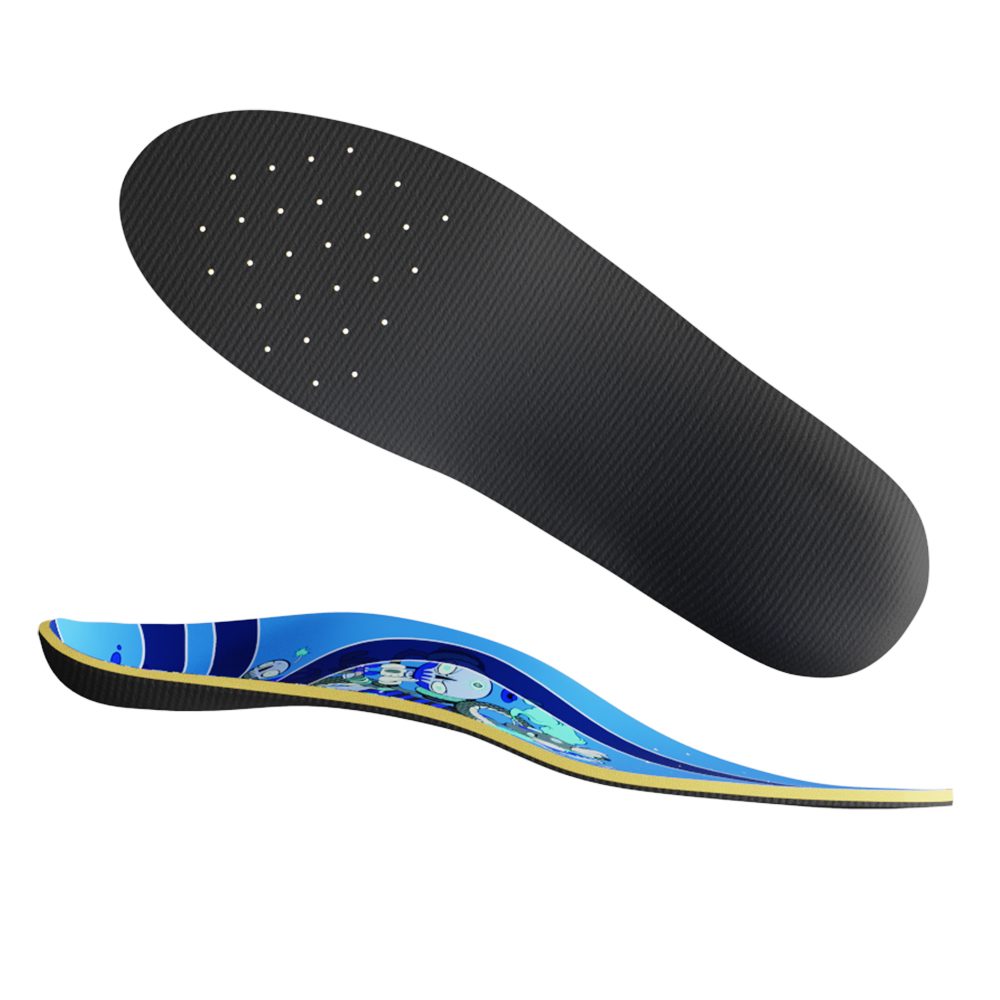
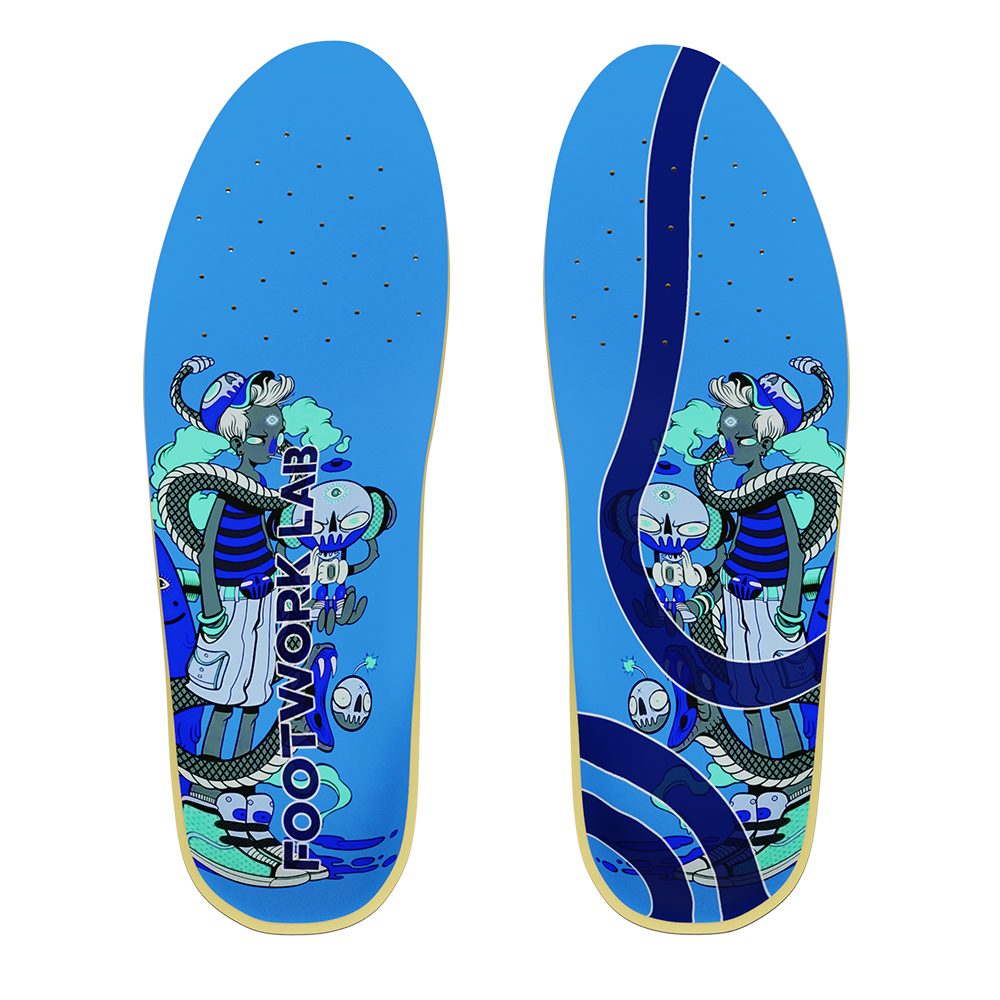
The structure under the sport range is worth knowing when comparing quotations. Our builds use a mesh fabric layer over an orthotic textile layer over a shaped polymer plate, and the grading comes from how those layers are configured, not from an added gadget. Buyers comparing ranges across suppliers should ask what changes between grades in a line, because a range where every grade is the same part with a different label will not survive its first season of returns.
What the record corner documents, and what it deliberately does not
A session in the corner produces a document, and the document’s contents decide whether the facility’s coaches will trust it. Ours records what a pressure system can honestly record: the shape and area of contact under the standing foot, the distribution of load across the sole, the behaviour of that load through a walking pass — foot axis angle, the split between contact and flat phases, peak and mean pressure, the speed at which the centre of pressure travels — and, with the cameras, the alignment of the lower limb and the column above the foot.
Those are recorded quantities, and it matters commercially as well as professionally that everyone in the building knows their status. The corner does not diagnose. Reading the numbers, deciding what they mean for a particular athlete, and writing any programme or referral around them belongs to qualified professionals — the team doctor, the physiotherapist, the S&C lead. Our reports say so on the page, and we train staff to hand the document over rather than interpret it. A supplier whose demonstration implies the machine reaches conclusions is telling you how they will behave after delivery.
It is equally worth stating what the corner does not capture. It does not scan the outer shape of the foot into a surface file — the word three-dimensional in this market is a search term buyers type, not a description of what a pressure record produces — and a facility that needs geometry for a carving workflow is shopping in a different category. What it produces instead is the quantity that training decisions actually consume: where load sits, how it travels, how the leg sits above it. Coaches rarely ask for shapes. They ask for the second visit.
That second visit is the real product. A first record starts a file; a retest against it is what turns the corner from a gadget into a service the facility can charge for, schedule and retain members with. Everything else in this article — room position, session routine, stocked grades — exists to make that retest possible and comparable.
Fixed conditions, or the retest is theatre
Comparability is a property of the routine before it is a property of the hardware. Two records can only be set side by side if the sessions that produced them were run the same way: the same standing instruction, the same number of walking crossings, the same starting foot, the same spot on the floor, the same time relative to training load. None of that appears on a specification sheet, and all of it appears in the retest.
The room itself has to hold still. The capture plate needs a level, hard floor with space for an approach walk; the cameras need their positions marked and left alone; the lighting should not change between morning and evening sessions. A corner that gets tidied into a different configuration every month produces records that drift, and the drift will be blamed on the athlete, the software or the supplier before anyone blames the tape marks on the floor.
The athlete’s state is the condition most often ignored. A record taken after a heavy session reads differently from one taken fresh, and a facility that wants honest retests fixes the protocol: same point in the training week, same warm-up state, same footwear removed or worn. Write the protocol on one page, laminate it, and bolt it to the corner. The facilities with the cleanest longitudinal files are almost always the ones with a laminated page.
Software has one job in this scheme: presenting the two records together so a professional can read the difference item by item. Ask any supplier to demonstrate exactly that — yesterday’s session beside today’s, same athlete — before signing anything. If the demonstration requires exporting to another programme and reconciling by hand, the retest workflow will quietly die within a season, and the corner will become the most expensive coat hook in the building.
Stocking the range behind the corner: how much, how often
The record corner generates specifications; the stockroom has to answer them the same week. Facilities that let the two drift apart — records recommending builds the stockroom does not hold — train members to wait, and waiting kills the service. The workable pattern is a small core stock against the sports on your timetable, replenished on a rhythm, with the factory covering the long tail to order.
Our terms are set for exactly that pattern. The minimum order is two hundred pairs, mixed across styles and sizes, which lets a facility hold several grades across a size curve rather than two hundred of one build. Samples ship within three days, and production runs at roughly five hundred to a thousand pairs a working day, so a restock is a scheduling item rather than a crisis. Delivery runs six to seven working days by courier, ten to twelve by air, thirty to thirty-five by sea, and a facility should place its first order against the slowest of those, not the fastest.
The mix itself should be decided by the record corner, not by intuition. After a month of sessions, the file will show which grades the timetable actually consumes — court sports pulling torsion grades, endurance programmes pulling cushioning, youth programmes pulling support — and the reorder becomes arithmetic. Facilities that stock by staff preference end up with a wall of the build the head coach likes and a queue for everything else.
Daily-life builds deserve a shelf of their own, because not every member who sees the record corner is an athlete. The same session that specifies a court build for one member specifies a comfortable walking build for another, and the comfortable range — mesh fabric, orthotic layer, shaped plate in its daily configuration — is where the quiet, steady volume sits. A range corner stocked for sport alone is a range corner half used.
The division of work between supplier, staff and professionals
What we supply is stated plainly: the record system itself, the insole range behind it, the training that gets a session routine running in the corner, and support after delivery through a dedicated WhatsApp group with engineers reachable directly, remote assistance when a session misbehaves, and over-the-air updates where the unit is connected. One unit is the minimum order for a machine, machines accept ODM, every unit is tested at the plant for seven days before dispatch, and the warranty runs twelve months against non-human damage with free parts. We do not publish prices, because a quotation depends on configuration and destination, and we do not promise regional exclusivity.
What the facility’s staff own is the routine and the stock discipline: the laminated protocol, the marked camera positions, the reorder arithmetic, the card per athlete. What the qualified professionals own is interpretation — what the quantities mean for a named person and what, if anything, should be done about them. When those three lanes stay in their lanes, the corner runs itself; when they blur, usually because someone in sales at the facility wanted to “read” a report for a member, the arrangement becomes exactly the kind of overreach this industry gets criticised for.
We hold our own lane the same way. We do not write programmes, we do not interpret records, we do not promise that any build improves any condition, and we say so in the first conversation rather than the warranty dispute. The range is specified from a record by a professional; our job is that the specification, once made, arrives correct, fits the size ordered and matches the grade named on the card.
Where a project is genuinely undecided — the pencil-mark corner case — the honest recommendation is often to start with the record and stock the daily range first, adding sport grades as the sessions show demand. That answer slows our sport-series sales and we give it anyway, because a corner with a used record and a thin shelf outperforms a corner with a full shelf and a record nobody takes.
Frequently asked questions
Where should the foot record corner sit in a training facility?
Where athletes already pass and wait: reception, the corridor from changing rooms, or the edge of the warm-up area. Assessment corners that cost a booked appointment get used less than corners athletes walk past, and the difference in usage is significant.
How are sport insoles ordered for a facility?
By the sports on the timetable first, then by the record. The range is graded on four axes — support, torsion, cushioning and propulsion — and two athletes with similar records can need different grades because their sports load the foot differently.
What does a session in the corner actually record?
Pressure and alignment quantities: contact area and load distribution, foot axis angle, contact and flat phase proportions, peak and mean pressure, centre-of-pressure speed, and lower-limb and posture alignment from the cameras. These are recorded values, not conclusions.
Does the equipment diagnose what the record means?
No. Interpretation belongs to qualified professionals — the team doctor, physiotherapist or coaching lead. Every report carries a line stating the data is for reference, and our staff are trained to hand the document over rather than read it.
What keeps a retest comparable to the first record?
A fixed routine: same instructions, same crossings, same starting foot, same floor spot, same point in the training week, and a room whose plate, camera marks and lighting do not move between sessions. The software then presents both records side by side.
What are the order terms for the insole range?
The minimum order is two hundred pairs, mixed across styles and sizes. Samples ship within three days, production runs at roughly five hundred to a thousand pairs a working day, and delivery takes six to seven working days by courier, longer by air or sea.
What support comes with the record system?
A dedicated WhatsApp group with direct engineer access, remote assistance when a session goes wrong, and over-the-air updates where the unit is connected. Machines are sold from one unit, accept ODM, are tested for seven days before dispatch, and carry a twelve-month warranty against non-human damage.
What we would do next
Take the pencil mark off the plan and replace it with a drawn corner: the plate, the camera marks, the approach walk and the shelf behind it. Send the sketch through the contact page and we will mark up the routine, the stock start and the reorder rhythm against your timetable. The insole range page lists the three series and the four gradings in the terms a reorder is actually written in.
Three pieces go deeper. Orthotic sport insoles are ordered by sport expands the grading argument sport by sport, and fitness analysis in a gym describes the record corner from the operator’s side of the counter. Dynamic balance measurement covers the trial that rounds out a session for training facilities, and postural analysis with the X5 details the alignment items the cameras contribute.
This article is intended for professional and educational reference. It is not medical advice. Foot assessment equipment produces measurements and images; clinical interpretation and any decision about care remain the responsibility of a qualified professional. Certification scope is limited to the documentation we hold: European Union certification and ISO quality system certification.