
The enquiry reads, in full: hello, we want a foot machine, please send catalogue and price. It is not a careless message — the sender runs three shoe shops and knows exactly what problem he has — but the two words he chose describe every product this company makes, several it does not, and a fair number of things that are not machines at all. A plate for standing on, a walkway for walking across, a camera station for photographing posture, a mat for a hallway, a bench for forming insoles: all of them answer to foot machine in a search bar, and all of them are bought for different reasons by different people. Sending him a catalogue would have been the polite way to waste his week. This article does what the reply should have done. It takes the search for a foot machine and narrows it, stage by stage, to a record type — the static print, the dynamic gait, the posture line — describes what each record contains and who consumes it, and then works through the one choice inside the dynamic category that buyers most often get wrong: the length of the walkway. By the end, the two-word search should have become a one-page shortlist.
A word that names no machine, and why the narrowing comes first
Generic searches are not lazy; they are honest. A buyer who types foot machine is describing a budget line and a room corner, not a product, because at that point in the purchase he genuinely does not know which machine the problem needs. The mistake happens later, when a supplier answers the generic enquiry with the product he happens to sell, and the buyer anchors on it. The correct first step is not choosing a machine but choosing a record — deciding what the document should contain when a session ends, because everything else follows from that.
The record types divide cleanly. A static record answers how the foot sits: the shape and area of the print under load, where the weight rests, how the arch presents at rest. A dynamic record answers how the foot behaves: what happens to all of that through a step, repeated across a pass. A posture record answers how the body sits above the foot: the alignment of the leg, the column, the shoulders. Each is a different document, consumed by a different person, justified against a different service.
Most buyers need more than one, which is why combination systems exist, but the order of the narrowing still matters. A shop that decides it wants “everything” before deciding what its counter staff will actually use tends to buy the most impressive unit in the demonstration room and the least used unit in its own building. Start from the document the customer takes away, work backwards to the hardware, and the catalogue shrinks by itself.
There is also a vocabulary trap worth naming. Alongside the honest generic enquiries sit the impressionistic ones — buyers who arrived through phrases like foot scanner in three dimensions, which are search terms rather than descriptions. What our systems record is pressure and alignment: a sensing surface under the foot and cameras beside it. They do not capture the outer contour of the foot, and a buyer whose workflow needs a shape file for carving is in a different category entirely, something we say in the first reply rather than the fifth.
The static record: one stance, one picture
The static record is the simplest document in the family and still the one most shops use hardest. The customer stands on the sensing plate, once, twice, a third time for good measure, and the report shows the footprint’s outline and contact area, the distribution of load across the sole, and the arch presentation at rest. Ten seconds of standing, one picture of how the foot carries the body when the body asks it to do nothing clever.
Who consumes it: the counter. A shoe shop fitting by record rather than by shoe size alone needs exactly this — arch type, print shape, load pattern — to point a customer at the right construction. A foot care counter stocking insoles needs it for the same reason one shelf up. The static record is fast, it needs no instruction beyond stand still, and it survives being run by staff who received an afternoon of training rather than a semester.
What it cannot do is describe motion, and the boundary shows up in the questions customers ask next. A print taken at rest says nothing about whether that foot rolls inward as it loads, how the weight transfers toward the toes, or how the heel behaves through contact — questions that surface the moment a customer says the shoes feel different when they walk than when they stand. Shops that start static usually add the dynamic record within a year, not because the first purchase was wrong but because the counter’s conversations outgrew it.
One honesty note belongs here because buyers raise it in every demonstration: the static picture is a recording, not a verdict. Arch type, load pattern, print shape — these are values for the professional or the trained fitter to read against the customer’s situation. Our reports state that the data is for reference, and we would rather a shop charged for a fitting conversation than improvised a diagnosis from a coloured footprint.
The dynamic record: behaviour through a step
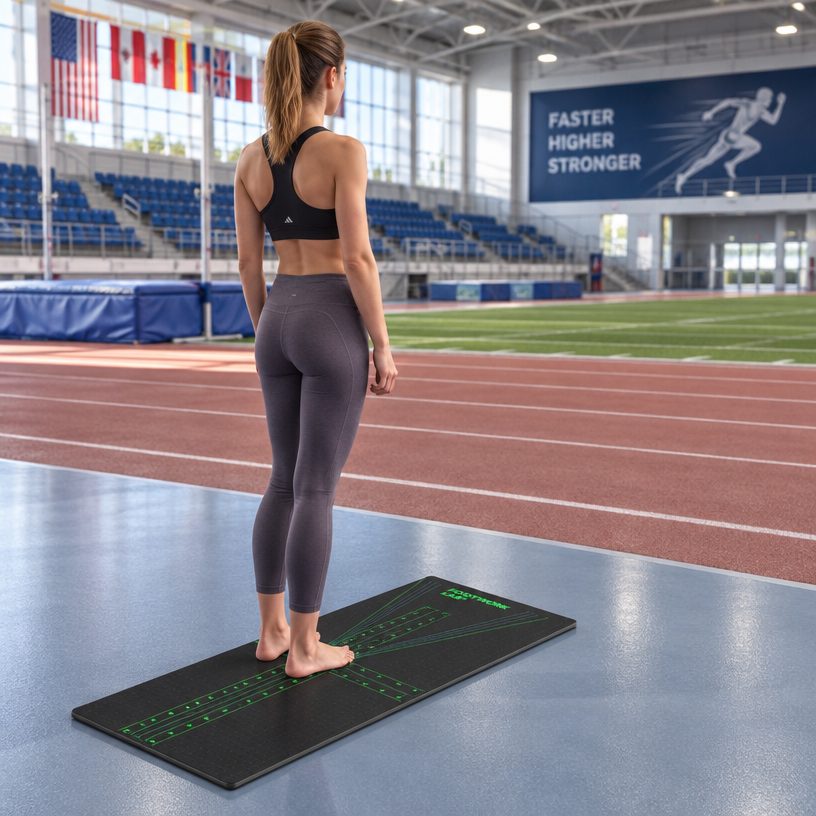
The dynamic record adds time. The customer walks across the sensing surface — once to settle, then the measured crossings — and the report fills with the quantities that only motion produces: the foot axis angle as the foot travels, the proportions of the contact and flat phases, peak and mean pressure under the loaded regions, the total contact area under way, and the speed at which the centre of pressure travels forward from heel to toe. Where the static record is a portrait, this is a short film compressed into numbers.
This is the record that clinical and training buyers actually mean when their enquiry says foot machine. A physiotherapy room reviewing how a patient moves after an ankle injury, a training facility checking how an athlete’s load pattern sits against last season’s, a shoe store running a serious gait-fitting service at the counter — all of them are shopping for the walking quantities. The hardware varies: a fixed plate in a floor, a walkway with a longer sensing strip, a portable mat that travels. The document, done properly, is the same.
The dynamic record also raises the discipline question that separates a usable purchase from an unused one. Quantities through motion are only comparable if the crossings are run the same way each time: same instruction, same pace, same starting foot, same floor. A supplier who has thought about this hands over a written routine with the machine; one who has not hands over a brochure. Ask at the demonstration to see the routine document — it costs nothing and reveals more than any specification.
And the same professional boundary applies, stated just as plainly. The walking quantities are recordings of behaviour, and their meaning for a named person belongs to a qualified professional. The equipment’s job is that the numbers are honest and the second record can be set beside the first. Deciding what the difference means — that is somebody with a qualification, and a supplier who blurs that line in the sales conversation is previewing how they will behave after the warranty starts.
The posture line: what the cameras add
The third record type points cameras rather than pressure at the problem. A lower-limb camera captures the heel and knee while the plate beneath does its work; a posture camera captures the standing column — how the head, shoulders, pelvis and knees sit over the base. Together they turn a sole measurement into a force-line picture, which is what footwear and insole decisions are actually specified against. A pressure number without the alignment beside it is half a sentence.
The posture line earns its keep in services that sell more than a fitting. A children’s programme shows a parent what a mirror cannot quantify; a sports facility shows an athlete why one side keeps complaining; a rehabilitation clinic builds its review file from the alignment images as much as from the pressures. In these rooms the posture record is often the reason the customer agreed to be assessed at all, which is a commercial fact worth being honest about rather than embarrassed by.
Buyers sometimes treat the camera half as an accessory and specify it last, which produces the most common configuration mistake in this category: enough sensing hardware to fill a report and camera positions chosen to fit whatever space was left. The cameras need their distances marked and their lighting controlled like the plate needs its level floor. If the room cannot hold the marks, buy the record the room can hold, rather than the record the brochure shows.
Where the three records meet is the combination document: foot, gait and posture in one session, one report, one file that opens next to the one from three months ago. That is what our own systems are built to produce, and it is the version of the phrase foot machine we answer when the buyer’s problem turns out to need all three. The combination is justified by the service around it, not by the hardware count — a shop with no review appointments gains little from posture cameras, and we say that too.
Choosing the walkway: what a longer capture buys, and what it costs
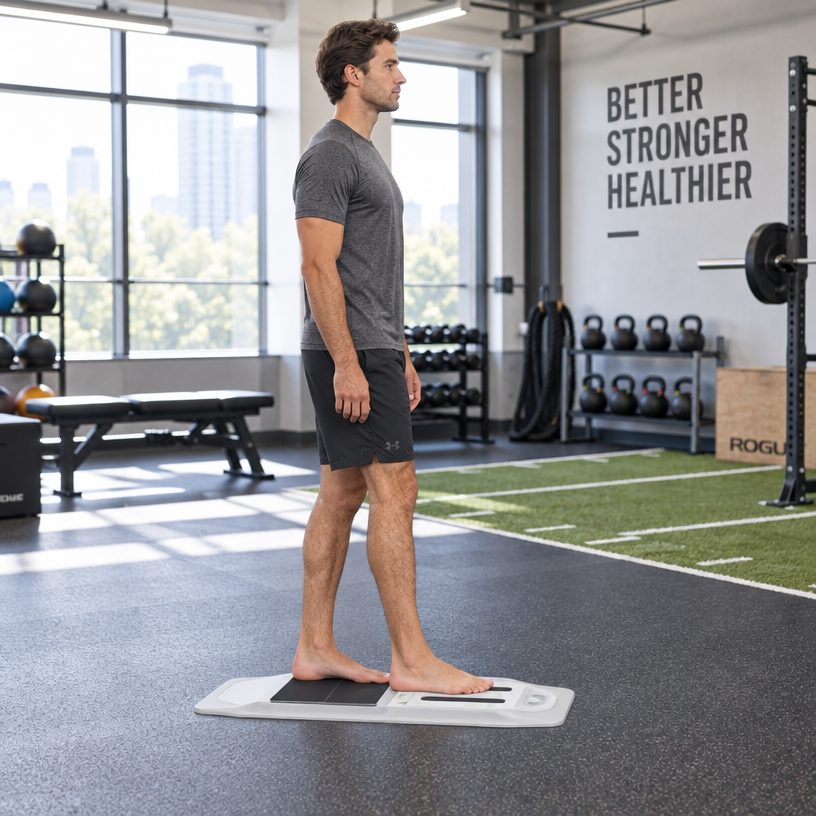
Inside the dynamic category sits one decision that generic enquiries never anticipate: how much walkway the capture needs. A compact plate captures a step or two; a walkway long enough for a settled stride captures the gait cycle as it actually behaves, once the walker has stopped thinking about walking. The difference sounds technical and is really about what the record can honestly claim to describe — a single step or a rhythm.
The extended walkway version of our system exists for exactly this. Its longer capture strip records whole dynamic cycles, which lets the report carry the fuller picture: the stance phase and the swing phase, the double-support moments where the weight transfers from one foot to the other, and the way those proportions hold or drift across successive steps. For rehabilitation rooms and training facilities whose whole point is how movement behaves over time, that depth is the product. A record of two steps cannot speak to a rhythm, and no software dresses that up.
The trade-offs are the honest part. A longer walkway needs more floor — a straight run clear of furniture, doors and shortcuts — and it needs the room to keep that run clear for good, because a capture strip that doubles as a corridor produces records of people swerving. It also changes who operates well: a longer session rewards a trained operator and a booked appointment, while a compact plate forgives a busy counter. Neither is better; they are different services, and the room decides.
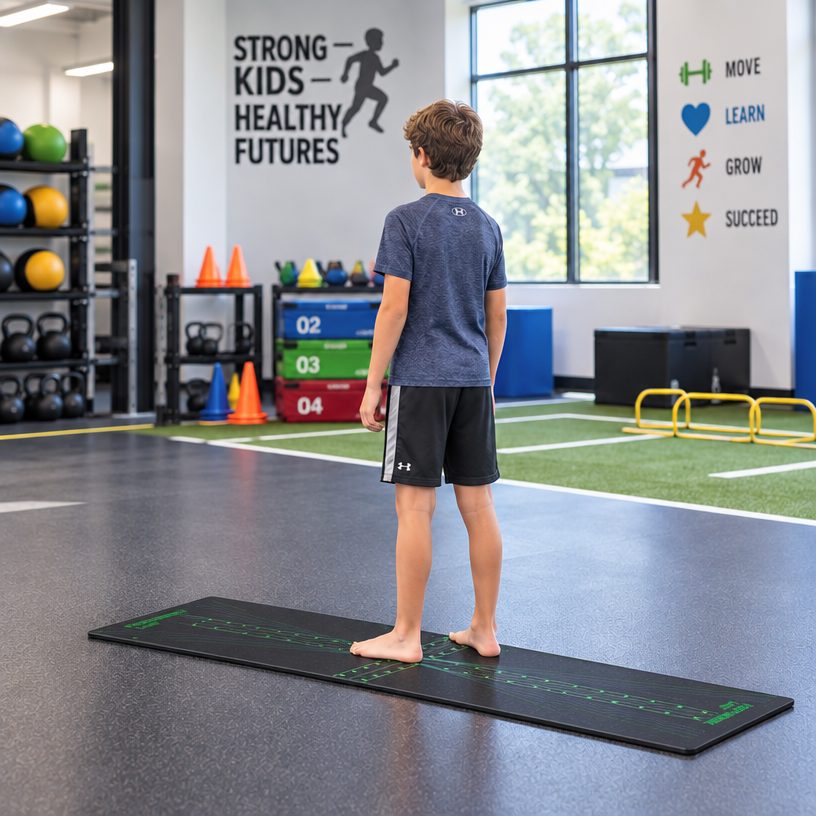
The practical rule we give buyers: choose the walkway length from the session you will actually run, not from the demonstration room. A shop fitting at the counter with three metres of free floor should buy the compact capture and be excellent at it. A clinic with a dedicated room and review appointments should buy the extended capture and build its service on the cycle quantities. Buyers who invert this — the longest strip in the smallest room, or the shortest plate in a gait laboratory — have bought the brochure rather than the workflow, and the machine will spend years proving it.
Finishing the search: the shortlist and the reply we would send
By this point the two-word search has narrowed itself. One page should now hold: the record type or types the service needs, the hardware that produces them at the walkway length the room allows, the routine document in writing, the sample report, and the after-sales terms. If the shortlist still has three names on it, the deciding questions are unglamorous and effective — can two sessions be displayed side by side, can the file leave the machine, who answers the phone on a Monday morning, and what exactly does the warranty cover.
Our own terms, stated once and plainly: machines start at a minimum of one unit and accept ODM, every unit is tested at the plant for seven days before dispatch, the warranty runs twelve months against non-human damage with free parts, and support runs through a dedicated WhatsApp group with engineers reachable directly, remote assistance when a session misbehaves, and over-the-air updates where the unit is connected. We do not publish prices — a quotation follows the configuration and the destination — and we do not promise exclusive territories, because a generic search crosses borders the way generic words always do.
The reply we would send to the three-shop owner, and to any enquiry that arrives as two words and a question mark, is a question back: what does the customer take away, and who reads it. Answer that, and the catalogue sends itself — sometimes it is a compact plate and a shelf of insoles, sometimes an extended walkway and a review diary, occasionally it is no machine at all yet, only a restock line and a better counter routine. We would rather send that answer than a catalogue, because a sale built on an unresolved generic word comes back as a machine under a cover with our name on it.
Frequently asked questions
What does the phrase foot machine actually cover?
Everything from a standing pressure plate to a gait walkway, a posture camera station and an insole forming bench. It is a starting point, not a product. The first narrowing is to the record type: static print, dynamic gait, or posture and alignment.
What does a static record contain?
Footprint outline and contact area, the distribution of load across the sole, and the arch presentation at rest. It is a recording of how the foot sits under load, read by a professional or trained fitter, and it fits a counter workflow.
What does the dynamic record add?
Behaviour through motion: foot axis angle, contact and flat phase proportions, peak and mean pressure, contact area under way, and centre-of-pressure speed. These quantities are only comparable when the crossings are run to a fixed routine.
What does the extended walkway version record?
Whole dynamic cycles rather than isolated steps, adding stance and swing phases and the double-support transfer moments, so the report can describe a rhythm rather than a step. It needs a clear straight run of floor and rewards a booked session.
Do your systems scan the foot in three dimensions?
No. The three-dimensional phrasing is a market search term, not a description of our equipment. Our systems record pressure through a sensing surface and alignment through cameras; they do not capture the outer contour of the foot.
What are the order and warranty terms?
Machines start at one unit and accept ODM, with seven days of testing at the plant before dispatch and a twelve-month warranty against non-human damage with free parts. Support runs through a dedicated WhatsApp group with direct engineer access.
Who reads the report?
A qualified professional or trained fitter, depending on the service. Every report states that the data is for reference; the equipment records values, and deciding what they mean for a person belongs outside the machine and outside the factory.
What we would do next
Write the two-word enquiry at the top of a page and answer underneath it: the record the customer should take away, the person who will read it, and the floor the machine will live on. Send that page through the contact page and we will reply with the configuration that fits, including the answer that no equipment is needed yet. The F2-PRO system page describes the extended-walkway record in its own terms, and the compact version sits beside it in the same catalogue.
Four pieces go deeper. Pressure plates and the F2-Pro compares the compact and extended captures directly, and pressure plate gait records walks through the routine that keeps two sessions comparable. Dynamic plantar pressure mapping on the F2 shows what a walking record looks like item by item, and three ways to capture a foot sorts the wider capture market in short form.
This article is intended for professional and educational reference. It is not medical advice. Foot assessment equipment produces measurements and images; clinical interpretation and any decision about care remain the responsibility of a qualified professional. Certification scope is limited to the documentation we hold: European Union certification and ISO quality system certification.