
A message arrives some weeks after delivery: “The pair is good, honestly — but could you make it softer?” Every workshop that builds custom insoles knows this message, and most of them handle it badly in one of two ways. The first is to say yes immediately, rebuild something, and ship a pair the customer still does not call softer. The second is to say no defensively, as if the request were a complaint about craftsmanship, and lose a customer who had no complaint at all. Both failures come from the same mistake: treating “softer” as a specification, when it is actually a feeling — vague, personal, and pointing at something real. The customer is not describing a material; she is describing a moment. Something under her heel in the first steps of the morning, or under the ball of her foot by the end of a shift, or a firmness she notices only inside one particular pair of shoes. Translating that feeling into something a bench can actually build is the whole craft of responding to this message, and it is more procedure than talent: find where the feeling lives, find when it arrives, find which shoe it happens in, decide what the build can change without disturbing what the original assessment put there, and write down what changed and why. This article walks that procedure end to end, including the part most workshops skip — what softer trades away, and how to say so before the bench starts, not after the customer calls back.
The request almost never means the whole pair
Softer, taken literally, would mean rebuilding everything, and that is almost never what the customer means. Listen to the message again and it points: “good, honestly, but softer” is the grammar of a local complaint, not a global one. The first job, before any bench discussion, is to locate the feeling — and the fastest way is to ask the customer to put a finger on it, literally. In messages that come back with a location, three patterns repeat more than all the others. There is the heel pattern: firmness felt in the first handful of steps after getting up, fading as the day goes on, which usually says more about the first steps than about the build. There is the forefoot pattern: comfort that runs out by late afternoon, which often says as much about the day and the shoes as about the insole. And there is the one-shoe pattern: a pair that feels right everywhere except inside one particular shoe, which is a fitting conversation, not a cushioning one. Each pattern leads to a different bench answer, and some of them lead to no bench answer at all — the heel pattern customer, for instance, may simply be describing a foot that arrives cold and tense in the morning, and no amount of added cushioning will change how a foot feels in its first minute of weight-bearing. Asking “where exactly?” before agreeing to anything is therefore not stalling; it is the difference between an adjustment and a guess with shipping costs.
Softness is a feeling, not a specification
Two customers can ask for softer and need opposite changes, which is why the word cannot go to the bench as-is. One customer means cushioning: she wants more give under a spot that feels uncovered, a landing that ends softer than it starts. Another means less push: the arch side of her build presses harder than she wants, and she describes that pressure as the pair being too firm, when the build is doing exactly what the assessment asked of it. A third means less rigidity overall: the shell feels like it makes her work, and she wants the pair to move more with the foot. A fourth means thinner: the pair fills her shoe, and fullness has been filed, somewhere in her head, under softness. Each of these maps to a different build decision, some of them mutually exclusive — the customer who wants more give under the heel and the customer who wants more push under the arch are asking for the same word and different worlds. Our article on where softness stops helping covers the underlying tension in detail: cushioning and control pull against each other in every build, and a pair built soft everywhere gives away the very things the assessment may have asked it to hold. So the first response to “softer” is never a yes or a no; it is a question back — “soft how?” — followed by the patience to wait for an answer in the customer’s own vocabulary. The vocabulary that comes back is the raw material the rest of this procedure works with, and it is almost always more usable than the workshop expects.
The questions that turn softer into something buildable
Between the customer’s word and the bench’s decision sit four questions, and they fit in one reply message. Where exactly does it feel too firm — have her point at the pair, on a photo if the conversation is remote, rather than naming a region from memory. When does it arrive: the first steps of the morning, the last hours of a workday, or the whole time inside one shoe — timing separates a build issue from a use issue faster than anything else on the list. Which shoe: the pair the customer reaches for most, and whether anything changed recently — a new job on hard floors, a weight change, a new sport, a different shoe habit — because our article on a pair after a change in body weight covers when the original build plan itself needs revisiting rather than patching. And the question customers find hardest and answer most usefully: what do you expect softer to do? The answer exposes the real request. “So my feet stop aching by evening” is a load-distribution conversation. “So I can wear them all day at work” may be a shoe conversation. “So it feels like my old shop-bought pair” is a conversation about expectations, and it deserves honesty early — a custom build will not feel like the pair it replaced, at least not in the first weeks, and pretending otherwise sets up the next callback. Four questions, one message, and suddenly “softer” has a location, a schedule, a shoe and a purpose — the four things a bench decision actually needs. Our article on turning a customer’s own words into a build spec covers how those answers get written down without losing their meaning in translation.
What the bench actually changes
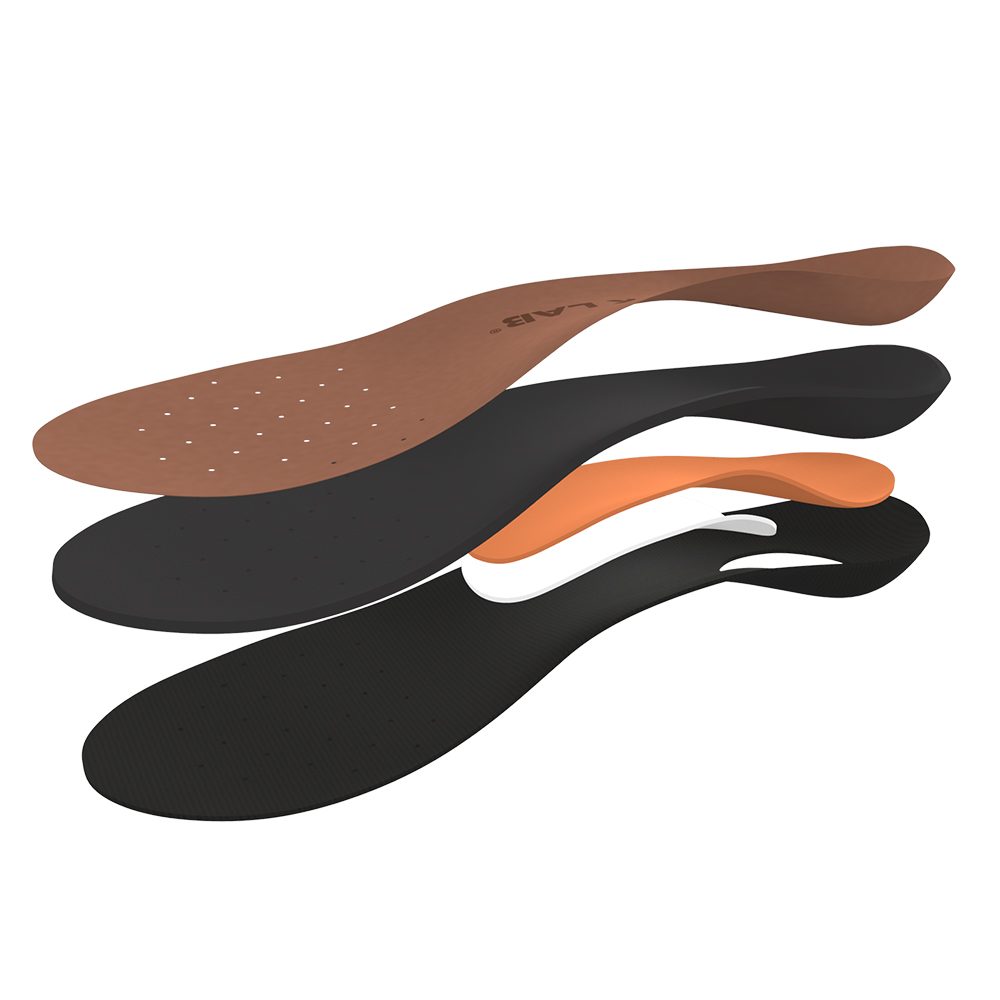
Once the feeling has been translated, the bench picks from a short list, and each option touches the build differently. Adding cushioning under the top cover, in the region the customer pointed at, is the most common move: a layer with more give beneath the area that asked for it, leaving the rest of the build as the assessment shaped it. Adjusting the shell’s give is the second: where a customer means the pair works too hard against her, regions of the shell can be made more compliant, though this is the option that most directly touches what the assessment asked the build to hold, and it gets the most caution. Softening an edge or the top cover itself is the third: firmness sometimes lives in a finishing choice rather than in the structure, and it can be eased without moving anything structural. What the bench deliberately avoids is the blanket change — rebuilding the whole pair softer because one region asked for it — for the reason the next section makes plain: softness in one place is a targeted decision, softness everywhere is a different product. The bench conversation is also where the honest constraint gets stated: every option on this list changes at least one other property of the pair, and the customer is told which property before the work starts, not after. A customer who hears “this will add give under the heel, and it will take a little room in that shoe” can weigh the trade; a customer who discovers it in the shoe discovers it with her shoes on, which is the more expensive way to learn it.
What softer trades away
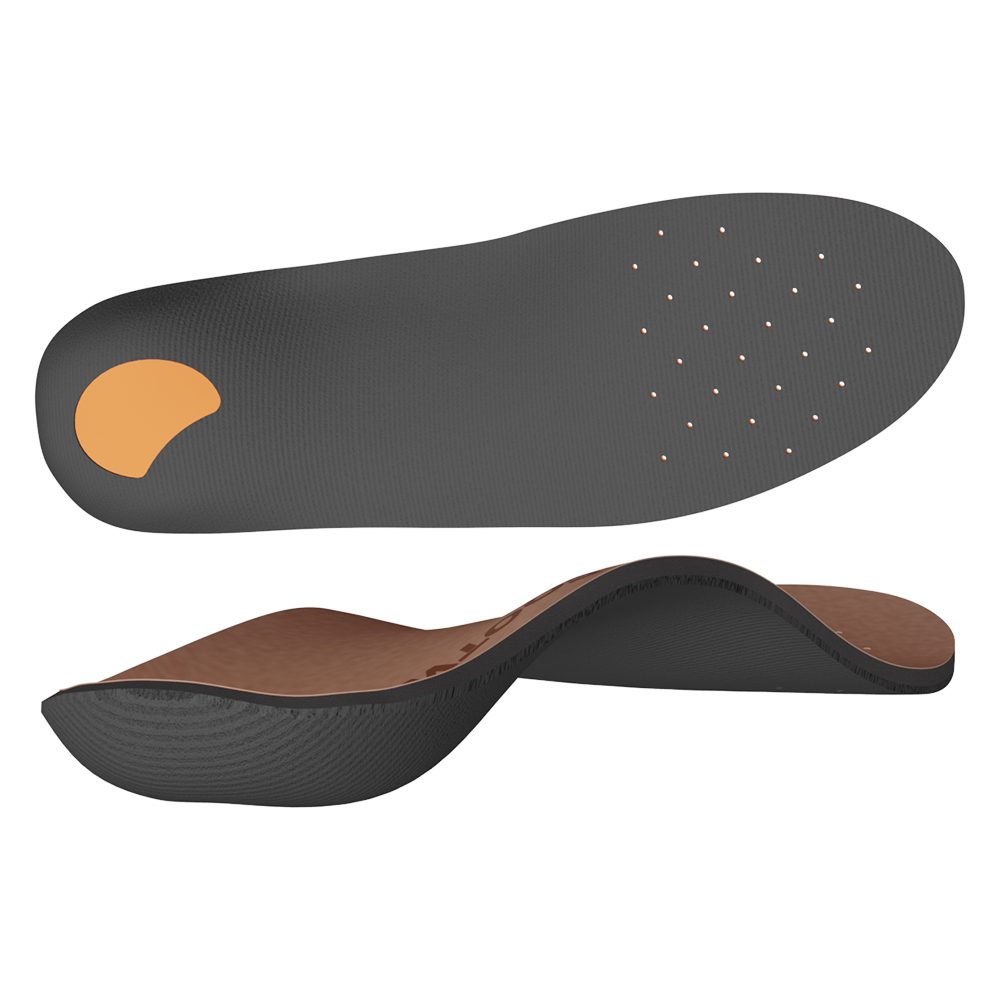
Softness is never free, and the trade-offs are predictable. The first is control: cushioning gives, and a build that gives under load redistributes that load differently — which is exactly what the original assessment tuned, and why a blanket softening can quietly undo a build that was working. The second is shoe volume: adding a cushioning layer takes up room in the shoe, and a pair that fit snugly may fit differently after the change — the customer who asks in October and wears the pair inside winter boots meets this trade sooner than most, a situation our article on cold, storage and boot volume covers well. The third is wear: a softer cushioning layer compresses with use, faster than a firmer one, which is why softer builds get checked more often rather than trusted longer — our article on reading a top cover for wear at the three-month check covers what to look at and when. The fourth factor is subtler: habit. Feet adapt to a build over weeks, and the firmness a customer calls a fault in week two may simply be the sensation of something her feet have not met before, which is why no serious workshop rebuilds on a first-week report without asking what changed. Saying these prices out loud before the bench starts is not a way to talk the customer out of the change; it is the way a customer makes the change as an owner rather than a passenger. The customers who hear the trade-offs and still say “go ahead” are, in our experience, the ones who come back satisfied.
Writing the change into the build record
An adjustment that lives only in the workshop’s memory is an adjustment the pair will lose. Every change made in response to a softer request gets written into the build record that has travelled with the pair since its first build: what the customer reported, in her own words alongside the translation of those words, what the bench changed, and what trade was accepted in doing it. Three years from now, when the same customer writes back about the same pair, whoever opens the file needs to find its history in one read — the original build decisions, the adjustment, the reasoning — rather than reconstructing it from a thread of old messages. The record also protects the customer in the opposite direction: if the adjustment turns out to have been wrong, the file shows what was tried, so the next move starts from evidence instead of from another guess. And there is a quieter benefit worth naming. A build record that accumulates honest entries — including the ones where the workshop changed its mind — reads, over years, like the pair’s biography, and a workshop that can show a buyer that biography is demonstrating something no brochure can: that the pair is a maintained product with a history, not a one-time object. Buyers who tour the line and see how adjustment requests are written up usually ask fewer questions afterward, because the record answers the one that matters most: what happens when the customer’s feet disagree with the plan? The answer is on file, in writing, from every customer who ever asked.
What to ask the customer to report back
An adjustment without a follow-up question is an adjustment the workshop will never learn from. The report-back we ask for is the same one we ask of every new pair, laid out in our article on what a customer should be asked to report in the first two weeks: where they feel the change, when it shows up, and in which shoe — the same three coordinates that defined the original request, because comparing like with like is the only way an adjustment gets judged fairly. Timing matters in the asking: too early and the customer is reporting habit, not change; too late and she has quietly adapted to something she dislikes. Somewhere in the first two weeks is the useful window, and the question should arrive as a message, not as an interrogation. The honest definition of success is worth writing into the message itself: the goal of an adjustment is that the specific feeling the customer pointed at has changed — not that the pair now feels brand new, not that every sensation has vanished. A customer who expected a different product from an adjustment was sold the wrong expectation somewhere, and this message is the last chance to correct it cheaply. If the report comes back positive, the record gets its closing line and the pair settles. If it comes back negative, the next conversation starts from the file, not from scratch — and that, more than any cushioning layer, is what the whole procedure was built to make possible.
Frequently asked questions
Can any pair be made softer?
Most pairs can be adjusted somewhere, but not every softness request can be met without undoing what the original assessment asked the build to hold. Surface-level cushioning is the easiest change; shell compliance is the most delicate. The bench decides after the request has been translated into a location and a moment, and the customer is told what each option trades away before work starts.
Will a softer pair wear out faster?
A softer cushioning layer compresses with use faster than a firmer one, which is why softer builds get their covers checked at intervals rather than trusted indefinitely. Wear shows in the cover and in the give of the layer itself. Reading the top cover for wear at the three-month check tells you whether the adjustment is holding or settling.
Why didn’t you make it soft in the first place?
Because the original build followed the assessment, and cushioning trades against control and load distribution. Some builds carry more cushioning from the start; others hold deliberately. A first-week feeling of firmness is often adaptation rather than a fault, which is why a workshop asks what changed before rebuilding — a question that has saved many pairs from unnecessary surgery.
Can I describe the change in my own words?
Please do — the customer’s own words are the raw material. What the workshop adds is the translation: where you pointed, when it arrives, which shoe it happens in, and what you expect softer to do. Those four answers get written into the build record beside your words, so the pair’s history keeps both the feeling and the decision.
Will a softer pair still fit my shoes?
Adding cushioning takes up room in the shoe, and a pair that fit snugly may fit differently after the change. The trade is stated before the bench starts. Customers who wear their pair inside boots, where volume is already tight, meet this sooner — which is why the shoe question is part of the original four questions, not an afterthought.
How do I ask for the change?
Message the workshop with three things: where the firmness sits — a photo of the pair with the spot marked works well — when it bothers you, and in which shoe. The sooner the request has a location and a moment, the sooner it becomes a build decision instead of a back-and-forth. Samples and adjustments move quickly once the request is concrete.
What if it still doesn’t feel right after the adjustment?
Report back using the same three coordinates — where, when, which shoe. The next conversation starts from the build record: what was tried, what trade was accepted. Sometimes a second adjustment settles it; sometimes the honest conclusion is that the first build was right and adaptation was still underway. Either way, the file makes the next step a decision rather than a guess.
What we would do next
If you are the customer with the message half-written, add the three coordinates before sending it: where, when, which shoe — a photo of the pair with the spot marked does more than any adjective. If you are the workshop receiving such messages, adopt the four questions as a standing reply, and write every adjustment into the build record with the trade stated. On our side, the insole categories page shows the ranges the bench builds against, including the rehab line where adjustments are most common, and the FAQ page collects the operational answers we give most often by message. The questions it does not answer reach us through the usual channels. Our article on where softness stops helping pairs well with this one if you are deciding what to ask for.
This article is intended for professional and educational reference. It is not medical advice. Foot assessment equipment produces measurements and images; clinical interpretation and any decision about care remain the responsibility of a qualified professional. Certification scope is limited to the documentation we hold: European Union certification and ISO quality system certification.