
He sits down in your chair with white dust still settled into the seams of his work trousers, and the first thing he mentions is not the ceiling he is painting. It is the last half hour of every job: coming down the ladder when his feet have had enough, toes curled over the rungs, heels hanging off the edge because the rung is too narrow to stand on properly. He has decorated houses for nineteen years. He assumed aching feet simply came with the paint.
His trade thinks of itself as an arm-and-shoulder job, and nearly everyone in it is surprised by what their feet have been doing the whole time. This piece is written for the clinics, physiotherapy rooms and orthotic workshops that meet people like him: what a day on ladders, edges and half-scaffold boards actually asks of a foot, which questions to ask before you build anything, and how to make the work boots part of the answer instead of part of the problem.
The working day underneath the paint
From the outside, decorating looks like a job for the shoulders and the brush arm. The morning starts with cutting in a ceiling — arms overhead, feet planted on a step for what turns out to be an hour. Midday belongs to the roller, which means small sideways shuffles along a wall, weight rocking from one foot to the other with every stroke. Skirting boards pull the whole body down into a crouch. Between rooms, the ladder, again and again, twenty or forty times a day depending on the house. None of it registers as exercise, and none of it shows up in the way he describes his job when asked what he does for a living.
The feet get no pause in any of it. On the ladder, the forefoot rides a rung barely wider than two fingers: toes curl over the edge for grip, the heel hangs in the air, and the weight of a grown man funnels through the front third of each foot on the way up and again, with braking added, on the way down. On scaffold boards and dust sheets it is static standing, on whatever the site happens to offer — usually concrete, usually spattered, usually cold.
So the first move is a simple one, and you can make it tomorrow: ask your next decorator customer to bring the boots he actually works in, not a description of them. Boots carry information a customer cannot. A lining compressed flat at the heel, a toe box crushed where the foot pushes forward on every climb, a sole worn shiny under the ball of the foot — each of these is a record of the working day, written in the material itself, and none of it survives a conversation held from memory. The boots arrive with their own opinions, and they are usually right.
Why a rung loads a foot differently
On flat ground the foot takes turns. Through the gait cycle, stance alternates with swing, load rolls from heel through forefoot, and each foot gets a regular rest while the other one carries. The ladder removes nearly all of that rhythm. Climbing is a sequence of short static holds: plant, grip, lift, plant. There is no swing to speak of, no roll from heel to toe, and no rest for the foot that is holding.
Each half of the climb loads the foot in its own disagreeable way. Going up, every step plants the forefoot on a narrow edge, the centre of pressure rides forward, and the toes claw the rung to keep the body from peeling backwards. Coming down is harder in a different direction: the heel skims the rung edge, and the ball of the foot brakes the body’s drop a dozen times a flight. Either way, the load is concentrated, static and repetitive — three qualities that plain walking distributes much more gently across the whole foot.
Hours of that add up to a working day spent largely under the metatarsal heads and inside the toe flexors, with the heels contributing very little. It explains something clinics hear constantly from trade customers: a forefoot that burns after a shift the customer describes as “mostly just standing around”. The description is honest. The standing simply happened on hardware no foot was shaped for, and no amount of arm strength upstairs changes what the forefoot paid for it downstairs.
Four questions to ask before you build anything
A build that answers the wrong part of the working day fails quietly: the customer wears it, notices nothing, and stops coming. Most of those misses are preventable with a short conversation, done in the same order every time, before any measurement or moulding takes place.
Four questions cover a decorator’s day. First: how much of a typical day is spent on ladders rather than at floor level — a rough split in hours or in jobs, whichever he can answer honestly. Second: where does the foot end the day in complaint, in his own words — under the toes, along the arch, at the heel, on the outside edge — recorded as description rather than interpretation. Third: the boots themselves — how old, how broken in, how much room is actually left inside the toe box, and whether he owns one pair for everything or separate pairs for work and home. Fourth: what has already been tried, from supermarket inserts to a pair somebody else made, and what became of each attempt. Ask the last one without a smile, because the failures customers describe are often the most precise specification you will get all day.
Write the four answers as four lines on the sheet, and do it the same way for every trade customer. Those lines decide more than any single capture does: how much volume the build must fill, which material survives plaster dust and paint, whether the build belongs in the work boots, the weekend shoes, or both, and — not least — how much of the problem the boots themselves have been causing all along.
What a record adds, and where it stops
Both states deserve a record. A standing capture shows how load sits when the feet are planted, which is the closest a clinic room ever gets to ladder stance. A walking capture shows how the foot behaves in motion, including all the floor work between climbs. Taken together they describe a working foot far more completely than either alone.
You cannot, and should not, recreate a ladder in your room. The honest approximation is to ask the customer to stand as he stands mid-job: weight rolled forward, one foot slightly higher than the other, toes engaged. The equipment then produces its map and its pressure line, and what those images mean is a question for the qualified professional reading them — not for the machine, and not for anyone selling around it. The record is a measurement of a moment; the interpretation and every decision that follows belong to the professional holding the whole file.
Watch, too, for the asymmetry almost every trade worker carries. One foot leads on the ladder; the other trails and brakes. When the two feet disagree in the record, that disagreement is a finding worth noting, not an error to be averaged away into a single tidy result. Each foot gets its own read, its own line on the sheet, and — eventually — its own answer.
Building into the boot, not the size
Work boots are hostile territory for anything added under a foot. A steel toe cap steals depth. A stiff sole refuses to flex where a build expects flex. The lining, compressed by years of climbing, has already claimed space the foot used to own. A build drawn up for a nominal shoe size, rather than for the interior of the actual boot, arrives in the post and fails on the first fitting — not because the foot was measured badly, but because the boot was never measured at all.
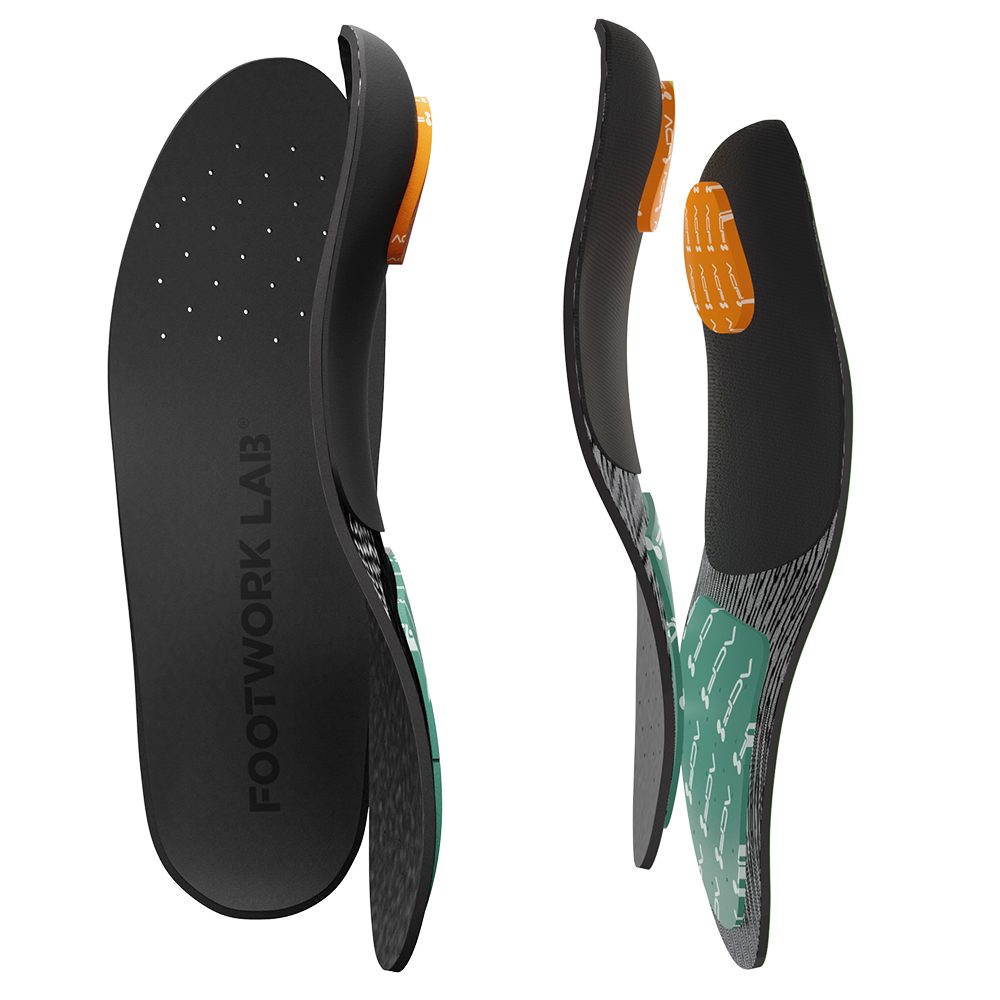
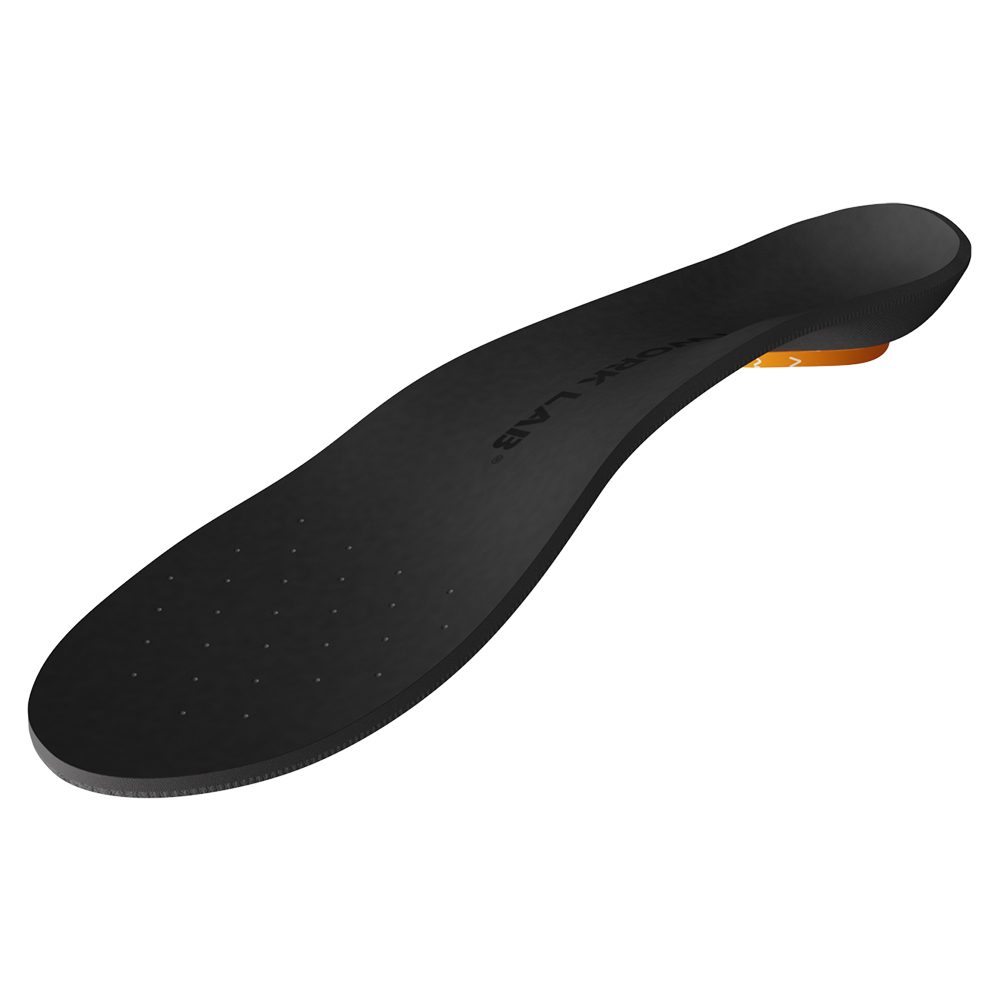
This is where a pair of custom orthotic insoles earns its keep: shaped to the boot’s real interior, spreading load across the whole plantar surface instead of letting the forefoot carry the ladder’s entire share, and supporting the arch through those long static holds where no other part of the foot gets a turn. Built that way, the addition becomes part of the boot rather than a visitor inside it.
Materials deserve the same attention as shape. Paint dust, plaster and splashes argue for a top cover that wipes clean and does not hold grit against the skin. The repeated toe grip on every climb argues for enough firmness that the support does not fold out of the way exactly when it is needed. And the braking foot on the descent argues for a heel cup deep enough to steady the heel through a dozen small arrests a flight, hour after hour, floor after floor.
The old pair tells you the truth
Before anything is finalised, look hard at what the feet have been wearing until now. Old inserts, even cheap ones, carry a readable story: load concentrated under the forefoot and barely touched at the heel, edges rolled where the foot slides, one side worn flat where the lead foot hammers and the other side barely marked. The boot soles repeat the same testimony from underneath, and the crushed lining repeats it from within.
Put that wear pattern next to the fresh record and compare them. Where the two agree, confidence in the picture goes up. Where they disagree, one of them is telling you something the other cannot — usually about the boots rather than the feet, and usually about a habit nobody mentioned in the conversation. Either way, the disagreement gets written down and resolved deliberately, not smoothed over.
This is a habit worth installing in the whole team, not just keeping for trade customers. We have written about it at length in Bring Me Your Old Pair: Checking Insoles Someone Else Made, and the short version is this: whatever somebody else built, and however badly it wore out, it wore out honestly, and its wear is evidence no fresh capture can replace. Fifteen minutes with the old pair answers questions the customer cannot, starting with whether the boots themselves deserve half the blame.
Support and load, in words that hold up
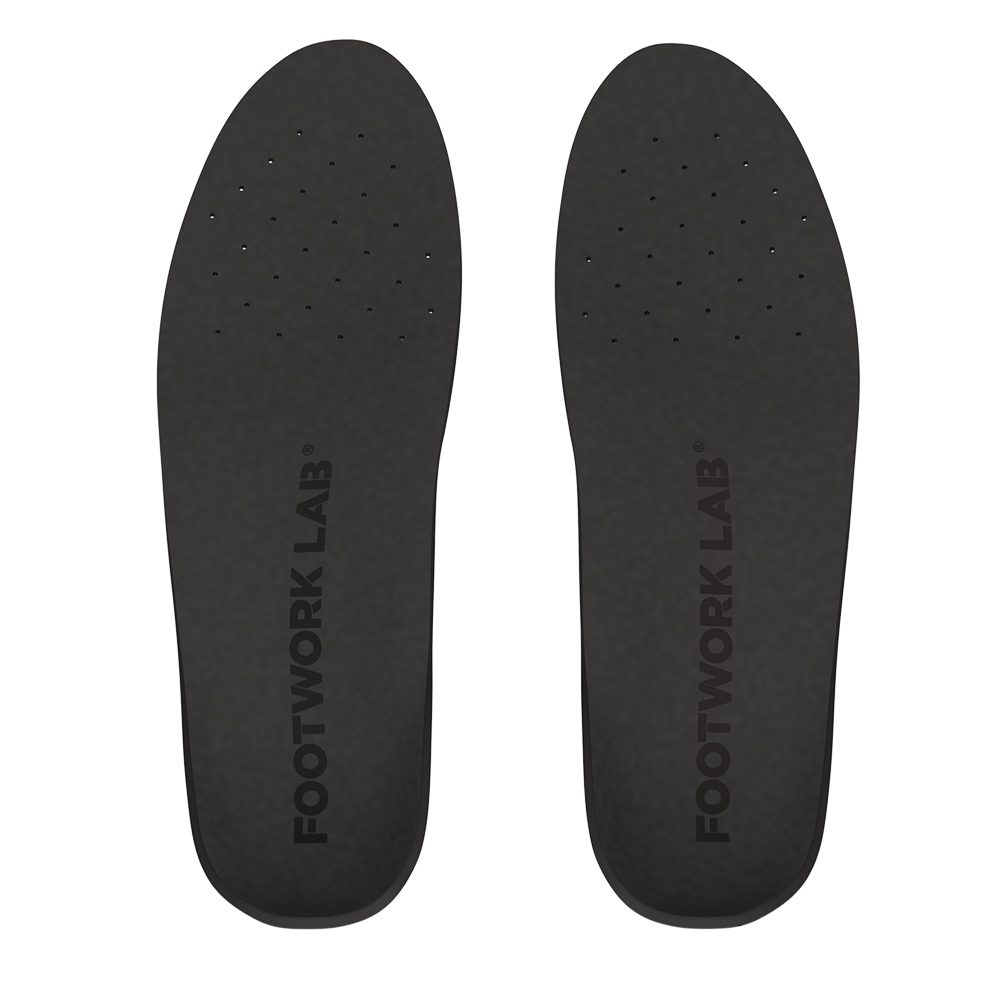
The vocabulary used with a decorator decides what he expects from the appointment. Words like support, alignment and load distribution describe what a build actually does: they hold the arch through static work, they keep the foot organised inside a stiff boot, and they move standing load toward the parts of the foot that have been idling while the forefoot did everything. Those words are safe because they are mechanical. They describe the object, not the outcome.
The vocabulary of repair is different, and it is not yours to offer. Nothing fitted into a boot corrects nineteen years of ladders, and a customer told that it does comes back in a month disappointed and out of patience. The honest framing stays the same in every room: the equipment produced a measurement; a qualified professional interpreted it; the build supports and distributes; how the feet actually feel by Friday is something the review will find out, not something anybody promises on day one.
A sentence worth using, with small local edits: “This build supports the arch and spreads the standing load back toward the heel, so the front of the foot stops carrying the whole ladder alone. What it changes for you by the end of a working week is something we check together at the review.” Then book the review before he leaves the chair, because a review that is never scheduled is a promise that was never kept. Put the review date on the sheet the same day the build is ordered, so the two entries travel together and neither depends on anybody’s memory.
Frequently asked questions
Why do decorators feel it most on the ladder rather than the floor?
Ladder work removes the rhythm of normal walking. Stance becomes a long static hold on a narrow edge, the forefoot and toe flexors do the gripping, and the heels contribute very little. Hours of concentrated static load under the metatarsal heads explain a forefoot that burns after a shift the customer describes as mostly standing.
Should the build go into the work boots or the everyday shoes?
Into the boots that do the damage, as a first step. Ask how the working hours split between ladders and floor, and which pair gets worn on more days than not. If the same build needs to travel between work and weekend footwear, that requirement changes the shape and depth discussion before anything is made.
Can I assess a ladder stance without a ladder?
Not safely, and not usefully. The honest approximation is a standing capture with the weight rolled forward and one foot slightly raised, plus a normal walking capture for the floor work. The conversation about the working day carries the rest, which is one reason the four intake questions matter so much.
What do wear marks on old insoles actually tell me?
Where the load has really been going: a forefoot concentration with a barely marked heel points to static front-of-foot loading, one-sided wear points to a lead-foot habit, and rolled edges point to sliding inside the boot. Compare the wear against the fresh record; agreement raises confidence, disagreement flags something worth resolving deliberately.
How often should a working build be reviewed?
At the interval you would use for any heavy occupational use, and sooner if the boot lining starts compressing again or the customer reports the support feeling flat. Trade customers wear equipment faster than office customers, and the review is where honest expectations get checked against what actually happened.
Do both feet usually need the same build?
Not necessarily. Most ladder workers have a lead foot and a trail foot, and the two can disagree in the record. Each foot can be assessed and built on its own evidence rather than averaged into one symmetrical answer that belongs to neither.
What do I tell the customer the build will do?
Describe the mechanics: support for the arch, alignment inside a stiff boot, load distribution away from the overworked forefoot. Do not promise how the feet will feel by a particular date. The record is a measurement, interpretation belongs to the qualified professional, and the scheduled review is where outcomes are actually discussed.
What we would do next
Add one line to your intake sheet this week, above the signature line: hours on ladders per working day. It takes the customer ten seconds to answer and it reframes everything after it — the boots he brings, the capture order you choose, the vocabulary you use at the end. Trade customers who hear the question asked routinely tend to volunteer the rest of the working day unprompted, including the parts they assumed nobody would care about.
The same logic stretches well past decorators. Landscapers spend their days on slopes and uneven ground (Nothing Underfoot Is Level: Insoles for Landscapers and Groundskeepers), and postal rounds punish feet with miles of pavement in all weather (Six Miles of Pavement, Rain Included: Insoles for Postal Rounds). Every trade has its own version of the rung — the surface that concentrates load where walking would spread it — and the intake line is the cheapest way to find each customer’s version early.
One question back to the readers who run these rooms: when a decorator tells you his feet only complain on the way down the ladder, what do you actually write on the sheet — and has that line ever changed the build you went on to make?
This article is intended for professional and educational reference. It is not medical advice. Foot assessment equipment produces measurements and images; clinical interpretation and any decision about care remain the responsibility of a qualified professional. Certification scope is limited to the documentation we hold: European Union certification and ISO quality system certification.