
The new operator’s sixth capture of the morning is not the same procedure as their first, and nobody has told them. The equipment behaved identically all morning. The customer placed their feet, the record was taken, the screen filled with the usual map. What changed lives entirely in the operator: which words were used before the capture, whether the stance was corrected or recorded, how long the customer was left to settle, whether the plate was checked first. The new operator cannot see these differences yet. Their trainer, watching from the back of the room, can see all of them.
Every clinic, retail store and screening service that adds foot assessment to its offering runs into the same arithmetic: the equipment is ready in an afternoon, and the operator takes longer. The gap between a trained operator and an experienced one is not knowledge of the machine — it is a set of habits that make one record comparable with the next, and those habits are invisible until someone writes them down. This article describes what experienced hands do differently by the hundredth record, what a fair record means before it means anything else, and a training sequence that shortens the gap on purpose instead of leaving it to time.
The equipment is ready in an afternoon; the operator takes longer
The asymmetry is worth naming because it surprises every new buyer of a foot assessment service. Setup is genuinely quick: the device arrives tested, connects, and walks the team through a first capture within hours. A new operator can produce a complete-looking record on day one. That is precisely the trap — the record looks finished, so everyone assumes the job is learned, and the service opens with operators who can run the machine but not yet the procedure around it.
What the machine does not teach is everything on either side of the capture. What to say while the customer takes off their shoes. How to let the customer place their own feet rather than placing them yourself. When a record deserves a second look and when it deserves a redo. How to keep the tenth customer’s experience identical to the second’s when the queue is growing. None of these is a machine skill; all of them decide whether the record means anything a colleague could work with a week later.
The distinction matters because the product of this service is not the map on the screen — it is the record’s usefulness over time. A single beautiful capture proves the equipment works. A series of captures, taken the same way across days and operators, is what lets anyone compare, follow up, or send a file to a partner clinic and have it understood. The machine supplies the first; only operator consistency supplies the second.
Which is why training deserves the same seriousness as the purchase itself. A team that budgets carefully for the device and casually for the operator has spent its money on the smaller half of the system — and will discover the difference in month two, when the follow-up records start disagreeing with the originals in ways no one can explain.
What changes between the first record and the hundredth
Watch a new operator across their first hundred captures and the drift has a predictable shape. The early captures are slow and careful because everything is unfamiliar; the customer gets plenty of time, the instructions are scripted, and the operator checks the setup visibly before every record. Then speed arrives — usually around the second week — and with it the first shortcuts. The pre-capture script shortens. The stance gets a helpful nudge. The plate check becomes a glance. Nothing dramatic happens, no record is obviously wrong, and this is why the drift survives: each shortcut looks harmless at the scale of one capture.
The second change is subtler and more important: the operator starts editing reality. A new operator records what the customer does; an untrained-quick operator records what the customer does after being adjusted into a tidier stance. The intention is good — the tidied stance looks better on screen — but the record has quietly stopped being a measurement of the customer’s own pattern and become a measurement of the operator’s preference. A week later, nobody can say which captures were edited, and the whole series carries the asterisk.
The third change runs in the opposite direction and is equally predictable: confidence in reading results arrives before confidence in taking them. New operators start narrating what the map shows long before they have the grounding to interpret it. This is the boundary every team has to hold deliberately — the equipment produces measurements and images; explaining what they mean, and any decision about what happens next for the customer, belongs to a qualified professional. A new operator who describes pictures is doing their job; one who starts diagnosing from them is doing someone else’s.
Recognising these three curves — speed, editing, overreach — is what separates a training plan from an apprenticeship. Time alone produces all three; only deliberate training decides which direction each one settles in.
What a fair record means first
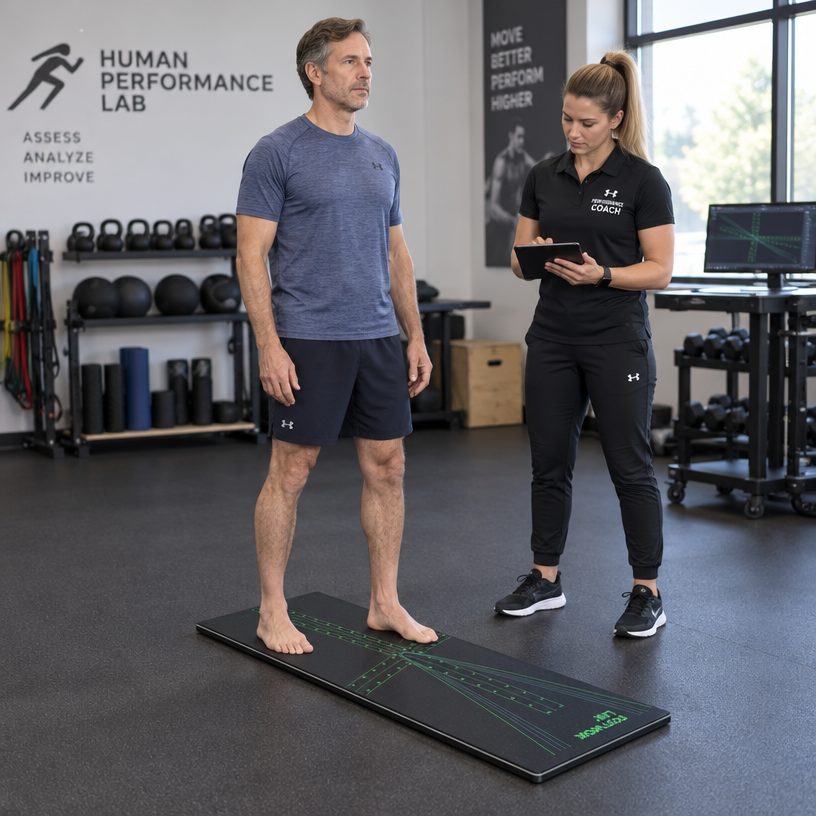
Before any training plan, the team needs one sentence it can point at: a fair record is one that shows what this customer’s feet actually do, taken the same way every time. Everything else is commentary. The sentence sounds obvious and is violated constantly, not through carelessness but through a dozen small, kind impulses — steadying a wobbling customer, suggesting a wider stance, tapping a heel into a neater line. Each one feels like service. Each one edits the record.
Fairness has three testable parts, and a trainer can check each one directly. First, is the capture area in its reference state — clean, marks in place, setup matching the procedure? Second, did the customer place their feet themselves, without steering, and settle before the record started? Third, would this capture be indistinguishable in method from the one taken an hour ago — same words, same waiting, same everything except the customer? A record that passes all three is fair; one that fails any of them is still a picture, but it is no longer a measurement.
The comparison test makes fairness concrete for trainees: the same customer, captured twice in one afternoon by the same operator, should produce records that agree. When they do not, one of the three parts failed, and the trainer’s job is to name which. This test is also the fastest confidence-builder a new operator ever gets — it converts the abstract idea of consistency into something they produced themselves and can see.
Fairness also has a customer-facing face, and it is worth teaching deliberately: the operator’s script is the fairness. The same first sentences, the same pause, the same silence while the customer settles — repeated for every customer — is what makes the queue feel calm and the records comparable at the same time. Customers do not experience the procedure as neutral; they experience the operator’s consistency as it.
A training sequence that shortens the gap
The gap between a trained operator and an experienced one can be shortened on purpose, and the sequence below compresses what usually takes months of accident into roughly two deliberate weeks. It assumes the trainee has already run the equipment once with supervision.
Days one and two: script and setup. The trainee learns the pre-capture script word for word — what is said while shoes come off, what is said before the customer steps on, what is said while they settle — and the capture-area reset as a written checklist, not a habit to absorb by watching. No interpretation of results yet; the trainee is explicitly told the reading comes later, from the professional.
Days three and four: the comparison test. The trainee captures the same volunteer twice, compares, and names the differences themselves before the trainer does. Repeat until the two records agree. This one exercise teaches more than any lecture, because the trainee discovers the drift in their own hands and connects it to their own shortcuts on the spot. Days five to ten: supervised volume. Real customers, with the trainer behind the room, watching for the three predictable curves — speed, editing, overreach — and correcting them the same day they appear.
Then the habits that keep it: a weekly spot-check in which one customer’s record is compared with a previous one; a monthly review where the trainer watches three captures end to end; and a fixed rule for the interpretation boundary, repeated until it is boring. The equipment’s own support channels take some of the load here — remote assistance when something behaves unexpectedly, and over-the-air updates to connected units — but no support channel can see the operator’s habits, which is what the reviews are for.
The sequence costs two weeks and produces an operator whose tenth capture is method-identical to their thousandth. The alternative — time and luck — produces the same result eventually, somewhere between the hundredth and the five hundredth record, with a series of quietly inconsistent records on the way.
Teaching the boundary between measuring and reading
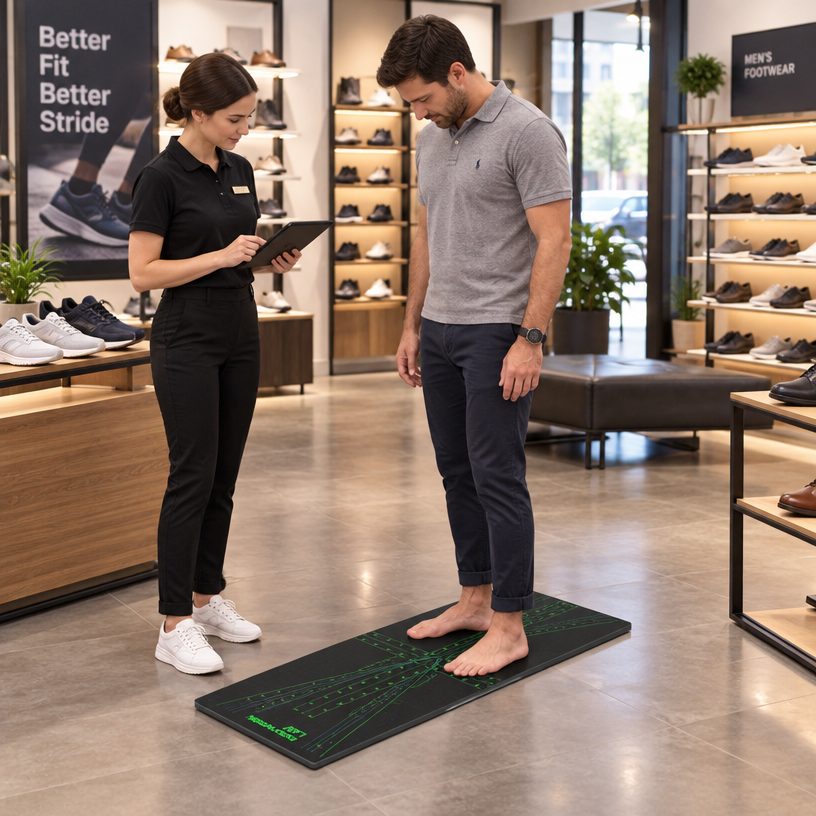
Of all the habits a training sequence has to install, the interpretation boundary is the one that needs teaching most deliberately, because everything else in the trainee’s instincts pushes the other way. A person drawn to this work is drawn to explaining things. The map on the screen is fascinating, the customer is asking what it means, and the trainee knows enough to say something plausible. Every one of those pressures points across the line — and the line is this: the equipment produces measurements and images of how load distributes; explaining what they mean for this customer, and any decision about what happens next, belongs to a qualified professional.
The training move that works is giving the trainee a vocabulary for the safe side of the line, rather than a rule about silence. Describing is allowed and encouraged: where load concentrates, how the two feet compare, how the standing pattern differs from the loaded one, what changed between this record and the previous visit. Interpreting is not: what the pattern means, whether it explains the customer’s complaint, what should be done about it. The distinction is teachable in an afternoon because the vocabulary is different — descriptions use measurement words, interpretations use story words — and the trainer can correct it the moment it crosses.
Scripts help here the way they help everywhere else in the procedure. A fixed sentence for the end of a capture — the record goes to the professional, who will read it against your history and explain what it shows — gives the trainee a complete, honest answer to the customer’s inevitable question, and protects them from improvising in the gap. Customers are not short-changed; a plain description of their own record, followed later by a professional’s reading, is a better experience than an eager half-explanation delivered at the capture station.
The boundary also has a self-protective function worth stating to trainees plainly, because it answers the question they are all quietly asking: an operator who describes stays inside their competence, and their records stay usable; an operator who diagnoses has stepped into someone else’s licence, and the service inherits the consequences. The vocabulary of measurement is not a limitation on the trainee’s career; it is the ground the whole service stands on, and the professional relationship around it works only while every hand that touches the record respects where it ends.
The habits experienced operators share
Watch experienced operators across different clinics and the same handful of habits appears, independent of equipment and setting. They are worth naming explicitly, because each one is teachable in an afternoon and none of them is obvious to a trainee.
First: they script the start. The first sentences of every appointment are the same, and the customer settles in the same silence, every time. Second: they never place the customer’s feet. The stance belongs to the customer; the marks say where, and the operator’s hands stay off until the record is done. Third: they reset visibly. The capture-area check happens where the customer can see it, which does double duty as hygiene assurance and as the operator’s own reset ritual between cases.
Fourth: they decide redo versus review fast. A capture with a placement problem gets restarted immediately, without apology or hesitation, because they know a redone capture costs less than a rescued one. The decision criteria are internalised — feet outside the area, steering during the capture, any doubt about the setup at the start — so the operator’s judgement is spent on interpretation-worthy questions rather than on whether to trust the record.
Fifth, and least expected: experienced operators talk less about the results than new ones do. They describe what the record shows — how load distributes, where pressure concentrates — in exactly that language, and hand interpretation to the professional. The habit protects the boundary that keeps a screening service legitimate, and it also protects the customer conversation: a measurement described plainly is more reassuring than an eager explanation of what it might mean.
For a trainer, this list doubles as the observation sheet. Five habits, watchable in three captures, correctable the same day. A new operator who has all five by the end of the training sequence is, in every way that affects the record, an experienced operator — the calendar simply has not caught up yet.
Making the standard survive staff turnover
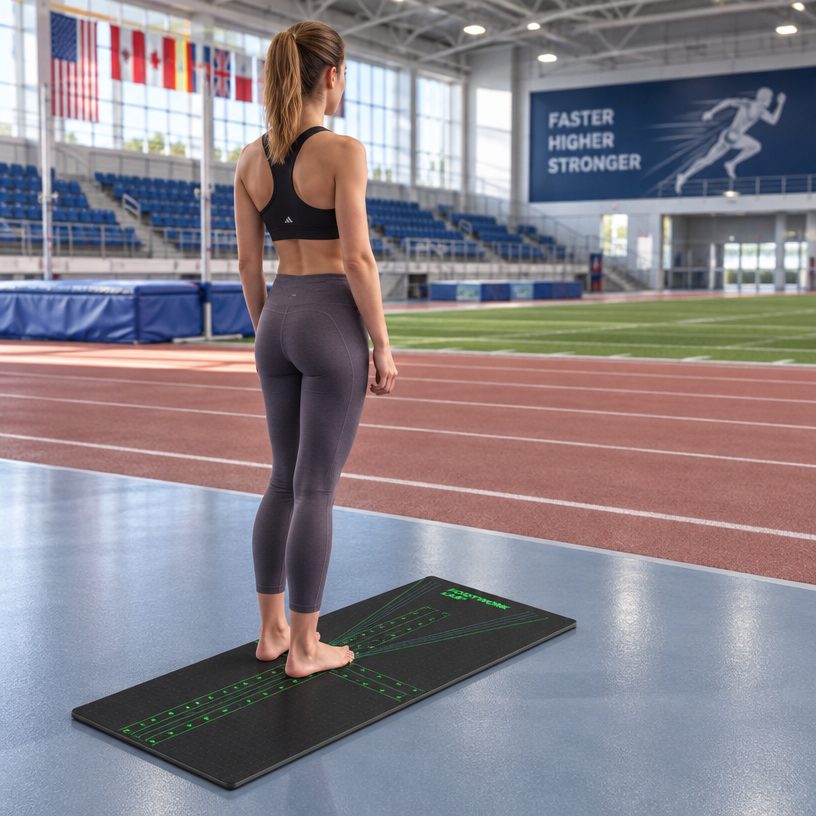
Everything above lives in people, and people leave. The final stage of any training plan is moving the standard from the operator’s habits into the station’s furniture, so that the next hire starts from the written word rather than from whatever the departing operator remembered to pass on. Four artefacts do most of the work: the pre-capture script, the capture-area reset checklist, the redo criteria, and the observation sheet for reviews.
Write them once, as the team’s actual practice — not as an idealised procedure nobody follows — and store them where the station is, not where the documents live. A script taped at eye level outperforms one in a shared drive, and a checklist on the wall trains the next operator during week one without anyone supervising. When practice improves, the artefacts get revised; the version on the wall is always the current truth, which is what makes it trustworthy.
The reviews keep the standard alive after the training ends. A weekly record comparison, a monthly observed capture, and a quarterly read of the wall documents against what people actually do — an hour a month in total, and it catches drift while the cause is still findable. The reviews are also how the equipment’s own reliability gets checked against the team’s: if records start disagreeing, the wall documents say whether the procedure held, which cleanly separates operator drift from anything worth a support call. Teams that work across several stations run identical documents at all of them, so a record taken at one station means the same thing as a record taken at another.
Turnover then becomes an event the system absorbs instead of an event the system fears. The next operator inherits the script, the checklist, the criteria and the review rhythm, reaches the experienced-operator habits in the same two weeks, and the service’s records stay comparable across the handover. That continuity — not any single capture — is what a foot assessment service actually sells, and it is built entirely out of training decisions that cost nothing to write down.
Frequently asked questions
How long does it take to train a new foot assessment operator?
The equipment takes an afternoon; a deliberate two-week sequence covers the procedure: script and setup on days one and two, the comparison test on days three and four, then supervised volume through day ten. Leaving it to time alone usually stretches the same learning across months of inconsistent records.
What is the most common mistake new operators make?
Editing reality: nudging the customer into a tidier stance or correcting posture during the capture. The intention is good, but the record stops measuring the customer’s own pattern and starts measuring the operator’s preference — and weeks later nobody can say which captures were edited.
How do you check whether an operator’s records are consistent?
Capture the same customer twice in one afternoon and compare. Records taken the same way should agree; where they disagree, one of the three fairness parts failed — the capture area was not in reference state, the customer did not place their own feet, or the method changed between captures.
Should a new operator explain the results to customers?
No. The equipment produces measurements and images; interpretation and any decision about care belong to a qualified professional. A new operator describes what the record shows in measurement language and hands the reading to the professional — the boundary keeps the service legitimate and the customer conversation honest.
When should a capture be redone rather than reviewed?
Placement problems restart immediately: feet outside the capture area, steering during the capture, or any doubt about the setup at the start. A redone capture costs less than a rescued one, and far less than explaining a compromised record to a colleague two weeks later.
What habits separate experienced operators from new ones?
Five: a scripted start for every customer, never placing the customer’s feet, a visible reset of the capture area between cases, fast redo-versus-review decisions, and describing results in measurement language rather than interpreting them. All five are teachable in an afternoon and observable in three captures.
How does a team keep capture standards alive through staff turnover?
By moving the standard into the station’s furniture: a written pre-capture script, a reset checklist, redo criteria and an observation sheet, taped at the station and revised whenever practice improves. Weekly record comparisons and monthly observed captures keep the documents honest, so the next hire inherits the system, not the memory.
What we would do next
If the team currently trains by watching, tomorrow morning is enough to start shortening the gap: write down the pre-capture script and the capture-area checklist exactly as your best operator actually does them, tape both at the station, and run the comparison test with your newest hire this week — same customer, twice, and let the trainee name the differences. If records still disagree after the test, the wall documents will tell you whether the procedure or the operator drifted, and both answers are fixable in an afternoon.
Two adjacent reads on this site: four retakes in a morning, on the usual reasons a capture gets redone, and let them pick the pace, on why the customer’s own speed makes a fairer record. Both extend the same argument this article keeps circling: a fair record is a procedure before it is a picture, and procedures can be written down.
The question we would leave with colleagues: think of the last capture at your place that had to be redone — could a new operator, handed only your wall documents, have taken it right the first time? And if the honest answer is no, which document is missing?
This article is intended for professional and educational reference. It is not medical advice. Foot assessment equipment produces measurements and images; clinical interpretation and any decision about care remain the responsibility of a qualified professional. Certification scope is limited to the documentation we hold: European Union certification and ISO quality system certification.