
儿童可以使用扁平足矫形鞋垫吗(Can Children Use Flat Foot Orthotics?)
Key Takeaways
- Yes, children can use flat foot orthotics, but they are appropriate only when there is a clinical reason—not simply because a child has a flat-looking arch.
- Flexible, painless flatfoot is common in childhood and is often managed with observation, appropriate footwear, and activity rather than routine orthotics.
- The decision should be based on symptoms, function, foot flexibility, and a proper assessment that distinguishes flexible flatfoot from rigid or progressive conditions.
- Children’s orthotics need growth allowance, appropriate arch support, a stable heel cup, and regular review; adult insoles scaled down are not a good substitute.
- Orthotics are generally a support tool, not a cure. They may improve comfort and load distribution, but they do not guarantee permanent arch change.
1. Introduction
Flat feet are common in children, and parents often notice a low or absent arch, uneven shoe wear, or a child who complains of tired legs after walking. A search for “can children use flat foot orthotics” usually comes from a practical concern: Is an insole safe for a growing foot, and will it help—or is it unnecessary?
The answer is not a simple yes or no. In children, foot shape changes with growth, and many flat feet are flexible and painless. Others are stiff, painful, or associated with a condition that needs medical review. This article explains when pediatric flat foot orthotics may be considered, how clinicians decide, what a child-specific device should look like, and which situations should prompt professional assessment.
2. The Short Answer: Yes, but Not for Every Child
Children can use flat foot orthotics when there is a clear clinical indication. The key question is not “Does the child have a flat arch?” but “Is the flat foot causing pain, functional limitation, or a mechanical problem that orthotic support can reasonably address?”
Flatfoot is a foot shape, not a diagnosis by itself. In clinical practice, the first distinction is between flexible and rigid flatfoot:
- Flexible flatfoot: The arch appears when the child is non-weight-bearing, stands on tiptoe, or performs a Jack test—passive extension of the big toe that should raise the medial arch. This pattern is common and often asymptomatic.
- Rigid flatfoot: The arch remains low even when the foot is off the ground or the toe is extended. This is less common and warrants medical assessment because it may be associated with structural, inflammatory, or neurological conditions.
For a child with flexible flatfoot, no pain, and normal play, orthotics are not automatically needed. Observation, well-fitting shoes, and normal physical activity are often reasonable. For a child with activity-related arch or heel pain, early fatigue, ankle instability, or noticeable gait changes, a trial of orthotic support may be considered after assessment.
The role of the orthotic matters. A pediatric flat foot orthotic is usually intended to support the arch, redistribute pressure, improve comfort, and influence alignment during gait. It should not be presented as a device that “builds” an arch or permanently corrects foot structure.
3. Assessment: Which Children Are More Likely to Benefit?
A child’s flat foot should be assessed in standing and sitting positions, with shoes off, and during walking. Clinicians commonly look at arch height, heel position, forefoot alignment, joint mobility, muscle strength, and gait symmetry. The Jack test is useful for checking flexibility. Tenderness over the medial arch, heel, or tibialis posterior tendon area may point to a symptomatic load problem rather than a purely developmental shape.
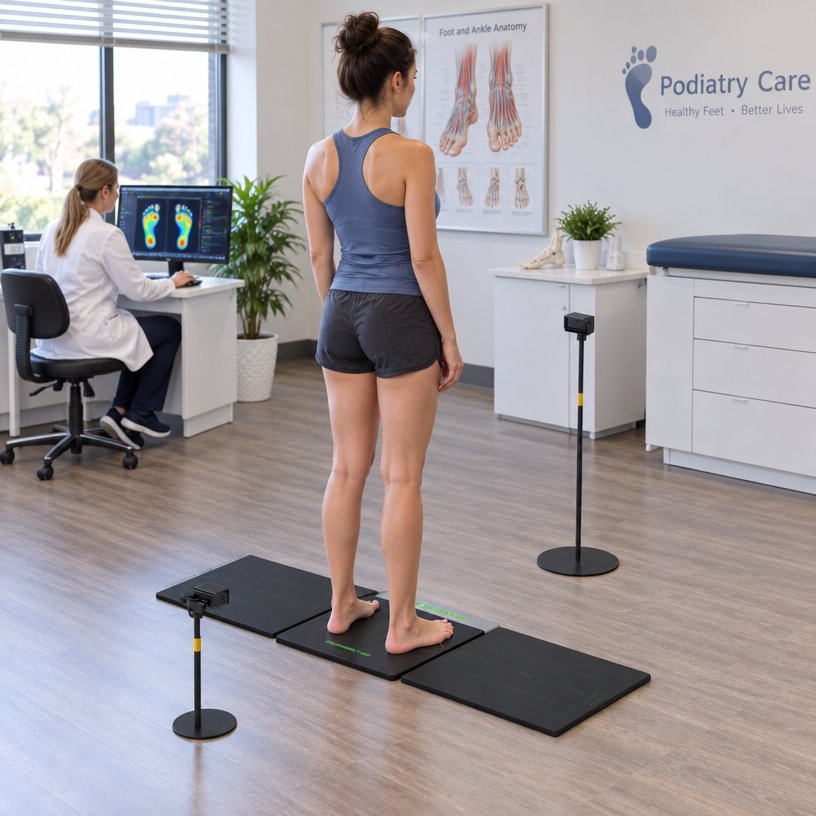
Instrumented assessment can add detail. Plantar pressure mapping shows where load concentrates during standing and walking. A 3D foot scan can measure foot length, width, arch height, and ankle circumference. Gait video or motion analysis can reveal asymmetry, toe-out gait, or ankle instability that a static exam may miss.
The arch index is one useful reference. It is calculated as midfoot contact area divided by the whole foot area, excluding the toes. In general:
| Arch index range | Typical interpretation |
|---|---|
| 0.21–0.26 | Normal arch |
| 0.26–0.30 | Mild flatfoot |
| Greater than 0.30 | Severe flatfoot |
These ranges support assessment; they do not replace it. A child can have a low arch index and no symptoms, or a moderate arch index with significant pain. Symptoms, flexibility, and function should drive the decision.
Red flags deserve medical review rather than a simple insole trial: a rigid or painful flatfoot, progressive deformity, marked asymmetry, frequent falls, toe-walking that persists, ankle instability, or signs of a neurological or connective-tissue condition. In more severe cases, a clinician may consider an ankle-foot orthosis or other brace rather than a standard insole.
4. Design and Fit: What a Child’s Orthotic Should Look Like
A child’s orthotic should not be an adult device trimmed to size. Growing feet need room, comfort, and a design that supports rather than forces the arch. Key design parameters include longitudinal arch height, heel cup depth, medial or lateral wedge angle, and—when indicated—a metatarsal pad.
Practical fit points include:
- Moderate arch support: Excessive correction can cause pressure and discomfort. The goal is controlled support, not a rigid, high arch.
- Stable heel cup: This helps control rearfoot position without gripping the heel too tightly.
- Growth allowance: The device should fit the foot and the shoe without crowding the toes. Removable or adjustable designs can be useful during rapid growth.
- Appropriate materials: EVA, thermoplastic, or composite materials may be used depending on the child’s weight, activity level, and sensitivity. Cushioning can improve tolerance.
- Shoe compatibility: A stable heel counter, removable insole, and enough toe box room matter. A good orthotic in a poor shoe often performs poorly.
- Gradual introduction: Start with short wearing periods and increase as tolerated. If pain increases, the device or fit should be reviewed.
Children’s feet change, so follow-up matters. A device that fit well six months ago may become uncomfortable or ineffective. Review fit regularly, especially during rapid growth periods, and reassess symptoms rather than continuing a device by habit.
5. Key Comparison and Practical Precautions
| Situation | What it may suggest | Are orthotics first-line? | Practical next step |
|---|---|---|---|
| Flexible flatfoot, no pain, normal activity | Common developmental pattern | Usually no | Observe, choose supportive shoes, review if symptoms appear |
| Flexible flatfoot with activity-related pain or fatigue | Mechanical load or poor endurance | Possibly, after assessment | Consider a trial with clear goals and follow-up |
| Rigid, painful, or stiff flatfoot | Structural or inflammatory condition | Not as a standalone first step | Medical assessment before prolonged orthotic use |
| Asymmetric or progressive flatfoot | Needs diagnosis | Not automatically | Prompt clinical review |
| Neuromuscular or severe deformity | Altered motor control or alignment | Often bracing or specialist orthotic care | Specialist assessment, possibly AFO |
Practical precautions are important. Do not use orthotics to “fix” a painless flexible flatfoot without a functional reason. Do not ignore persistent pain, stiffness, or a worsening deformity. Do not rely on online insoles alone for a child with red flags. And do not expect an insole to replace strength, activity, footwear choice, or medical care when those are needed.
6. FAQ
Q1. Can toddlers use flat foot orthotics?
Toddlers often have a low arch because of normal fat pads and ligamentous laxity. Unless there is pain, a rigid deformity, delayed development, or a specific medical condition, routine orthotics are not usually the first step. A clinician can assess whether the foot is flexible and whether symptoms warrant support.
Q2. Do orthotics cure flat feet in children?
No. Orthotics are generally used to support the foot, redistribute pressure, and improve comfort or function during gait. Some children may experience symptom improvement, but permanent structural change is not guaranteed. The treatment plan should match the child’s symptoms and functional needs.
Q3. How often should a child’s orthotic be reviewed?
Review depends on age, growth rate, symptoms, and device type. During rapid growth, fit should be checked regularly—often every few months—and sooner if the child reports pain, the shoe feels tight, or walking patterns change.
Q4. Are over-the-counter insoles enough?
For mild, intermittent comfort needs, a well-fitting over-the-counter insole may be reasonable. For persistent pain, rigid flatfoot, asymmetry, or functional limitation, a proper assessment is more appropriate. Custom or adjustable pediatric orthotics may be considered when standard insoles do not fit the foot or the clinical need.
7. Conclusion
Children can use flat foot orthotics, but the decision should be selective and clinically grounded. Flexible, painless flatfoot often needs observation and good footwear rather than routine intervention. Orthotics are more reasonable when a child has activity-related pain, fatigue, gait changes, or a mechanical problem that support can address. A child-specific device should fit well, allow growth, avoid excessive correction, and be reviewed over time. If the flatfoot is rigid, painful, asymmetric, or progressive, seek professional assessment before relying on an insole. The practical next step is to match the intervention to the child’s symptoms and function—not to the appearance of the arch alone.