
A foot pressure scanning machine records one of the most useful —
and most over-read — data streams in the assessment world. The plantar pressure map
looks intuitive: colours under a foot, red where load concentrates. Intuition is what makes it
valuable in a consultation, and intuition is also what makes it easy to over-read, because the
map answers narrower questions than most buyers assume. This article covers what static and
dynamic pressure recording genuinely shows, what it does not, and how to place the instrument
in a service without asking it to do another instrument’s job.
FOOTWORK LAB builds pressure assessment hardware at its plant in Ruichang, Jiangxi Province —
running since 2018, on foundations laid when the company was founded in 2014 — including the X5 foot scanner family. We write this from the factory side, for
clinics, retailers and distributors deciding where pressure measurement belongs in their
offer.
A note on why this instrument became central to the trade: unlike observation, which is
skilled but subjective, and unlike shape records, which describe geometry but not behaviour,
the pressure recording turns something invisible — force under the sole — into something a
professional and a customer can look at together. That shared image is why services built on
pressure data communicate well: the customer sees the same recording the professional reads.
The instrument’s commercial history is the history of that image becoming affordable and
reliable, and it is still unfolding.
What the plate records, in plain terms
A pressure scanning machine has a sensing surface where a foot is placed or across which a
person walks. The surface reports how force distributes across its area, moment by moment. In
static stance, the recording shows the standing load pattern: where the heel carries, how the
forefoot shares the work, how the arch region engages. In dynamic passes, the recording extends
through the step: how load arrives at the heel, moves through the midfoot, and pushes off at
the forefoot.
Two views of the same person, and both are worth having. The static map is stable and easy
to explain to a customer standing beside the screen. The dynamic recording is where feet
differ most from their static selves — a stance map can look symmetrical while the walking
passes tell a more textured story. Equipment that records only one of the two views leaves a
measurable gap in the assessment.
That is why our combined systems put the pressure plate and a camera module in one workflow:
the plate records the force story, the camera records the posture and alignment story, and the
report places them side by side. Neither stream replaces the other; together they give a
professional something defensible to read.
Buyers sometimes ask whether the combined workflow complicates the operator’s job. In
practice it simplifies it: one session script covers both streams, the software prompts each
step, and the report assembles itself from what was captured. The alternative — running a
pressure plate and a camera as separate procedures with separate files — doubles the chances of
a missing frame and halves the professional’s confidence when the two views disagree.
Integration is not a feature badge; it is what keeps a busy assessment room honest on its worst
day.
Static recording: the standing picture
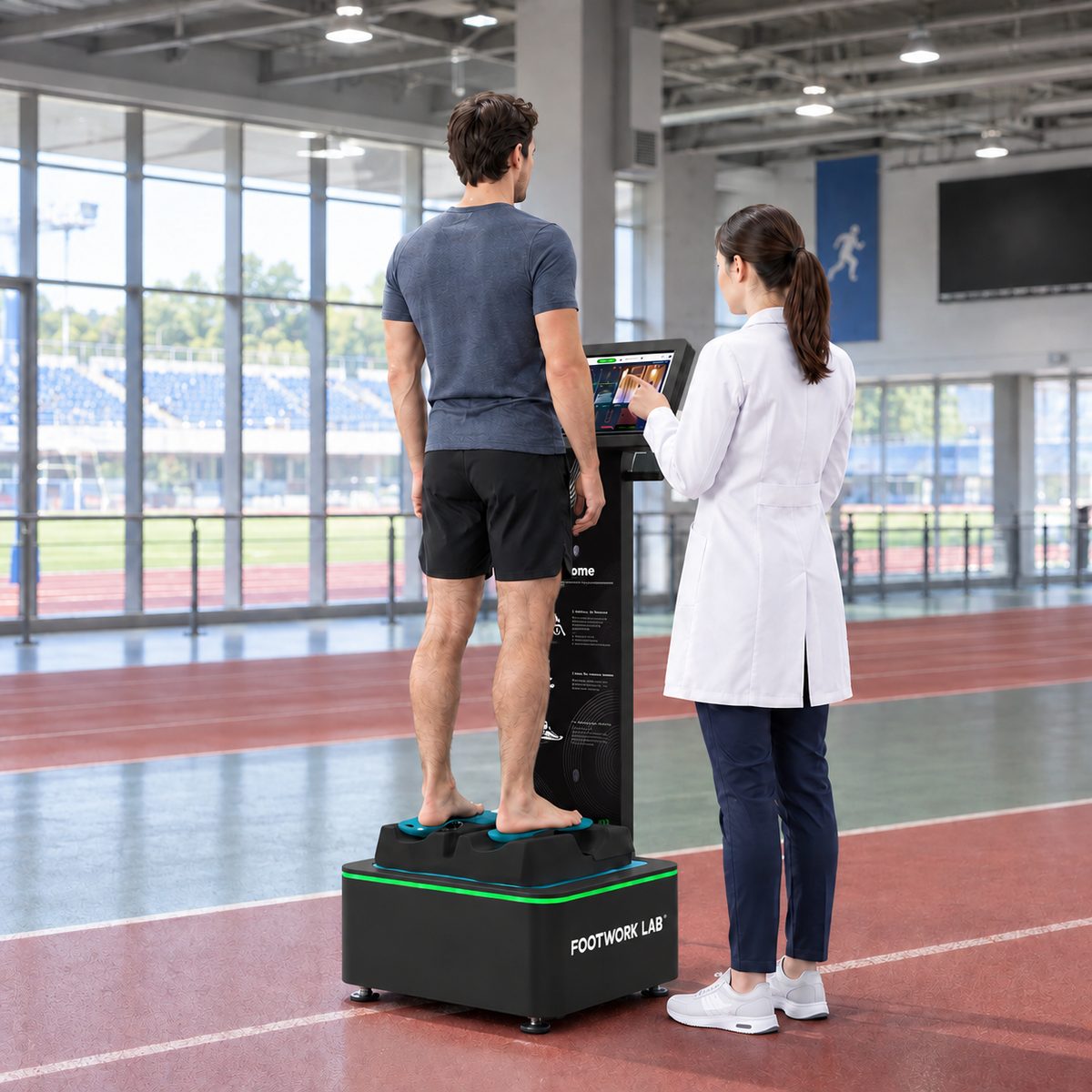
Static capture takes moments and rewards discipline. The person steps onto the plate,
standing naturally; the map forms; done well, the operator confirms quality — full contact, no
leaning on a support, weight even — before the person steps off. The output shows the standing
load pattern, and its most common honest uses are descriptive: showing a customer how their
weight sits when still, establishing a baseline for the file, and anchoring the conversation
that follows the dynamic passes.
Operators sometimes ask how much the static view can vary between recordings of the same
person. The honest answer is: more than buyers expect, and less than skeptics fear. Standing is
a behaviour, and behaviours vary with attention, footwear history and fatigue. The response is
not to chase a single perfect map but to standardise the conditions — the instruction given,
the pause before capture, the confirmation of quality — and to read the static view as the
baseline it is. Two well-captured static maps of the same person will agree far more than two
casually captured ones; the difference is procedure, not physics.
The limits matter as much as the uses. A static map cannot tell you how the person moves. It
cannot tell you why the load sits where it sits — the “why” belongs to professional
interpretation against history and observation. And it is sensitive to posture habits in the
moment: someone braced against a wall produces a different map than someone standing on a bus.
Operators who standardise the instruction — stand naturally, look ahead — get recordings that
compare cleanly across visits.
Dynamic recording: the movement picture
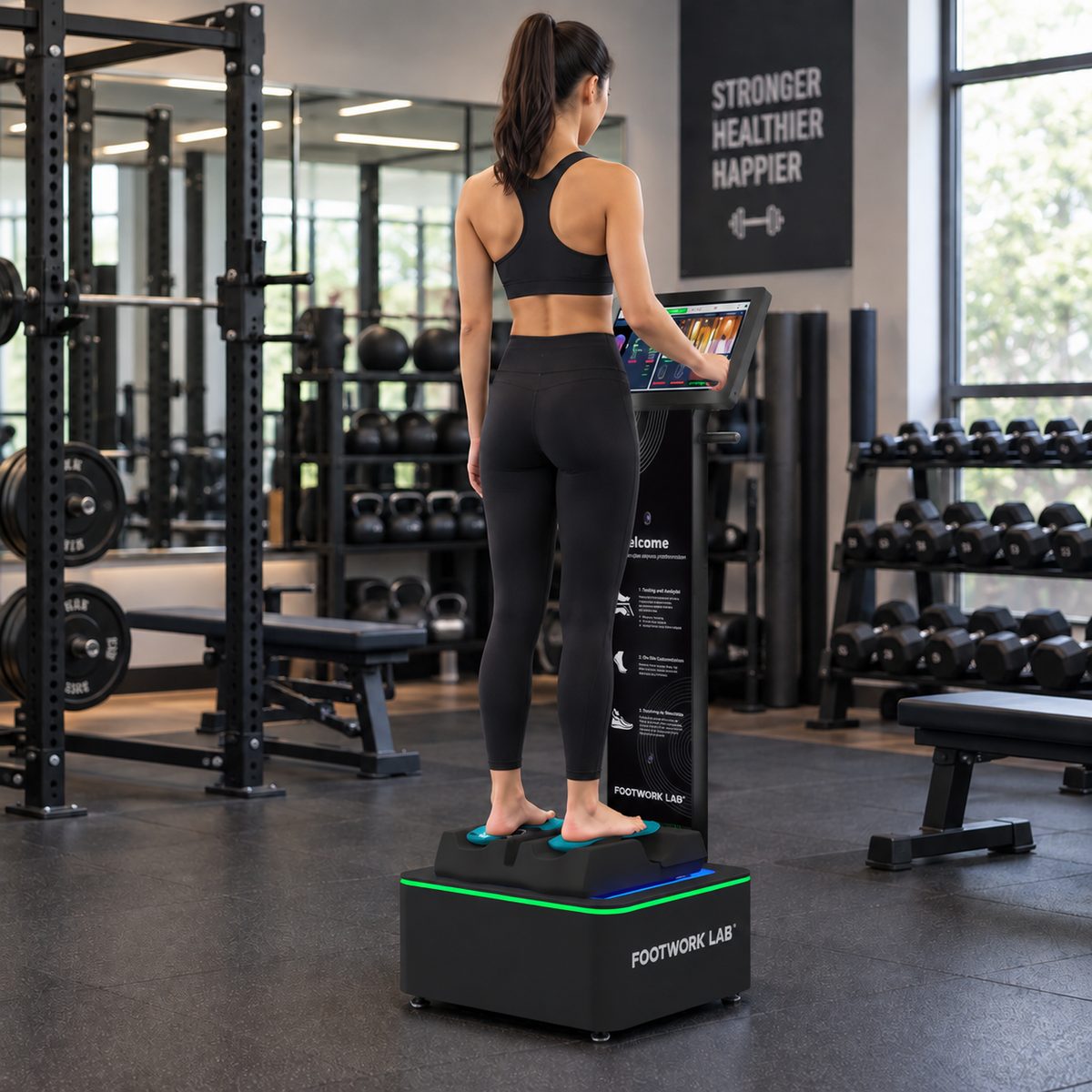
Dynamic capture asks the person to walk across the plate several times, naturally. Each pass
records the sequence of the step — heel contact, midfoot loading, forefoot push-off — and after
a few passes, the operator has repeated samples of the same pattern rather than a single
instance. Repeatability is the point: one pass is an anecdote, several consistent passes are a
recording.
The dynamic view changes what the assessment can describe. Timing questions — where load
arrives first, how it transfers — only exist in movement. Symmetry questions sharpen: a
standing map may look even while the walking passes show the two feet working differently.
For services built around walking, running and occupational load, the dynamic recording is
the core deliverable, and the static map becomes the supporting frame.
Practically, dynamic capture needs space: a few clear steps of approach, a stable plate
position, and a room where a person can walk without choreography. Clinics planning an
installation should measure that path before ordering — it is the difference between clean
passes and sessions full of careful, unnatural stepping.
Walking behaviour adds its own capture considerations. People walk differently when they
know they are being recorded — longer steps, straighter lines, more attention to the plate.
Experienced operators reduce that effect with a simple trick of layout: an approach path that
continues past the plate, so the walk has a destination beyond the measurement. The person
walks to somewhere, and the plate happens to be in the way. It sounds trivial; in practice it
is the difference between passes you can read and passes you must apologise for.
Reading the map without over-reading it
The pressure map’s power and its danger are the same property: it looks like a verdict.
Colours invite conclusions. The disciplined reading keeps three boundaries visible.
First, the map is a recording, not a diagnosis. It describes load distribution for the
person, in the conditions captured. What it means — and what, if anything, to do about it — is
professional interpretation, the province of the qualified practitioner, informed by history
and examination that no plate can perform. Equipment that respects this boundary produces
better services, not weaker ones.
Second, conditions define the claim. A map from barefoot walking on a flat plate describes
barefoot walking on a flat plate. It does not automatically describe the same person in
work boots on concrete, and reports should be quoted with their conditions attached.
Third, single sessions are snapshots. The value compounds across visits: baseline, follow-up,
comparison over time. Services that bring customers back for re-measurement get more from the
same machine than services that measure once — and the customer sees the difference.
Files also gain from a small annotation habit: a line of context per session — footwear that
day, activity pattern, anything the professional noticed. Ten seconds of typing turns a stored
map from an image into a record, and six months later that line is often the difference between
a useful comparison and a guess. Services that annotate consistently report that their
follow-up conversations are shorter and sharper, because the file answers the questions memory
would otherwise fumble.
The re-measurement habit deserves commercial attention as well as methodological value.
Services that schedule follow-up recording — at an interval that suits their programme — create
a return visit with genuine content: the comparison, not the hardware, is the event. Customers
experience continuity rather than transaction, and the service builds a longitudinal file that
becomes more valuable — professionally and commercially — with every visit. The equipment was
bought once; the file it feeds is the compounding asset.
Where a pressure machine fits — and where it does not
The instrument earns its place in services that need the load story: clinics running insole
programs, where pressure data is the specification input; retail fitting operations adding a
professional layer to shoe selection; rehabilitation and sports settings tracking how load
patterns present across a programme; occupational assessments where standing and walking
conditions are the job.
It does not replace a contour or dimension record. If your deliverable is an object that must
match the foot’s surface geometry — a last, a dimensional fit record — pressure data is not
that record, and a shape-capture instrument is the right tool. It also does not replace
observation: the camera module exists in our systems precisely because force data alone cannot
show how a limb positions itself. Buyers who match the instrument to the deliverable are
finished choosing in minutes; buyers who ask one machine to do every job are starting a
disappointment.
Where does the camera module sit in all this? Precisely at the boundary the plate cannot
cross. Force data is silent about why the load sits where it sits — whether the person’s
alignment, their habit, or their footwear is doing the shaping. The posture and alignment frames
do not answer the why either, but they show the configuration that accompanied the recording,
which is what a professional needs in order to interpret it responsibly. Buyers comparing
systems should evaluate the two streams as a pair: how the software presents them together is a
fair proxy for how seriously the manufacturer thought about reading, not just recording.
Choosing a machine: what to test beyond the colours
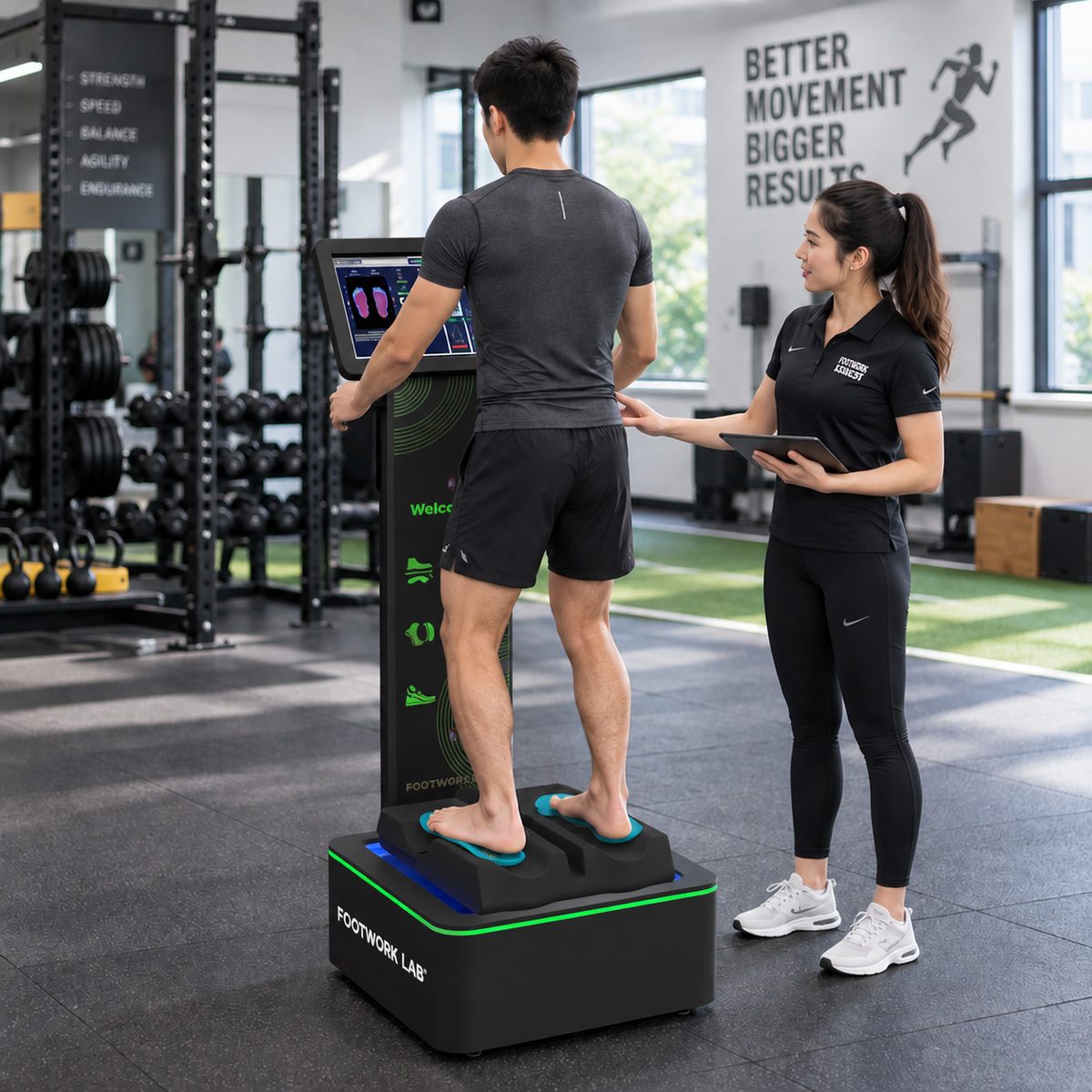
Every supplier’s screenshots look similar, so evaluate the machine behind the picture. How
does the software guide the operator through a session — static, then dynamic, then posture —
and confirm capture quality before the person leaves the plate? How are repeated dynamic
passes handled: presented individually, or consolidated? How does the report read to a
customer who is not a specialist, and to the professional who is? Can layouts be adapted —
which is a question about who writes the software, and whether the manufacturer owns it?
Then the operational layer: what testing does each unit pass before dispatch — ours is seven
days in-house, at a production pace of roughly three to five machines per day; what warranty
covers the year after delivery — twelve months on machines, spare parts free for non-human
damage; and what the support channel looks like — a dedicated group with direct engineer
access, remote assistance, over-the-air updates for connected units. A machine is a
multi-year service relationship wearing a hardware costume; buy the relationship, not just the
screenshot.
A word on the economics of the choice, since pressure machines span a wide price range. The
range mostly reflects capability scope — footprint, walkway length, camera integration, software
depth — and the honest way through it is the deliverable question again. A service that needs
stance plus passes plus posture has one set of requirements; a service that needs a portable
stance check has another. Paying for scope you will not use is the common over-buy; buying
below your workflow’s requirements is the common under-buy, and it surfaces later as
workarounds. The comparison table exists precisely to catch both errors before they are
purchased.
Frequently asked questions
What is the difference between static and dynamic pressure recording?
Static recording captures the standing load pattern; dynamic recording captures how load
moves through the step — heel contact, midfoot loading, forefoot push-off — across repeated
walking passes. Both views belong to a complete assessment.
Can a pressure map tell me what is wrong with a foot?
No. The map is a recording of load distribution under specific conditions. Interpreting what
it means, and any decision about care, belongs to a qualified professional.
How many walking passes does a session need?
Enough consistent passes that the operator is reading a pattern rather than an anecdote —
several, captured naturally. Repeatability is what turns passes into a recording.
Does the X5 record posture as well as pressure?
The X5 family pairs pressure capture with a camera module for posture and lower-limb
alignment, so the report places the force story and the alignment story side by side.
Can I order one machine to start?
Yes. Our machine minimum order quantity is one unit, so a service can validate the workflow
before scaling.
What testing and warranty stand behind a unit?
Every unit is tested in-house for seven days before dispatch. Machines carry a twelve-month
warranty covering non-human damage, with free spare parts in scope.
What support follows delivery?
A dedicated WhatsApp group with direct engineer access, remote assistance where the setting
allows, and over-the-air updates for connected units.
Finally, a note about training, which buyers consistently under-request and later wish they
had ordered. Capture discipline — stance quality, pass consistency, posture framing — is a
short, learnable syllabus, but it does not transfer by brochure. Ask what onboarding the
supplier includes, whether sessions can be recorded for review, and how refresher support works
once the team has real volume. A modest investment at installation prevents the slow drift that
turns a capable instrument into an inconsistent one.
What we would do next
If the load story is what your service needs, start with the X5
foot scanner page and compare it against the F2 and FMP
platform for the combined pressure-and-posture workflow; the X3 pressure scanner covers the compact-footprint case.
The technology overview explains the sensing and camera
modules, the pressure mapping guide shows what a recording contains,
and the contact page puts a factory engineer on your questions. For
standing answers on MOQ, warranty and shipping, see the FAQ page.
This article is intended for professional and educational reference.
It is not medical advice. Foot assessment equipment produces measurements and images; clinical
interpretation and any decision about care remain the responsibility of a qualified professional.
Certification scope is limited to the documentation we hold: European Union certification and ISO
quality system certification.