
Recording the sole while someone walks is a different engineering
problem from recording it while someone stands, and recording it while someone runs is a third
problem again. Each step up in speed shortens the time available to capture, changes the
loading that arrives, and increases the sensitivity of the result to how the session was set up.
Teams that understand this before they buy end up with recordings they can compare across sessions
and across people. Teams that do not often end up with a set of images that look impressive and
answer nothing in particular.
FOOTWORK LAB builds dynamic gait platforms as part of our foot assessment range, manufactured at
our own plant in Ruichang, Jiangxi Province, where we have produced since 2018. The
F5-LAB dynamic gait system is the platform in our range
designed for walking and running capture. Most of the conversations we have with buyers about it are
not about sensors at all. They are about the room, the routine, and what the recording is for. This
article covers those three, because they determine whether the platform earns its place.
What walking and running ask of a recording system
The essential difference between walking and running is not intensity. It is the amount of time
the foot spends in contact with the ground, and the fact that the two feet are never in the same
phase of the cycle.
During walking, the contact phase is long and there is a period when both feet are on the ground
at once. During running, contact time shortens considerably and there is a flight phase in which
neither foot is loaded. The loading that arrives is also different in character, arriving faster and
peaking higher, and the sole of the foot meets the surface in a different way.
For a recording system, these differences translate into three requirements. The capture has to
be fast enough to resolve a shortened contact event. The capture area has to cover a stride rather
than a stance. And the recording has to track both feet across a sequence, because a single foot
recorded in isolation cannot describe how the two sides relate to each other.
This is why a standing plate and a walking platform are not interchangeable products with
different prices. They are built to answer different questions, and the platform exists because
movement is where much of the informative loading occurs.
Capture conditions: barefoot, in-shoe and on-platform
Before choosing a configuration, decide the conditions the room will use. This single decision
constrains everything else, and it is far easier to make before purchase than to change afterwards.
Barefoot capture
The foot meets the recording surface directly, which gives an unobstructed view of how load is
distributed through the sole. It is the most common condition for assessment work, and the easiest
to keep consistent between sessions.
In-shoe capture
Where the question concerns what happens inside footwear, the measurement has to be taken where
the loading occurs. This condition tells you about the interaction between foot, insole and shoe,
which is a different question from barefoot loading and cannot be inferred from it.
Platform capture during movement
A platform allows the person to move across the capture area at their natural pace. What matters
here is that the run-up and run-out are long enough for the person to be moving naturally by the
time they cross the recording area, and that the surface does not change underfoot.
The practical rule we give buyers is to choose one condition per routine and keep it. Changing
conditions between sessions destroys comparability, and comparability is where most of the value
sits, because one recording in isolation says far less than the same recording repeated over time.
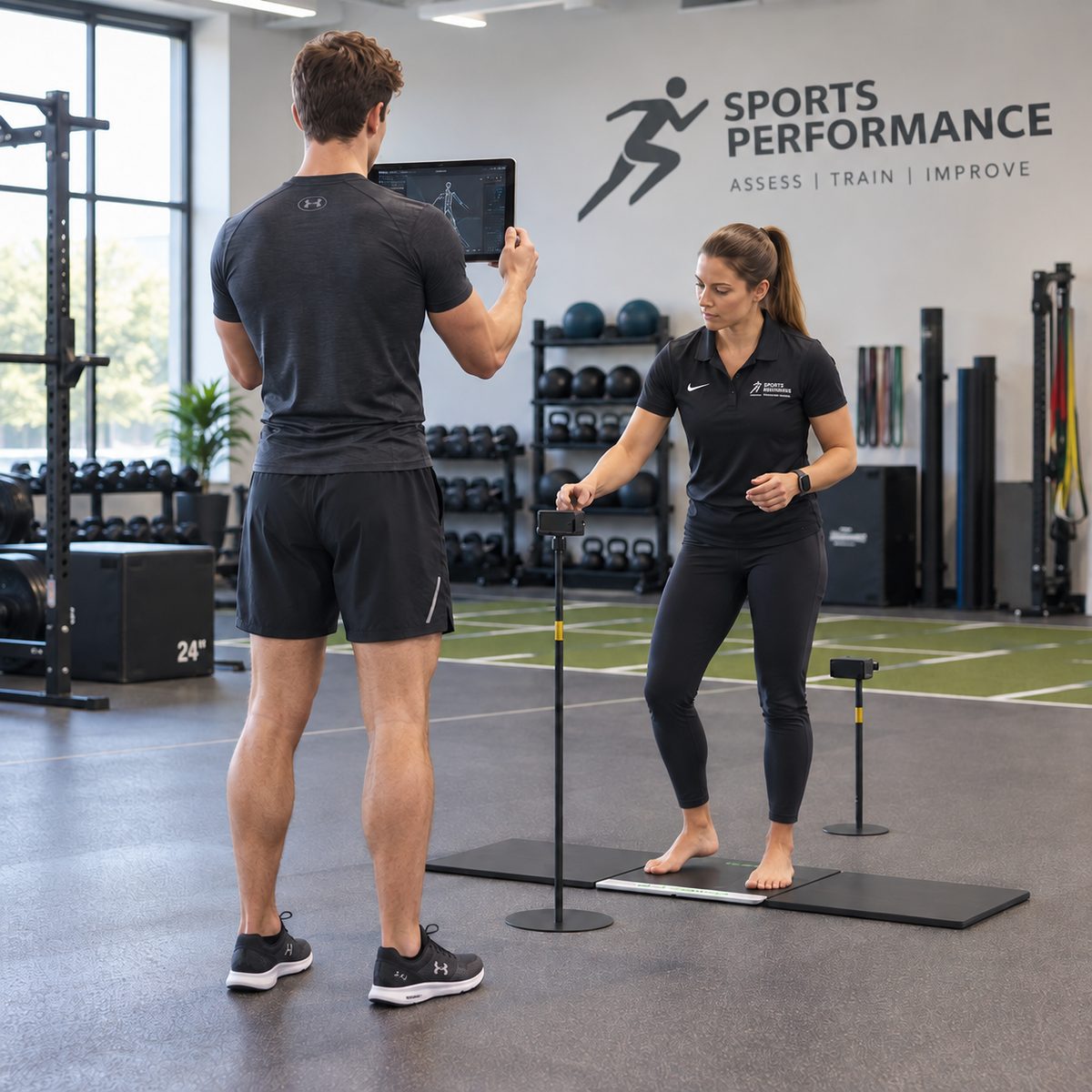
What the platform records: pressure, timing and position
Three families of output come out of a dynamic recording, and each answers a different kind of
question.
- Pressure distribution. Where load sits under each sole, and how the distribution
changes across the contact phase. This is the output most people picture when they think of a
pressure recording. - Timing. When each region becomes loaded, how long it remains loaded, and when it
releases. Timing is what separates a dynamic recording from a static image, and it is where
asymmetry between the two sides usually becomes visible. - Position and path. Where the centre of pressure sits as the sequence progresses,
which describes how load travels along the sole during each step.
Alongside this, camera-based capture in our systems records posture and lower-limb alignment, so
a recording can show both what happens at the sole and the position the body is in while it happens.
That combination is more informative than either half alone, which is why we build both into the
same platform rather than treating them as separate purchases.
What none of these outputs do is state a conclusion. The platform produces measurements and
images. Reading them, deciding what they mean for a particular person, and choosing what happens
next is a professional judgement made by a qualified person. Equipment that implies otherwise is
describing a capability it does not have.
One further capture decision is worth making before installation rather than after. Decide whether the platform will record a single pass or a series, and whether the result presented to a colleague is a single representative pass or a summary across several. Both approaches are defensible, and they produce different records. A single pass is easier to discuss and less robust; a series is harder to present and considerably more reliable. Most teams settle on recording several passes and presenting one, with the others available on request, which keeps the conversation simple without discarding the evidence.
Reading walking and running data side by side
Where a team records both walking and running, the comparison itself becomes the most valuable
output. Several things usually become visible at once.
Contact time changes. The same person’s contact pattern shortens as speed rises,
and how it shortens varies between individuals. Watching that change tells you something the two
recordings separately do not.
Loading shifts. The regions that carry load at walking pace are not necessarily
the regions that carry it at running pace. Where a team also supplies insoles, this is the kind of
observation that informs how a design is specified, which is one reason we produce equipment and
insoles in the same plant.
Symmetry changes. Two sides that behave similarly while walking may diverge at
speed, and that divergence is often the reason a client wanted a running recording in the first
place. It is also the observation most likely to be over-interpreted, so it is worth repeating the
capture before drawing any conclusion from a single session.
Consistency changes. How repeatable a person’s pattern is across passes can be as
informative as the pattern itself. Teams that record several passes and look at the spread, rather
than a single averaged picture, get considerably more out of the same equipment.
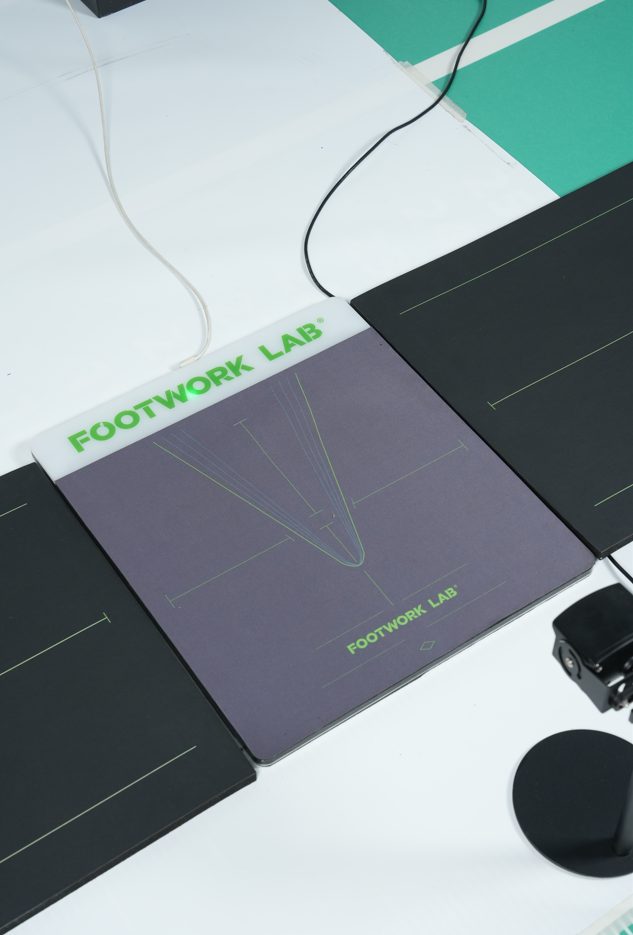
Where the platform sits in a room
A dynamic platform is not a device that can be added to a room without changing it. Three
practical considerations decide whether an installation works.
Space
A platform needs a run-up and a run-out, both of which take floor space. The run-up lets the
person reach a natural pace before the capture area; the run-out stops them from having to break
stride while still on the recording surface. A room that cannot provide both will produce recordings
that are technically valid and practically misleading.
Flow
Where does the platform sit relative to the rest of the appointment? A system placed across the
room from the consultation area will be used less than one placed on the natural route through it.
This sounds trivial and is not: equipment that interrupts a routine gets skipped, and a skipped
system produces no data at all.
Records
Decide before purchase where recordings go after the session. Export formats, integration with the
records the team already keeps, and interface language all matter more in daily use than any
hardware detail. A system that cannot share its output ends up being transcribed by hand, and hand
transcription is where the habit dies.
A related point concerns the person being recorded. Any capture session is unfamiliar to someone who has not experienced it before, and unfamiliarity shows up in movement. The response is not to discard the first recording but to use it as a warm-up: allow the person to walk or run through the area before the recording that will be kept. Teams that build this into the routine get more representative data, and the people being recorded are noticeably more relaxed, which is worth something in itself when the appointment continues afterwards.
What the recording does not show
Being explicit about limits is part of an honest specification.
A dynamic recording does not identify a cause. Two people with similar loading patterns may have
arrived there for entirely different reasons, and the recording cannot separate them. It does not
describe the upper body directly, except insofar as position capture includes it. It does not
replace examination, history or professional judgement; it complements them. And it describes the
session it recorded, not a person’s movement in general.
There is also a technical boundary worth naming. A recording is a measurement taken under
particular conditions. Change the surface, the footwear, the speed or the number of passes, and you
have a different measurement. That is not a weakness of the method; it is a property of all
measurement. The response is to standardise what you can and to state what you could not.
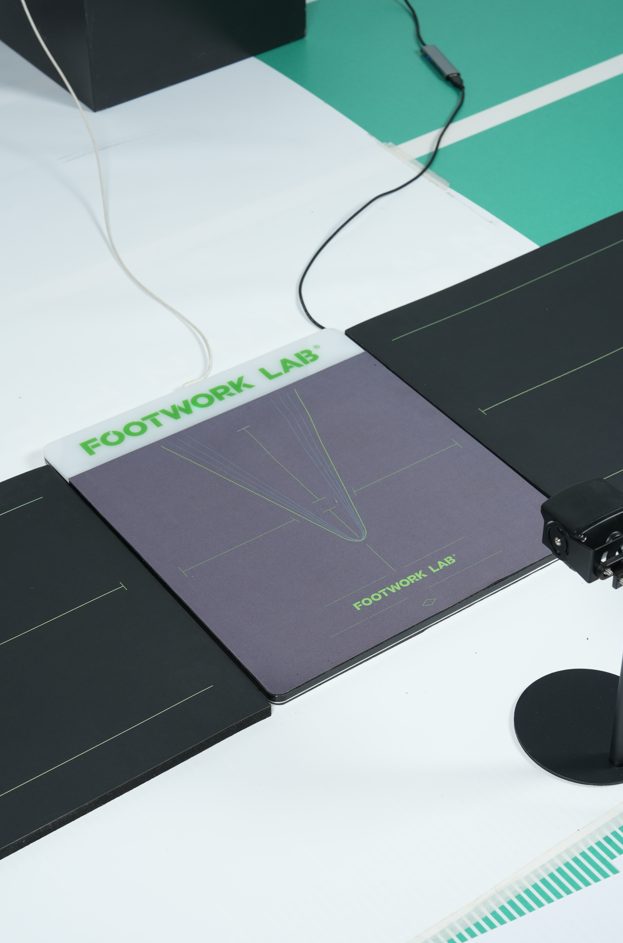
It is worth noting that a warm-up pass costs nothing and is easy to forget. Making it part of the written routine, rather than a matter of judgement on the day, is what keeps it happening when the room is busy.
Planning a capture area that will still work in year three
Most installations that disappoint were not badly specified. They were specified for the first
month rather than the third year. Five decisions avoid that outcome.
- Choose one routine and write it down. Surface, footwear condition, number of
passes, who operates. Write it before installation and keep it pinned in the room. - Buy enough space, not just enough platform. The capture area is the smallest
part of the installation. - Decide who reviews the output and how often. A named reviewer and a periodic
review keep the data in use. - Confirm the support path before you need it. Ask who answers a technical
question in year two, through which channel, and how quickly. - Start with one unit. Our machine minimum order quantity is a single unit, which
lets a team run the routine in the real room before standardising across a group.
On the support question, our answers are published rather than provided on request. Machines carry
a twelve-month warranty covering non-human damage with free spare parts within that scope. Support
runs through a dedicated WhatsApp group with direct engineer access, remote assistance where the
setting allows, and over-the-air updates for connected units. Every unit is tested in-house during a
seven-day testing period before dispatch, and production runs at roughly three to five machines per
day, a rate chosen so that testing and inspection are done properly rather than nominally.
Frequently asked questions
Do I need a different system for walking and for running?
Not necessarily, but you need to decide the capture configuration. Walking and running differ in
contact time and loading pattern, so the platform has to resolve a shortened contact event and cover
a stride. The same system can serve both where the space and routine allow it.
How much floor space does a dynamic platform installation need?
More than the platform itself. A run-up and a run-out are required so the person reaches a
natural pace before the capture area and does not have to break stride on it. Buyers who plan the
capture area without the approach usually end up recording the wrong part of the movement.
Does the system tell us what a recording means?
No. The platform records pressure distribution, timing and the path of the centre of pressure,
along with camera-based posture and alignment capture. Interpreting that output for a particular
person is a professional judgement made by a qualified practitioner.
Can we record with shoes on?
Capture conditions are a specification decision rather than a set property, and in-shoe
recordings answer a different question from barefoot ones. What matters most is consistency: choose
one condition per routine and keep it the same across sessions.
Can we start with a single platform?
Yes. The minimum order quantity for machines is one unit, and we would rather a team trial one
system in their own room than order several on the strength of a demonstration.
How is the equipment tested and delivered?
Every unit is tested in-house during a seven-day testing period before dispatch, with production
at roughly three to five machines per day. Typical transit is six to seven working days by express,
ten to twelve by air, and thirty to thirty-five by sea.
What warranty and support come with a platform?
A twelve-month warranty covering non-human damage with free spare parts within that scope,
supported through a dedicated WhatsApp group with direct engineer access, remote assistance where
the setting allows, and over-the-air updates for connected units.
What we would do next
Decide the routine before the hardware: one capture condition, one sequence, one named reviewer.
Then check the room, because space is the constraint that cannot be set afterwards. If you want to
see how our systems combine pressure and camera-based capture, the
technology overview is the place to start, and the
F5-LAB dynamic gait system is the platform built for
walking and running work. This guide to putting a walkway assessment into a
rehabilitation unit covers the room-planning side in more detail, and
this article explains what a gait report actually shows. For a
configuration discussion, contact the team or read the
FAQ page first.
This article is intended for professional and educational reference.
It is not medical advice. Foot assessment equipment produces measurements and images; clinical
interpretation and any decision about care remain the responsibility of a qualified professional.
Certification scope is limited to the documentation we hold: European Union certification and ISO
quality system certification.