
Buyers searching for insole machines for shoes are usually trying to
answer one question: can we stop outsourcing and bring the fitting work in-house? It is
a good question, and the answer depends less on the machines than on the workflow that surrounds
them. A milling unit on a delivery pallet does not make a service; an assessment-to-production
chain does. This article maps that chain end to end — what each stage requires, which equipment
covers it, and where in-house projects most often stall.
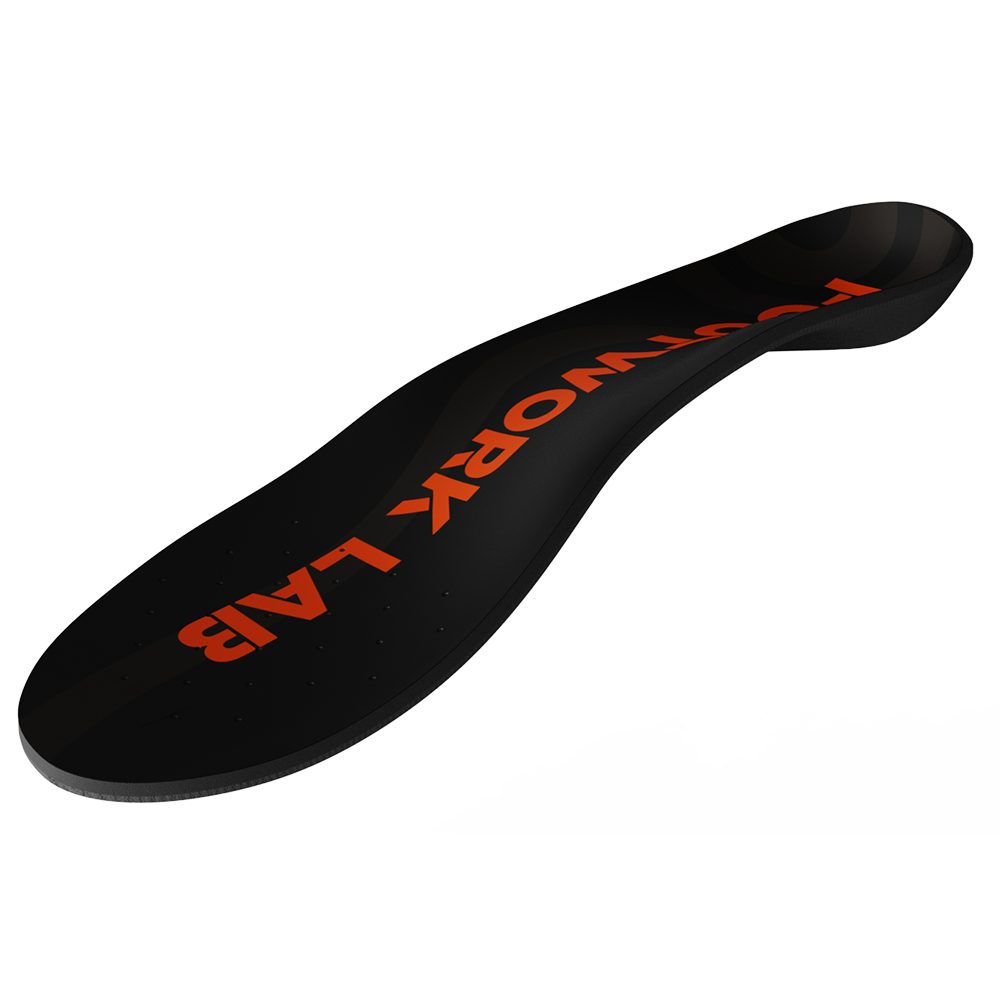
FOOTWORK LAB builds both ends of that chain: the foot assessment equipment that produces the
data, and the insole production that turns specifications into finished pairs from our own plant
in Ruichang, Jiangxi Province, running since 2018. We also supply customers who run the
production side themselves, which gives us a view of both models — fully outsourced and
hybrid — and of the decision points that separate the businesses that make the transition from
the ones that buy hardware and stall.
The three-stage framing does one more job before the sections begin: it puts a name on what
you are actually buying at each stage. Stage one purchases a capability to see; stage two
purchases — or develops — a capability to decide; stage three purchases a capability to make.
Most in-house projects stall because the business evaluated a machine (stage three) when what
it lacked was a decision process (stage two), or bought a decision process when the real gap
was capture quality (stage one). Diagnosing the missing capability first is a thirty-minute
exercise that protects a five-figure budget.
First, decide which part of the workflow you are bringing in-house
An insole service has three stages. Stage one is assessment: recording plantar pressure in
stance and movement, plus posture and alignment capture. Stage two is specification: turning the
data into a build — shell stiffness, layers, top sheet, shape decisions. Stage three is
production: forming the shell, assembling layers, finishing and inspecting the pair.
“Insole machine” searches usually have stage three in mind, because milling and forming
equipment is the visible, photographable part of the workflow. But stage three is the least
defensible part of a service. Customers do not choose your clinic because you own a forming
unit; they choose it because the assessment and specification are credible. The businesses that
succeed in-house almost always start with stages one and two, and add production later — if at
all.
This is not a sales argument against hardware. It is a sequencing argument: know which stage
your business is actually missing before comparing machines, because the machine for the wrong
stage is the most expensive purchase in this category.
A word on vocabulary, since it misleads buyers at this exact decision point. Searches for
machines return factory-scale imagery because factory-scale content dominates search results; a
clinic-scale workflow photographs modestly and ranks badly. The mismatch between what buyers
see and what their volume needs is not a signal that in-house is unrealistic — it is a signal
that the results are pitched at a different buyer. Size the workflow from your own session
numbers, not from the photographs, and the category becomes navigable again.
Stage one: the assessment equipment that generates order data
Every custom insole begins as data, and the quality of that data caps the quality of
everything downstream. The core instrument is a plantar pressure system: a sensing plate that
records how load distributes under the foot while a person stands, and again while they walk
across it. Alongside it, a camera module records posture and lower-limb alignment, because the
plantar map gains meaning when it can be read against how the leg sits over the foot.
For a clinic or retailer planning an in-house service, the assessment stage is where the
customer experience lives — it is visible, it takes minutes, and it produces the report the
customer takes home. It is also the stage with the smallest footprint and the fastest payback,
which is why we recommend buyers start there even when their long-term plan includes
production.
Our own range is built around this stage: the F2 and FMP
platforms combine the pressure plate with the posture camera, and the analysis software that
drives them is written in-house, which matters when report layouts need to match your
consultation flow rather than a generic template.
On choosing within stage one: the range of assessment hardware is wide, but the practical
selection criteria are few. Does the plate record both stance and movement with quality checks
in between? Does the camera capture posture and alignment in the same session, or does the
operator need a separate procedure? Is the software the manufacturer’s own, and can reports
adapt to your documentation? And does the supplier run its own insole production — because if
it does, the same data that drives your reports also drives real orders, and the capture
workflow has been pressure-tested by daily use rather than designed in the abstract.
Stage two: specification — the skill that makes the service defensible
Between data and production sits specification: choosing what the insole will be. Shell
stiffness against the recorded load pattern. Cushioning layers against use case — a retail
customer who walks all day and a rehabilitation patient have different requirements even with
similar maps. Top-sheet material against footwear and climate. None of these choices is exotic;
all of them are learnable; and together they are the professional judgement your customer is
paying for.
Buyers considering in-house production often underestimate stage two and overestimate stage
three. A forming machine executes a specification; it does not write one. If your team cannot
yet translate a pressure map into a build, the machine will simply produce confident-looking
output from an unformed decision — which is worse than outsourcing to a factory that specifies
for you.
This is why hybrid models exist, and why we support them deliberately: a business runs its
own assessment and sends us the data; our production team specifies and manufactures; the
finished pairs ship within days. The business keeps the customer relationship and the
assessment value, and stages two and three stay at the factory until the team is ready to take
them on.
Stage three: production equipment, honestly framed
If your plan does include in-house production, the equipment question becomes concrete:
forming capability, milling or cutting for layers and top sheets, grinding for edge finishing,
and pressing for assembly. Beyond the machines themselves, budget for the unglamorous
surroundings — material stock, consumables, workspace layout, and the training period during
which output is practice, not product.
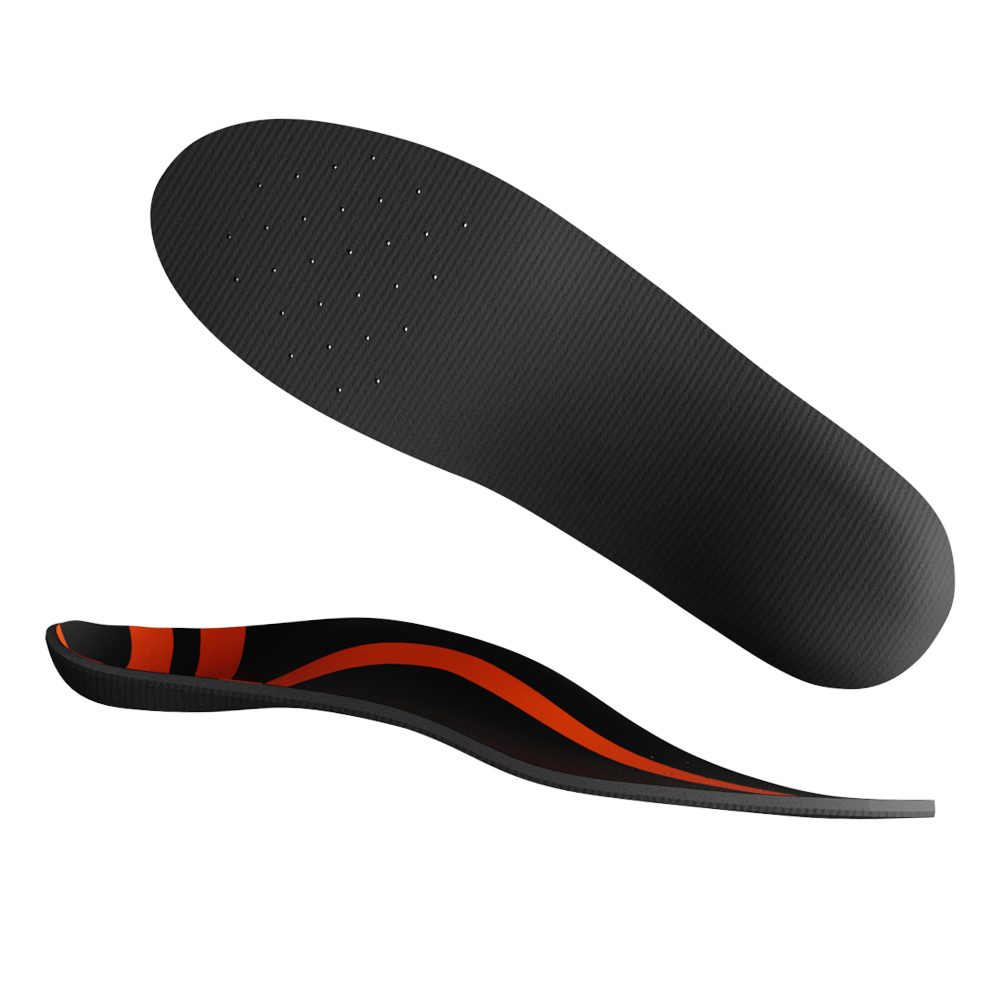
Volume justifies this investment. Our own plant runs at roughly five hundred to a thousand
pairs per day, which is a factory-scale figure; a service producing dozens of pairs a week
needs a fraction of that capability, and the machines sized for that output are smaller, slower
and cheaper than the images that dominate search results suggest. Beware of buying
factory-class throughput for clinic-class volume — the mismatch shows up in idle capacity and
in maintenance you do not yet need.
If stage three is genuinely in your plan, visit at least one working installation before you
buy — not a demonstration room, a working service. Watch where the machines sit relative to the
workflow, how materials are stored and moved, what the operator does between pairs, and where
the bottlenecks actually form. Every production layout we have seen succeed was copied,
consciously or not, from a working floor rather than from an equipment catalogue. The visit
costs a day; the layout mistakes it prevents cost months.
The hybrid model most of our customers actually choose
Patterns from our order book: most businesses that add insole services start by installing
assessment equipment, running a specification dialogue with our production team, and receiving
finished pairs — minimum order two hundred pairs, mixed across models and sizes, samples within
three days of specification approval. The service launches without production risk, and the
business learns stage two by reviewing how each specification maps to each assessment.
Over time, some of these customers take specification fully in-house. A smaller number add
production equipment as well. The sequencing matters: each stage is learned on the previous
stage’s working output, not on theory. By the time production hardware enters the plan, the
team has specified hundreds of pairs and knows exactly which machine operations their builds
require.
There is also a financial shape to the hybrid path worth spelling out. The assessment stage
is a moderate, one-time investment with a clear payback per session. The specification stage,
while outsourced, costs nothing but dialogue and review. The production stage is the large,
lumpy investment — machines, materials, maintenance — and it is the one whose economics depend
entirely on volume you do not yet have. Spreading those costs across the learning curve rather
than paying them upfront means the business never carries capacity it cannot use, which is the
most common quiet drain in equipment-heavy projects.
The hybrid model also disciplines the procurement itself. A buyer who has sent six months of
real data to a factory knows the volume, the material mix and the failure modes of their own
orders — which turns equipment selection from brochure comparison into a straightforward
capacity calculation.
Cost structure: where the money actually goes
Across both models, costs cluster in four places. Assessment: the hardware and the space it
occupies, plus the minutes of staff time per session. Specification: training and dialogue —
cheapest when outsourced, an asset when learned. Production: machines, materials, consumables
and maintenance — entirely avoided in the outsourced model. Logistics: sample cycles and
finished-goods freight, six to seven working days by express, ten to twelve by air, thirty to
thirty-five by sea.
Note what does not appear on that list: inventory. Measured production carries no insole
stock — the input is data, and every pair is made after the assessment. Businesses moving from
shelf-stock supply consistently find that the removed inventory cost funds a meaningful share
of the assessment investment, a point that rarely appears in equipment brochures but shows up
in every real budget we review with customers.
Two hidden lines deserve explicit mention in any budget. Training time is the first: capture
discipline, specification review, and — if production is in scope — machine operation are all
learned on working hours, and the first weeks of any new stage run slower than the steady
state. Planning that slowdown into the calendar, rather than discovering it, is the difference
between a team that adopts the workflow and a team that resents it. Consumables are the second:
adhesives, top-sheet stock, forming materials. They are individually small and collectively
easy to forget; a budget that names them survives its first quarter.
A stepwise plan you can start this quarter
Install the assessment stage first, with hardware sized to your consultation volume. Send
real data to a factory — ours or any competent one — and launch with produced pairs under a
mixed minimum order. Review every specification against every assessment for the first
cohort; that review is your stage-two training. Track demand honestly: volume, model mix,
remake reasons. Only when the volume justifies it, price the production stage against your
own numbers rather than against search results.
Run in that order, the question in the opening paragraph answers itself: the businesses that
bring work in-house successfully are the ones that earned each stage with the output of the
previous one.
Wherever your plan lands on the three stages, the underlying asset is the same: clean,
consistent capture data. It powers your reports, your specifications, your remake analysis and
— if you eventually produce — your machine settings. Businesses sometimes ask what single
indicator best predicts an in-house service’s success; our answer, from the factory side of
hundreds of orders, is capture consistency. It is invisible in the sales conversation and
decisive in the second year, which is exactly the profile of a thing worth investing in
early.
Frequently asked questions
Can I start an insole service without buying production machines?
Yes, and most of our customers do. You run the assessment in-house, send us the data, and our
production team specifies and manufactures the pairs. Samples ship within three days of
specification approval.
What is the minimum order for produced pairs?
Two hundred pairs, mixed across models and sizes, so a first cohort can cover realistic
variation instead of a single repeat specification.
What equipment do I need for the assessment stage?
A plantar pressure system for stance and movement recording, plus posture and alignment
capture. Our F2 and FMP platforms combine both in one workflow, with in-house analysis
software.
Do you accept ODM or OEM?
On insoles we accept both ODM and OEM. On machines we accept ODM; machine OEM is possible but
discussed case by case.
What is your production capacity?
Roughly five hundred to one thousand pairs per day at our Ruichang plant, each pair produced
to its own specification.
How should I plan logistics for a launch?
Plan around the sample cycle first, then production freight: six to seven working days by
express, ten to twelve by air, thirty to thirty-five by sea, depending on destination.
Are you a factory or a reseller?
A factory. We build the assessment equipment and produce the insoles in our own plant,
operating since 2018, with development and production handled in-house.
What we would do next
Start with the assessment stage: the F2 and FMP
platforms cover the pressure-plus-posture workflow that generates usable order data, and the
technology overview explains how the modules work together. For
the produced side, the insole categories page shows what a
first mixed order can contain, and the FAQ page holds the standing answers —
MOQ, samples, OEM and ODM, warranty, logistics. The in-house service
guide walks through the clinic setup case, and the contact page
reaches the team that runs both ends of the workflow.
This article is intended for professional and educational reference.
It is not medical advice. Foot assessment equipment produces measurements and images; clinical
interpretation and any decision about care remain the responsibility of a qualified professional.
Certification scope is limited to the documentation we hold: European Union certification and ISO
quality system certification.