
Thermoplastic polyurethane has become the default shell material in custom insoles, and “TPU” on a specification sheet has become a substitute for thinking about stiffness. It is a family of materials, not a single one. Two shells described as TPU can differ by more in behaviour than a TPU shell differs from a polypropylene one, and the difference is exactly what determines whether the pair does its job.
For a buyer placing a production order, stiffness is the specification that most often gets lost between the clinic and the factory. The brief says “medium support”. The factory chooses a sheet that is in stock. The pairs arrive, they are all slightly different from the sample, and nobody can say why because nobody wrote down what the sample was.
FOOTWORK LAB produces TPU-shell insoles in our own plant in Ruichang, Jiangxi Province, alongside molded and milled builds. This article is about specifying the shell in terms a production line can hold: grade, thickness, geometry and the tests that catch a drift before a batch is wasted.
What TPU is, and why it dominates shells
Thermoplastic polyurethane is a polymer that softens when heated and hardens when cooled, which makes it workable in both molding and milling routes. It is tough, it resists abrasion, it bonds readily to other layers, and it tolerates the flexing a shoe imposes at the ball of the foot. Those properties explain why it displaced older shell materials in most of the market.
It is also forgiving in production. A TPU sheet can be cut, heated, formed and trimmed without the brittleness that makes some stiffer materials difficult to finish. That forgiveness is a commercial advantage: fewer rejects, shorter training, more predictable output.
The cost of that forgiveness is that it invites vagueness. Because almost any TPU sheet will produce a wearable shell, buyers stop asking which one. The result is a market where two products with the same product name behave differently, and the difference is attributed to the foot rather than to the material.
Stiffness comes from three variables, not one
The first variable is the grade. TPU grades differ in hardness and in flexural behaviour, and the differences are specified by the material supplier rather than by the insole factory. A harder grade produces a shell that resists load; a softer grade produces one that yields and returns.
The second is thickness. A shell twice as thick is not twice as stiff in a simple linear sense, but the effect is substantial, and it compounds with geometry. Thickness is the variable most often changed quietly when a sheet runs short, which is why batch records matter.
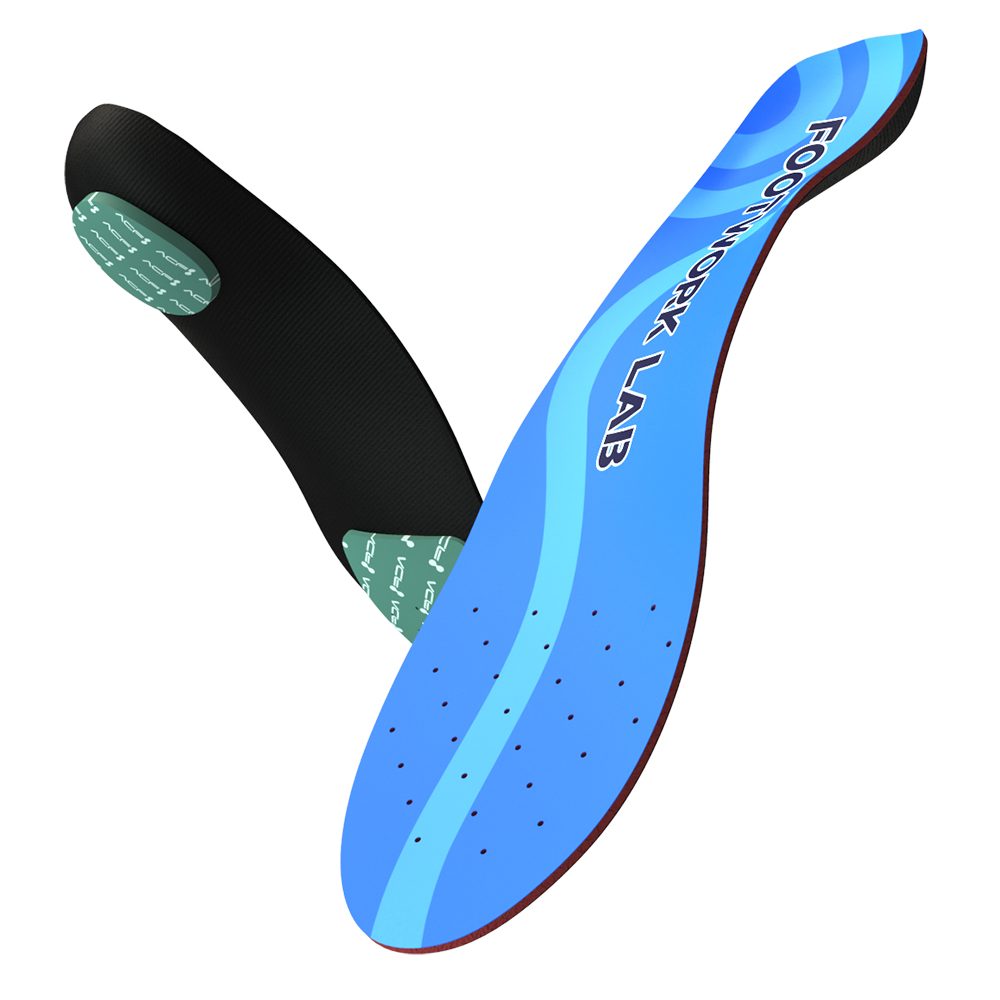
The third is geometry: the curvature of the arch, the depth of the heel cup, the extent of the medial wing, the cut line at the forefoot. A curved shell resists load far more than a flat one of the same material, because the curvature turns bending into compression.
Specify all three and the shell becomes reproducible. Specify one and the other two are chosen by whoever is producing that day, which is the origin of most “the second pair feels different” complaints.
Grades, and how they behave in a shoe
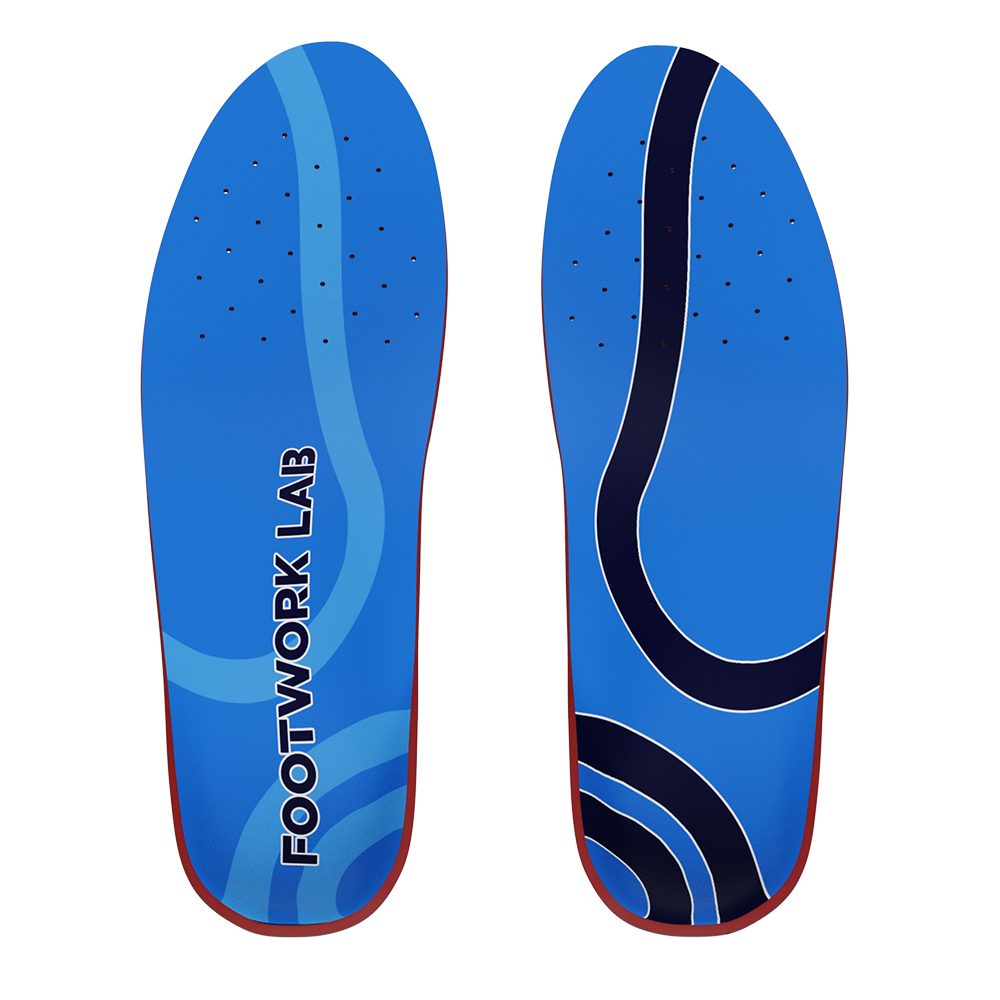
In practice, three behaviours matter. A shell that is stiff enough to hold the arch under a heavy load but flexible enough to let the forefoot bend at push-off. A shell that is stiff throughout and does not bend, which suits a brief calling for more control and a shoe with enough volume. And a shell that is soft throughout, which suits comfort-led products where structure is secondary.
Each behaviour has a place. The mistake is not choosing a soft shell; it is choosing one without deciding to. Clinics that serve a mixed customer base often need two shells in the range, and a factory that only stocks one grade will describe every brief as a fit for it.
Ask what grade the sample was made from, in the material supplier’s own designation, and write it into the purchase order. That single line removes most of the ambiguity in a TPU specification, and it is the line most often missing from a brief.
Thickness, geometry and the shape of the shell
Thickness is usually chosen to suit the shoe rather than the foot. A shell that is too thick lifts the heel and crowds the toe box; one that is too thin loses the structural behaviour the grade was chosen for. The footwear record in the brief is what allows the factory to pick within a range rather than guess.
Geometry then decides where the stiffness is expressed. A shell that extends forward under the midfoot creates a longer lever, which changes how load is carried during stance. A shell that stops at the heel leaves the midfoot to the foot itself. Neither is better in the abstract, and the recording is what tells you which the brief needs.
The heel cup deserves its own decision. Depth, flare and the transition into the arch determine how the rearfoot is held and whether the edge of the cup becomes a pressure point. A deep cup in a thin shell can create a hard rim; a shallow cup in a stiff shell can leave the rearfoot unheld. The two variables have to be chosen together.
Specifying stiffness for a production order
A production-ready specification has four lines: the material grade, the thickness range with a tolerance, the geometry of the shell in enough detail to be reproduced, and the finishing standard for the edges. Everything else — top cover, cushioning, padding — sits on top of that foundation.
The tolerance line is the one buyers forget. A thickness range that says “about two” is not a specification. A range with an upper and lower bound, and a note on what happens outside it, allows the factory to reject a sheet rather than use it.
Finishing matters more than it sounds. A TPU shell with a sharp edge will wear through a top cover and create a pressure line along the side of the foot. The specification should say how the edge is dressed, not just that it is dressed, because “smoothed” means different things in different workshops.
What the shell does at push-off
The forefoot is where a rigid shell can become an uncomfortable one. At push-off the foot needs to bend at the metatarsal line, and a shell that extends too far forward resists that bend. The customer feels it as a stiff board under the ball of the foot, and no amount of cushioning above it removes the sensation.
The cut line is therefore a design decision, not a trimming convenience. A shell that ends behind the metatarsal heads lets the foot flex while keeping the midfoot supported. A shell that extends beyond them supports more and moves less, which suits a brief calling for control and a shoe with a stiff sole.
Ask the factory where the cut line sits relative to the metatarsal heads, and why. A supplier who answers in terms of the shoe and the brief is specifying. A supplier who answers in terms of a standard template is trimming.
Common failures, and what they indicate
Cracking at the medial edge usually indicates a shell that is too stiff for the geometry, or a fold introduced during forming. It appears after weeks of wear rather than at delivery, which is why a batch that passes inspection can still generate returns.
Delamination between the shell and the cushioning layer points to surface preparation or adhesive choice. It is the most common failure in builds that combine materials, and the least visible at the sample stage, because a fresh bond holds for long enough to pass a hand check.
Cold-weather behaviour is the third. Some grades become noticeably stiffer at low temperatures, which changes how the shell feels in winter and can make an edge that was comfortable in summer feel sharp in January. If a product is sold in a market with real winters, ask how the grade behaves cold.
Sheet storage and shelf life
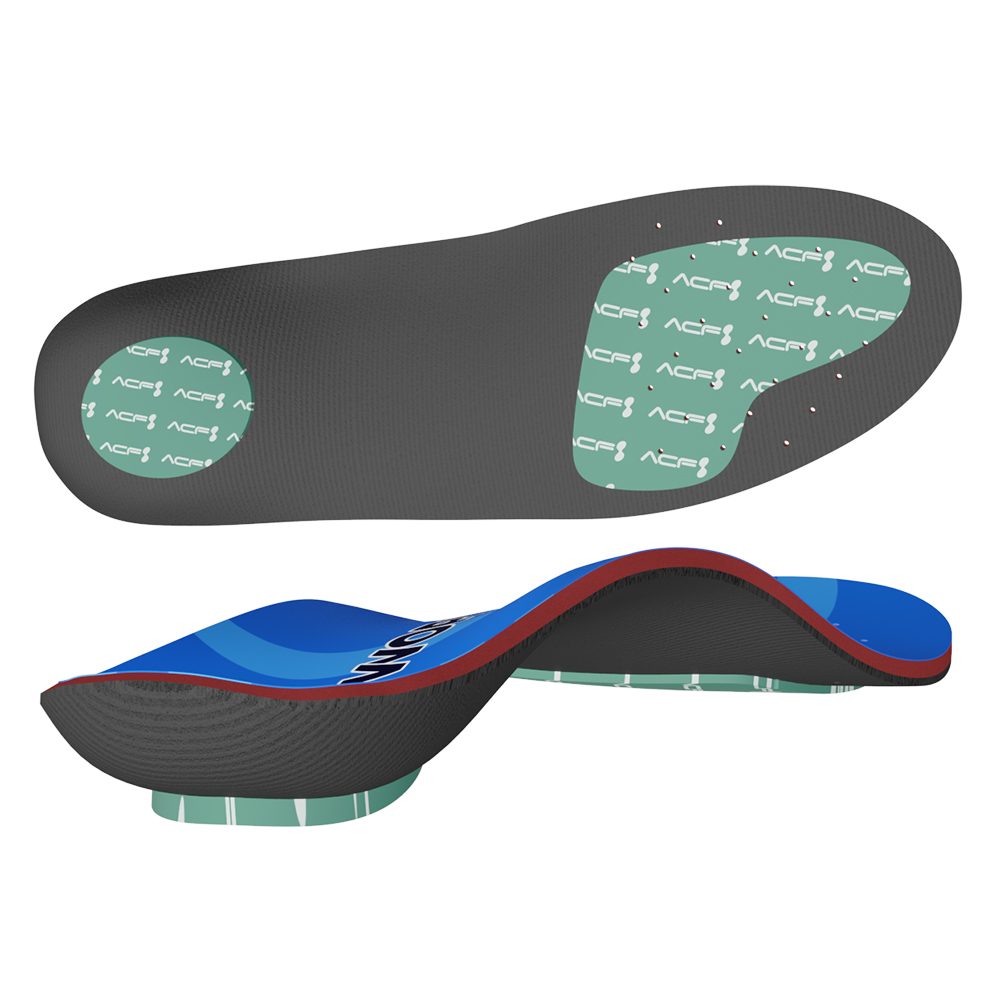
TPU sheet is not inert. It absorbs moisture, it can warp in storage, and it ages. A factory that stores sheets flat, dry and away from heat produces consistent shells; one that stores them upright in a warm room produces shells that behave differently in the first week of a batch than in the third.
Ask how the material is stored and how long it sits before use. The question sounds pedantic until a batch arrives that feels slightly different from the sample, and the explanation turns out to be a pallet that spent a summer against a wall.
Ordering at volume: batches, tolerances, tests
At volume, consistency is a records problem before it is a materials problem. Each batch should be traceable to a sheet, a grade and a date, and each order should be checked against a reference pair retained from the approved specification. Without those two habits, a drift is discovered by customers rather than by the factory.
Testing can be modest and still useful. A flex check at the forefoot, a hand-load check at the arch, a visual check of edges and a dimensional check against the reference pair will catch most of what matters. None of them requires a laboratory, and all of them require someone to do them every time.
Our own production runs at roughly five hundred to one thousand pairs a day, which means a batch is a real unit of work rather than a single pair. Two hundred pairs is the minimum order for insoles, mixed across models and sizes, and samples ship within three days of specification approval so a grade can be checked before a run.
A ten-minute check a clinic can run
Clinics do not need a laboratory to catch a shell that is out of specification. Three checks cover most of it. Flex the forefoot: it should bend at the intended line and return without a crease. Load the arch by hand: the resistance should feel the same on both sides of the pair. Run a thumb along the edge: it should be smooth enough that a sock would not catch.
Then compare against the reference pair from the approved specification. If the new pair feels different in the hand, it will feel different under the foot, and the conversation with the factory should happen before the batch is delivered to patients rather than after. A clinic that keeps one reference pair per build has a quality control function for the price of a shelf.
One last note on specification language. Words like firm, medium and soft are useful in a conversation with a patient and useless in a purchase order. Translate them once, into grade and thickness, and keep the translation in the same document as the assessment. The translation is the specification, and everything downstream depends on it being written rather than remembered.
What to ask a supplier
Ask which grade, in the material supplier’s designation. Ask what thickness range the order will be produced in. Ask what happens if the sheet available on the day falls outside that range. Ask for a reference pair from the approved specification. Four questions, and the answers separate a factory from a trader.
Then ask about the finishing standard and the adhesive system, because those are where a good shell becomes a poor product. A factory that can describe its bonding method and its edge finishing in specific terms is a factory that has thought about the failure modes.
Our own answers are on the record: we are a factory rather than a trading company, we produce in our own plant, and our certification scope is limited to European Union certification and ISO quality system certification. We would rather describe a shell precisely than describe it impressively.
Frequently asked questions
Is TPU better than polypropylene for a shell?
They behave differently. TPU is tougher and easier to finish, and it tolerates flexing well. Polypropylene is stiffer for the same thickness and behaves differently under repeated load. The right choice depends on the brief, not on a general ranking.
How thick should a TPU shell be?
Thick enough to deliver the stiffness the brief needs and thin enough to fit the intended shoe. The footwear record sets the upper limit, and the load pattern sets the lower one. Both belong in the specification, with a tolerance.
Can the same shell be used for every customer?
No. A shell is specified against a load pattern and a shoe. A range of two or three shells covers more of the market than one universal shape, and a custom brief covers the rest.
Why do two pairs from the same order feel different?
Usually because the specification named one variable and left the others open. Grade, thickness and geometry all affect stiffness, and a change in any one of them produces a different product even when the drawing looks the same.
What is the minimum order for a TPU build?
Two hundred pairs, mixed across models and sizes. Samples are dispatched within three days of specification approval so the grade and the geometry can be checked in hand.
Do you produce shells for other insole makers?
We produce finished insoles to specification. Insoles are available under ODM, where we carry more of the design decisions, and OEM, where we produce to your brand and specification.
How long does delivery take?
Samples within three days of approval; production scheduled against the specification. Shipping is six to seven working days by express, ten to twelve by air, and thirty to thirty-five by sea.
What we would do next
Write the grade into the specification before the next order, and keep a reference pair from every approved build. Our article on carbon fiber inserts covers the stiffer end of the same decision, and the piece on arch support construction shows how the shell sits inside the rest of the build.
For minimum order, samples, OEM and ODM, see the FAQ page. To have a shell specified against a recording, contact our team, or visit the factory page.
This article is intended for professional and educational reference. It is not medical advice. Foot assessment equipment produces measurements and images; clinical interpretation and any decision about care remain the responsibility of a qualified professional. Certification scope is limited to the documentation we hold: European Union certification and ISO quality system certification.