
Custom inserts is a phrase that sells well in retail and means at least three different things behind the counter. Trimming a stock insert, heat-adjusting a mouldable one, and building a pair from a measurement are three levels of work with three cost structures and three failure modes, and a customer who is sold one while expecting another returns the product.
Retailers rarely set out to mislead. The problem is that personalisation sounds like custom, and the difference only appears when a foot does not match the average the product was built around. At that point the shop either has a process for the exception or it has a refund.
This article separates the levels, explains what each one can and cannot deliver, and sets out how a retail range can carry all three without confusing the staff who sell them. The insole production side is described from our own line, which is where the difference between adjusting and building becomes visible.
Three levels wearing one word
Level one is adjustment: a stock insert is trimmed to a shoe or a size. It changes fit, not shape, and it is fast enough to happen while the customer waits. Its honest promise is that the insert sits properly in the shoe.
Level two is mouldable adaptation: a heat-softened insert takes some impression of the foot and then sets. It changes shape in a limited way, within the material’s ability to deform and recover. Its honest promise is a closer match under the foot than a stock product provides.
Level three is measurement-based production: a record of the foot is taken, a design is specified, and a pair is produced for that foot. Its honest promise is geometry built to a brief, with a remake route if the fit is wrong.
The three levels are legitimate products and they serve different customers. The failure is not in selling any of them; it is in selling one with the vocabulary of another, because the customer’s expectation then belongs to a level the shop cannot deliver.
There is a fourth level that sits outside the three: the modified shoe. Stretching, padding and sole adjustments change the environment the insert sits in, and a shop that offers adjustments without saying so is implicitly promising a level of service it may not be able to repeat.
It is worth writing the levels on the price list rather than in a training manual. A customer comparing two prices with no explanation assumes the cheaper one is the same product, and that assumption is the beginning of the return.
What adjustment can and cannot do
Adjustment is underrated. A well-trimmed insert that sits flat in the shoe and does not ride forward solves a large share of everyday complaints, and it does so at a price and speed that make it saleable in a shop.
What adjustment cannot do is change the load path under the foot in a defined way. The geometry is whatever the stock product already had; trimming removes material at the edges and does not add support where none exists.
That is why a shop selling adjustment should describe it as fit rather than as support. The language matters commercially as much as ethically: a customer who buys fit and receives fit is satisfied; a customer who buys support and receives fit is a return waiting to happen.
Staff training for level one is short. A gauge, a trim line, a test in the shoe, and a rule about when to escalate to a higher level. The escalation rule is the part that keeps the shop honest.
Adjustment also has a quality ceiling set by the stock product. A well-designed stock insert trimmed accurately performs better than a poorly designed one trimmed perfectly, which is why the range a shop chooses matters more than the trimming skill it develops.
There is also a question of honesty about durability. An adjusted stock insert wears like a stock insert; a produced pair wears like a produced pair. A shop that sells the first with the second’s durability expectation is buying a complaint with a discount.
What mouldable adaptation adds
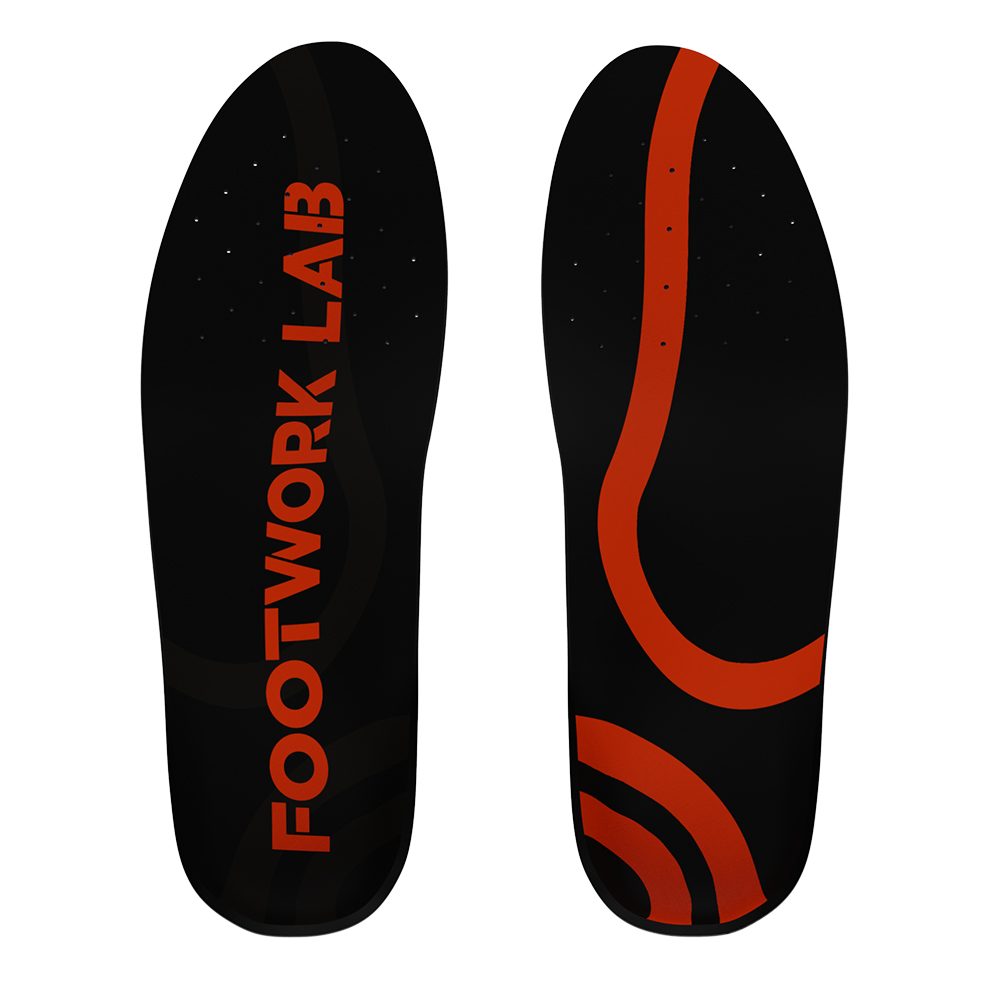
A mouldable insert adds shape. Heated and loaded, it takes an impression of the plantar surface and holds it as it cools. The result is closer to the individual foot than a stock product, and the process is short enough to run in a shop or a clinic room.
Its limits are the material’s memory and the loading method. A material that deforms easily also recovers easily, so the shape it holds is a compromise; and the impression depends on how the foot was loaded, which means the operator’s protocol decides the result as much as the product does.
This is why two shops using the same mouldable insert can produce different experiences. One loads the foot in a standing position with a defined stance; the other lets the customer sit and press. Both are ‘custom’ in the marketing sense and neither is comparable.
Selling level two honestly means describing what was done: the insert was heated, the foot was loaded in this position, and the resulting shape is a closer match than stock. That sentence is defensible, and it teaches the customer something the shop can repeat next visit.
It is worth writing the loading protocol on a card and keeping it with the equipment. The card is what makes two staff members produce comparable results, and it is the difference between a service and a demonstration.
It is also worth timing the process honestly. A mouldable fitting that takes twenty minutes in a quiet shop takes thirty-five on a Saturday, and a shop that quotes the quiet-day figure will either rush the work or run late. The estimate should be the busy-day one.
What measurement-based production changes
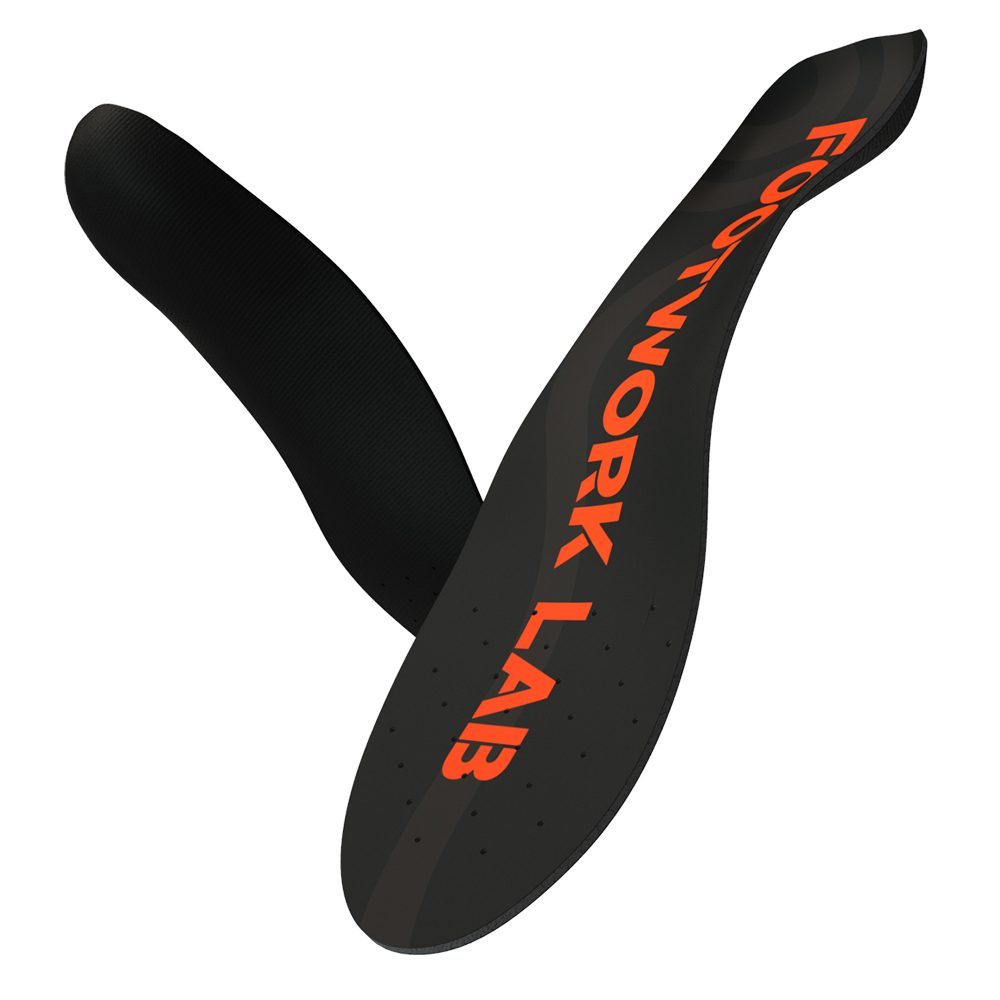
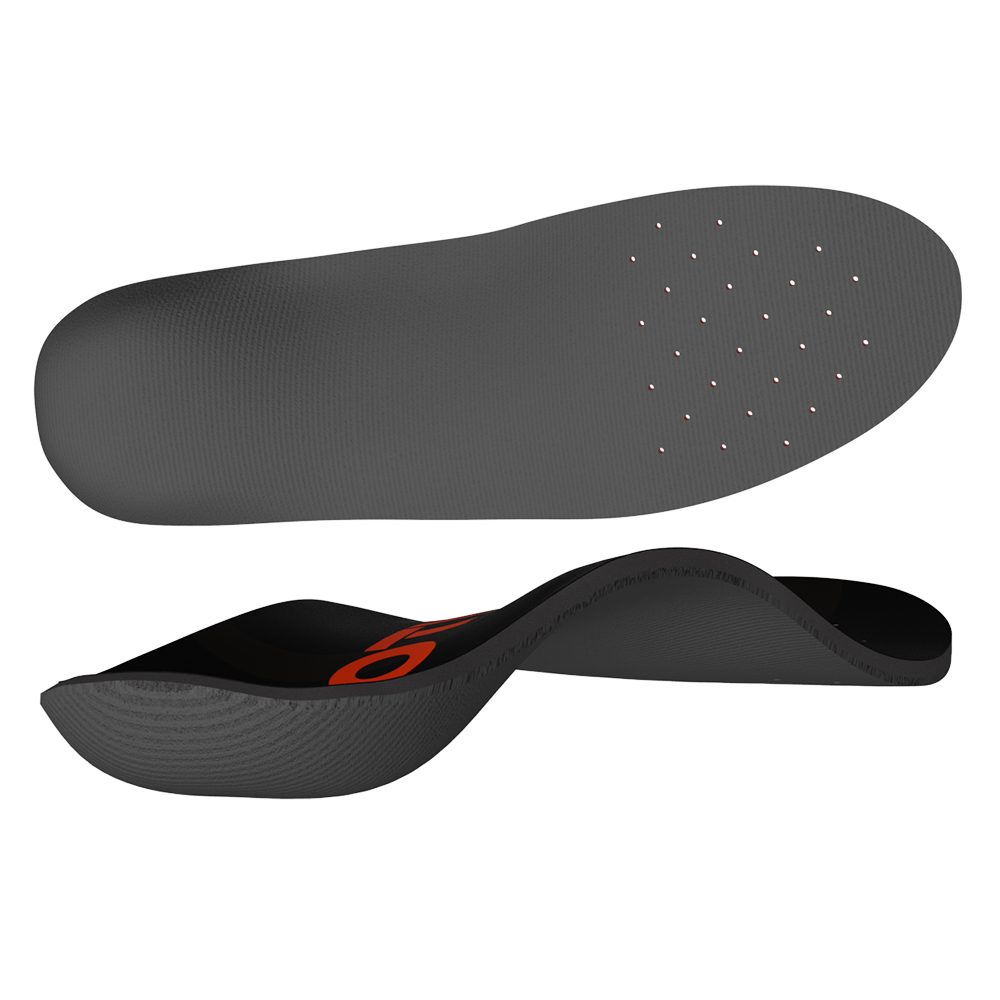
Level three changes the object rather than the fit. Geometry is specified — arch height, width, apex position, blend, heel cup, shell stiffness, cover, thickness budget — and produced against that specification. The pair is built for a foot rather than adjusted to one.
It also changes the time scale. A produced pair takes days rather than minutes, which means the retail experience has to include a follow-up: the customer leaves with a record and returns for the product. Shops that cannot manage that follow-up should not sell level three.
The economics differ accordingly. Level three requires a measurement process, a specification conversation and a remake route, and it prices as a service with a product attached. Our own production runs a two-hundred pair minimum with mixing, which suits a shop or a small chain that reorders rather than one that sells a single pair occasionally.
The reward is a customer relationship that survives: a pair built to a specification can be reproduced, modified, and compared with a later record. That is the difference between a transaction and a programme.
Level three also changes what the shop needs to store. Rather than holding stock in every size, it holds a small number of reference samples and a relationship with a factory, which is a different kind of inventory problem and usually a cheaper one.
There is also a staffing consequence. Level three requires someone who can hold a specification conversation, and that skill is scarcer than trimming skill. Shops that sell level three without that person end up with a measurement process and no design process.
It is also worth telling the customer what happens if the pair is wrong. A stated remake route removes the fear that makes people choose the cheaper level, and it gives the shop a procedure instead of an argument at the counter.
Writing a retail range that carries all three
A range works when each level has a distinct job and a distinct description. Fit for the walk-in who needs the shoe to sit properly; adaptation for the customer whose foot does not match the average; production for the customer who wants a pair built to a brief and is willing to wait.
The descriptions should be written side by side on one page, so that staff can see the boundaries. A page that lists the three levels, the time each takes, what the customer receives, and when to escalate is more useful than any training video.
The pricing structure follows the same page: three levels, three structures, no level pretending to be another. Customers accept a hierarchy when it is explained; they resent it when it is discovered.
The last element is the escalation rule in writing. If a customer returns twice with the same complaint, the answer is not another adjustment; it is a measurement. A shop with that rule turns a difficult customer into a programme customer, and a shop without it turns the same person into a review.
The page should also state waiting times honestly. A customer told three weeks and served in two is delighted; one told a week and served in two is a complaint. The estimate costs nothing and protects everything.
The escalation rule also protects the customer’s time. A person who returns twice with the same complaint has already spent more of their own time than the price difference between levels, and saying so plainly is often what convinces them to move up.
The records that make personalisation repeatable
Even level one benefits from a record: the shoe, the size, the trim line, the date. It costs a line in a notebook or a field in a till system, and it turns a repeat visit into a two-minute transaction instead of a fresh conversation.
Level two needs more: the loading protocol, the position, and the outcome reported by the customer. Without the protocol, the next pair cannot be reproduced, and the shop’s best result becomes an accident it cannot repeat.
Level three needs a full specification and the approved sample. That is what allows a remake to be a correction rather than a guess, and what allows a second pair for a different shoe to be specified intelligently rather than copied.
A retail operation that keeps records at all three levels accumulates something more valuable than stock: a picture of which level its customers actually need. That picture is what a range plan should be built from.
Records also protect the shop in a dispute. A note that says which level was sold, when, and for which shoe turns a disagreement into a review, and reviews usually end with a satisfied customer rather than a refund.
It also helps to record what the customer rejected. A pair that was tried and returned is information about the next specification, and a shop that writes it down stops repeating the same recommendation to the same person.
What to tell a customer in one paragraph
The paragraph we would write for a shop notice board: a stock insert can be trimmed to fit your shoe; a mouldable insert can take a closer impression of your foot; a produced pair is built to a specification from a measurement and takes several days, with a fitting conversation when it arrives.
That sentence does three things at once: it separates the levels, it sets an expectation about time, and it gives the customer a reason to choose the higher level rather than feeling pushed towards it.
It also protects the staff. A salesperson repeating that paragraph cannot overpromise, because the words do not contain a promise — they contain a description of work.
Simple language, three levels, no adjectives doing the work of specifications. It is the cheapest quality control a retail range can install.
The last thing the paragraph should include is where to go next. A customer who understands the three levels can decide for themselves whether to book the higher one, and a decision made by the customer is the one that does not come back.
Frequently asked questions
Are custom inserts the same as custom-made insoles?
Not necessarily. Trimming a stock insert and heat-adjusting a mouldable one are personalisation; building a pair from a measurement is production. The three levels differ in time, cost and what they can deliver.
Can a shop sell all three levels?
Yes, provided each level has its own description, price structure and escalation rule. Most confusion comes from one level being described with another level’s vocabulary.
How long does a produced pair take?
Production and shipping take days rather than minutes, and the retail experience has to include a follow-up when the pair arrives. Samples from our plant ship within three days.
What is the minimum order if a shop wants to stock produced pairs?
Two hundred pairs, mixable across models and sizes. That suits a shop or small chain that reorders rather than one that sells a single pair occasionally.
Can produced insoles carry the shop's brand?
Yes. Insoles are available as ODM and OEM, with the design following an agreed specification and the branding applied to your requirement.
What should we record at the point of sale?
At minimum the shoe, the size and the level sold. For mouldable products, the loading protocol and the position; for produced pairs, the specification and the approved sample.
Do you supply the assessment equipment as well as the insoles?
Yes, we build foot assessment systems and insoles, which is useful when a shop wants the measurement and the production to come from one supplier.
What we would do next
Put the three levels on one page with time, cost structure and escalation rule for each. The Insole Categories page shows the produced ranges we make, and Our Factory explains the specification review behind them.
The article on pedorthics describes the discipline that sits behind level three, and it is the vocabulary worth teaching to staff who sell the higher level.
This article is intended for professional and educational reference. It is not medical advice. Foot assessment equipment produces measurements and images; clinical interpretation and any decision about care remain the responsibility of a qualified professional. Certification scope is limited to the documentation we hold: European Union certification and ISO quality system certification.