
A footwear brand ordering insoles is not buying a therapy product. It is buying a component — one that has to fit a last, survive a warranty period, carry a logo and arrive in a carton that a warehouse can scan. That difference in framing changes almost every part of the brief, and buyers who bring a clinic’s vocabulary to a footwear order tend to spend the first cycle correcting assumptions rather than making product.
We produce insoles as a component for footwear programmes as well as to clinical specifications, and the two briefs look different on the page. A clinical brief is organised around load and region. A footwear brief is organised around the last, the construction, the sock lining, the price position and the returns policy. Both need a written specification; they need different fields in it.
What follows is the brief a footwear brand should bring to a factory: what to specify, what to decide before the first sample, and where a component order differs from a clinical one. It is written for buyers who have a range to fill and a date to hit.
What a footwear brief contains
A footwear brief starts with the last. The insole sits inside a volume that the last defines, and a component that ignores that volume will lift the heel, crowd the toes or leave a gap at the arch. Buyers should send the last reference, the size run and the internal volume the insole must live within, rather than a length and a width alone.
The second field is construction. A flat component for a cemented shoe is a different product from a moulded component for a trainer with a removable sock lining. Which one a brand needs is decided by the shoe, not by the insole, and a factory that is not told will build the one it builds most often.
The third field is the sock lining interface. Some shoes have a removable liner the insole replaces; others have a fixed liner the insole sits on top of. That single fact changes thickness allowance, adhesion and the finish of the underside, and it is the field most often left out of a first brief.
The fourth is the price position. Not a number, but a band: a component built to hit a particular retail price has a defined material budget, and a factory can propose materials within it. A brief that omits the band invites a quotation for the wrong product, and the correction costs a sample cycle.
The fifth is packaging. A footwear brand sells in a box, and the insole either travels inside the shoe or in its own bag with a card. Which one is decided by the retail model, and it decides the carton logic and the labour at the factory’s packing table.
The sixth is the label. A component that carries a brand name, a size and a material declaration needs the wording approved before print. Buyers should name the markets the shoe ships to, because the required wording differs and a reprint mid-run is the most expensive kind of change.
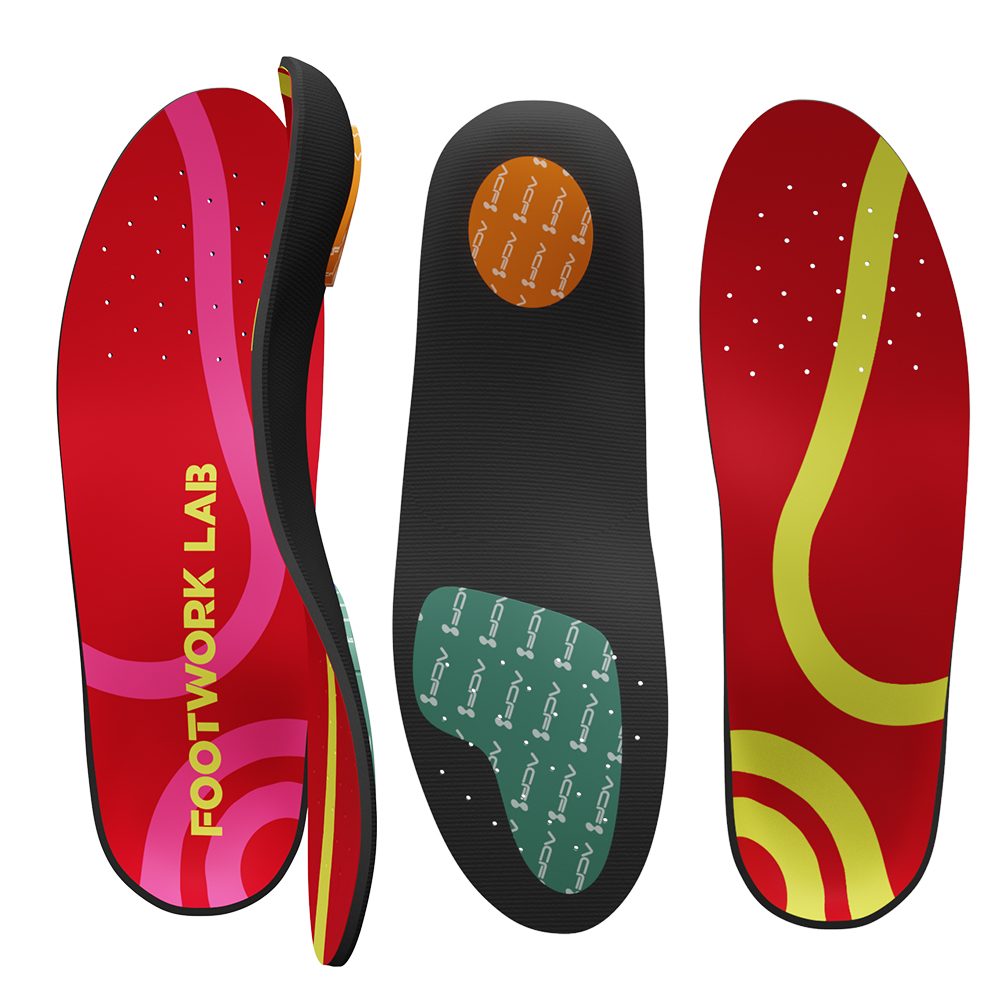
An underside that grips rather than slides is a finish decision rather than a material one, and it belongs in the brief with the sock lining interface. Buyers who have received components that creep forward inside a shoe know the symptom and rarely know the cause; one line about the liner settles it before the sample stage.
It is worth saying what a footwear brand usually gets wrong in a first brief, because the pattern is consistent. The brief describes the foot the insole is for, and not the shoe the insole goes into. The factory then builds something reasonable and the brand discovers at the sample stage that the component lifts the heel by a few millimetres and changes how the shoe feels, which is a fit problem the shoe will be blamed for. One line about the internal volume would have prevented the entire loop, and that line is the reason a footwear brief starts with the last rather than with a customer profile.
Fit inside the shoe, not fit to the foot
A clinic builds a device to a foot. A footwear brand builds a component to a shoe, and the difference is the whole discipline of the brief. The component has to sit flat, stay put, allow the foot its volume and not change the shoe’s fit in a way a customer notices on the first step.
That means the component is often thinner than a clinical device and more uniform across sizes, because the last already does the shaping work. Buyers who ask for a clinical specification in a footwear component usually receive something that lifts the heel and changes the shoe’s feel, and the returns that follow are attributed to the shoe rather than to the insole.
It also means the size run follows the shoe’s sizes rather than a foot measurement. A brand selling in three regions may have three size conventions, and the component has to be mapped to each. That mapping is a document in its own right, and it belongs in the brief rather than in a conversation at the sampling stage.
Materials for a component brief
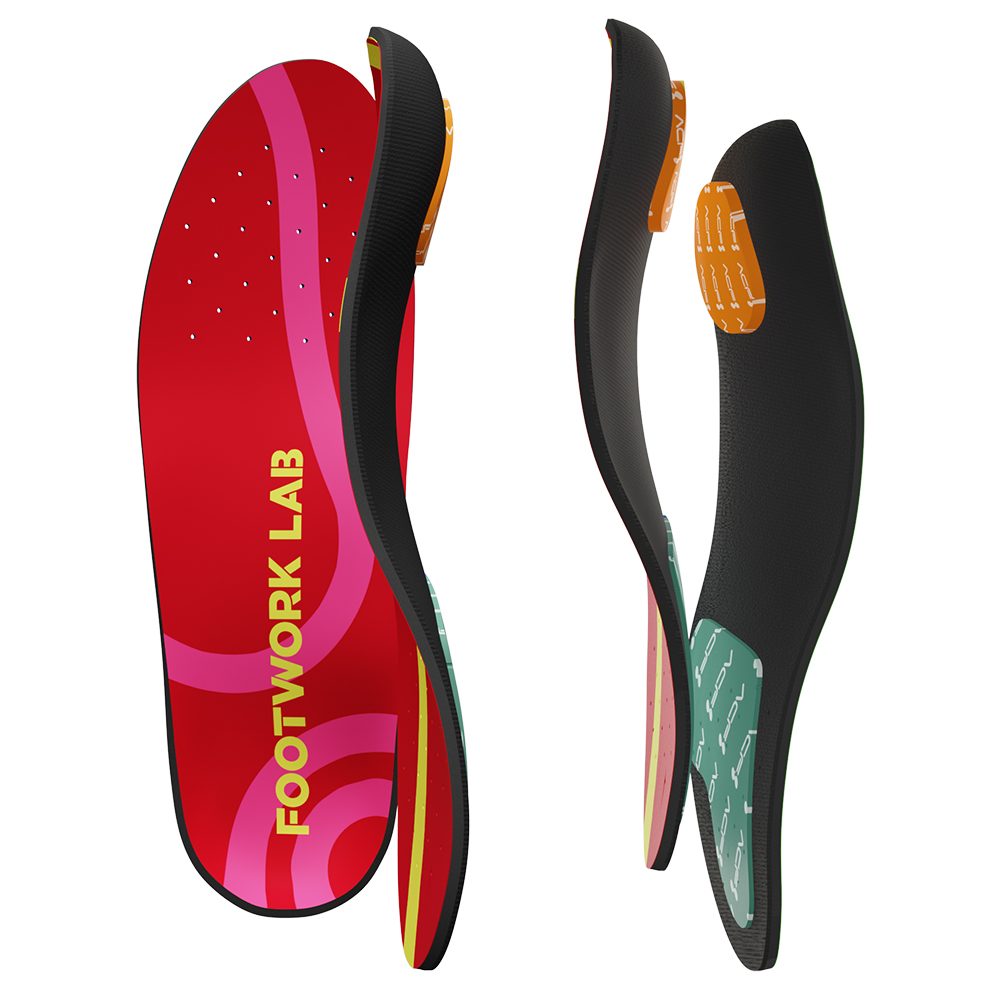
A component brief usually works within three material decisions: the base, the top surface and any cushioning layer. The base gives structure; the top surface decides how the foot behaves against it and how the product looks; the cushioning layer decides how the component feels in the first week, which is when a customer forms an opinion.
The material choice is constrained by the price band and by the market. Some markets require particular declarations, and some retail channels ask for a material story. Buyers should raise those early, because a material change late in a programme usually means a new sample and a new print plate.
Durability is judged differently in footwear than in a clinic. A clinical device is judged on fit; a component is judged on whether it survives the shoe’s warranty period without flattening, curling or delaminating. That test is the one a brand’s quality team will run, and the brief should say so explicitly so the factory can choose materials against it.
There is also a testing question that belongs to the brand rather than the factory. A component tested on a machine is not the same as a component tested in a shoe on a person walking to a bus stop. Brands that keep a small wear panel, three or four people in the target size range, discover more about durability in two weeks than a laboratory can report in a month. The panel costs almost nothing and it is the most reliable early warning a programme can have, provided the brand writes down what the panel reported rather than remembering that it seemed fine.
Sampling and the approval loop
A component sample cycle is short if the brief is complete: a pair built to the brief, placed in the shoe, walked in, and assessed against three questions. Does it sit flat? Does it change the shoe’s fit in a way the brand accepts? Does it survive a week of wear without visible change?
The loop usually runs twice. The first sample corrects the volume and the size mapping; the second confirms the material and the finish. Brands that compress the loop by approving a sample before it has been worn in the shoe tend to discover the problem in the first production run, when the correction is expensive.
Our samples ship within three days of specification agreement, which makes a two-loop process practical within a launch calendar. The constraint is not our side of the loop; it is the brand’s decision time, and buyers who book that time into the calendar avoid the most common cause of a late launch.
Approval authority is the other thing worth naming early. In a footwear company the product team, the quality team and sometimes the retail buyer all have a view on a sample, and a factory that receives three opinions in sequence will sample three times. Naming one approver, with the others consulted before the decision rather than after it, shortens the loop more than any change to the production schedule, and it is entirely within the brand’s control.
Volume, minimums and the size run
A footwear programme has a size distribution that is decided by the shoe’s market, not by a clinic’s patient mix. A brand selling through retail usually needs a full run in modest quantities; a brand selling online may need a different distribution. The brief should carry the distribution rather than a total, because the total is derived from it.
Our insole minimum is two hundred pairs, mixed across models and sizes, which suits a launch or a first season. The mix matters more than the total: a run spread across a full size range costs more to produce than the same total in fewer sizes, and the difference appears in the lead time as well as the price.
Brands planning several styles should consider consolidating materials across them. A shared base and top surface across three styles reduces changeover, simplifies quality checks and makes the range easier to explain at retail. Consolidation is a design decision with a production benefit, and it is worth taking deliberately.
Consolidation has a second benefit that shows up at retail. A range with one shared base and one shared top surface is easier to explain on a shelf card and easier for a shop assistant to describe, which reduces the training burden that a wide range creates. Brands that consolidate often find the range sells better for reasons that have nothing to do with the insole, and that is a perfectly good commercial argument in its own right.
Quality and the paperwork a brand needs
A brand’s quality team will ask for three things: a specification it can compare against, a record of the material lots, and a sample retention set. Those are ordinary requests, and a factory that cannot meet them is not set up for component work, however good its clinical products are.
The specification should be the document the inspection bench measures against, not a marketing sheet. Ours is one page, and it carries the fields production actually checks. Brands that send a spec sheet written by marketing usually receive a pair that matches the sheet and not the shoe.
Certification wording belongs in the same conversation. Our plant operates under ISO quality system certification, and insoles for European Union destinations carry our European Union certification. We supply the documentation we hold and describe its scope exactly, which is what a brand’s compliance team needs in order to plan the label.
A retained sample set is worth more than it sounds. When a customer complaint arrives two seasons later, a brand holding the sample that was approved can compare it with the returned product and establish whether the specification changed or the expectation did. Without a retained sample, both parties argue from memory, and memory in a supply chain is generous to whoever is speaking.
Where a footwear order differs from a clinical one
The purpose differs, and the vocabulary follows. A clinical order is organised around load, region and specification detail. A footwear order is organised around volume, fit inside the shoe and a price band. A factory that receives one framed as the other will ask questions for a week before it can start.
The approval differs too. A clinical specification is approved by a clinician who carries the decision into a record. A footwear component is approved by a product team that carries it into a launch calendar. The second moves faster and changes less, which is why a clear brief matters more, not less.
What does not differ is the value of a written document. Both kinds of buyer get a better product from a one-page specification than from a description, and both discover the same thing: the factory cannot improve a brief it was never given.
It is also worth agreeing what the factory will do with a rejected sample. A factory that keeps it and photographs it beside the replacement is building a record the brand can use; one that discards it is starting the next cycle from a description. That small habit is the difference between a programme that improves across seasons and one that repeats the same discussion.
Frequently asked questions
Can you produce insoles to fit our existing lasts?
Yes. Send the last reference, the size run and the internal volume, and the component is built to the shoe rather than to a foot measurement. The size mapping across regions is part of the brief.
What is the minimum order for a footwear programme?
Two hundred pairs, mixed across models and sizes. The distribution matters as much as the total, because a run spread across a full size range costs more to produce than the same total in fewer sizes.
How fast can we receive a sample?
Within three days of specification agreement. A useful approval loop runs twice: the first sample corrects volume and size mapping, the second confirms material and finish.
Do you supply insoles with our brand and packaging?
Yes. OEM and ODM both cover branding, packaging artwork, labelling language and carton marking, all agreed in writing before a run is scheduled.
What certification can you provide?
Our plant operates under ISO quality system certification, and insoles for European Union destinations carry our European Union certification. We supply the documentation we hold and describe its scope exactly as defined.
How long does production and shipping take?
Production depends on the size mix and the material. Freight adds six to seven working days by express, ten to twelve by air, or thirty to thirty-five by sea for programme shipments.
What we would do next
Send the last reference, the construction, the sock lining interface and the price band through our contact page, and we will return a material proposal and a sample plan. Samples ship within three days of agreement.
Our insole categories page shows the families we build, and our factory page describes the line a component order runs on.
This article is intended for professional and educational reference. It is not medical advice. Foot assessment equipment produces measurements and images; clinical interpretation and any decision about care remain the responsibility of a qualified professional. Certification scope is limited to the documentation we hold: European Union certification and ISO quality system certification.