
Four listings, four photographs of a machine with a plate on the floor, and one phrase repeated in all four titles: 3D scan machine. The buyer who sent them had assumed he was comparing like with like. He was not. One listing sells a device that maps the outside of the foot and hands over a file a milling machine can follow. One sells a pressure surface whose report happens to be drawn as a solid-looking picture. One sells a camera station that photographs a standing body and calls the result a model. And one is a pressure and alignment system with an on-site forming step, which is what we make. The phrase is a search term rather than a measurement category — it is what buyers type, and sellers have learned to answer it. What a foot record actually holds in our own systems is pressure and alignment: where load sits, how it travels through a step, and how the leg and body sit above the foot. From there this article sorts the three machine types behind the phrase, gives the questions that separate them before a demonstration, and states plainly where our own equipment stops.
Why the sorting matters commercially rather than pedantically: the three types are bought for different reasons, installed by different people, and justified against different revenue. A contour device is a manufacturing input. A pressure system is a decision input. A posture station is a conversation input, and often the reason a customer agrees to be assessed at all. A buyer who cannot tell which one a listing describes will compare prices across categories, which is the most reliable way to buy the wrong thing confidently.
One phrase, three machines, and why the listings converge
The phrase survives because it is vivid. A foot is an object in space, a screen shows a shape, and “three-dimensional” is the adjective a buyer already owns. Search engines reward the word because buyers type it, and sellers who make none of the three machine types still put it in a title, a tag or a meta description because that is where the traffic is. The result is a category defined by an adjective rather than by a measurement.
Each of the three types can defend the word, which is what makes the confusion durable. A device that captures a surface really does produce geometry. A pressure report rendered as a coloured relief on a foot outline looks dimensional even when every value behind it is a pressure reading. A camera station that photographs a body from several angles is producing a spatial description of posture, and calling that a model is not absurd. None of them is lying; they are answering the same question with three different subjects.
For a buyer, the practical consequence is that a title tells you almost nothing and a specification sheet tells you a little. The reliable question is not “is it three-dimensional” but “what does the document contain when the session ends”. Ask that of every listing and the category splits cleanly: files with geometry, reports with quantities, and images of a standing body. Only the first can be sent to a milling machine, only the second can be compared numerically across visits, and only the third shows the shoulder sitting lower than the other one.
The contour machine: what a shape file is actually for
A contour device captures the outer surface of the foot and produces geometry. Its output is a file that a carving tool, a printer or a moulding bench can reproduce, which makes it a manufacturing input rather than a clinical record. Workshops that build individual shells from individual shapes need one, and for them the purchase is straightforward: the file has to be accurate enough that the finished product fits the foot it was taken from.
What a shape file does not carry is behaviour. A surface says nothing about where load concentrates when the foot is standing, how the arch behaves under weight, how the centre of pressure travels forward through a step, or how the leg aligns above it. Those are quantities in time, and time is exactly what a surface capture does not record. A workshop can hold a perfect shape of a foot and still not know whether that foot rolls inward through every step.
This is the type most often bought by mistake, because the word in the title matches the word in the buyer’s head. A clinic that wants to discuss load and alignment with a patient, and to compare a record with the one taken three months ago, gains little from geometry and loses the comparison entirely. The reverse mistake happens too: a workshop that needs a shape because its production runs on moulds buys a pressure system and discovers the gap at the first build, not at the first demonstration.
There is a housekeeping cost to geometry that listings never mention. A file per customer per visit accumulates, needs a naming convention that survives staff turnover, and has to be backed up somewhere the workshop can reach in a hurry. A shape taken two years ago is worth nothing if nobody can find it, and re-taking it means the customer comes back for a second appointment to solve a problem that should have been closed. Buyers comparing contour devices should ask where the files live and who can open them, in the same breath as how accurate the capture is.
The pressure system: load, timing and the force line above
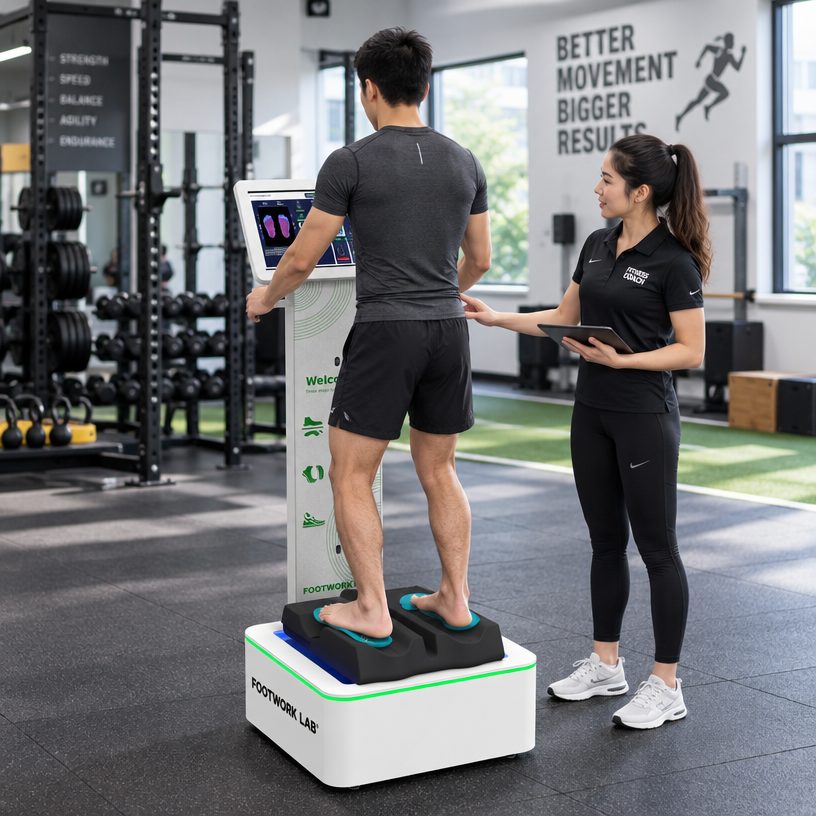
A pressure system records quantities, and the quantities are the point. Standing passes give footprint length and width, contact area, the distribution of load across the sole and the arch presentation at rest. Walking passes add the behaviour: foot axis angle, the proportions of contact and flat phase, peak and mean pressure, and the speed at which the centre of pressure travels forward. A balance trial adds how load shifts when the body is asked to hold still.
Cameras extend the record past the sole. A lower-limb camera captures heel position, knee tracking and the direction the shin carries while the plate beneath is doing its work; a posture camera captures how the column above sits over that base. Together they turn a sole measurement into a force-line picture, which is the part of the record that footwear and insoles are actually specified against. A pressure number without the alignment beside it is half a sentence.
The strength of this type is comparability. Because the items are named and the session can be run identically, a record taken today can be set beside one taken next season and the difference discussed item by item. That is what makes a retest worth booking and a service worth charging for. The weakness is that nothing here can be sent to a milling machine: a report is a decision input, and a build still needs a specification and a forming step.
The posture station: a different subject entirely
The third type points its cameras at the whole body rather than at the sole. Its subject is the standing column: head position, shoulder height, pelvic level and tilt, knee alignment, and the shape of the legs as they carry weight. In our own system those items are recorded as angles and offsets alongside the foot data, so that a session produces one document covering foot, ankle, lower limb and posture rather than three documents nobody has time to reconcile.
This is the type that most often gets called a scanner in ordinary speech, because a camera that builds a spatial picture of a person sounds like one. The important thing for a buyer is what the output is for. A posture record is a conversation tool and a comparison tool: it shows a customer something they can see in a mirror but cannot quantify, and it gives the practitioner a baseline for a review. It is not a diagnosis, and the moment a listing implies that it is, the listing has left the category.
Where this type earns its place is in services that sell more than a pair of insoles: sports training, rehabilitation, children’s programmes, workplace screening. The foot record explains the load; the posture record explains why the customer is interested in the first place. Systems that combine both in one session shorten the conversation considerably, which is a commercial benefit rather than a clinical one, and worth being honest about.
Five questions that sort a listing before a demonstration
First, ask what the document contains, in the vendor’s own words, and insist on a sample. Geometry, named quantities, or photographs — the answer decides the category. A vendor who cannot produce a sample report is selling a photograph of a machine, and the demonstration will be a demonstration of the machine rather than of the record.
Second, ask what happens to the file after the session. Export format, whether the customer receives a copy, whether a colleague can reopen it without the unit, and whether two sessions can be displayed side by side. Comparability is a software property, and it is the one most often missing from a listing that leads with hardware.
Third, ask how the session is standardised. How many passes, which foot first, what instruction is given, where the machine stands. A vendor who has thought about repeatability answers with a routine; one who has not answers with features. The difference shows up six months later, when the clinic tries to review a customer and finds two records that cannot be set beside each other.
Fourth, ask who reads the output and what the vendor says about that. Any answer that puts the interpretation in the software is a warning. The fifth question is about the years after delivery: what the warranty covers, who answers when something fails during a clinic morning, whether the software improves over the network, and whether there is a route to a human engineer rather than a ticket queue. Those answers rarely appear in a listing, and they decide what the machine is worth in its third year.
A demonstration is worth more if it is run on your terms. Bring a colleague rather than a patient, ask for the routine to be performed twice on the same person, and look at the two documents side by side afterwards. Two sessions run minutes apart should produce records that can be read together; if they cannot, the machine will not manage a comparison across a season either. Ask to keep a sample report and to see it opened on a computer that is not the demonstration unit, which is where awkward export questions usually surface.
Where our own record sits, stated plainly
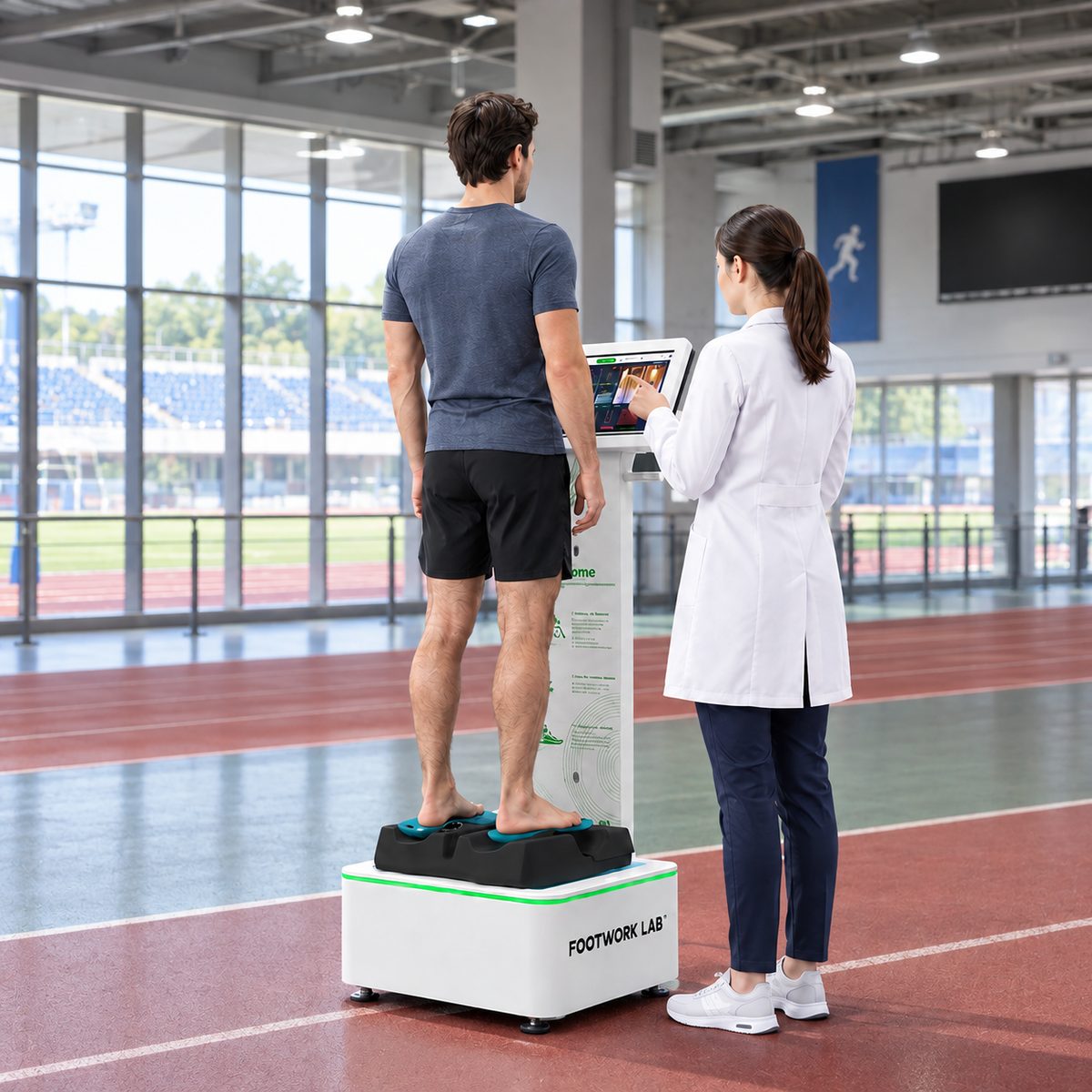
Our system is a pressure and alignment record with an on-site forming step. It captures foot data, lower-limb alignment and whole-body posture in one session, and it forms insoles over a shaping pillow while the customer waits. It does not capture the outer contour of the foot and produces no geometry for a milling tool. When a buyer arrives using the phrase from this article’s title, we set the phrase aside and describe the document instead: what it holds, what it feeds, and what it cannot do.
We also do not diagnose. Every item — foot axis, contact and flat phase proportions, footprint dimensions, peak and mean pressure, contact area, centre-of-pressure speed, heel position, shoulder height, pelvic level — is a recorded value, and reading it belongs to a qualified professional. Our reports carry the line saying the data is for reference. A listing that implies otherwise is not describing a better machine; it is describing a different, and unsupportable, claim.
Commercially we keep to structure. One unit is the minimum order, machines accept ODM, every unit is tested at the plant for seven days before dispatch, the warranty runs twelve months against non-human damage with free parts, and support runs through a dedicated WhatsApp group with engineers reachable directly, remote assistance when a session goes wrong, and over-the-air updates where the unit is connected. We do not publish prices, because a quotation depends on configuration, destination and the service around it, and we do not promise exclusivity by region.
What we can offer instead of a phrase is a sorting conversation. Send the four listings that started this article, or your own, and we will say which category each belongs to and which questions it will fail. Sometimes the answer is that a contour device is what the buyer needs, and we say so. A sale built on an unresolved adjective comes back as a disappointed clinic with our name on the crate.
Frequently asked questions
Is the X5 a 3D scanner?
No. The phrase is what buyers type in a search bar, not a description of the equipment. The X5 records foot pressure, lower-limb alignment and whole-body posture, and forms insoles on site. It does not produce a contour file of the foot, and we say so in the first conversation.
What are the three machine types behind the phrase?
A contour device that captures the outer surface and produces geometry for a milling tool; a pressure system that records load, timing and alignment as named quantities; and a camera station that records standing posture. Each can defend the word, and each answers a different question.
What does a posture record contain?
Angles and offsets for the standing body: neck tilt, shoulder height difference, pelvic level and tilt, knee extension, and the alignment of the legs under load, recorded alongside the foot data so one session produces one document. These are recordings, not conclusions.
Can the system make insoles in the same visit?
Yes. With the heating box and shaping pillows in the kit, a specified build can be formed on site while the customer waits. The specification — contour family, support grade, cushioning — comes from the reading, and the pillow provides the contour family rather than an individual shape.
How do I sort listings before booking a demonstration?
Ask for a sample report and read what it contains: geometry, named quantities or photographs. Then ask about export, session routine, who reads the output, and what happens after delivery. Those five answers sort a shortlist faster than any specification sheet.
What are the order and warranty terms?
One unit is the minimum order, machines accept ODM, each unit is tested at the plant for seven days before dispatch, and the warranty covers twelve months against non-human damage with free parts. Support runs through a dedicated WhatsApp group with direct engineer access.
Who reads the report?
A qualified professional. Every report states that the data is for reference, and interpretation of the alignment images, pressure values and posture angles belongs to clinical or professional judgement rather than to the equipment or the vendor.
What we would do next
Take the shortlist and put one question at the top of the page: what does the document contain when the session ends. Send the shortlist through the contact page and we will sort it category by category, including the listings that are not ours and the ones we would not sell you. The X5 system page lists the record items and the forming module in the equipment’s own terms.
Two pieces go further into the phrase. Plantar 3D scanning is a search term makes the same argument from the scanning side, and three ways to capture a foot sets out the three trades in short form. 3D foot scanner for podiatrists covers what a clinic actually does with the record afterwards, and postural analysis with the X5 describes the posture items one by one.
This article is intended for professional and educational reference. It is not medical advice. Foot assessment equipment produces measurements and images; clinical interpretation and any decision about care remain the responsibility of a qualified professional. Certification scope is limited to the documentation we hold: European Union certification and ISO quality system certification.