
Advertisement. This is a promotional product article.
How Custom Insoles Fit Into a Careful Approach to Stepping on Ladders and Hard Objects
What are custom insoles, and who might consider them?
In the sense used here, custom insoles are shoe inserts built with a shaping layer that is molded to an individual customer’s foot data. The manufacturer behind the product information summarized in this article, FOOTWORKlab, describes itself as a factory that develops and produces its own products. Its range includes custom orthotic insoles in three categories — Daily, Medical and Sports — alongside detection equipment such as the F2-Pro Gait Scanner and the F5-LAB Gait Analysis Platform, and the OCF orthotic shoes series.
People tend to look into this category when ordinary footwear feels like a compromise: long stretches of standing on hard floors, walking on uneven ground, or working in shoes that were never shaped around their own feet. Ladders, step edges and hard objects underfoot come up often in that same conversation, and this article treats that concern as a real one rather than a marketing hook.
One point has to be clear from the start. The available product materials do not describe ladder work, stepping onto hard objects, impact testing or injury prevention. Nothing in this article should be read as a claim that any insole prevents damage to feet or reduces a measured impact. What follows explains what the products are, how a fitting is described, how to read the specifications, and exactly where the published information stops.
What does the fitting and ordering process actually involve?
The materials describe a sequence rather than a single purchase, and each stage has its own conditions.
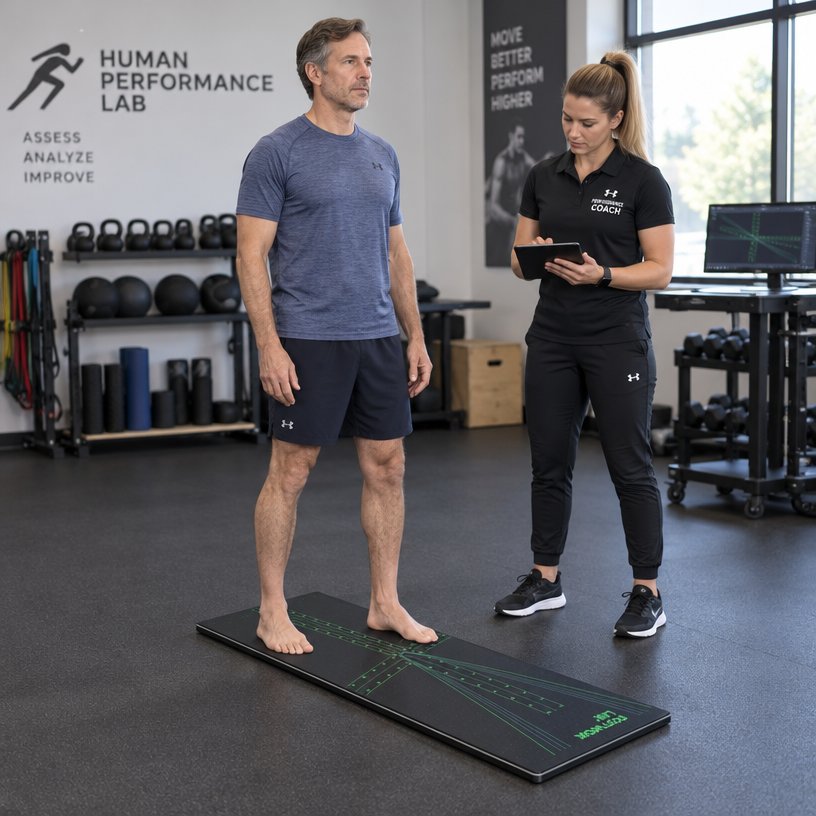
Capturing foot data. Foot information is collected with the company’s detection systems. Those systems are described as providing three major detection functions, one of which is upper body posture detection; the excerpt available for this article is cut off at that point, so the remaining functions are not listed here. Sinmec Fabric — a flexible fabric sensor technology based on conductive materials and yarn fusion textile technology — is used in the pressure plates of systems such as the F2 and FMP Gait Scanners. BodyFit AI, described as a machine-vision model built on a neural network trained with millions of custom datasets, is said to understand the condition of the foot, leg and spine as well as posture and movement, and to support monitoring and guidance for sports and rehabilitation.
Choosing a line. The catalogue is organized into three categories with over 30 types in total. Daily insoles are grouped under comfort, stability and shock absorption. Medical insoles are grouped under flat feet, pressure relief, hallux valgus and plantar fasciitis. Sports insoles cover basketball, golf, skiing, hiking, running, badminton and more.
Molding. Depending on the type, insoles combine materials such as polyester fiber, Aosolite, ACF, PET thermoplastic fiber and suede with thermoplastic shaping layers molded to each customer’s foot data.
Checking before dispatch. According to the company’s own FAQ, all products are quality-controlled professionally and strictly during manufacturing, machines are tested and insoles are checked before leaving the factory.
Several practical details are simply not in the materials: how long a fitting or production cycle takes, how many appointments are needed, what the insoles cost, or whether a scan produced by a different system can be used. For individual buyers there is also a stated order condition worth knowing before you plan anything — the minimum order for insoles is 200 pairs, which can be mixed across types and sizes, while the minimum order for a machine is one unit. ODM is offered for machines, and ODM and OEM for insoles; OEM service for a machine is described as requiring discussion rather than a fixed minimum.
How should a non-specialist read the specifications?
The specification language is worth unpacking, because a few familiar-sounding words carry narrower meanings than they seem to.
Пользовательский means the shaping layer is molded to the customer’s own foot data. It does not, by itself, say anything about how much force the finished insole absorbs or how it behaves on a ladder rung.
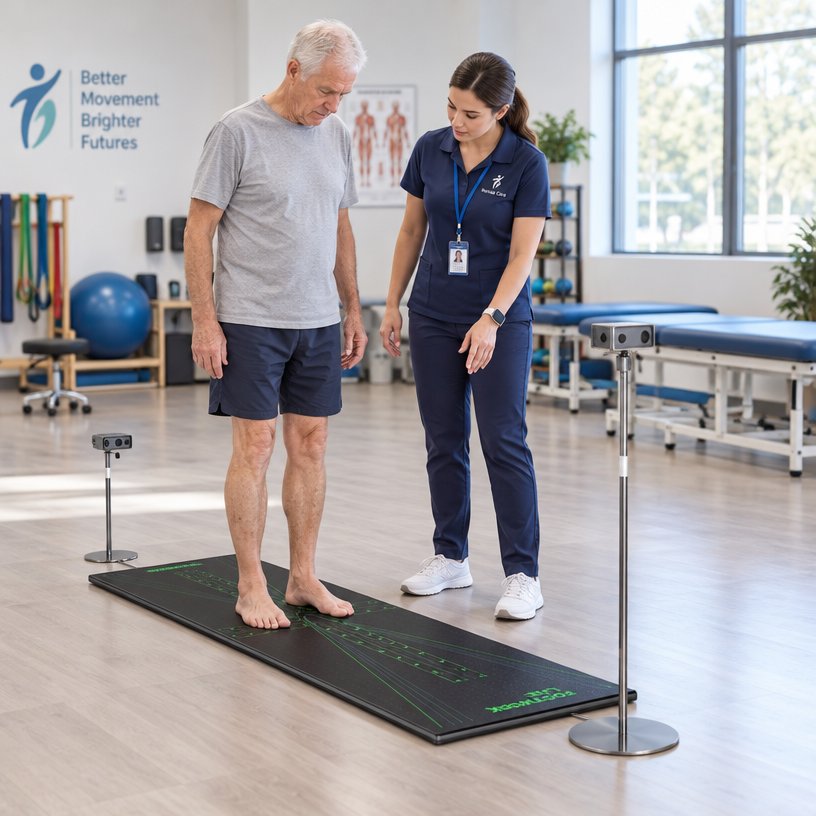
Shock absorption appears as a category label under the Daily line, alongside comfort and stability. The materials do not attach a number, a test method or a benchmark to that label, so it should be read as a way of sorting product types rather than as a measured performance figure.
Material names — polyester fiber, Aosolite, ACF, PET thermoplastic fiber, suede — are listed by type, without thickness, density or durability figures. The list tells you what goes into a given insole; it does not predict how that insole will feel underfoot.
Detection technology is described functionally. BodyFit AI is presented as a machine-vision model trained on millions of custom datasets for understanding foot, leg and spine condition, posture and movement, and for supporting monitoring and guidance in sports and rehabilitation. Sinmec Fabric is presented as a flexible sensor technology used in the pressure plates of the gait scanners and under development for wearable applications. Neither description includes accuracy figures, validation studies or certifications.
The software layer is a network SaaS system that supports multi-language settings and online OTA updates, with one account able to manage multiple devices — a setup the materials frame as suited to chain clinics and multi-store operations. That detail matters mainly if you are evaluating the equipment rather than a single pair of insoles.
In short, the published specifications explain composition, category and process. They do not contain impact ratings, load limits, pressure-reduction percentages or safety standards, and none should be inferred.
Is this right for you, and when should you be cautious?
The honest answer depends on why you are looking, and several conditions are worth checking before you commit.
The product information supports a match if your interest is in a shoe insert molded to your own foot data, and if your reason falls inside the categories the company actually names: comfort, stability or shock absorption under the Daily line; flat feet, pressure relief, hallux valgus or plantar fasciitis under the Medical line; or a specific sport under the Sports line. The Medical line is described as providing rehabilitation care for those named conditions, and that description is the manufacturer’s own wording, not an independent finding.
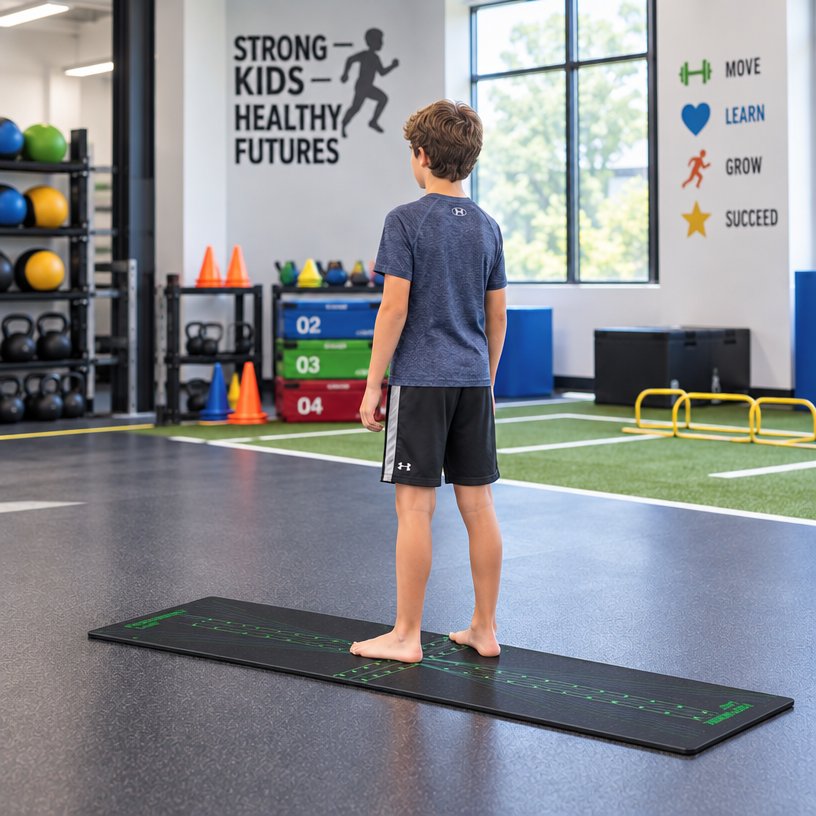
Be cautious in these situations. First, if your goal is documented protection while climbing ladders or stepping onto hard objects, the materials contain no impact test data, no standards and no injury-prevention claims, so an insole should not be counted on for that purpose on the basis of this information. Second, if your foot situation is not among the named conditions, the materials offer no guidance either way. Third, the materials say nothing about suitability for children, during pregnancy, after surgery, or in relation to any diagnosed medical condition, and they say nothing about how the insoles interact with footwear other than that the OCF orthotic shoes are a separate product line. Fourth, the 200-pair minimum for insoles is a real constraint for an individual buyer and is worth confirming with the company before you plan a fitting.
Where does this information come from, and what does it not cover?
Everything factual here is drawn from two company documents. The first is a set of product manual excerpts covering the product range, BodyFit AI, Sinmec Fabric, the three detection functions, the insole categories, the materials and the foot conditions the Medical line addresses. The second is the company’s official FAQ page, listed at footworklab.net/resources/FAQ/en/ and captured on 9 November 2026, which supplies the factory description, the quality-control statement and the minimum order and ODM/OEM details.
Those sources leave clear gaps, and this article does not fill them. There is no information on ladder use, on stepping onto hard objects, on impact or shock testing, on durability, on pricing, on warranty terms, on lead times, on independent user experience, or on third-party certifications and clinical studies. Several manual excerpts are cut off mid-sentence, so even the details they do cover may be incomplete here. The descriptions of what the technology and the insoles are intended to do come from the manufacturer, and no independent evaluation was used. Treat this as a map of what the company says about its own products, not as a verdict on whether the products work for your feet.
Frequently asked questions
Do these insoles prevent damage when I step on a ladder rung or a hard object?
The available materials do not describe ladder use, hard-object contact, impact testing or injury prevention, and no such claim is made here. Shock absorption appears only as a category label under the Daily line, without a number or test method attached. If protection from impact is your main requirement, this information does not answer that question.
How is my foot data collected?
Through the company’s detection systems, which use pressure plates built with Sinmec Fabric and are described as providing three major detection functions, one of them upper body posture detection. BodyFit AI is presented as the machine-vision model that interprets foot, leg and spine condition along with posture and movement. The excerpt available here is truncated, so the full list of functions is not included.
What materials go into the insoles?
Depending on the type, the company lists polyester fiber, Aosolite, ACF, PET thermoplastic fiber and suede, combined with thermoplastic shaping layers molded to each customer’s foot data. No thickness, density or durability figures are published alongside those names.
Can I order a single pair?
The stated minimum order for insoles is 200 pairs, and those pairs can be mixed across different types and sizes. The minimum for a machine is one unit. ODM is offered for machines, ODM and OEM for insoles, and OEM service for a machine is described as needing discussion.
Are the Medical insoles meant for diagnosed conditions?
The Medical line is described as providing rehabilitation care for flat feet, hallux valgus and plantar fasciitis, and as addressing pressure relief. That is the manufacturer’s description of what the line is for; the materials do not state whether it substitutes for, or should be used alongside, professional care.
Who manufactures the products?
The company states that it is a factory and that it develops and produces its products itself. It also states that quality control is carried out professionally and strictly during manufacturing, with machines tested and insoles checked before leaving the factory.