
The booking says running capture, and the runner on the platform says she cannot run today. A sore calf from a long run two days ago, a comeback after six weeks off, a scheduled recovery week in a training plan — the reasons vary, but every room with a running platform meets one of them regularly. Cancelling feels wasteful, and usually it is: a session with a runner who cannot give a full-effort stride can still produce a record worth keeping, provided everyone in the room agrees on what today’s capture is and what it is not. That agreement is what this article is about. It covers what actually changes in a stride when effort drops, how to choose today’s pace with the runner rather than for her, which questions a submaximal record can answer honestly and which ones it cannot, what the operator writes on the session sheet so the day stays recoverable, and the point at which the honest answer is to send the runner home and book another date. Some rooms call it submaximal running capture; the substance is simpler — one real stride, taken at the effort the runner actually has today, described on paper exactly as it was taken.
Why the appointment is worth keeping
The first instinct when a runner arrives unable to run is to apologise and reschedule. Before doing that, it helps to remember what the runner came for. Most of them did not book because they wanted a photograph of a stride at race pace; they booked because something in their footwear or training has changed and they want a structured look at how load moves through their feet. Several of the questions behind that booking survive a low-effort day intact: which regions of the foot carry the most during running-shaped loading, how the left foot compares with the right, whether the contact pattern looks the way the runner describes it feeling. Those answers can be collected today, at whatever effort allows.
The conversation that decides this is short and should happen before anything is switched on. Ask the runner directly: can you move at a pace that feels honest, without guarding, without limping, without thinking about the sore spot on every step? If the answer is yes, the session proceeds with the effort level written down. If the answer is no — if every step would be a negotiation with a symptom — the room has its answer too, and it is covered near the end of this article. The mistake to avoid is the middle case: capturing a guarded, compensating stride and filing it as if it were representative.
There is also a practical argument for keeping the appointment. The runner is already in the room, the footwear question can be settled today, and the intake conversation — training history, what changed recently, what she wants from the assessment — produces material the next session will need anyway. A submaximal capture plus a thorough interview beats a cancelled slot and a cold start in three weeks.
What changes in a stride when the effort drops
A stride at reduced effort is a real stride, but it is a different one, and the room should know in what ways before reading anything on the screen. The most visible change is ground contact: at lower speed the foot spends longer on the surface each step, and load that would arrive quickly at higher effort arrives gradually instead. The pattern on the pressure map softens accordingly: regions that spike when the runner is pushing read more evenly at a jog, and the roll through the forefoot spreads across a longer window.
The centre of pressure path changes shape too. At easy paces many runners sit further back through stance, keeping weight on the rearfoot longer before the transfer forward begins; at higher effort the same runner may carry more through the forefoot and midfoot, with a shorter, steeper path. Neither version is the wrong version. They are the same foot answering two different demands, and today’s record describes the demand that was actually applied.
Style adjustments pile on top of the pace effect. A runner who is protecting a sore calf shortens the stride on one side, lands more gently, and shifts weight in ways she is not aware of. This is why the room watches the runner, not only the screen: a visibly guarded stride is a finding about today’s capture conditions, and it belongs in the notes whether or not the map looks unusual. The honest summary: a submaximal capture shows how this foot behaves under this load, today, at this pace — and every one of those qualifiers needs to survive onto the session sheet.
Choosing today’s pace with the runner
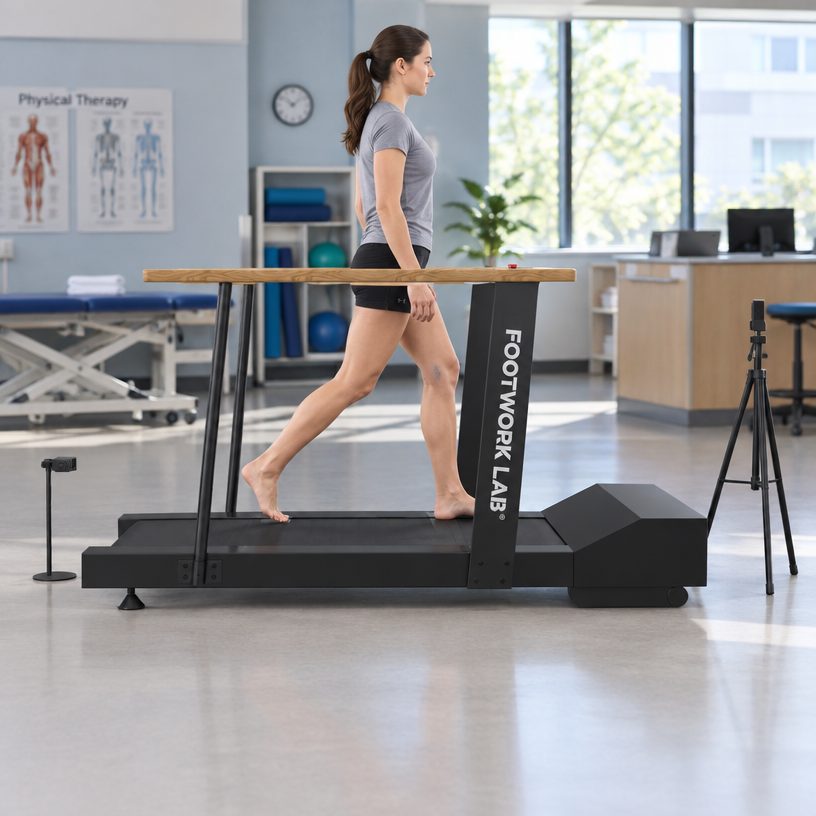
Pace on a running platform is a protocol decision, not a preference, and on a submaximal day that decision gets made with the runner rather than for her. The opening question works well phrased as capacity rather than speed: what pace could you hold all morning without the sore spot entering your mind? The answer is usually conservative, and that is fine — the session wants the fastest pace the runner can hold without guarding, which is a different thing from the fastest pace she can produce.
From there the procedure looks ordinary. The runner warms up at a walk, moves to the chosen pace, and the operator watches the first passes for the signs of guarding: an asymmetric stride, a hesitation at contact, a runner who keeps glancing at the sore side. If the first passes look guarded, drop the pace rather than coax the runner through it. A slower, clean stride tells you more than a faster, protected one, and the record keeps its value precisely because the conditions were chosen honestly. Our article on belt speed as a protocol decision covers the same logic for full-effort days, and the reasoning transfers unchanged.
Two things get written down the moment the pace is agreed. The first is the pace itself, in whatever units the room uses — the runner’s own description is enough, as in: easy pace, conversation possible, roughly what I run on recovery days. The second is the reason today’s pace differs from usual: one line on the intake form, such as: calf soreness after a long run two days ago, runner reports guarding at faster efforts. Those two lines are what make the record interpretable in a month, by anyone, without a phone call.
What the record can honestly answer
A submaximal capture answers a specific set of questions well. It shows how load distributes through this foot during running-shaped movement at the recorded effort. It gives a like-for-like left and right comparison, because both feet worked under the same conditions in the same session — the comparison logic is the same one described in our piece on building a left-and-right comparison you can defend. It shows contact timing and the shape of the centre of pressure path at that pace. If the session includes several passes, it shows how consistent the runner’s pattern is from stride to stride, which many runners find genuinely useful on its own.
What it cannot answer is the question it will be asked anyway: is this how my foot behaves when I actually race? The honest answer is that nobody in the room knows, because the record describes a different demand. A foot that reads heavily through the forefoot at an easy jog may distribute very differently at faster efforts, and the map from today neither confirms nor denies it. Rooms that say this plainly keep their records trustworthy; rooms that let a runner leave believing today’s map predicts race-day loading have manufactured a conclusion the equipment never produced.
This is also where the standing division of labour belongs in the conversation. The platform produces measurements and images of load under stated conditions. What those measurements mean for this runner’s training, footwear or care is a judgement for a qualified professional working with the full record — and the record’s usefulness depends on how precisely the conditions were stated. A submaximal record with a stated pace and a stated reason is usable evidence. The same capture without the labels is a rumour about a stride.
Writing submaximal into the record
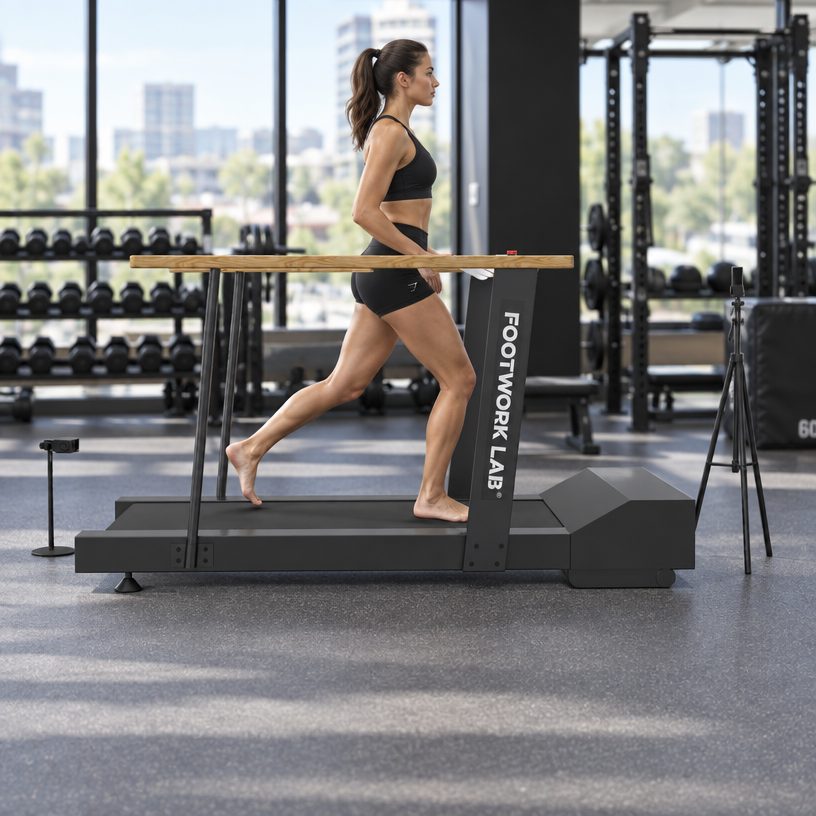
The session sheet does most of the work of making today recoverable. The lines that matter are short. Effort level: submaximal, easy pace, conversation possible. Reason: calf soreness after a long effort two days ago; runner reports guarding above easy pace. Observations: stride visibly shortened on the left on early passes, settled after warm-up. Footwear: the pair the runner actually trains in, and the reason it was chosen — our article on choosing which shoes go on the belt covers that decision separately.
Why this much writing for one session? Because the most common future use of a submaximal record is comparison. A runner who captures today at an easy pace will, in a few months, stand on the same platform at full effort, and the first thing the room will do is put the two records side by side. Without today’s labels, the comparison reads as a change in the foot. With them, it reads correctly as a change in demand, and the reader can decide which parts of the difference belong to the pace and which might belong to the training in between.
The labels also protect the room from its own archive. A submaximal record that looks, on the thumbnail, like every other record from that runner is a trap waiting for a busy afternoon. Some rooms add a visible marker to the file name; some make the effort line the first line of the printed summary the runner takes home, as described in our piece on what belongs in a printed summary. Whatever the method, the test is the same: a stranger opening the record a year later should know within one screen that the capture was not a full-effort one.
Where a walking pass fits into the same session
When running is off the table entirely, the session does not have to end with an empty platform. A walking capture asks a different, smaller demand of the same foot, and it has real value on a day like this: it shows how the foot behaves when the runner is not running at all, which is a question most runners never think to ask. For a runner managing a sore calf, the walking record also gives the next session a baseline — the comparison then runs in the useful direction, from a documented quiet day to a documented full-effort one.
The procedure needs no special handling. Same platform, same footwear decision, same session sheet, with the effort line reading: walking, comfortable pace. The operator says the same kind of thing she says on running days — walk the way you walk on the pavement outside, not the way you walk in a hallway — because the instruction shapes the stride more than the hardware does. Rooms that keep instruction wording consistent across operators and days are the ones whose walking records can be compared at all; our article on two operators and one protocol covers how those scripts get agreed.
A walking pass also settles a practical question the runner often raises: whether today’s soreness has changed ordinary movement, not just running. Seeing the walking record beside the running-shaped one from an earlier visit lets a professional describe the difference with evidence instead of impressions. That is the equipment doing exactly what it is built for, and nothing more than that.
When the room should reschedule instead
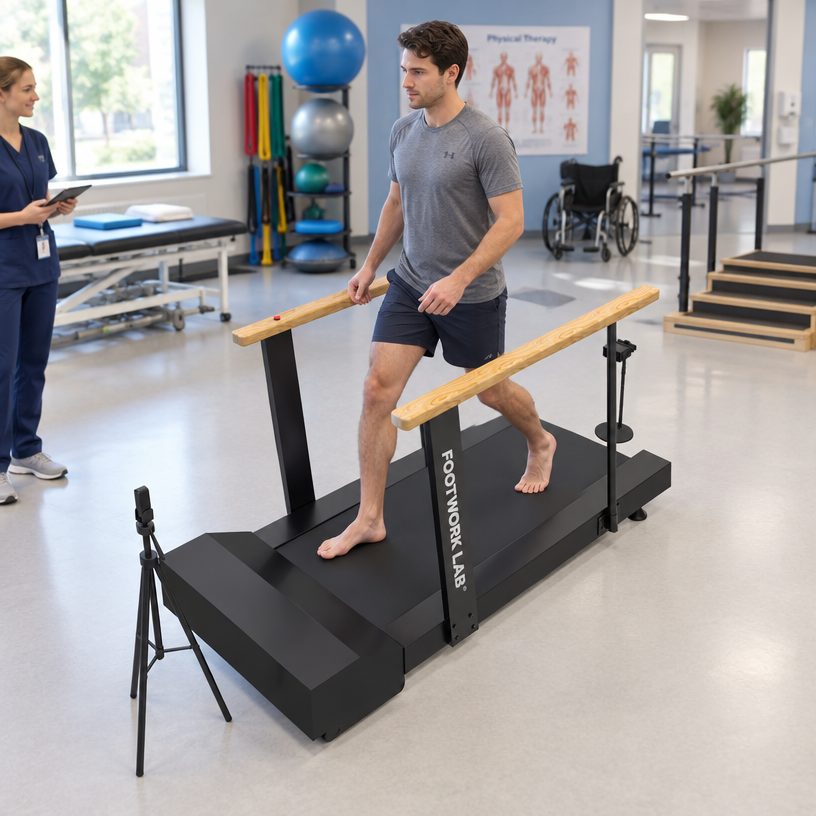
There is a line in every one of these conversations, and the room’s job is to find it. When the runner limps, when the stride is visibly protected on every pass, when the sore spot changes the way the foot lands rather than merely the pace she chooses — the capture should not happen. A guarded stride recorded and filed as representative is worse than no record, because it is persuasive: the map looks authoritative on a screen, and nothing on it announces that the runner was negotiating with a symptom through every contact.
The rescheduling conversation deserves the same care as the capture one, because runners protect their training and their appointments with equal stubbornness. Say plainly what the room would be buying: a map of a compensation, not a map of your foot. Say what the rebooked session will look like, and that the intake conversation from today is already filed, so the next visit starts warm. Most runners accept that trade once it is stated in those terms.
Between the two outcomes — capture at reduced effort, or reschedule — there is a working rule most experienced rooms converge on: capture when the stride is honest at some pace, label the pace, and reschedule when honesty is unavailable at every pace. The runner usually knows which side of that line she is on before the operator does; the room’s contribution is asking in a way that makes an honest answer easy, then writing down whatever the answer is.
Frequently asked questions
Is a running capture still useful if the runner cannot give full effort?
Yes, if the effort level is recorded. A submaximal capture answers questions about how load distributes at the recorded pace, how the left and right feet compare under the same conditions, and how consistent the stride is from pass to pass. What it cannot do is predict how the foot behaves at higher efforts, so the record must carry its effort label wherever it goes.
Should we reschedule instead of capturing a reduced-effort stride?
Reschedule when the runner is guarding on every pass — limping, visibly protecting one side, or changing how the foot lands because of a symptom. Capture when the stride is honest at some pace the runner can hold comfortably. The middle case, a guarded capture filed as representative, is the outcome to avoid at all costs.
What should the session sheet say about a submaximal day?
Three things: the effort level in the runner’s own terms, the reason today differs from a usual session, and any observations about guarding or asymmetry seen during the passes. Those lines make the record interpretable months later and keep any future comparison between this capture and a full-effort one honest.
Can we compare today’s submaximal record with a full-effort capture from an earlier visit?
You can place them side by side, but read the difference as a change in demand before reading it as a change in the foot. Pace, effort and the day’s condition are all differences between the two records. A professional reading both should see the conditions stated on each, which is exactly why the labels matter.
How do we choose the pace when full effort is not available?
Choose it with the runner: the fastest pace she can hold without guarding or thinking about the sore spot. Phrase the question as capacity rather than speed. If early passes look protected, drop the pace rather than coaxing through it. Whatever is agreed goes on the sheet in the runner’s own words.
Does a slower stride make the pressure map wrong?
No. The map records what happened under the stated conditions, and a slower stride is simply a different condition: longer ground contact, a softer load pattern, often a centre of pressure path that sits further back. The map is accurate for the demand that was applied. It becomes misleading only if someone reads it as if the demand had been a different one.
What footwear should the runner bring if running is off the table?
The pair she actually trains in, even if today’s session ends up being a walking capture. The footwear decision belongs to the question the assessment is trying to answer, and the training shoes are part of that answer. If a walking pass is added, the same pair keeps the session comparable with anything recorded later.
What we would do next
If your room keeps running appointments, give the team one habit this week: before the platform is switched on, ask the capacity question — what pace could you hold all morning — and write the answer on the session sheet before anything is captured. The F5-LAB running and gait platform page describes how walking and running captures sit in one workflow, and our article on belt speed as a protocol decision extends today’s reasoning to full-effort sessions. For the footwear side of the same appointment, choosing which shoes go on the belt covers the decision in detail, and the same foot on a different indoor surface handles what changes when the season moves training indoors. Questions we answer most often between shipments are collected on the FAQ page, and equipment-specific ones are quickest through the contact page.
This article is intended for professional and educational reference. It is not medical advice. Foot assessment equipment produces measurements and images; clinical interpretation and any decision about care remain the responsibility of a qualified professional. Certification scope is limited to the documentation we hold: European Union certification and ISO quality system certification.