
The pick list refreshes, the trolley is still half empty, and the shift clock says the morning has barely started. Somewhere in a distribution centre, a picker is starting what will turn out to be a working day measured in aisles rather than hours: concrete floor, steel toe caps, a route that resets with every new order. By the afternoon the step count will have climbed past anything anyone planned for, and the picker’s feet will have paid for every box before noon.
Warehouse pickers are among the highest-mileage workers any foot professional will ever assess, and they arrive with a specific profile: long distances on unyielding floors, footwear fixed by employer rules, and a pace set by the order system rather than by the body. For shoe retailers, orthotic workshops, and occupational health providers serving logistics operations, this is a group worth a dedicated routine rather than a generic insole recommendation. This article describes what a picking shift actually does to feet, the questions to ask first, what an assessment adds, and how a support programme for a warehouse workforce is piloted and kept running.
The Shift Is Measured in Aisles, Not Hours
Ask a picker how long a shift is and the answer comes in distance, not time. The route loops between racking and packing stations, back to the trolley, on to the next order, all day, with the pace dictated by the pick list and the floor unchanged from one end of the building to the other. Unlike most walking jobs, there is almost no variety of surface to break the pattern: sealed concrete everywhere, occasionally a dock plate, rarely a soft patch anywhere. The same regions of the foot absorb the same impact thousands of times a shift, on the same unforgiving ground.
The footwear adds its own conditions. Safety footwear with toe caps is mandatory in most picking areas, and it tends to be built for protection first — stiff soles, generous toe boxes, sometimes heavier than the wearer would choose. A picker therefore walks their kilometreage inside shoes selected by policy, on a surface selected by the building, at a tempo selected by software. None of the three variables that most shape foot load — surface, shoe, pace — was chosen by the person whose feet absorb all of it.
This is why picker complaints have a recognisable shape when they reach a clinic or a fitting bench. It is rarely a single dramatic incident; it is the accumulation — a forefoot that burns by mid-shift, heels that complain on the way to the car, an arch that did not used to have opinions. The professional hearing this is not looking for one cause. The honest description is a load-environment problem: distance, floor, and shoe interacting, shift after shift. The assessment’s job is to turn that description into specifics, and the specifics are what any support decision will stand on.
The Arithmetic of a Picking Day
A useful exercise with any picker customer: rebuild the day’s arithmetic together on paper. How far does a typical shift cover, in their own estimate — aisles walked out and back, trips to packing, the loop to the break room? How much of it is under time pressure, and does the pace rise near the end of the shift when the order list is clearing? Which stretches are walked loaded, pushing a trolley or carrying a tote, and which unloaded? The answers draw a load profile that no questionnaire about “standing work” will ever capture, because picking is not standing work — it is high-mileage walking under intermittent load.
Two details in the arithmetic deserve special attention. First, the loaded-to-unloaded ratio: carrying changes how the foot strikes and how long it stays in contact with the ground, and a picker who spends most of the day pushing a loaded trolley walks a different walk from one who walks empty between picks. Second, the surface: warehouse floors are chosen for forklifts and pallet trucks, not for feet, and even the best cushioned shoe cannot fully offset a full shift of sealed concrete. Both facts belong on the record sheet, because they will shape both the assessment conditions and any support conversation that follows.
Practitioners who work with logistics teams often notice something else in the arithmetic: the picking pace rarely allows the natural load-shifting of unhurried walking. The hurried stride pattern — shorter contacts, harder heel strikes, less time on any one region but more repetitions — is its own category, and it is the pattern the assessment should try to see. Asking the picker to describe a busy morning versus a quiet one usually tells the professional more about real conditions than any single capture can, and the contrast goes straight into the file.
Questions Worth Asking Before the Assessment
A short question set, asked before any capture, fits the picker case. One: the employer’s shoe policy — which models are permitted, are they issued or chosen from a list, and which pair is actually worn? Everything recommended later has to fit inside that policy. Two: the shift pattern — lengths, rotation, whether overtime is common in peak season, because a support decision made for ordinary weeks must survive peak weeks too.
Three: where does the day complain, and by when — the forefoot by lunchtime, the heels on the drive home, one side more than the other? Pinning the complaint to the shift’s timeline gives the follow-up a comparison point in the worker’s own language. Four: what has been tried already — cushioned socks, sports insoles from a supermarket, a different permitted shoe model, thicker work socks? Every failed attempt is information; it shows what the foot and the mandated shoe have already rejected, and it saves the professional from proposing the same thing in different packaging.
Five, and picker-specific: what does the worker do outside work? Many pickers also stand or walk in a second job, or commute long distances on foot, and the total weekly load is what any support has to cover — not just the shift. Write the five answers down in the picker’s own words at the top of the record sheet. The set takes minutes, it converts “warehouse worker” into a specific person on a specific floor in specific mandated shoes, and it is the part of the file the follow-up conversation will lean on hardest.
What an Assessment Adds for a Picker
The assessment’s contribution, for this group, is to make the load environment visible in numbers. A static capture shows the arch profile and standing load distribution — the base picture of how this foot behaves when quiet. A dynamic capture at the picker’s own working pace shows how load travels through the gait cycle across those thousands of contacts: where the concentration sits, how the centre of pressure travels, whether the two sides share the work or split it. Both are measurements; the interpretation belongs to the qualified professional who combines them with the five answers and the examination.
A question worth deciding deliberately: capture with the work boots or without? The work boot is the actual operating environment — its sole geometry, its stiffness, its toe cap all change the picture — so a capture inside the mandated footwear answers questions about the real shift. A barefoot capture answers questions about the foot itself. Rooms that pick one condition per question, and write the choice on the sheet, end up with files that can be compared honestly at the follow-up. Rooms that mix conditions without noting it build files no one can read a trend from.
What the assessment does not do is pronounce. It cannot tell the picker why the order system sets the pace it sets, and it does not diagnose anything; it produces measurements that make the professional’s conversation specific — “here is where your forefoot is absorbing the day” rather than “your feet are just tired”. That specificity is exactly what a picker who has heard generic advice for years responds to, and it is the difference between a file that shapes a sensible support decision and a file that just documents a complaint.
Support That Survives a Warehouse Day
When the professional’s interpretation points toward foot support, the warehouse day sets the requirements. Distance demands support that holds its shape across thousands of contacts, not only across the first week. The hard floor asks for a load distribution that keeps any single region from absorbing the whole day — the assessment record, not the catalogue, says which region needs the relief. And the mandated safety shoe defines the physical envelope: whatever goes in must fit under the foot without pushing it up into the toe cap, in a shoe the worker did not choose.
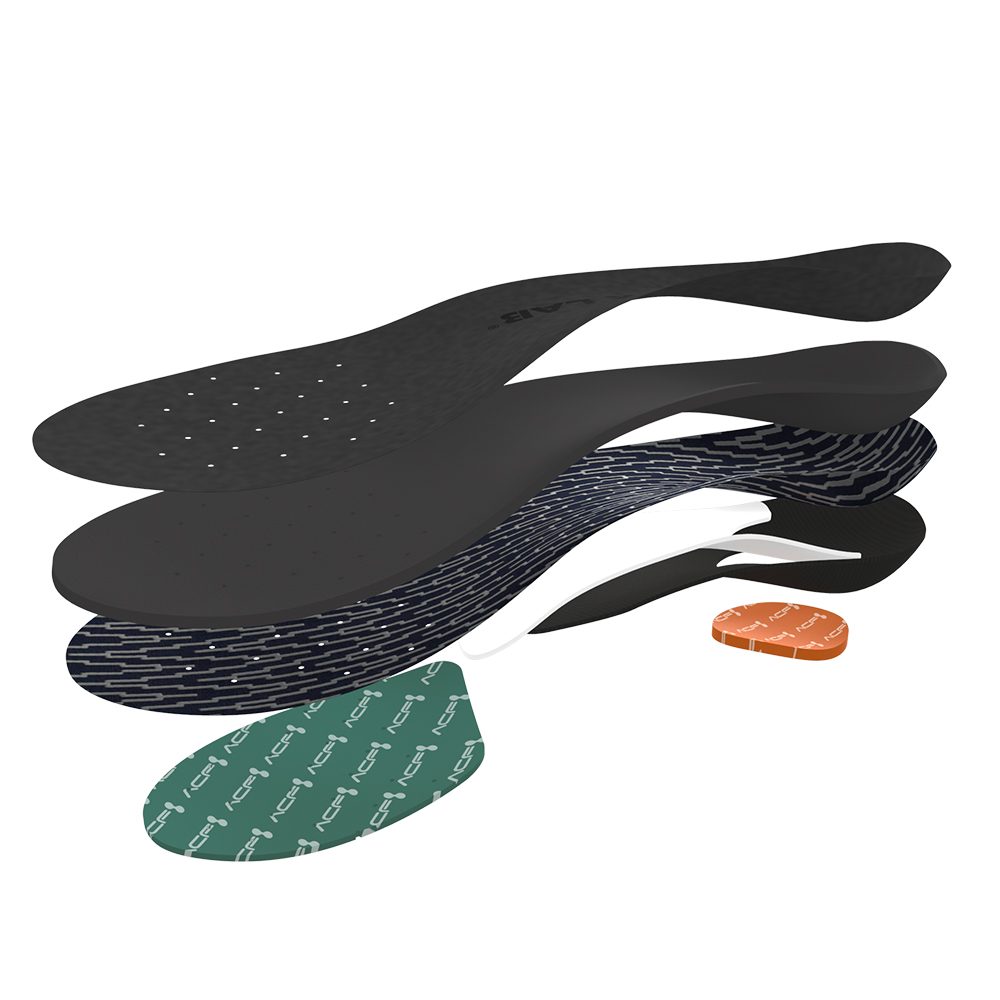
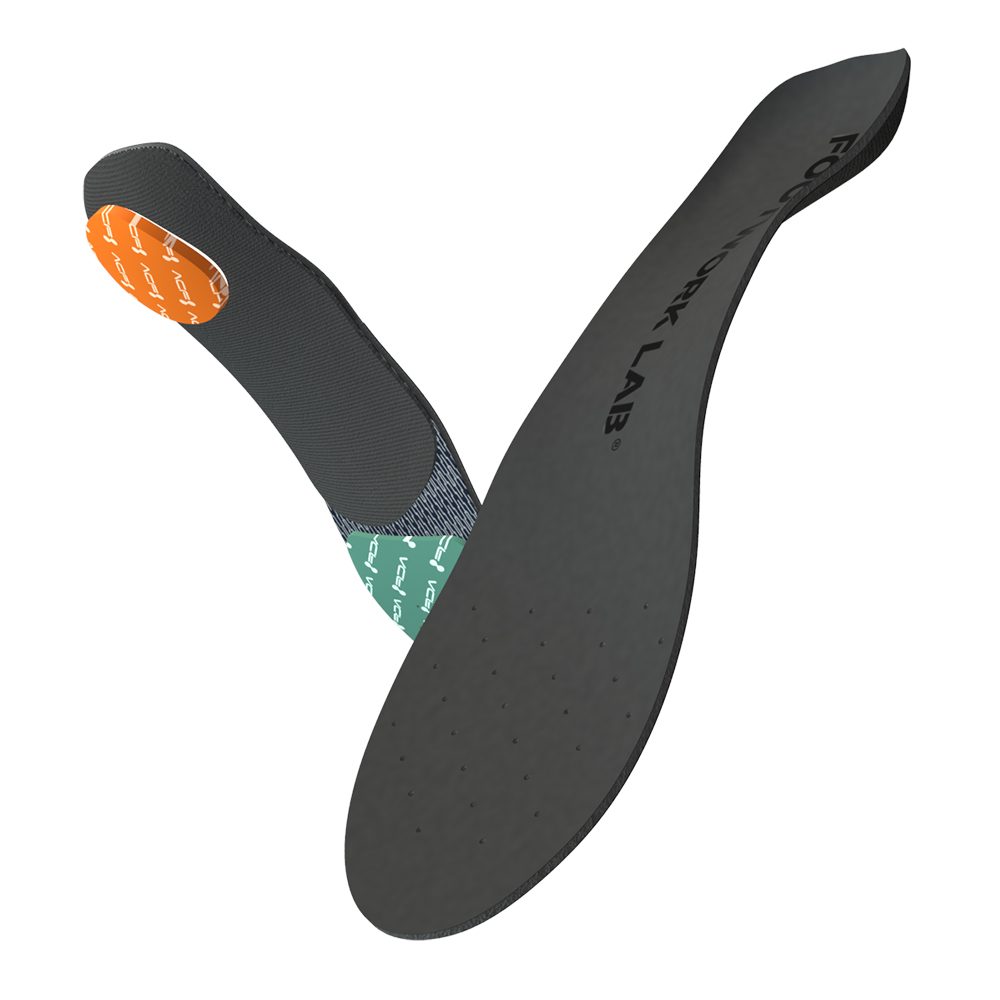
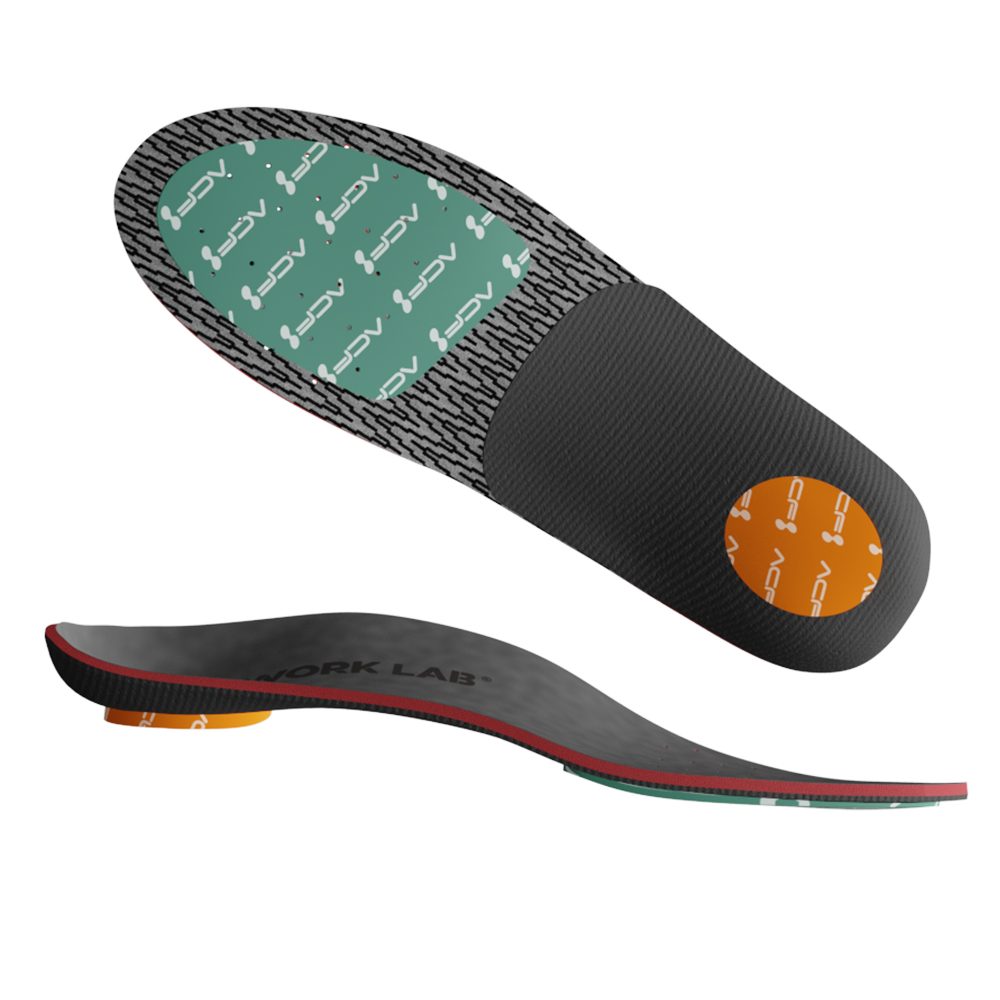
Custom orthotic insoles are the category built to this brief — support, alignment, and load distribution shaped from a person’s own record — and the honest framing stays the same as with any workforce: a support is a tool that changes how load is distributed inside the shoe, chosen because the professional judged that change worthwhile for this foot. It does not shorten the pick list, it does not soften the concrete, and it does not replace the employer’s responsibility for rotation and break schedules. Saying those limits plainly at the fitting bench is part of the service, and pickers — who are credentialed sceptics by trade — respect the professional who states them.
One expectation worth setting at the first fitting: the first two weeks are an adjustment, not a verdict. Feet that have walked their kilometreage on flat stock insoles do not reorganise their load pattern overnight, and a picker who reports new sensations in unfamiliar places is usually reporting adaptation, not failure. The scheduled follow-up — timed a few weeks out — is where first impressions become informed ones, and where the workshop learns what the day actually did to the pair.
Getting the Fit Right Inside Safety Footwear
The bench check decides the outcome more often than the design does. Take the picker’s actual work boot, pull the stock insole, and look at the working envelope: depth over the toes, width through the ball, whether the footbed was glued or free. Steel toe caps punish an over-thick installation — lift the foot upward and the toes find the cap within an hour — so the fit question is not academic; it is the difference between a pair that gets worn and a pair that lives in a locker.
Three checks, in order. Depth: foot on the proposed support inside the boot, toes free of the cap, no upward pressure at rest. Hold: lacing or strap tightened, then a short walk — the foot must stay still on the support rather than sliding over it, or the support engages in the wrong places. Edge: the support’s rim should sit inside the boot’s footbed line, not bridge across a narrower midfoot, or every step ends with the edge loading tissue the boot was already pressing. A support failing any check goes back for a thinner or differently shaped build before it ever leaves the bench, because a picker’s patience for second fittings is real but not unlimited.
Two habits extend the life of whatever goes in. Replace, never stack: the stock insole comes out, and one support goes in — doubling layers steals toe depth and changes the boot’s fit in ways nobody intended. And ask the picker to bring the work socks they actually wear to the fitting, because sock thickness shifts the whole envelope. These are small disciplines, but they are the ones that separate a workforce programme from a drawer of half-used pairs, and the second order from a warehouse always reflects how honestly the first fitting was done.
Serving a Warehouse Workforce as a Programme
Individual pickers find their way to clinics and retailers; workforces arrive through programmes, and the programme shape repeats across the sector. It starts with a pilot: one team, one assessment session on site or in coordinated appointment blocks, five questions plus capture per volunteer, a genuine size range on hand. Pairs are produced from the records, fitted inside the mandated boots with the checks above, and a follow-up is booked before anyone leaves. The pilot’s outcome — worn or unworn, complaints shifted or unchanged, reorders or silence — decides whether the operation extends it site-wide.
The logistics behind such programmes are an established manufacturing routine rather than an experiment. Production follows the records: each pair is built to its person’s assessment, in batches once the session’s records are processed. Our own factory, which has produced custom insoles since 2018, ships samples within three days and runs production capacity in the hundreds of pairs per day, with minimum order quantities sized so that a mixed-style, mixed-size pilot batch for a single team does not require a warehouse-scale commitment. Distributors entering the logistics sector usually find the binding constraint is assessment capacity — capture sessions, records, bench time — not the factory.
What keeps a programme alive past the first season is rhythm. Rechecks spaced a few weeks after each rollout catch the adjustment cases and the fit corrections while they are still small; a peak-season review before the order volume climbs protects the feet exactly when the load spikes; and an annual reassessment keeps the records current as boots change models and routes change layouts. Providers who keep that rhythm become part of the operation’s planning; providers who fit and vanish become a line in next year’s procurement review.
Frequently asked questions
Are custom insoles compatible with steel toe cap boots?
Usually, provided the installation respects the toe cap: the stock insole comes out, one support goes in, and the foot must not ride upward toward the cap. The bench check with the actual boot decides, because depth and shape vary between safety models, and the check takes minutes.
Should the assessment be done with or without the work boots?
Depends on the question. A capture inside the mandated boots shows the real operating environment — the sole stiffness and geometry the shift is actually walked in. A barefoot capture shows the foot itself. Choose one condition per question, write the choice on the sheet, and keep the follow-up in the same condition.
How long does it take to adjust to a new pair?
There is no fixed timeline, and a professional who promises one should be heard with caution. Most people need an adjustment period of a few weeks while feet and habits adapt to a changed load distribution. A follow-up scheduled a few weeks out is worth more than any prediction made at the first fitting.
Can one insole design cover pickers, forklift drivers and packers?
The job titles share a building but not a load profile: pickers walk long distances, drivers sit and climb, packers stand in place. The assessment record for each person decides the support, which is why workforce programmes are built from individual records rather than from a single warehouse-wide design.
How often should warehouse staff have their insoles reassessed or replaced?
Inspect at every follow-up and replace when the support visibly loses its shape — long-distance work on hard floors is a demanding use. A reassessment makes sense whenever the boots change model, the routes or shift pattern change materially, or a complaint moves to a new region of the foot.
What should a pilot programme for one warehouse team look like?
One team, one assessment session with the five questions and a capture per volunteer, a real size range on hand, pairs produced from the records, fitting inside the mandated boots, and a follow-up booked before the session ends. The reorder decision — the team’s and the operation’s — is the pilot’s real output.
Do insoles matter for packers who stand in one place rather than walk?
Static standing is a different load situation — weight parked in the same regions for long stretches — and whether support suits a particular packer is a professional decision from their own record. The assessment routine is the same; the record, not the job title, decides the support.
What we would do next
If you supply or serve logistics operations, the first move costs almost nothing: put the five questions from this article on the front of your record sheet and run them for every picker who walks in during the next month. The answers — floor, shoe policy, shift pattern, complaint timeline, failed attempts — will tell you whether a workforce pilot is worth organising, and they will do it in your own customers’ words. A pilot, in turn, is a one-team experiment: one session, one follow-up, one honest look at whether the boots are being worn and the reorders are coming.
For reading that sits next to this topic: standing commuters in Standing Room Only: Insoles for the Daily Commute share the hard-floor arithmetic, garage mechanics in Creepers, Lifts and Concrete share the mandated-footwear fitting problem, contract cleaners in Mopping the Same Corridor Twice a Shift share the unchanging floor, and anyone supplying a first pair should read The First Two Weeks: What Getting Used to a New Pair Actually Feels Like before writing the follow-up script. The manufacturing side — custom insole ranges built from individual records — is routine; the assessment capacity and the bench honesty are the parts that decide outcomes.
The question for the comments: when you assess a picker, do you capture inside the mandated work boots or barefoot — and what does the choice cost or gain you at the follow-up? We have our own practice and our reasons, but the rooms and retailers serving real warehouses have the far larger sample, and this is one of those choices where the field’s answers would genuinely improve our training materials.
This article is intended for professional and educational reference. It is not medical advice. Foot assessment equipment produces measurements and images; clinical interpretation and any decision about care remain the responsibility of a qualified professional. Certification scope is limited to the documentation we hold: European Union certification and ISO quality system certification.