
Welding looks like a seated trade until you count the hours: standing at a bench, weight locked on one leg, heat rising through a booth floor built for steel rather than for feet. The customer arrives in a boot that has been chosen for protection and not for comfort, and describes the day in terms of jobs finished rather than hours stood. Ask where the weight goes and the answer usually comes as a shrug followed by a demonstration: one hip out, one knee soft, the foot on that side doing most of the work. The stance is so ordinary within the trade that nobody has ever thought to measure it.
Insoles for welders and fabricators come up as a question about standing comfort, but the useful assessment starts earlier, with the posture the work demands and the floor it happens on. This article looks at the parts of that day that a fitting room can actually observe: the stance, the boot, the surface and the timing of the record. It also sets out what a measurement can and cannot say, and what to put in writing when a new pair is tried. None of it requires a special protocol for welding. It requires paying attention to a working pattern that is easy to overlook because the customer rarely describes it as a problem.
The Trade That Looks Seated
From a distance a welding bay looks like a stationary job. A person in a mask leans over a bench, a torch moves along a seam, sparks stay behind a screen. The stillness is misleading. Fabrication work alternates between long periods at a bench, short moves to position a piece, and time spent grinding or checking a weld. During the bench periods the body adopts a braced stance: feet apart, knees slightly flexed, weight shifted toward the side doing the fine work. Because the hands are occupied and the mask limits vision, the feet are placed once and then left. A posture that would feel temporary in another setting becomes the posture of the afternoon.
The floor under that stance is part of the story. Booths and workshops are built for heavy equipment and hot work, which means concrete, steel plate and grate rather than resilient flooring. Heat radiates from the work and conducts through the sole, and the boots are heavy enough that moving them is a decision rather than a reflex. A customer may report that the discomfort is worst after a long session without having any language for the cause. The fitting room’s first task is to translate the working day into ordinary terms: how long at the bench, which side carries the weight, what is underfoot, and when the boots finally come off. Those four answers tell you more than a job title ever could.
There is also the habit of finishing one more bead before taking a break. Fabricators describe it without thinking: the piece is nearly done, the mask stays down, and the next pause is postponed until the seam is complete. What looks like a few extra minutes can extend a held stance well beyond the length anyone would choose deliberately. When a customer says the boots feel tightest at the end of the day, ask how often breaks were taken and whether they came at a natural stopping point. The answer belongs beside the posture note, because it explains why a stance that should have lasted a short while quietly became the shape of the afternoon.
Ask About the Stance Before the Shoe
The most useful questions in this kind of appointment are about posture, not footwear. Ask the customer to show how they stand at the bench rather than describing it. Most people can do this in the room without any equipment, and the demonstration is usually immediate and precise: one foot advanced, weight back on the other, shoulders turned toward the work. Note which side leads and whether it changes between tasks. Ask whether the stance is held for a single long stretch or broken by short walks to another part of the workshop. These answers shape what a record means, because a static capture taken in a neutral stance may miss the posture the customer actually spends the day in.
Write the answers down in plain words on the file. A line such as “weight held on right through bench work, foot advanced left, no change of stance for long periods” is far more useful to a colleague later than a general note about standing work. Include the floor type and whether the customer works in one booth or moves between several, because heat and surface change together. This is also the moment to ask what the boots are used for outside work, since a pair that goes from the workshop to a cold yard or a long drive home is being asked to do more than one job. Collecting all of this before anyone mentions an insole keeps the later conversation grounded in the trade rather than in a product.
Why the Static Record Matters Here
For a customer whose day is defined by a held stance, the still record earns its place before the walking record. It shows how load is distributed while the person stands in the posture being measured, and it can be repeated on another day to see whether the pattern holds. The moving record adds a different layer: through the gait cycle, through stance and swing, the centre of pressure travels across the foot in a way that a single image cannot show. Both are measurements. Neither is a picture of a full shift, and neither tells you which part of the working day is responsible for a complaint.
The skill is in reading the two together and refusing to overinterpret either. A static map taken in a neutral stance may look symmetrical while the customer demonstrates a strongly one-sided working posture. That is not a contradiction; it is a reminder that the capture position is one of the variables. Some teams take a second still record in the customer’s own working stance, clearly labelled as such, and compare it with the neutral one. Others keep the standard capture and rely on the written note about posture. Either approach is defensible provided the file says which was done. What should be avoided is a quiet substitution, where a map is described as representative when the conditions were never checked against the way the customer actually stands.
Heat, Floors and Boot Choice
Welding boots are selected for protection against sparks, heat and heavy objects, so they tend to be stiff, high and slow to change. That stiffness is a constraint on any insole placed inside them. Before discussing a design, check the space available with the original insole removed, and confirm that the boot still closes and holds the heel once a replacement is in. A shape that works well in a lighter shoe can lift the foot or crowd the toe box in a reinforced boot. The working boot should therefore be present at the fitting whenever possible, not described over the phone.
Heat changes how the day feels without changing the measurement. A warm booth, a floor that holds heat and a boot that does not breathe all add up to a foot that swells slightly across a shift, which is why some customers prefer to be recorded later in the day when the volume is closer to working conditions. Note the timing on the file, and keep it consistent for any repeat. This is also a sensible place to state the limits plainly: the equipment produces measurements and images, while interpretation and decisions about care belong to a qualified professional. A fitting room can talk about load distribution and support inside a boot. It cannot claim to treat an injury or promise that a day will feel different, and it should not quote a cost in the middle of a technical conversation.
What an Insole Can Do Inside a Welding Boot
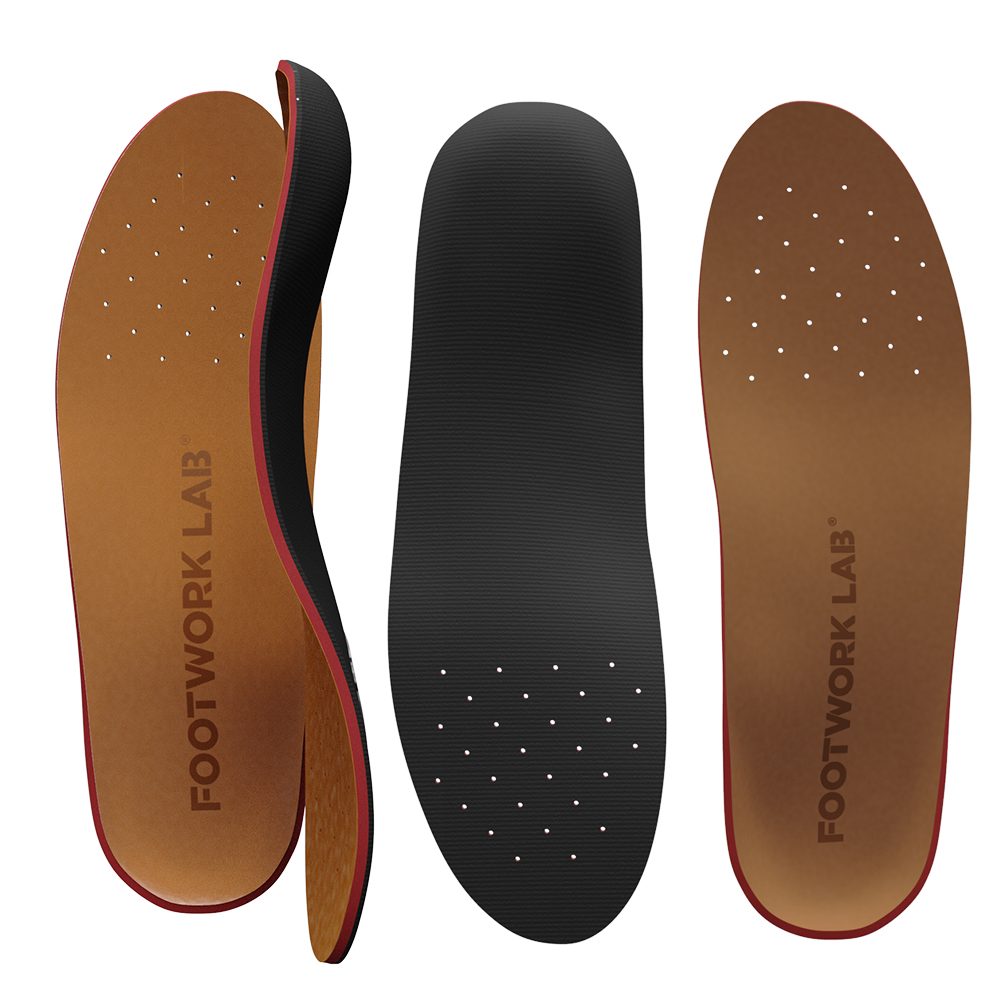
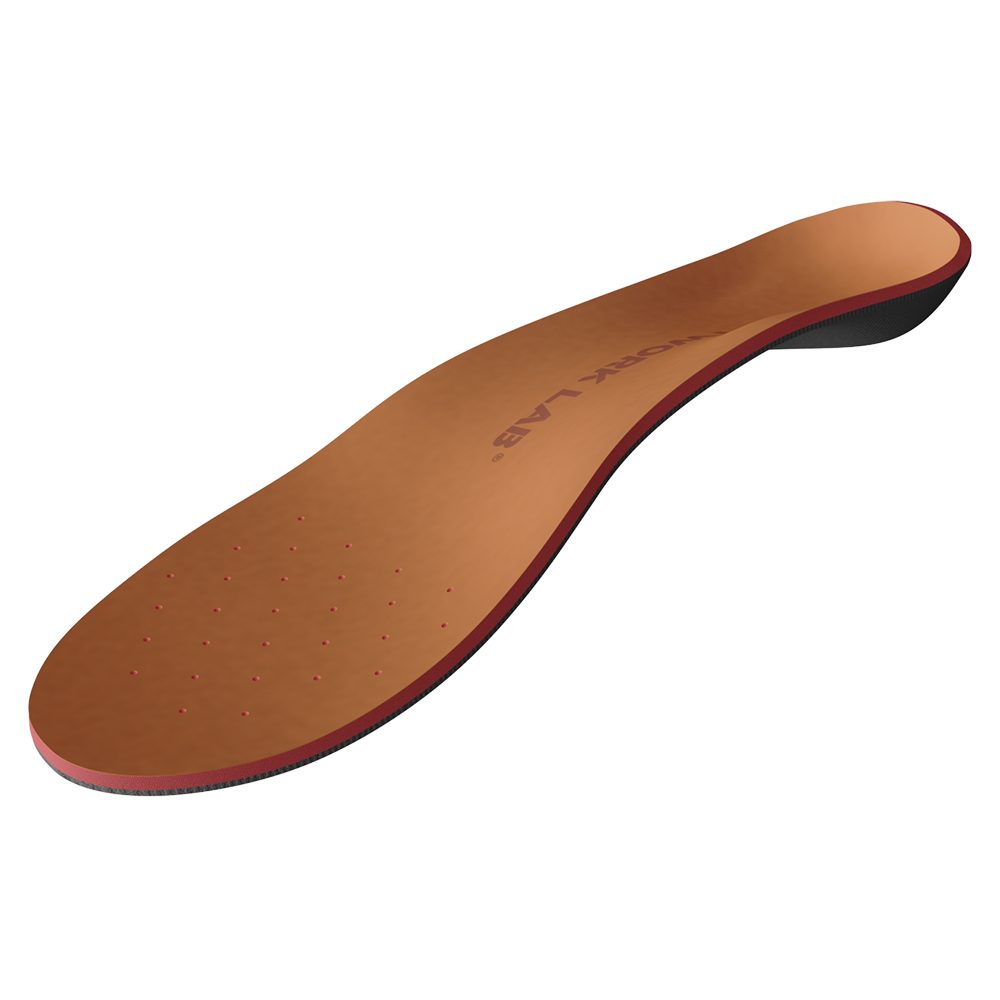
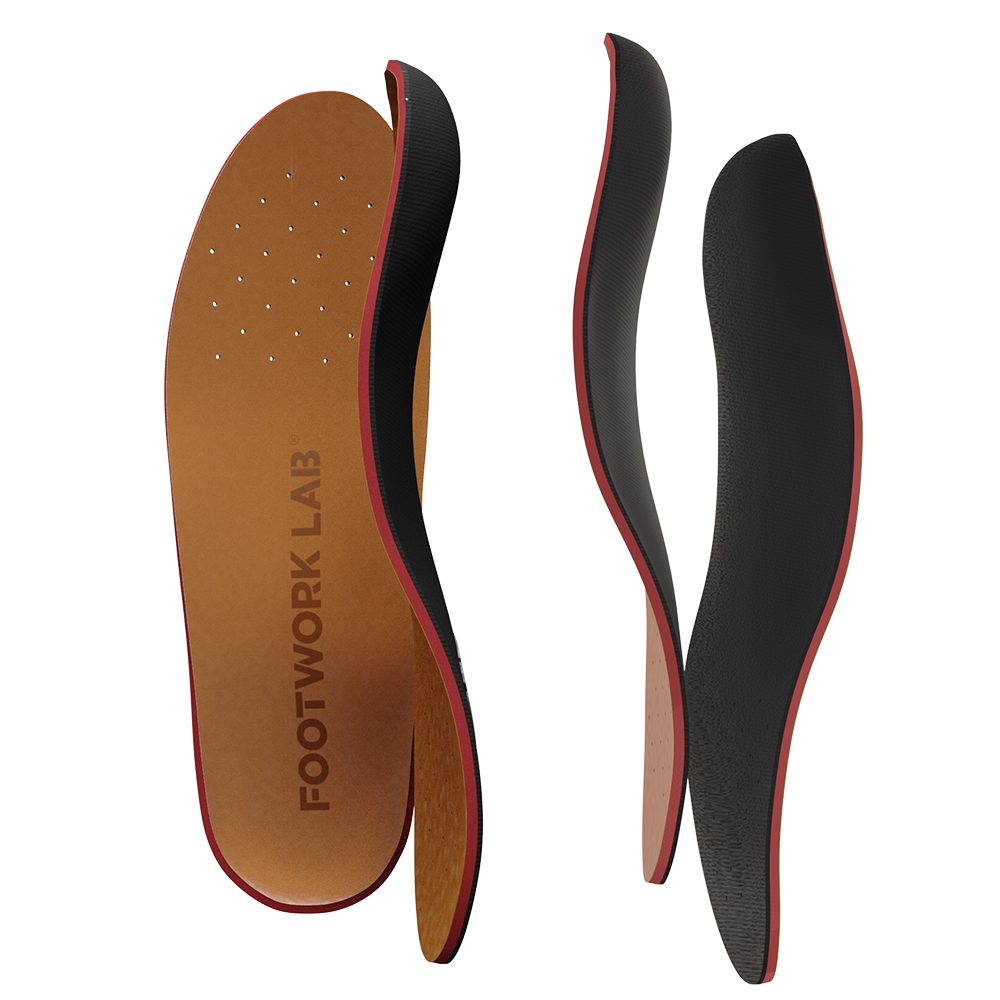
Within those constraints, a custom insole has a clear and limited job. It can support an arch profile, influence alignment, and change how load is shared across the sole of the foot inside the boot. For a customer who locks weight onto one side through a long bench session, the useful question is whether the proposed shape changes the distribution measured in the stance they actually use, rather than only in a neutral one. That is a reason to bring the written posture note into the design conversation, not to leave it in the file. Custom orthotic insoles, including an insole range made for daily wear, are shaped from a record and a working context; they are not chosen from a job title.
What an insole cannot do is remove the braced stance, cool the floor or make a heavy boot light. Those belong to footwear choice, task rotation and the layout of the workspace, and a good fitting says so. There are other boundaries worth stating at the same time. We do not diagnose from an image. We do not promise how quickly anyone will notice a difference. We do not describe an insole as correcting foot structure, because the honest vocabulary is support, alignment and load distribution. Customers who hear those limits early tend to ask sharper questions later, and the conversation stays useful even when the answer is that a new pair is not the right next step.
The Trial Period and the Second Conversation
A new pair should be treated as a proposal to be checked against a working week rather than as a finished answer. Ask the customer to wear it through a normal stretch of bench work, in the same boots and on the same floor, and to keep the original insoles for comparison. The second conversation should start with specific questions: did the boot still feel secure at the end of a long session, did the insole move inside the shell, and was any difference noticed early or late in the shift. General impressions are hard to use; the timing of a change is something a team can act on.
Behind the fitting, production sets its own rhythm. Samples can be prepared within a few days of a confirmed design, and custom insoles are made in batches at a factory that also runs mixed sizes and styles within one order. That matters for a workshop with several fabricators, where a fitting room may want to test one design across a small group before deciding. The review visit is where those observations come together: the record, the written posture note, the state of the boot and the customer’s account of the week. If the design changes, the file should say what was changed and why, so the next review has a clear starting point. A pair that is reviewed once is a trial; a pair that is reviewed twice becomes evidence.
Language at the Counter
The way a session closes is what the customer carries back to the workshop. Begin with what was measured and under which conditions: standing still, walking, in these boots, at this point in the day. Then describe what the proposed insole is intended to do inside that boot, using the words support, alignment and load distribution and avoiding anything that sounds like a promise about the body. If the customer asks whether a particular discomfort will go away, the honest response is that a map is a measurement, not an explanation, and that any decision about care rests with a qualified professional. Saying that calmly is easier when it has been part of the conversation from the start.
End with an arrangement rather than a reassurance. Agree when the review happens, what boots to bring, and what would justify an earlier call. Suggest that the customer notices when in the shift any change appears, because a difference at the start and a difference at the end are different pieces of information. If the work changes, a new bench, a different booth, a spell on grinding duty, say that the old record may no longer be the right comparison. Teams that close this way receive observations instead of vague complaints. They also avoid the two most common disappointments in this trade: a pair judged on the first hour alone, and a pair discussed in a language that promised more than a measurement could support.
Frequently asked questions
Do welders really stand all day?
Not continuously, but a great deal of fabrication work happens in a held, braced stance at a bench. Long periods in that posture, often with weight favouring one side, are the part worth describing in the assessment. Ask the customer to demonstrate the stance rather than relying on a job title.
Does heat change what should be recorded?
Heat does not change the measurement itself, but it can change the foot across a shift and the way a boot feels. Note the time of day and the working surface on the file, and keep them consistent for any repeat so that two records describe comparable conditions.
Is a static record or a walking record more useful here?
Both answer different questions. A still record describes load distribution in a defined stance, which suits a trade built around holding position. A walking record shows how that distribution changes through the gait cycle. Read them together and say which conditions each one covered.
Can an insole help when weight is locked on one leg?
It can support the foot and influence how load is shared inside the boot, including in a working stance if that stance is documented. It cannot change the task or the posture the job requires. Footwear, task rotation and the workspace address those parts separately.
When should a new pair be reviewed?
After a normal stretch of working days in the same boots, rather than after a short trial at home. Bring the boots and keep the original insoles. Ask when in the shift any change appeared, because timing is more useful than a general first impression.
Will a custom insole fit inside heavy welding boots?
Usually, provided there is enough room and the boot still closes securely with the heel held. Check the space with the original insole removed and try the proposed shape in the actual work boot, since a design that suits a lighter shoe may crowd a reinforced toe box.
Can a pressure map identify the cause of a foot problem?
No. The equipment produces measurements and images, not an explanation of cause. Interpretation and any decision about care belong to a qualified professional. The map is most useful alongside the working history, the footwear and a proper clinical assessment.
What we would do next
Add one line to your intake form this week: “show me how you stand at the bench.” It takes a few seconds, and the demonstration often changes the whole appointment. Write the answer in the customer’s own words, with the working surface and the time of day beside it, so a later record has a context to return to.
Then make the review visit about evidence rather than reassurance. Compare the new pair with the original in the same boots, and ask when in the shift any difference appeared. Teams fitting other trades with long held stances will recognise the problem described in fitting for care home teams, and the habit of recording after a full shift is especially relevant when heat and a warm booth change the foot by the end of the day.
Our question for fellow professionals: how do you document a working stance that never appears in a standard capture, and do you take a second record in the customer’s own posture or rely on a written note? We would like to compare approaches, because this is one of those details that separates a fair record from a tidy one.
This article is intended for professional and educational reference. It is not medical advice. Foot assessment equipment produces measurements and images; clinical interpretation and any decision about care remain the responsibility of a qualified professional. Certification scope is limited to the documentation we hold: European Union certification and ISO quality system certification.