
The phrase “3D laser scanner” is a market label, not a product
category, and that is the first thing a buyer needs to understand. Search the term and you
will be shown rows of units that share a silhouette, a camera fold-out and a screenshot of an
analysis screen. Underneath those similarities sit very different measurement principles serving
very different jobs. One unit may record the shape of the foot surface. Another records how load is
distributed under the sole. A third records how the lower limb lines up over the foot. Buying the
wrong one is rarely a question of quality. It is a question of matching the machine to the work you
actually intend to do.
This article is written from the production side rather than the listing side. FOOTWORK LAB has
built foot assessment equipment since 2014 and has operated its own plant in Ruichang, Jiangxi
Province since 2018. Because we sell direct, we answer these questions weekly from buyers who have
already collected three or four quotations and are still not sure what they are comparing. What
follows is the decoding work we would do first, before any quote is requested.
Why the same three words describe very different machines
In most product categories, a label narrows the field. In foot assessment equipment the opposite
happens. The label widens it. A single listing phrase can be applied to a bench-top unit with a
glass plate, to a portable pad that folds into a case, to a walkway system that a person crosses
several times, and to a shoulder-height frame with a camera array. All of them can be described,
without anyone lying, as equipment for measuring the foot.
The reason is that the label describes an impression rather than a measurement principle. Buyers
associate the words with speed, with a screen, and with a printed report. Sellers know this and
borrow the words that rank. The result is a category where the vocabulary is shared but the
engineering is not.
For a clinic, a rehabilitation unit, a footwear retailer or a distributor, the practical
consequence is straightforward. Before comparing anything — throughput, footprint, software,
support — you have to establish what the unit records. Everything else is secondary, because a
beautifully built machine that records the wrong variable will be a disappointment regardless of
how well it is made.
There is a commercial dimension too. Two suppliers can quote for the same nominal product at
very different levels, and the difference is not always margin. It is often that the two units are
not the same class of instrument. Comparing them line by line is meaningless until the measurement
job is aligned.
What the word “laser” usually refers to in this category
Outside foot care, laser measurement is well understood: a beam is projected at a surface, the
return is timed or triangulated, and a distance is calculated. Repeated across a surface, those
distances build a map of shape. It is a non-contact method, it is fast, and it produces dense
surface data. That is the association most buyers bring with them.
Inside foot assessment equipment, the term is used far more loosely. Some units genuinely
perform optical surface capture of one kind or another. Others use structured light, stereo
cameras or photogrammetry, and the printed output looks similar enough that a buyer cannot tell the
difference from a screenshot. A third group uses no optical surface capture at all, and the word
appears in the listing because it appears in competing listings.
None of this makes one approach better. It makes the label useless as a filtering criterion. The
useful question is not “which method is named” but “what does the unit actually record, and under
what conditions”. A supplier who can answer that question in plain language, without retreating
into acronyms, is usually a supplier who knows their own product.
It is also worth saying plainly what we do and do not build, because some buyers arrive with an
assumption and only discover the mismatch late. FOOTWORK LAB manufactures foot assessment
equipment built around pressure sensing together with camera-based posture and lower-limb alignment
capture, driven by analysis software we write ourselves. We do not manufacture laser scanning
hardware. If your requirement is specifically optical surface capture for a purpose we do not
serve, the honest answer is that we are not the right supplier, and we would rather say so at the
start of a conversation than after a purchase order.
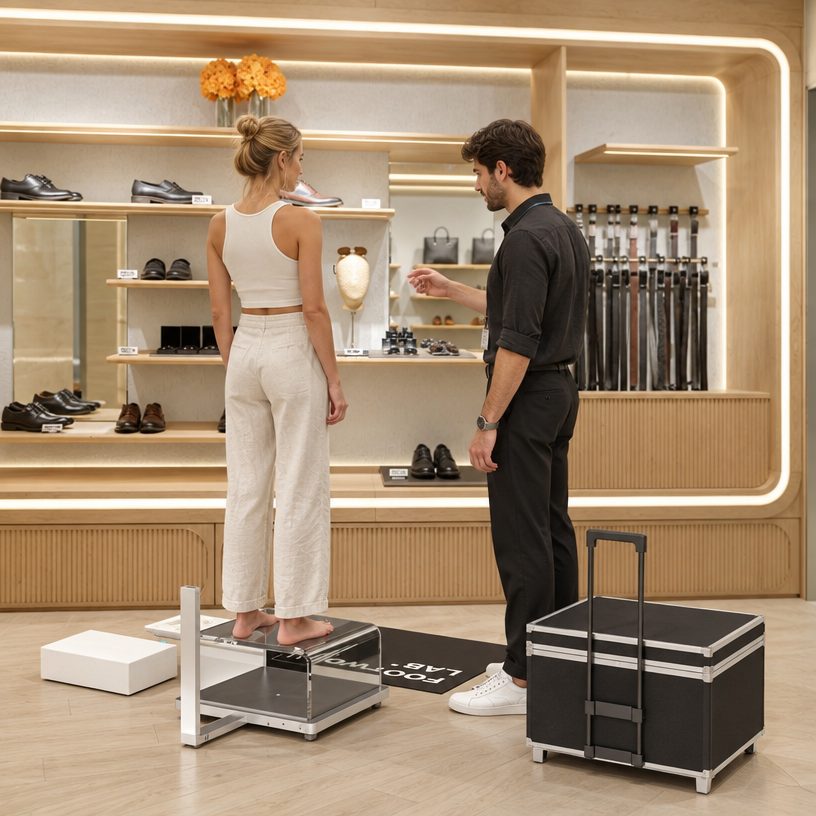
Geometry capture, pressure mapping and posture: three different jobs
Stripped of marketing language, the equipment sold in this space does one or more of three
things. Understanding which of the three you need is the whole of the evaluation.
- Foot geometry capture. Records the shape of the foot: the arch profile, the
length and width, the outline of the sole. This is the input that feeds insole design and footwear
fitting, because a formed product has to be built to a shape. - Plantar pressure measurement. Records how load is distributed under the foot,
either while a person stands still or while a person moves. This is the input that describes
loading, and it answers questions geometry cannot: where the load sits, how it shifts, and whether
the two sides behave similarly. - Posture and lower-limb alignment capture. Uses cameras and machine vision to
describe how the body is balanced over the feet and how the leg and ankle line up. This is the
input that connects what happens at the sole with what happens further up the chain.
A well-specified assessment room often wants more than one of these, because they answer
different questions about the same person. Geometry tells you what to build. Pressure tells you
what the loading looks like. Alignment and posture describe the position the loading happens in.
Where a clinic already owns one of the three, the sensible purchase is usually the one that
complements it rather than duplicates it.
This is also where a single label causes real commercial damage. A buyer who wanted pressure
data and received a shape capture unit will describe the equipment as inaccurate, when in fact it
was answering a different question well. The instrument did its job. The specification did
not.
How to read a specification sheet without a glossary
Specification sheets in this category are often long on technology names and short on jobs.
Reading them well is a skill, and it can be learned in one sitting. Five things are worth looking
for, in order.
- What is recorded. Shape, load, alignment, or a combination. If the sheet
cannot state this in one sentence without product names, read that as information in itself. - Under what conditions. Standing still, walking, running, in shoes or barefoot.
Capture conditions shape what the data can support far more than any hardware detail. - What the output looks like. Ask for a sample report, anonymised, from a real
session. A sample report tells you more about day-to-day usefulness than any specification. - How data leaves the system. Whether records can be exported, whether they can
be attached to your existing patient or client records, and whether an interface language can be
changed. - What the software is allowed to claim. A measurement system describes
measurements. Any output that reads as an instruction about a person’s care has crossed a line
that equipment should not cross.
Notice that none of these five items require the buyer to understand sensor physics. They
require the supplier to explain the product in the language of the customer’s working day. When a
supplier can do that, the technical conversation becomes much easier afterwards.
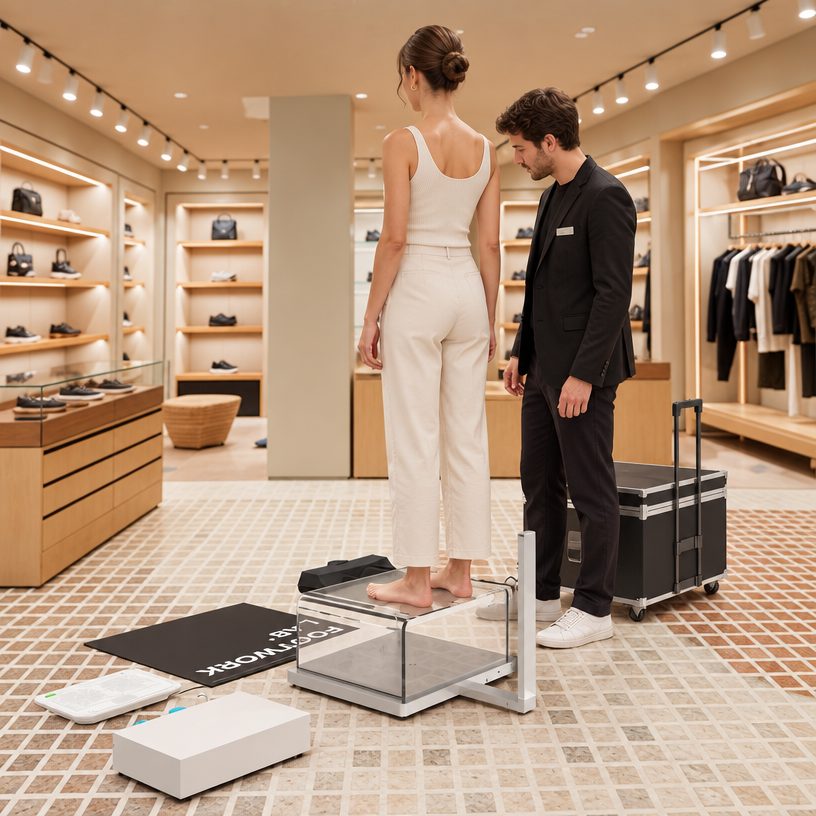
Questions that separate a builder from a reseller
Once you know what the unit records, the next question is who stands behind it. The same
hardware reaches overseas buyers through three main routes, and the long-term cost profile differs
markedly between them.
Straight from the manufacturer
The company that designed and assembles the unit sells to you directly. Technical questions
reach the people who wrote the software. Changes — an extra field in the report, a different
interface language, an export that matches your existing records — are feasible because the tooling
and the code sit in the same building.
Through a trading company
An intermediary buys finished units and resells them. This can be a genuine service: a good
partner holds spare parts, offers first-line support in your language, and handles import
logistics. It becomes a problem when the intermediary is essentially a website with a forwarding
address, because every technical question is relayed and every part is re-imported.
Under a different badge
Identical hardware is sometimes sold under several brand names with a new enclosure or a new
sticker. The practical risk is divergence over time: firmware and documentation drift apart, so an
update written for one version may never have been tested on the badged version your clinic
received.
Because these routes are hard to tell apart from the outside, the questions matter more than the
marketing. Ask who designs the unit and where it is assembled. Ask who writes the software and
whether the report format can be adjusted. Ask what happens in year two when a part needs
replacing. We answer all of these in public on our FAQ page, and we would rather
compete on those answers than on adjectives.
What we do not claim, and why that matters
Trust in this category is built as much by restraint as by features, so it is worth being
explicit about the limits of what assessment equipment can do.
A foot assessment system measures. It records pressure distribution, captures posture and
alignment, and produces images and figures from which a qualified professional draws a conclusion.
The conclusion itself belongs to that professional. Equipment that implies otherwise is describing
a capability it does not have, and a buyer who purchases on that basis will eventually feel
misled.
We are equally careful with certification language. The documentation we hold covers European
Union certification and ISO quality system certification. We do not present that as more than it
is, and we do not make claims we cannot evidence.
On commercial terms, we publish our minimum order quantities rather than hiding them: a single
unit for machines, and a lower threshold for insoles that can be mixed across models and sizes. We
accept ODM on machines, and both ODM and OEM on insoles. What we do not do in an article like this
is quote a figure, because the honest number depends on configuration, volume, service scope and
destination — and a number given without those variables would mislead more than it helps.
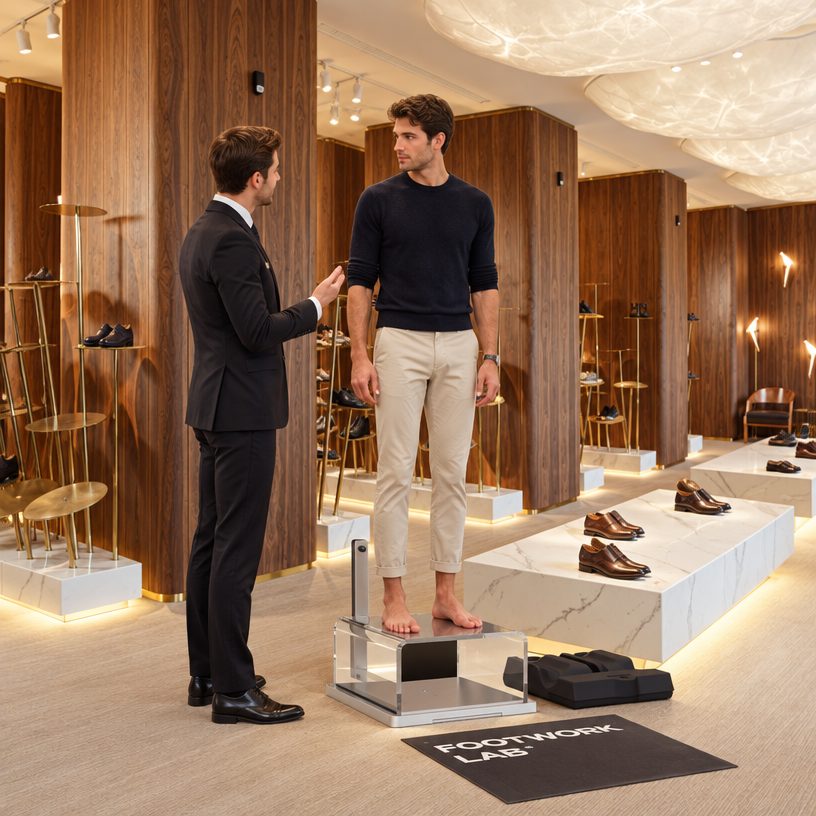
A short evaluation sequence you can run this week
If you are currently holding two or three quotations and cannot decide, this sequence usually
resolves it in a single afternoon.
- Write one paragraph describing the job. Not the product — the job. What will
the room do with the output on a normal Tuesday? Keep it to five sentences. - Request a sample report from every shortlisted supplier. Anonymised or
synthetic, it does not matter. What matters is whether the output matches the paragraph you just
wrote. - Ask who supports the unit in year two. Not the sales contact — the engineer.
Ask how that support reaches you and in what language. - Ask how the unit fits your existing records. If data cannot leave the system
in a usable form, the equipment is an island. - Ask what the supplier would refuse to sell you. A supplier who says “nothing,
we sell everything” is telling you they will sell you the wrong instrument. A supplier who
redirects you is telling you they understand the category.
None of this requires technical expertise, and all of it works regardless of which branch of the
market you end up buying from. The point is to make the label irrelevant by replacing it with a
description of the job.
Frequently asked questions
Does the phrase “3D laser scanner” mean the same thing in every listing?
No. In this category it functions as a market label rather than a technical definition, and it is
applied to units built on quite different principles — optical surface capture, pressure sensing,
alignment and posture capture, or combinations of these. Two machines described with identical
words can perform completely different measurement jobs.
Do I have to buy optical capture equipment to understand loading under the foot?
No. Load under the foot is described by pressure measurement, which records distribution while a
person stands or moves. Surface shape capture answers a different question and does not substitute
for pressure data, just as pressure data does not substitute for shape.
Can I order a single machine to evaluate before committing to more?
Yes. Our minimum order quantity for machines is one unit. We would rather a buyer test a single
machine in their own setting than place a large order on the strength of a demonstration.
Do you accept customisation, and who writes the software?
We write our own analysis software, which is why the report format and interface can be adjusted
for a client’s workflow. We accept ODM on machines. Machine OEM is possible but needs to be
discussed case by case, and we accept both ODM and OEM on insoles.
What warranty and support do you provide after delivery?
Machines carry a twelve-month warranty covering non-human damage, with spare parts supplied free
of charge within that scope. Support runs through a dedicated WhatsApp group with direct engineer
access, remote assistance where the setting allows it, and over-the-air updates for units that are
connected.
How do you test equipment before it ships?
Every unit is tested in-house before it leaves the plant, with a seven-day testing period before
dispatch. Production capacity sits at roughly three to five machines per day, which is deliberate:
it is a rate that allows testing and inspection to be done properly rather than nominally.
What about delivery times and certification?
Typical transit is six to seven working days by express, ten to twelve by air freight, and
thirty to thirty-five by sea, depending on destination and clearance. On certification, our
documentation covers European Union certification and ISO quality system certification, and we
limit our claims to exactly that.
What we would do next
If you are early in the process, start with the job description rather than the product list, and
then ask each supplier for a sample report. If you already know you need pressure and posture data
rather than surface shape, our F2 and FMP platform is the family
most buyers in that position end up comparing, and the technology
overview explains how the sensing and camera capture work together. If loading during movement
is the priority, look at the F5-LAB dynamic gait
system. Whichever route you take, the questions in this article will serve you with any
supplier in the category, including us.
This article is intended for professional and educational reference.
It is not medical advice. Foot assessment equipment produces measurements and images; clinical
interpretation and any decision about care remain the responsibility of a qualified professional.
Certification scope is limited to the documentation we hold: European Union certification and ISO
quality system certification.