
A mold is the part of a custom insole nobody photographs and everybody depends on. It defines the shape the material takes, it outlives the pair it made, and its ownership decides who can reproduce a device two years later. Yet in most purchasing conversations the mold is an afterthought: something the lab keeps, something the clinic assumes it has, something that turns into an argument when a supplier changes hands.
The question that matters is simple and rarely asked: who owns the positive model that a pair was formed over? If the clinic does, it can reorder from any supplier and move its business. If the supplier does, the clinic has a device it cannot reproduce without permission, and a client who returns in three years depends on a relationship it may no longer have.
We manufacture custom insoles from specifications and models supplied by clinics, and we keep molds for repeat orders where the customer asks us to. This article sets out what a clinic should own, what a lab should hold, and how to write the arrangement down before the first pair is made rather than after the hundredth.
What a mold is, in production terms
A mold is a physical record of a shape. In insole production it is usually a positive model of the foot in the position the device is designed around, and the material is formed over it or against it. The model carries the geometry that the finished pair reproduces, which is why it matters more than any single pair.
Molds are made from several materials depending on the process and the volume: plaster, dense foam, machined blocks, printed forms. Each has different durability and different dimensional behaviour over time. A mold that shrinks or creeps will produce a pair that is subtly different from the first one, which is a quality problem disguised as a repeat order.
The practical implication is that a mold is inventory. It has a storage cost, a shelf life and a retrieval problem. A clinic with two hundred clients has two hundred models somewhere, and the question of where is a question about service, not housekeeping.
Who should own the model
Where a clinic has assessed the client and specified the device, the clinic owns the record of that specification, and the model is part of it. That position is easy to state and occasionally awkward to enforce, because the model physically sits in whoever’s workshop made the pair.
The arrangement that works in practice is custody with ownership. The lab holds the model, the clinic owns it, and the agreement says so in one sentence with a retrieval process attached. A clinic that can ask for its models and receive them within a stated period is a clinic that can change supplier, which is also the reason the supplier will look after them.
Where a brand sells under its own label and the factory designs the device, the calculus changes. The design may belong to the brand, the tooling to the factory, and the model to one or the other depending on how the contract was written. That is a negotiation, and it belongs before production, not after a disagreement.
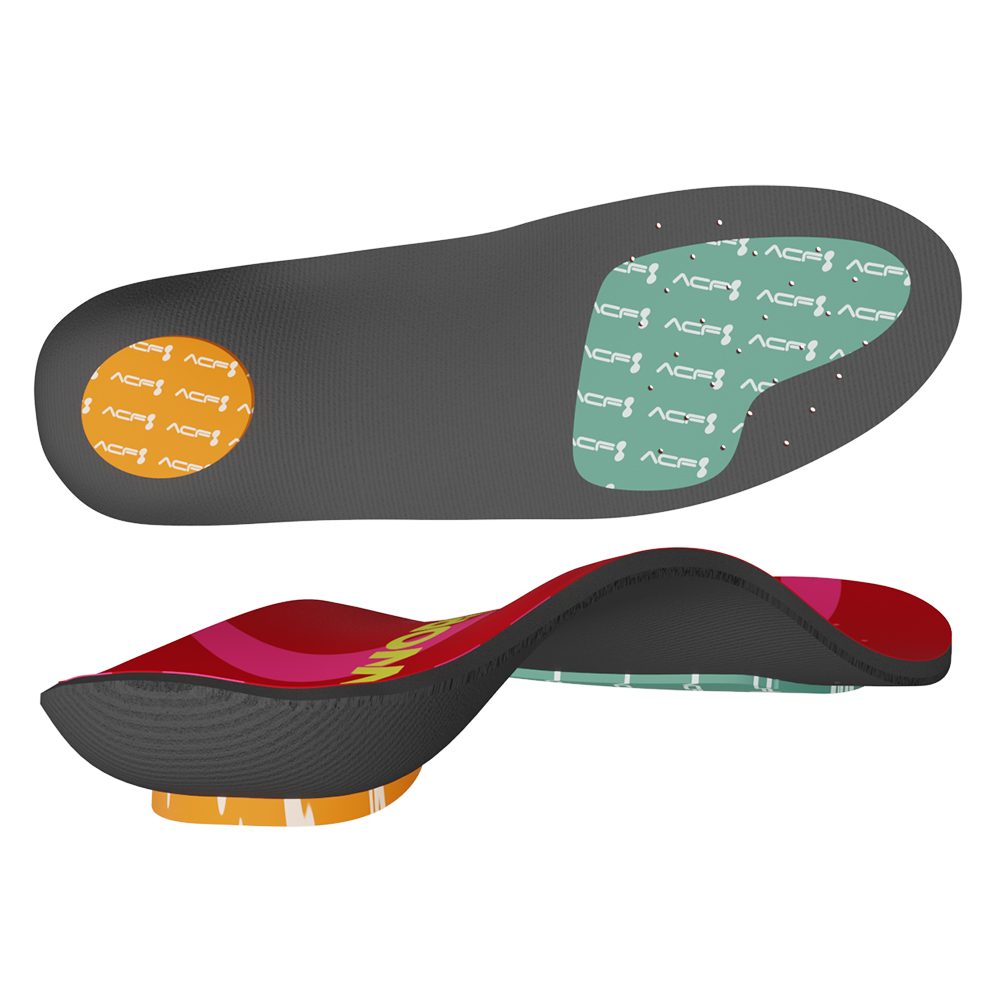
Storage, retrieval and the two-hundred-client problem
Physical models take space, and space in a clinic is expensive. Most practices therefore choose one of three patterns: keep models for a defined period and discard the rest, digitise the shape and re-create models on demand, or leave custody with the lab under a written arrangement.
Each has a failure mode. Time-limited storage means a returning client may need a new assessment, which is defensible if it is explained at the time. Digitised shapes depend on a file format surviving software changes, which is a real risk over a decade. Lab custody depends on a relationship that may end.
The version we see work best combines two of them: keep the digital record indefinitely, keep the physical model for a stated period, and be explicit with clients about what happens after that period. It costs little and it removes the surprise.
Molds in the ordering conversation
When a clinic orders from a factory, the order needs to say where the model comes from. Three cases cover most orders: the clinic supplies a physical model, the clinic supplies a digital shape that the factory turns into a model, or the factory holds a model from a previous order and reuses it.
The third case is the one that needs a written rule. Reusing a model is efficient and appropriate when the specification has not changed, and wrong when the client’s foot has changed. The order should state whether the existing model is being reused, and the clinic should confirm it against the assessment record.
For repeat orders of the same specification, we keep the model and note the date it was created. When a clinic sends a new assessment, the model is regenerated rather than adjusted, because adjusting a model is how small errors accumulate into a device that no longer matches its own record.
Molds and the assessment record
The model is only meaningful alongside the assessment it came from. A shape without the load data, the client’s footwear and the specification is a sculpture; with them, it is a device design. Clinics that store models and discard assessments end up with shapes they cannot justify.
This is one argument for keeping a pressure recording with every model. The recording explains why the contour sits where it does, which is what a new practitioner needs when a client returns and asks why the device was built that way.
It is also an argument for exporting rather than relying on a single system. A recording trapped in software that is no longer supported is a recording that will be lost, and the model will outlive it.
When a mold has to change
A model should be regenerated when the assessment changes materially: a new recording shows a different load pattern, the client’s footwear has changed in a way that affects volume, or the specification has moved to a different build family. It should also be regenerated when the physical model has degraded, which happens quietly with plaster and foam.
It should not be regenerated for a remake of the same specification. A remake is a production question, not a design one, and regenerating the model introduces a variable that makes the comparison between the two pairs meaningless.
Writing those two rules down prevents most of the confusion that surrounds remakes. A clinic that can say “same model, new pair” or “new model, new design” has a vocabulary for the conversation.
Digital shapes and the format question
Digital shape data has obvious advantages: it does not take shelf space, it can be sent anywhere, and it can be re-created. It also has an obvious weakness: it depends on a file format, a piece of software and a reader that all have to still exist when the file is needed.
The practical answer is to export in more than one form and store the exports with the assessment record. A neutral mesh file, a set of measurements, and a printable summary will together survive more software changes than any single proprietary format.
Ask any supplier what happens to stored shapes if the software is discontinued. A supplier with an export policy is a supplier thinking about a decade; one without is thinking about a licence renewal.
The commercial terms worth writing down
Four terms cover most of the risk. Ownership: who owns the model. Custody: who holds it and where. Retrieval: how a clinic gets it back and how quickly. Retention: how long it is kept after the last order.
Add a fifth for factories that design on a customer’s behalf: what happens to the tooling if the relationship ends. A brand that has paid for development and cannot take the tooling with it has funded a competitor’s capability.
None of these terms are unusual, and all of them are cheaper to agree at the start. The conversation is uncomfortable for about five minutes and saves a year of ambiguity.
What we do with models
For clinics that send specifications, we create the model, keep it for repeat orders, and record the date and the assessment it was built from. If a clinic asks for its models, we return them. If a clinic wants the digital shape as well, we provide the export.
For brands ordering under their own label, we agree ownership in writing before the first production run, because the answer changes what each side can do later. We would rather have that conversation early than discover the disagreement at the point when a customer is waiting.
What we do not do is sell molds as a product. A mold without the assessment behind it is a shape looking for a reason, and we are not in the business of supplying shapes.
Three questions to settle before the first pair
First, who owns the model. Second, where it lives and how it comes back. Third, how long it is kept and what happens to the client’s record afterwards.
Answer those three in writing, and the rest of the arrangement tends to look after itself. Leave them unanswered, and the first returning client becomes the first argument.
A note on the word itself
In this trade, “mold” is used for the physical form, for the cavity in a forming process, and sometimes for the finished device. The ambiguity causes real confusion in orders: a clinic asking for a mold may mean a model of the foot, a forming tool, or a pair of insoles.
Say which one you mean, and ask the supplier to confirm it in the order acknowledgement. It is a small discipline that prevents a shipment of the wrong object arriving with the right paperwork.
What a clinic should ask before storage grows
Count the models you expect to hold in three years, then measure the shelf you have. Most clinics underestimate by a factor of two, because the estimate counts current clients and forgets that returning clients generate a second and third model.
The number decides the system. Below a certain volume, labelled boxes and a simple index are enough. Above it, a numbering scheme tied to the client record is the only version that survives staff changes.
Label with the date as well as the name. A model without a date is a shape with no history, and the first question anyone asks about a model is when it was made.
Working with a lab you do not own
Most clinics use a lab rather than a bench, and that makes the relationship part of the quality system. A lab that knows which model belongs to which client, and can find it in a week, is doing the work that a clinic’s own filing would otherwise do.
Ask how the lab indexes models, what it does when a name changes, and how it confirms that the model being reused is the right one. These are small process questions that reveal whether the arrangement is systematic or personal.
Ask too what happens when the technician who made the model leaves. A lab where knowledge is in one person’s memory is a lab with a single point of failure, and the clinic carries that risk without seeing it.
A last practical point: photograph the model when it is made, from two angles, and keep the image with the record. It costs nothing, it survives the loss of the physical object, and it answers the question every clinic eventually asks about a device it cannot find.
The photograph also helps the client conversation. A shape on a screen is easier to explain than a shape in a box, and a client who understands what was built is a client who can describe the result to someone else.
None of this requires new equipment. It requires the decision to keep the model as a record rather than a by-product, which is the whole argument of this article in one sentence.
Frequently asked questions
Do we own the molds you make from our specifications?
Yes, where the model is created from a clinic’s assessment and specification. We hold custody for repeat orders and return the models on request. For brand-label work the ownership is agreed in writing before production.
How long do you keep a model?
We keep it for repeat orders and note the date it was created. If a clinic sends a new assessment, we regenerate rather than adjust. Retention after the last order follows the term agreed with the customer.
Can you work from digital shape data instead of a physical model?
Yes. We create a model from the digital shape and record the specification alongside it. Ask for the export format you want stored, so the shape remains usable if software changes.
What is the minimum order for custom insoles?
Two hundred pairs, mixable across models and sizes. Samples are dispatched within three days of specification approval.
Do you sell molds as a standalone product?
No. Our scope is finished insoles built to specification and foot assessment equipment. A model without the assessment behind it is not something we supply on its own.
How do you handle a remake?
A remake of the same specification reuses the model. If the assessment has changed, we build a new model, because adjusting an existing one is how small errors accumulate.
Do you accept ODM and OEM on insoles?
Yes, both. We produce to a customer’s specification and under a customer’s brand, with ownership terms for models and tooling agreed before the first run.
What we would do next
Before your next order, ask your supplier one question in writing: who owns the model, and how do I get it back? The insole categories page shows the families we produce, the FAQ page covers minimum order and ODM terms, and our article on custom insole molds covers the sizing and turnaround side of the same subject. For the production sequence around the model, the comparison of molding, milling and printing explains how each process uses the shape.
This article is intended for professional and educational reference. It is not medical advice. Foot assessment equipment produces measurements and images; clinical interpretation and any decision about care remain the responsibility of a qualified professional. Certification scope is limited to the documentation we hold: European Union certification and ISO quality system certification.