
“Custom made orthotics” is a phrase every supplier uses and few
define, which is exactly why buyers should ask for the workflow behind it. Custom means
nothing without a chain: a measured foot, a specification written from that measurement, a
production line that executes the specification, and an inspection step that checks the pair
against it. This article walks that chain from the factory floor — where the orders we ship
daily actually move — so a buyer can compare suppliers on process instead of adjectives.
Why lead with process rather than product? Because in this category the product photographs
are effectively identical: a pair of insoles on a clean background, an angle shot, a heel cup
in close-up. No image distinguishes a measured build from a shelf product, and no image shows
whether the factory inspected what it made. Process — data in, specification written, line
inspected — is the only honest differentiator available to a buyer, and it is entirely visible
if you know which questions to ask.
FOOTWORK LAB produces custom orthotic insoles in its own plant in Ruichang, Jiangxi Province,
alongside the foot assessment equipment that generates the order data. We have run this
production since 2018, at a current pace of roughly five hundred to a thousand pairs per day,
each pair tied to an individual specification. What follows is how those pairs are made, and
how a buyer can verify that any supplier’s “custom” claim means the same thing.
Custom begins with data, not with materials
The first input to a genuinely custom pair is a recording of the foot it serves. The core
stream is plantar pressure: how load distributes under the sole while the person stands, and
how that distribution shifts as they walk. The supporting stream is posture and alignment
capture — how the leg lines up over the foot — because two feet with similar pressure maps can
sit under very different limb positions, and the device should know it.
This is why assessment equipment and insole production so often travel together in this
industry: the quality of the data caps the quality of the product. A supplier who claims custom
output but cannot name the data inputs is producing guesswork with a custom price tag. Ask what
they need from you — a pressure recording, posture frames, a scanned contour, a plaster cast —
and the answer sorts the market quickly.
The data question also reveals a practical fork buyers face: some suppliers work from
physical casts and footprints, others from digital recordings, and a growing number — us among
them — work from digital assessment data as the primary input. The fork matters for how your
service scales. Physical inputs travel slowly and degrade in quality with distance; digital
recordings travel in seconds and arrive complete. A supplier whose intake is digital can serve
a market you have never visited, which quietly changes the ceiling on the business you are
building.
Our own requirement is straightforward: a plantar pressure recording in stance and movement,
plus posture capture, taken with assessment hardware such as our F2 and FMP platforms. From that recording, specification can
begin.
Specification: where measurement becomes a build decision
Specification is the step most invisible to buyers and most consequential to outcomes. The
specifier reads the recording and decides the shell: how stiff, which shape through the arch
region, where the edges sit. Then the layers: cushioning density against the use case, whether
the person walks retail floors all day or trains on hard surfaces. Then the top sheet: material
against footwear type, climate and wear pattern.
Each decision traces back to something in the data — or should. When we review a
specification internally, the question asked of every choice is which recorded feature it
responds to. A specification that cannot answer is decoration, and decoration at custom prices
is the failure mode buyers should be hunting for when they compare quotes.
Specification is also where professional judgement lives. The equipment measures; the
specifier decides. That division is healthy and worth keeping visible: a product made from
measurements and professional decisions is honest about what it is, and no supplier should
claim the device itself makes clinical judgements.
Buyers sometimes ask how much specification they should keep in-house versus delegate to the
factory. The honest answer is that it is a dial, not a switch. At one end, the factory
specifies everything from your data — fastest to launch, least internal learning. At the other,
your team specifies and the factory executes — slower to start, stronger long-term. Most
businesses we serve sit in the middle and drift along the dial as their confidence grows. The
design question is not which end is right, but where you intend to be in two years, and whether
the supplier supports movement along the dial rather than resisting it.
Inside production: forming, layering, finishing
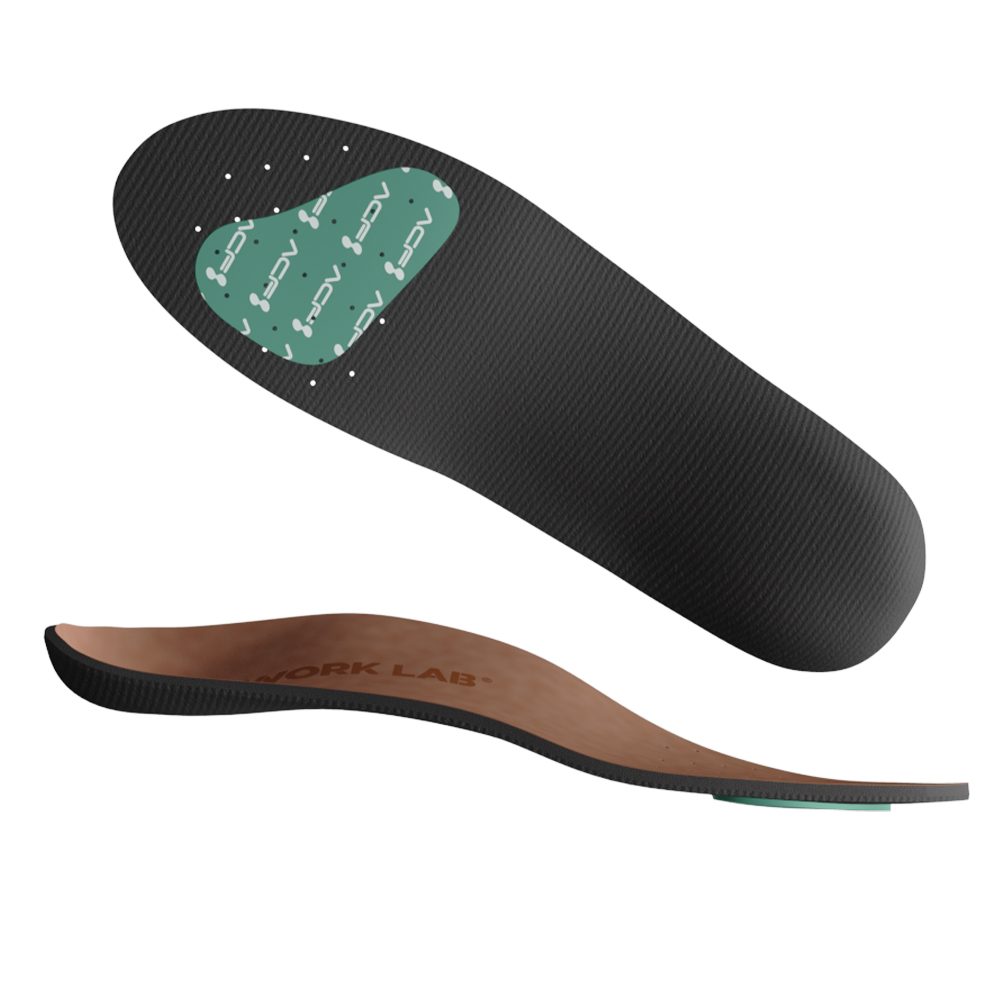
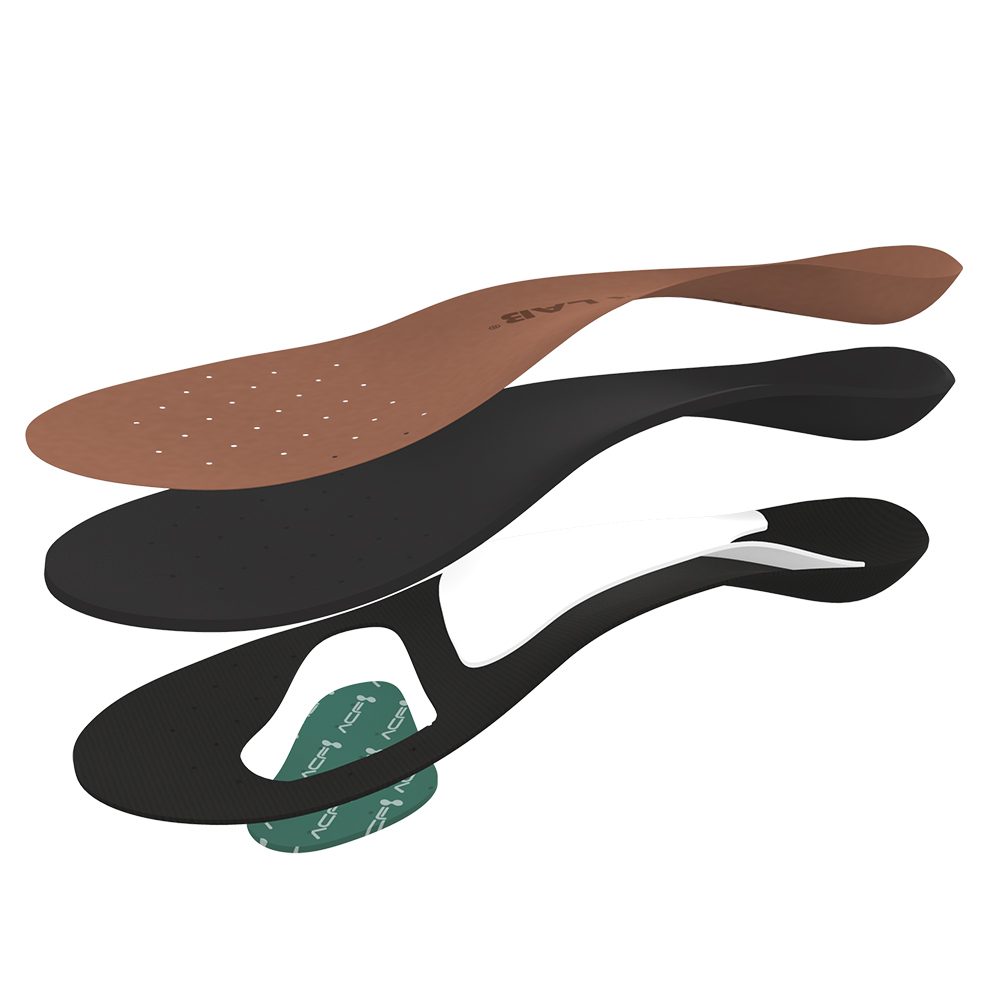
Once a specification is written, production is a sequence of trades. The shell is formed to
the specification’s shape — heated, pressed over the model, cooled, trimmed. Layers are cut and
bonded in order: cushioning where the build calls for it, support structure where it does not.
The top sheet goes on last, wrapped and finished so that the pair is comfortable against skin
and sock from the first wear.
Then inspection — the step that separates production from assembly-line hope. Each pair is
checked against its specification: shell shape, layer order, edge finishing, symmetry between
left and right. At our daily pace of five hundred to a thousand pairs, inspection has to be
systematic rather than heroic, and it is built into the line rather than appended after it.
Buyers visiting any factory — ours or another — should ask to see this sequence running:
forming, layering, finishing, inspection. Four stations in a row tell you the claim is real.
A warehouse of finished goods and no visible process tells you the opposite.
Inspection deserves one more sentence, because it is where buyers are most easily reassured
by nothing. A finished-goods warehouse proves output; it does not prove checking. The questions
that prove checking are procedural: what is compared, against what reference, at what
frequency, and what happens to a pair that fails? A line with answers is a line you can trust
at volume. A line with enthusiasm but no answers is a line whose quality lives in its best days
— and volume has a way of finding a factory’s worst days.
From approval to dispatch: what the timeline looks like
The commercial timeline has two halves. The sample half: a specification is approved, sample
pairs are produced and dispatched within three days, and the buyer evaluates build, fit and
finish in their own market. The production half: confirmed orders run through the line at
roughly five hundred to a thousand pairs per day, minimum order two hundred pairs — mixed
across models and sizes, because real first orders are never uniform.
Freight completes the calendar: six to seven working days by express, ten to twelve by air,
thirty to thirty-five by sea. Buyers planning a launch should put the sample cycle at the
centre of the schedule — it is the phase where fit feedback is collected and specifications are
adjusted, and everything downstream inherits its quality.
Sample evaluation is worth doing with a method rather than an impression. Wear the samples
in the footwear your customers actually wear, for the hours your customers actually wear them.
Check the edges after a week; check the top sheet after a month; compare the left and right for
symmetry of wear. Note what the factory’s specification said each layer would do and whether
the wear pattern agrees. A written note from that exercise — even three observations — makes
the production conversation concrete and gives both sides a shared reference for the volume
order.
OEM and ODM: two ways to put your brand on custom production
For distributors and clinics building a branded line, the trade terms matter. OEM means we
manufacture to your specification and carry your brand and packaging: you bring the design
authority, we bring the line. ODM means we carry more of the development — model structure,
material selection, build logic — and you bring the market. On insoles we accept both; on
machines we accept ODM, with machine OEM discussed case by case.
The choice between OEM and ODM is really a question about where product development
capability should sit. A business with a strong technical team leans OEM and keeps the
know-how in-house. A business moving fast into a market leans ODM and buys the factory’s
accumulated build experience. Both routes depend on the same foundation — a factory that
controls its own production — because brand promises are only as good as the line behind
them.
On brand-building specifically: the businesses that succeed with private-label insoles are
the ones whose brand claims match what the factory can document. A brand built on measured
production — assessment data in, specification on file, inspection records kept — can say
things a resold product cannot, and customers in professional channels increasingly ask for
exactly that documentation. Before committing to a label, ask the factory what records travel
with the product: build documentation, material references, inspection results. The answer
defines the ceiling on what your brand can honestly claim, which is a ceiling best known before
the packaging is printed.
How to verify “custom” claims before you commit
A short verification list, usable with any supplier. Ask what data inputs they require per
pair, and reject answers that skip measurement. Ask who writes the specification and what
qualifies them. Ask to see the production sequence on video: forming, layering, finishing,
inspection. Ask what happens when a pair does not match its specification — the remake policy,
in writing. And ask for sample pairs before volume, on the supplier’s timeline, not as a
favour.
We hold our own production to that list because we suggest it to buyers; a factory
confident in its process loses nothing by it. What the list exposes, when a supplier
hesitates, is the gap between “custom” as a marketing word and custom as a manufacturing
reality.
The list also works in reverse, as a self-check for buyers: can you state what data your
service records, who writes your specifications, what your remake policy is? A service that
cannot answer its own version of those questions will struggle to evaluate any factory’s
answers. Some of the most productive supplier relationships we see started with a buyer who had
done their own process homework first — not because the buyer needed to become a manufacturer,
but because process-literate buyers make process-honest suppliers, and the whole trade improves
a little each time that pairing forms.
What custom production cannot promise — said plainly
A measured, well-specified insole is a wearable product that provides structure and
redistributes load. That is what it is, and that is the honest scope of the claim. It is not a
medical procedure, and no specification changes that. Buyers building consumer-facing language
should keep the boundary visible: the assessment records, the professional interprets, the
product supports. Suppliers who promise outcomes beyond the product’s nature are borrowing
credibility that belongs to qualified practitioners — and handing their customers the risk.
This boundary is not a limitation of custom production; it is the reason custom production
earns professional trust. The product does what the data and the specifier intend, and
everyone in the chain — factory, clinic, wearer — can describe it the same way.
A closing practical note: keep your own pair records. Model, specification reference, wear
start date, and the customer’s plain-language feedback at follow-up. The archive costs minutes
per pair and compounds into the most valuable dataset a service can own — its own outcomes,
honestly recorded. Factories can supply materials and specifications; only your service can
accumulate this file, and over the years it becomes the quiet engine of both your remakes and
your referrals.
Frequently asked questions
What data do you need to produce a custom pair?
A plantar pressure recording in stance and movement, plus posture and alignment capture.
Assessment hardware such as our F2 and FMP platforms produces both streams in one session.
What is your minimum order, and can it be mixed?
Two hundred pairs, mixed across models and sizes. Real first orders are never uniform, so
the mixed minimum is designed for how services actually launch.
How fast are samples dispatched?
Within three days of specification approval, so you can evaluate build and fit in your own
market before committing to production volume.
What is your daily production capacity?
Roughly five hundred to one thousand pairs per day at our Ruichang plant, each pair
inspected against its own specification.
Do you accept OEM and ODM on insoles?
Both. OEM means manufacturing to your specification and brand; ODM means we carry more of
the design and material decisions while you carry the market.
What are the shipping options and times?
Six to seven working days by express, ten to twelve days by air freight, thirty to
thirty-five days by sea, depending on destination and clearance.
Are you the factory that makes the pairs?
Yes. Development and production are in-house at our plant in Ruichang, Jiangxi Province,
operating since 2018, with assessment equipment built by the same company.
What we would do next
Send a real recording, not an enquiry form. A pressure and posture session from your own
assessment workflow — hardware like our F2 and FMP
platforms produces it in minutes — lets a production team show you a specification, then a
sample pair, then a schedule. The insole categories page
shows the model families available for a first mixed order, the factory
page shows the line the orders run through, and the FAQ page holds the
standing answers on MOQ, samples and logistics. When the pair is in your hand, the contact page turns the conversation into an order.
This article is intended for professional and educational reference.
It is not medical advice. Foot assessment equipment produces measurements and images; clinical
interpretation and any decision about care remain the responsibility of a qualified professional.
Certification scope is limited to the documentation we hold: European Union certification and ISO
quality system certification.