
A bunion moves the story of the foot toward its inner edge. The prominent joint at the base of the big toe changes where load lands, how a shoe fits, and which part of an insole actually has work to do. Buyers searching the term usually arrive with a customer in mind and a catalogue in hand, and the gap between the two is where most disappointing pairs come from.
For a clinic or a retailer, the question is rarely whether the deformity exists — the customer can see it. The question is what a measurement adds that a glance cannot, and how much of that measurement survives the trip to a production floor. Those are answerable questions, and they are the ones this article takes on.
We manufacture custom orthotic insoles and the assessment equipment that feeds them, at our own plant in Ruichang, Jiangxi. The insole side of this topic is described from the production floor: what a bunion brief changes in the design file, what it cannot change, and what a factory needs to see before it commits to forming a pair.
Where the load actually goes
The first thing a pressure record shows in a bunion case is redistribution. Weight that a foot without the deformity would share across the ball of the foot concentrates under the first metatarsal head and the big toe, or — when the toe has lost its push-off role — shifts sideways to the second and third metatarsals. Neither pattern is subtle on a map; both are easy to miss by eye.
A static standing record shows the redistribution at rest. A walking record shows something more useful: whether the toe region participates in push-off, how long the inner forefoot carries load during each step, and whether the outer forefoot is absorbing work it was never shaped for. The two records disagree often enough that both are worth capturing before a specification is written.
There is a limit to state plainly. A pressure record describes where load lands; it does not say why the joint drifted, and it does not replace the clinical examination that measures joint mobility and reviews history. A factory reading a brief benefits from the record, but the professional judgement around it stays with the clinic. We design to a specification; we do not interpret the foot behind it.
One caution belongs at the top of the reading: a pressure record in a bunion case looks dramatic, and dramatic records tempt dramatic designs. The professional’s restraint is part of the specification. A design that clears the prominence and spreads the inner forefoot load is usually the correct first move; anything more aggressive should be justified by the record and by the examination, not by the vividness of the colours on the screen.
What the deformity changes in the design file
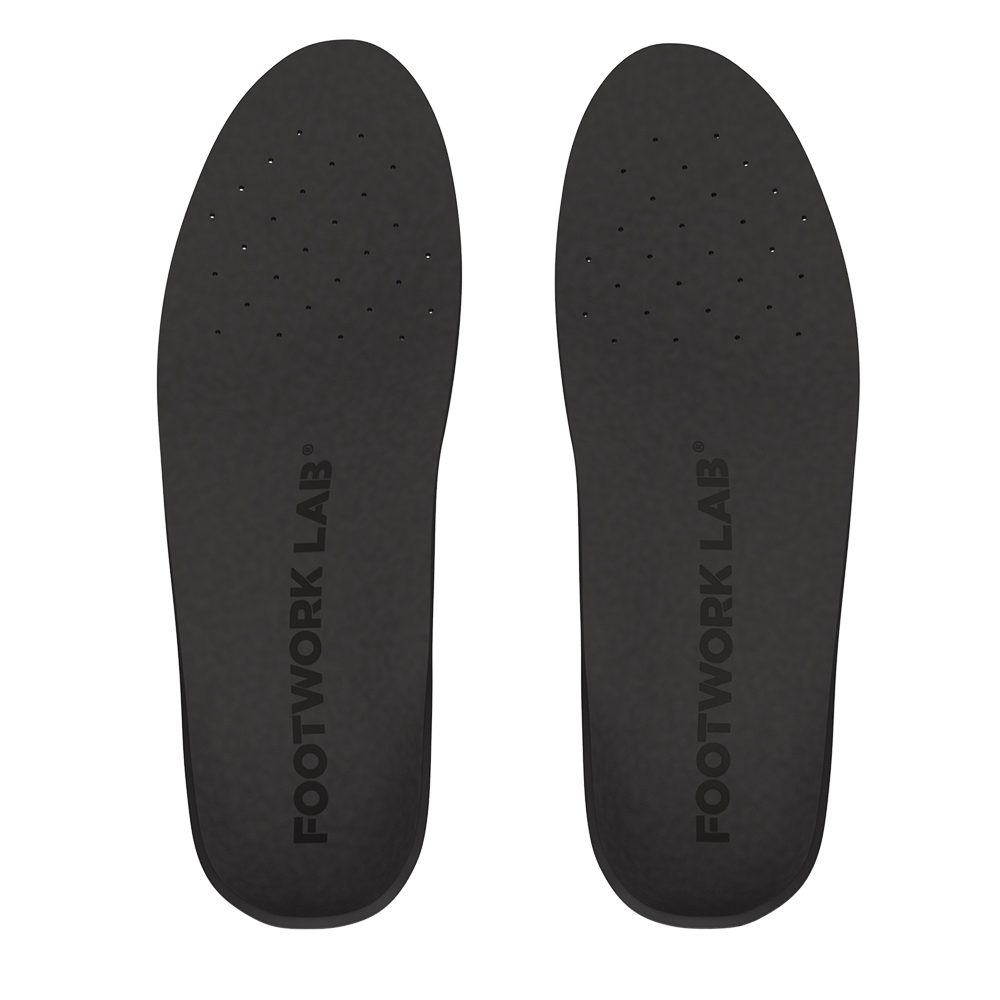
A bunion brief changes three regions of an insole more than anything else. The forefoot gets wider, because the design has to make room for the joint rather than press against it. The first metatarsal region often gets a load-spreading decision — either a recess that offloads the prominent area or a cradle that shares the work with neighbouring structures, depending on what the professional specifies.
The big toe region changes too. If the toe still participates in push-off, the design preserves a channel so it can; if it does not, the design stops assuming that it will. Writing down which of the two situations applies is the single most valuable line in a bunion brief, and the one most often missing when orders arrive at a factory without one.
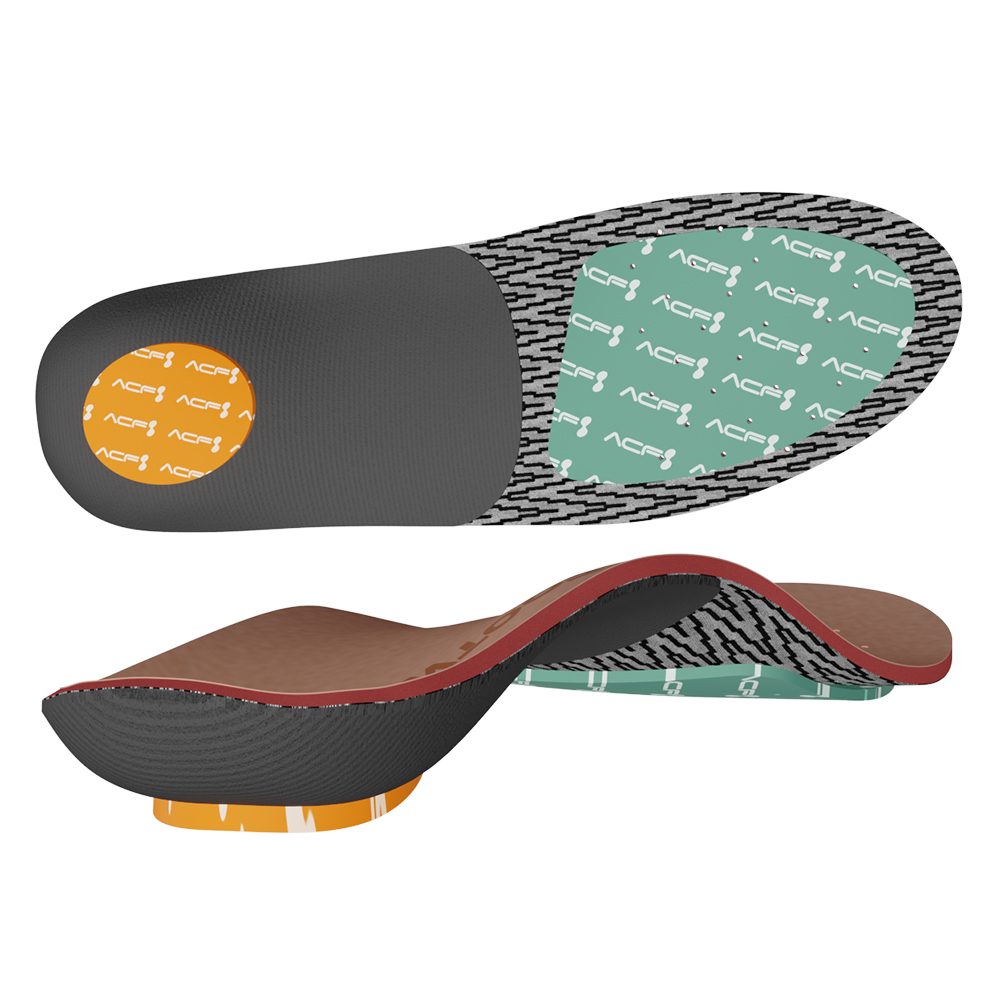
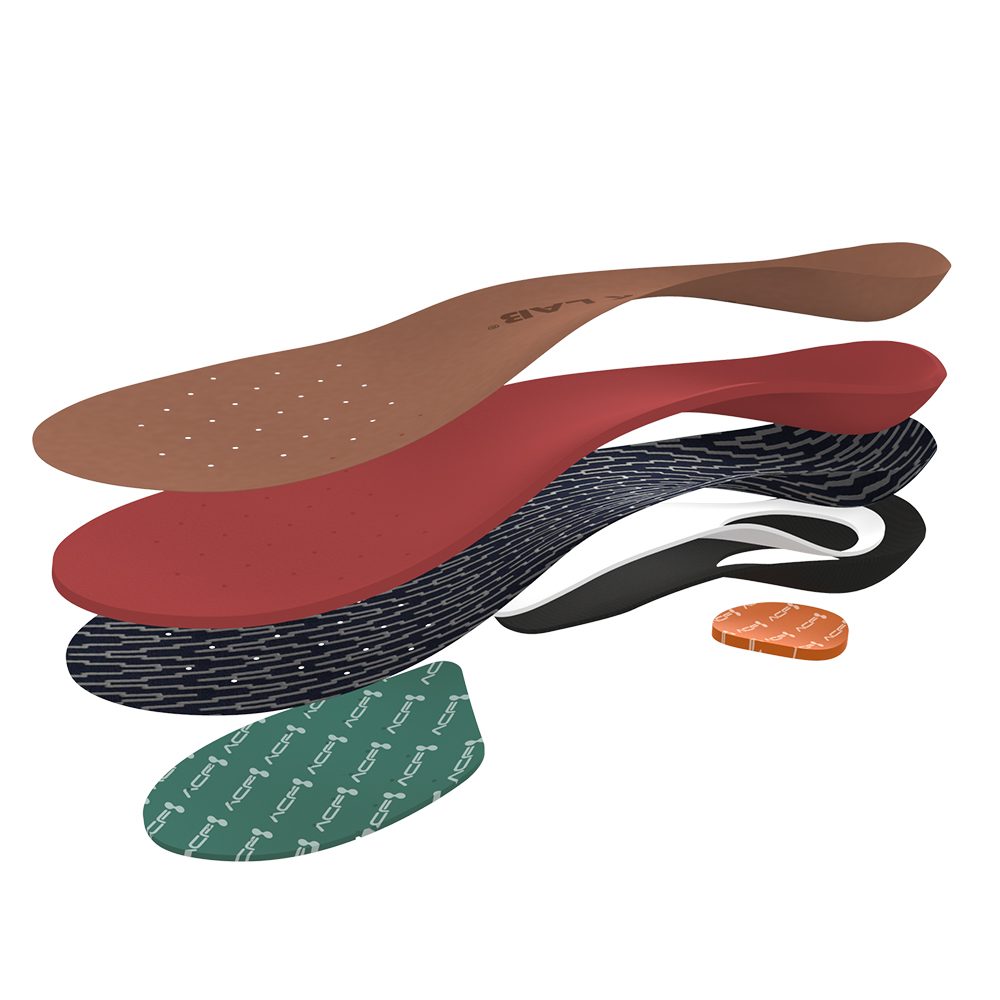
Everything else in the file responds to those three decisions: shell stiffness in the forefoot loosens or firms accordingly, the top cover in the forefoot may change material to reduce friction over the prominence, and the thickness budget gets rebalanced because width and depth both consume space inside a shoe. None of it is exotic; all of it is orderable — if it is written down.
A worked example shows how little needs to change. A retail customer with a prominent joint, a wide forefoot requirement and a daily walking shoe needs exactly three lines beyond a standard daily brief: the width, the metatarsal region decision, and a note that the toe channel must stay open. The rest of the design — heel cup, cover, stiffness family — carries over from the range’s standard daily geometry. Precision costs three lines, not a redesign.
The shoe sets the ceiling
An insole can only be as generous as the shoe it goes into. A wide forefoot design inside a pointed, narrow toe box gives the foot a brief holiday and then returns it to the pressure that shaped the complaint. This is why serious fitters ask to see the shoe before they finalise a design, and why our specification template carries a shoe context field on the first page rather than the last.
For a retailer, the shoe conversation is also a sales opportunity handled honestly. A customer with a prominent joint benefits from knowing which of their own shoes can host a load-spreading insole, and which shoes defeat one before the day starts. Saying that plainly builds more repeat business than pretending a single pair of insoles works everywhere. The measurement supports the conversation; it does not replace it.
Where the shoe cannot change — work footwear, dress codes, personal preference — the design works within the volume that exists. That is a legitimate outcome, and a good specification says so: forefoot width capped by the shoe, load-spreading achieved through geometry rather than added material, and a written note that the limitation belongs to the footwear, not to the insole.
Work boots deserve their own sentence in the shoe conversation. Safety footwear trades forefoot volume for protection, and a bunion customer in mandatory boots lives a harder day than their assessment alone suggests. The brief should name the boot, the hours in it, and the compromise the design accepts — because a factory that knows the constraint can work within it, and one that learns of it at the fitting cannot.
What the assessment adds that a glance cannot
Experienced fitters can size a foot by eye and often get close. What they cannot see by eye is distribution: how much of the forefoot load sits under the first metatarsal head versus the second, how the heel and midfoot share the standing phase, and whether the pattern changes between standing and walking. Those are the inputs a bunion brief consumes.
A plantar pressure system produces exactly that input. Pressure sensing captures the map; a camera captures posture and alignment so the foot is not read in isolation; the analysis software assembles both into a record that a professional can annotate and a factory can read. That is the category our own equipment sits in — a foot assessment system, not a scanner in the imaging sense, and we say so in quotations to keep expectations aligned.
The record also becomes the baseline. If the customer later changes footwear, adds a second pair of insoles, or simply returns for a review, the original map shows what shifted. A retail workflow built on stored records makes those conversations concrete: the customer sees their own before-and-after rather than a generic diagram from a poster.
Comparing the two records on one page is the report layout that serves bunion cases best: standing map and walking timeline side by side, with the forefoot region visible in both. The fitter can point once at the resting concentration and once at the push-off detour, and the customer understands in two gestures what a page of prose would take a paragraph to explain. Our reports are arranged for exactly that two-gesture conversation.
Sourcing: what to confirm before the order
A bunion brief is precise enough that a factory can build to it, and precise enough that vague orders show. Before committing, confirm the supplier reads specifications rather than only photographs: can they accept a written forefoot width requirement, a stated offloading decision for the first metatarsal region, and a named shoe context? A supplier who answers all three in a quotation is production-ready.
Confirm the remake clause next. Forefoot geometry is the region where first-version fit most often needs one revision — the width that clears the joint in the workshop can still feel tight in the customer’s own shoe. A factory that produces to a written specification can measure the remake against the same document; a factory that produces to instinct cannot, and will treat each remake as a new negotiation.
Minimums and logistics close the checklist. Our insole line runs with a two hundred pair minimum that can be mixed across models and sizes, samples ship within three days, and production capacity sits in the hundreds of pairs per day — figures published on our FAQ page for buyers who need to plan a season rather than a single order. The same page covers warranty and after-sales terms in writing.
Buyers sometimes ask whether a platform matters for bunion work. The honest answer: the walking record a mat or plate produces already carries the decisive information — where forefoot load lands through the stance and push-off. A longer platform adds stride-to-stride comparison, which is useful for runners and for progress review, but it is not the purchase that unlocks bunion fitting. Rooms should buy depth where their caseload needs it, not where a single presentation type tempts them.
Positioning the product without overclaiming
An insole for a bunion customer does one honest job: it changes how load is distributed inside the shoe and makes room for the joint. It does not change the underlying alignment of the bones, and no document from a factory should imply that it does. Buyers who state that boundary to their own customers find the boundary protects them — returns fall and trust rises.
The vocabulary on the shelf matters here. Words that promise structural change invite the disappointment that words about load distribution do not. Our own product copy for the daily and recovery care ranges is written around what the design does under the foot — spreading load, clearing the prominence, holding the heel — and the same discipline is available to any dealer who asks for co-written wording under an OEM agreement.
This is also where the assessment record earns its keep commercially. A customer who has seen their own pressure map accepts a load-spreading explanation readily, because the map made the redistribution visible before anyone made a claim about it. The record does the persuading; the insole does the work; nothing on the shelf has to promise more than either can deliver.
The camera frames earn their place in bunion cases more than most. Alignment above the foot — how the ankle and knee line up while the inner forefoot carries its share — frequently explains why the load concentrates where it does, and the frames turn that explanation into something the customer can see. A brief written with the frames attached gives the factory the same context the fitter had, which is the whole point of a specification.
A one-page brief that production can build from
Everything above compresses onto a single page. The fields that matter: forefoot width requirement and the shoe it must fit; the offloading decision for the first metatarsal region; whether the big toe participates in push-off; shell stiffness family for the forefoot; top cover material; thickness budget; wear context and daily hours; and the remake clause with its evidence rule.
Attach the pressure record and a photograph of the shoe interior, and the brief is complete. Our production team can form against it, our quality check can inspect against it, and a remake — if one is needed — measures against the same page. Buyers who adopt the template typically find their second order goes smoother than their first, because the vocabulary is already shared.
The template is available on request through our contact page, and it works with any supplier, not only with us. That is deliberate: a buyer who specifies clearly gets better product from every factory on their list, and the industry-wide habit of writing things down is worth more to the market than any single order we ship.
Finally, a note on volume for dealers building a bunion-aware range. The designs are a variant set on existing families — width, metatarsal decision, toe channel — rather than a new family of their own. A distributor can therefore cover the presentation inside its existing daily and recovery care minimums, adding the variant lines to the order rather than a new category to the range plan. The two hundred pair minimum mixes across models and sizes for precisely this kind of coverage.
Frequently asked questions
Can an insole make a bunion disappear?
No. An insole changes how load is distributed inside the shoe and makes room for the joint. It does not change the underlying alignment of the bones. Any supplier claiming structural change from an insole should be treated with caution.
Why does a pressure record matter for a bunion order?
The record shows where load actually concentrates under the forefoot, which is what the design responds to. A glance can size a foot; it cannot show whether the first or the second metatarsal region is carrying the work.
What is the most important line in a bunion insole brief?
Whether the big toe still participates in push-off. It decides the forefoot channel design, and it is the field most often missing from orders that arrive without a specification.
Do you need the shoe to make the insole?
The shoe context is part of the specification: forefoot volume, toe box shape and daily hours all constrain the design. A photograph of the shoe interior is enough to start; the physical check happens at fitting.
What is your minimum order for custom insoles?
Two hundred pairs, mixed across models and sizes. The structure suits clinics and distributors who reorder rather than one-off single pairs, and the details are published on our FAQ page.
How fast can we test a sample?
Samples ship within three days. The useful test places the sample in the target shoe under the target activity, then records what the remake should change.
Can we sell the insoles under our own brand?
Yes. Custom insoles are available as ODM and OEM, covering design to specification, branding and packaging, all agreed in writing before production begins.
What we would do next
Send us a bunion brief in the field list above — even a first draft — and our team will return a review with the production questions marked before any commitment. Samples ship within three days of agreement, and the two hundred pair minimum can be mixed across models and sizes.
If the assessment side is the gap, our F2 and FMP foot assessment systems capture the pressure records and posture images that feed briefs like this one, with a WhatsApp support group, engineer direct support and over-the-air updates behind every connected unit.
This article is intended for professional and educational reference. It is not medical advice. Foot assessment equipment produces measurements and images; clinical interpretation and any decision about care remain the responsibility of a qualified professional. Certification scope is limited to the documentation we hold: European Union certification and ISO quality system certification.