
Buyers describe an arch support insole by its function; a factory builds
it as a stack of parts. That gap is where most of the surprises live. Two pairs can look
identical in a product photograph and differ completely in the grade of foam inside them, the way
the arch section was formed, and how carefully the finished part was inspected before it was packed.
None of that shows up in a listing, and none of it can be judged from a single sample in the hand.
This article is written from the production side. FOOTWORK LAB has manufactured custom orthotic
insoles since 2014 and runs in-house insole production in Ruichang, Jiangxi Province. We build to our
own models and to customers’ designs, and the same questions come back from clinics, footwear
retailers and distributors: what is actually inside the part, how is the shape created, and how is
quality held steady between the sample pair and the shipment that follows it. Here is how that works,
described in terms of material families and process steps rather than the numbers that only matter
once you are standing at the machine.
An arch support is a function, not a single part
Search the phrase “arch support for insole” and you will find products described as though the
support were a material you could order by name. On the production floor it is not a material. It is
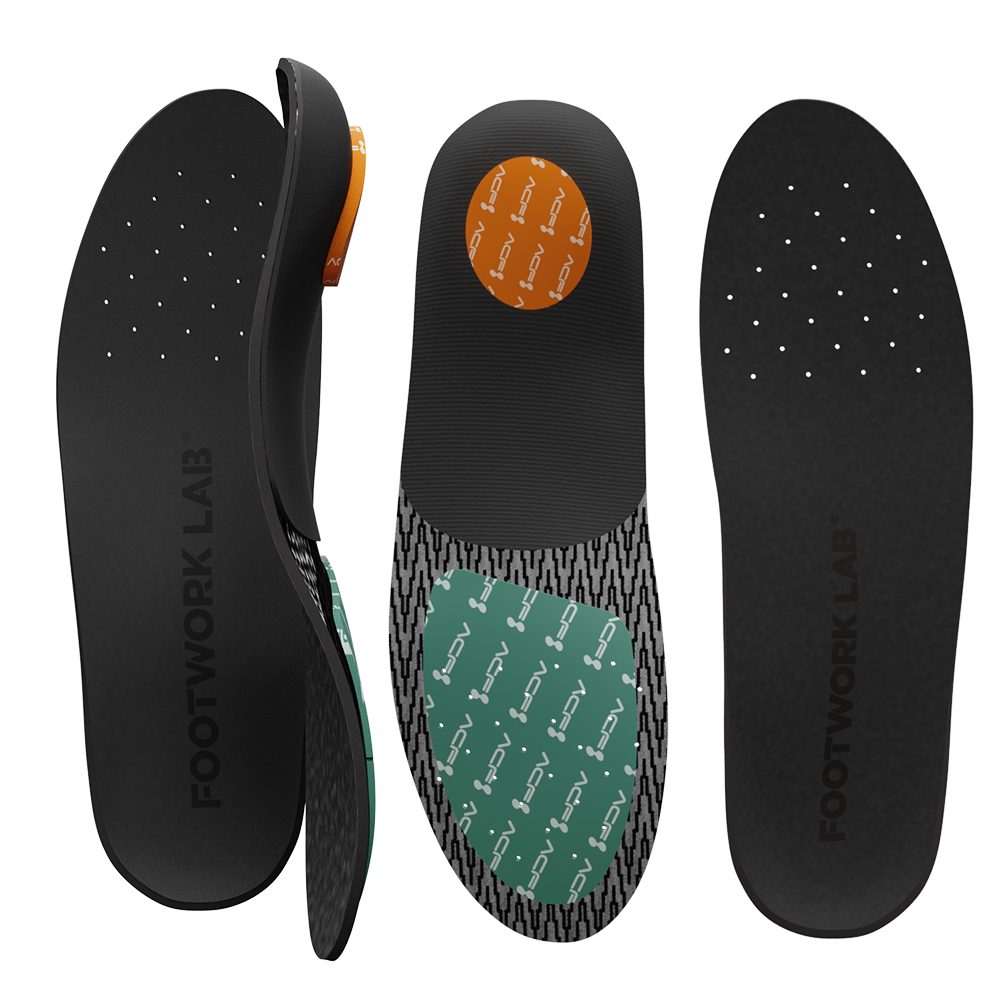
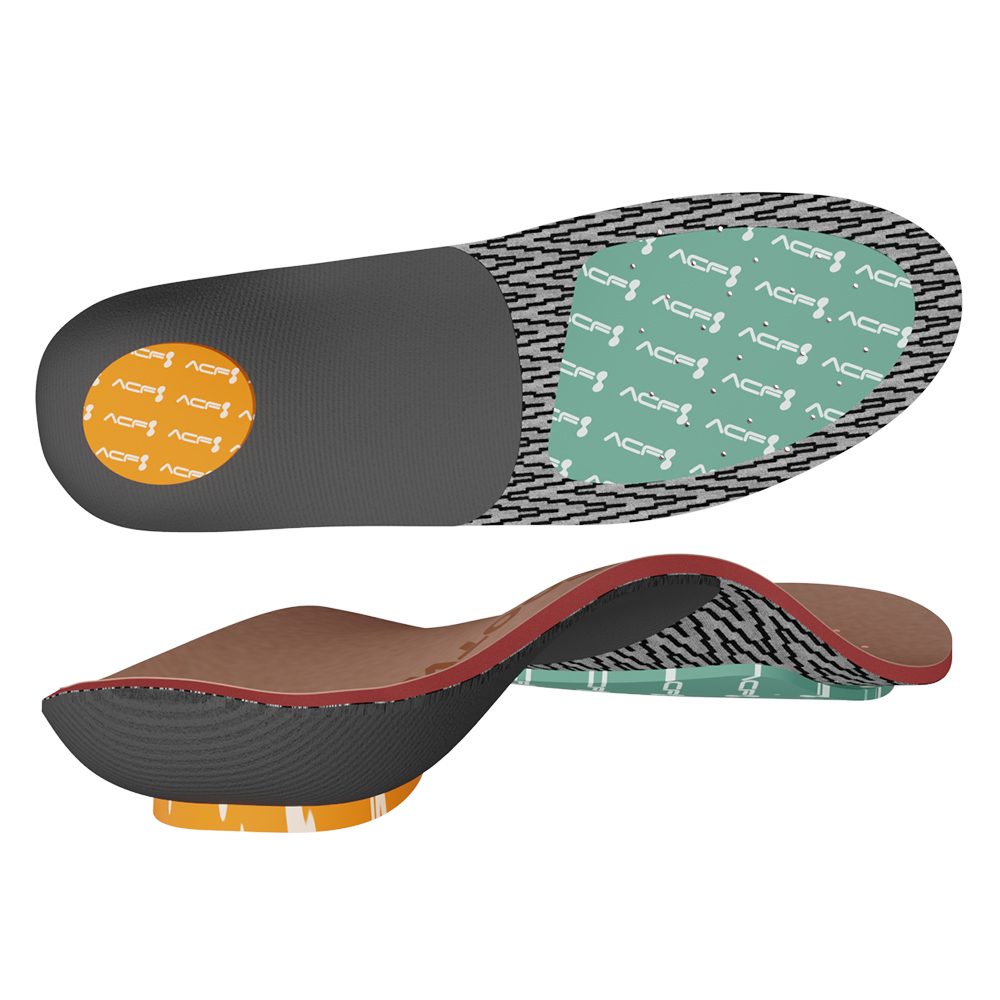
a function that a group of layers performs together, and when we open a finished pair this is what is
inside it.
- The base, or shell — the structural layer that carries the arch and gives the
insole its shape. It is the part that resists bending, and it is usually where the support physically
comes from. - The cushioning layer — foam or gel placed above or below the base, chosen for
how it spreads load under the heel and forefoot. - The top cover — the sheet in contact with the foot or the sock: fabric, leather,
suede or a perforated sheet, selected for friction, moisture behaviour and appearance. - Bonding and finishing — the adhesive or heat-bonded joints that hold the layers
together, plus the grinding and bevelling that let the edge sit inside a shoe without a lip.
Two insoles can both be sold as arch support and behave very differently, because the support is
the product of three variables: how thick the base is, how firm the base is, and how the contour is
shaped. Change any one of them and the finished part changes. This is why a specification that reads
only “arch support, medium” is not yet a specification — it is the opening of a conversation.
One point we are deliberate about. We describe what a shape does to load distribution; we do not
describe what it does to a foot. An insole is a manufactured object that supports and redistributes
load. It is not something that alters the structure of a foot, and we do not sell it that way. If a
supplier tells you their arch support changes foot structure, they are making a claim about the human
body rather than about foam and plastic.
Material selection: the EVA family and thermoformable options
Most bases in this category come from a small number of material families, and the choice drives
almost everything downstream — the feel, the durability, the process steps and the cost. Our full
material and process notes sit under core technology; the working
version follows.
EVA in different grades
Ethylene-vinyl acetate is the workhorse of the category. It exists in a range of densities and
firmness grades, and one factory can produce both a soft, forgiving cushioning base and a firm
structural section from the same family. The practical rule is simple. Softer grades cushion and
conform more; firmer grades hold a shape and resist bending. A part built around a firm arch section
is usually a harder grade, or a harder grade bonded to a softer one so that the part can be firm where
it needs to carry load and soft where it meets the foot.
Thermoformable materials
Thermoformable sheet can be heated, placed over a model and moulded, then cooled into its new
shape. This is the family that allows a closer contour match to an individual foot, and it is common
where an insole has to follow a specific arch profile rather than a generic size run. The trade-off is
process cost. Heating and cooling add steps and handling, and the material has to be worked inside its
window or it springs back toward the flat sheet it started as.
Stiffer elements for thin profiles
When a thin insole still has to carry load, a stiffer element can be laminated into the stack so
that the part gains rigidity without gaining bulk. This buys stiffness at a higher material cost, and
it is normally specified where the shoe itself is shallow and there is no room for a thicker base.
How the choice is actually made
When a customer requests a quotation, material is the first thing we pin down, because it is the
most common hidden variable in a low offer. A cheaper grade of foam is invisible in a photograph and
may not be obvious in the hand for weeks, but it changes both the feel of the part and how long it
serves. Our selection order is: required stiffness, thickness available inside the intended shoe,
weight, how the part bonds to the layers above and below it, expected service life, and only then
material cost.
Covers, cushioning and the layer in contact with the foot
The base gives an insole its function. The upper layers give it its day-to-day feel, and this is
the part of the build that a low-cost pair is usually trimmed first — because a thinner cover, a
smaller cushioning pad or a faster adhesive are all easy to hide and hard to notice on arrival.
Top covers
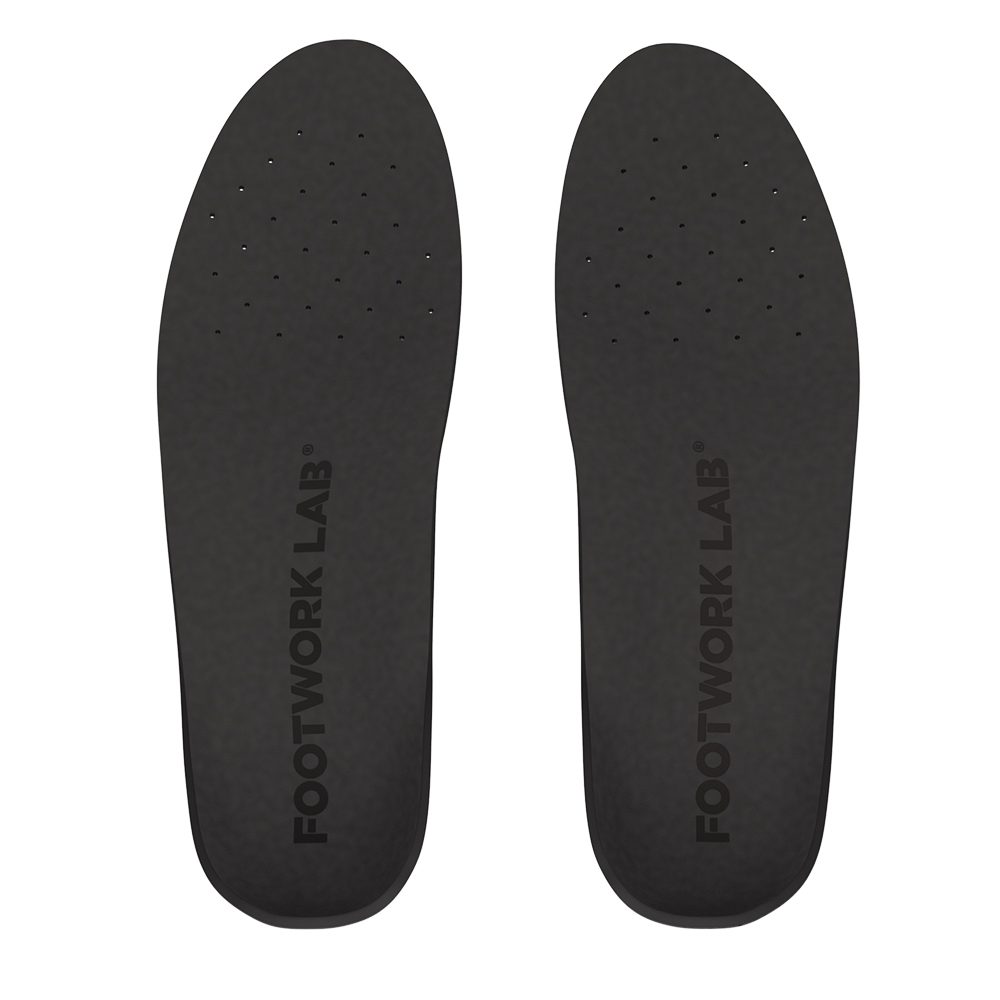
The cover decides how the surface behaves against a sock or bare skin. Fabric covers are
breathable and inexpensive; leather and suede resist wear and look more finished; a perforated sheet
can improve air movement and reduce friction where the foot rubs. Whatever the material, the cover is
the layer an end user sees and touches every day, which is why cover separation or pilling is one of
the failures that generates the most complaints relative to its actual cost.
Cushioning elements
Cushioning is where a design is tuned to a use case. A heel pad changes the way impact is spread
at heel strike; a forefoot pad changes the pressure under the ball of the foot; a small dome or island
concentrates softness in one place. None of these elements change the arch shape — they change where
load is concentrated and how quickly it builds. Keeping that distinction clear is part of how we
describe a product honestly.
Bonding
Layers can be joined with adhesive or heat-pressed together. Bonding is the joint that determines
whether an insole survives a year of daily use or separates in the first month, so it is one of the
points we inspect hardest. A weak bond may pass a visual check on a fresh pair and fail only after the
insole has been walked in, which is why we test bonded assemblies rather than judging them by
appearance.
Edge finishing
Finally, the edge: the grinding and bevelling that shape the perimeter so the insole sits flat
inside a shoe and does not catch on the lining. A thick, unblended edge is the most common reason a
well-designed insole feels wrong in the shoe, and it is a hand-finishing detail that takes skill to
hold consistent across a run.
Forming: heating, moulding, shaping and finishing
Forming is the sequence of steps that turns flat sheet into a shaped part. The order matters,
because each stage constrains the next.
Cutting the blanks
Sheet is cut to the rough shape of the size or model being produced. Cutting is where a run either
stays consistent or starts to drift: if the blanks vary, every later step inherits that variation, and
the finished parts will differ in ways that no amount of finishing can hide.
Heating and moulding
The blank is heated until it can be shaped, then placed over a model. The model may come from a
cast, from a scanned file milled into a positive, or from a generic mould matched to a size run.
Thermoformable material takes the contour of the model; softer EVA is pressed into a moulded shape.
Either way, the shape of the model is the shape of the finished arch section, which is why model
accuracy is worth more attention than it usually gets in a purchase conversation.
Cooling under pressure
Cooling is not passive waiting. A part that is released too early relaxes and loses some of the
contour it was just given. Holding it in position while it sets is what makes the shape repeatable
from pair to pair, and it is one of the differences between a workshop that produces a good sample
and a factory that produces a consistent order.
Trimming, grinding and blending
Once cool, the part is trimmed to its final outline, the edges are ground and blended, and the
upper layers are added. Grinding also removes thickness in targeted places — a technique covered in
the next section — so the finishing stage is part of the design, not just cleanup.
Repeatability and small runs
In small-batch work, the cost is dominated by setup rather than material: preparing the model,
setting the process, and checking the first parts. This is why the first pair of a new design carries
most of the effort, and why running a second size after the first is far cheaper than starting from
nothing. It also explains why a sample that arrives quickly is not evidence that the whole order will
be quick to produce — the question is whether the factory can hold the same result across the run.
Layered hardness and thickness zones
The design of a custom insole is, in large part, a question of where the part should be firm and
where it should give. That is controlled by two things: the firmness of the material and the thickness
of the section at each point.
Hardness zones
A single insole can combine several hardness grades. A firm medial section under the arch, a softer
area under the heel, and a mid-range forefoot is a common arrangement. The firm area carries load and
holds the contour; the soft areas allow movement and absorb the moment of contact. Thinking in zones
rather than in one overall firmness is what makes an insole appropriate to a use case instead of
merely generic.
Thickness and bending behaviour
Thickness works alongside firmness. A thicker section of the same material resists bending more
than a thin one, so a design can reach a target stiffness either by choosing a harder material or by
adding thickness — and those two routes feel different in the shoe. Thickness is also limited by the
shoe: there is only so much room above the sole, and a design that ignores that limit will either
crowd the toes or lift the heel out of the heel counter.
Recessing instead of swapping material
Sometimes the cleanest way to soften one area is to grind a shallow recess or pocket into an
otherwise firm base, rather than introducing a second material. This keeps the bonding simple and the
part consistent, and it is a standard technique where a small zone needs to be more forgiving without
changing the character of the whole insole.
Support, described honestly
When we talk about a medial or arch feature, we talk about how it distributes load and where it
places contact between the foot and the surface. That is a statement about geometry and material, and
it is one we can stand behind. It is not a statement about what happens inside a person’s foot, and we
do not make those claims on behalf of the product. Buyers who want to describe an insole accurately to
their own customers will find this discipline useful, because it keeps the language defensible.
Inspection, sampling and the ODM and OEM routes
Between the design and the shipment sits inspection, and between the enquiry and the order sits
sampling. Both are where a manufacturer either earns trust or quietly loses it.
What we check before packing
Inspection covers the points that a customer cannot verify from a photograph. We check the outline
and thickness against the agreed specification, check that the formed contour matches the model, flex
the part to look for weak bonds, inspect the cover for alignment and adhesion, and compare the
finished pair against the reference pair we keep for that design. Appearance is part of it, but the
checks that matter most are the ones that predict how the insole behaves after a month of use rather
than how it looks on the desk.
Sampling and small batches
Sampling is how a design is settled before volume starts. Insole samples ship within three days,
and production capacity runs at roughly 500 to 1,000 pairs per day, which means a small trial order
can be turned around quickly. Our minimum for insole orders is 200 pairs, and those pairs can be mixed
across types and sizes — useful where a clinic or a distributor wants to test several models at once
rather than commit to one. We would rather a buyer test a mixed batch and reorder what works than
order a large quantity of a design nobody has worn.
ODM, OEM and what actually differs
For insoles we work both ways. Under ODM, we develop the model to your requirement and it is
supplied under your brand. Under OEM, you bring the design and we manufacture it to your
specification. The difference is mostly about who owns the design and who carries the development
work, and it changes the sampling stage much more than it changes the production line. What it does not
change is the honesty of the description: whichever route a pair takes, we will not describe it as
changing a foot, and we will not quote a figure for price until the material grade, layer stack,
cover, finishing and packaging are defined. Price in this category is a consequence of those choices,
not a number that exists on its own.
Frequently asked questions
What is an arch support insole actually made of?
It is a stack of layers rather than a single material: a structural base that carries the arch and
holds the shape, one or more cushioning layers, a top cover in contact with the foot, and the bonding
and edge finishing that hold it together. The firmness and thickness of the base are what create the
arch function.
Can you match an insole we already sell?
In many cases yes. We work from a physical sample, a specification drawing or a recorded shape, and
we build a model that reproduces the geometry. Where a design exists only as a finished product, we
would normally produce a sample pair first so that the match can be judged in the hand before any
volume order is placed.
Do you offer ODM and OEM for insoles?
Yes. Under ODM we develop the model to your requirement and it is supplied under your brand. Under
OEM you provide the design and we manufacture to it. Machine OEM is a separate discussion, because the
enclosure and branding change the commercial arrangement.
What is the minimum order for custom insoles?
The insole minimum is 200 pairs, and those pairs can be mixed across types and sizes. That mix is
deliberate: it lets a clinic or distributor trial several models in one order rather than committing
to a single design.
How long does a sample take, and what is your production capacity?
Insole samples are dispatched within three days. Standard insole production runs at roughly 500 to
1,000 pairs per day. Machine production is separate, at three to five units per day.
How do you keep the sample pair and the production run consistent?
We hold a reference pair for each design, and production is checked against it: outline and
thickness against the agreed specification, formed contour against the model, flex testing for bond
strength, and cover alignment and adhesion. Consistency comes from controlled heating and cooling and
from comparing against that same reference rather than from trusting a fresh sample.
Do you publish material grades or hardness values?
Not as a public list. Material and firmness are specified per project together with the customer,
because the right choice depends on the intended shoe, the use case and the service life expected. We
are happy to discuss the material family and the layer structure in detail once we know what the
insole has to do.
What we would do next
If you are sourcing arch support insoles and want to compare suppliers fairly, start by defining
the layer structure you want rather than the wording on the listing: which firmness zones the part
needs, how much thickness the intended shoe allows, which cover suits the end user, and how the
finished pair will be inspected. A supplier who can talk through those four points, and who will not
promise anything about a person’s foot, is a supplier you can compare meaningfully against another.
The full range we produce is listed under insole categories, and
the commercial terms — minimums, sampling, ODM and OEM, delivery timings — are collected in our
FAQ. If you would like us to look at a design or a sample you already have, send
the details through the contact page along with the shoe type the insole is
intended for, and we will tell you which construction fits and which parts of it you can leave out.
Distributors and clinics building a private-label line can also start at
become a partner.
This article is intended for professional and educational reference. It is
not medical advice. Foot assessment equipment produces measurements and images; clinical
interpretation and any decision about care remain the responsibility of a qualified professional.
Certification scope is limited to the documentation we hold: European Union certification and ISO
quality system certification.