
The testing card at the gym listed six stations and fifteen minutes each: body composition, flexibility, grip, a jump test, a movement screen, and a cool-down walk that nobody booked. Members came in twice a year, worked through the card in order, and left with a sheet of numbers stapled to their programme. When the owner asked where foot assessment should go on that card, the question sounded like a scheduling detail. It was not. A testing menu is a timetable in which each station changes the body that arrives at the next one, and a foot record placed badly measures something the gym itself created. This article is about placing it well — which station it belongs after, what has to be identical for the second visit to mean anything, what coaches do with the findings once they have them, and the claims a gym must not make on the back of a measurement. It is written for the people who buy fitness testing equipment, not for the people who market it.
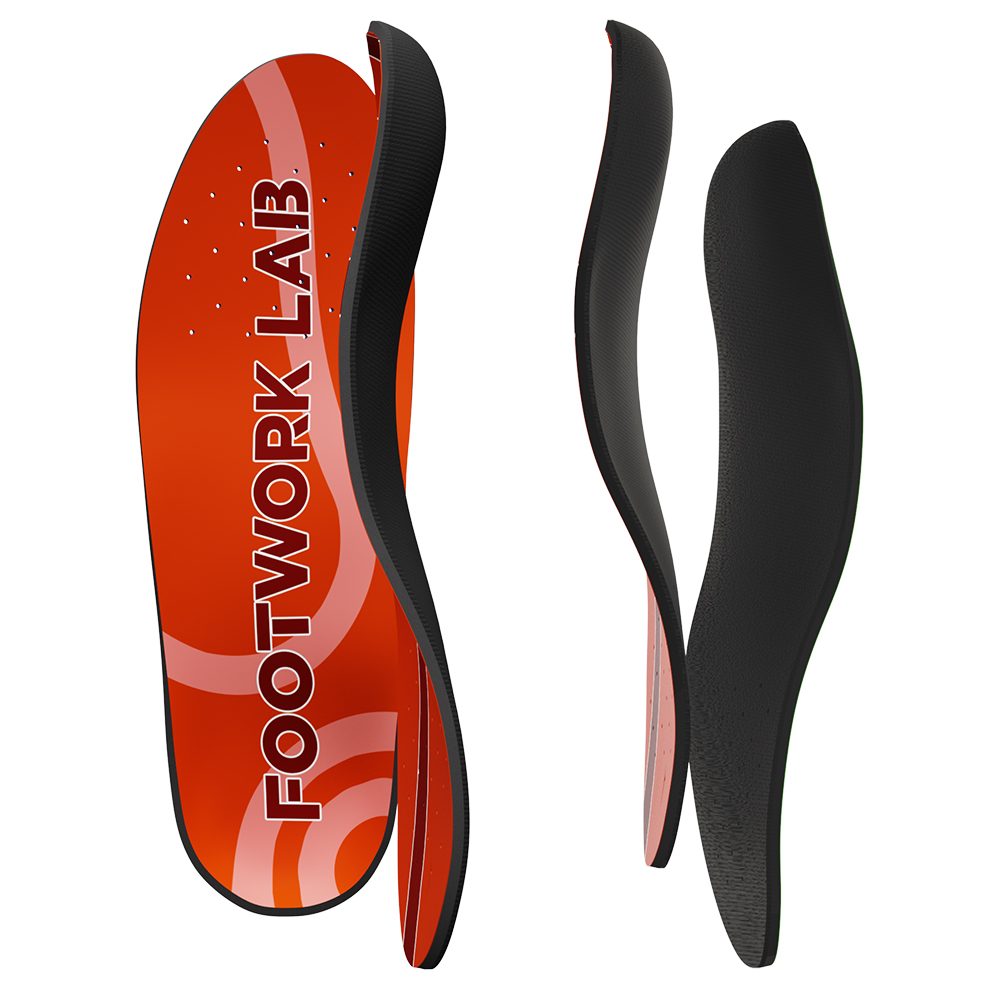
On the insole side, the FX Sport range is built around four grades rather than four sports: support, anti-torsion, cushioning and starting ability. Which combination a member receives follows the training block and the shoe, and the record taken at the testing station is what makes that choice repeatable rather than remembered.
A testing menu is a timetable, not a list
Every station on a testing card borrows from the next one. A maximal jump test leaves the calves loaded for twenty minutes. A flexibility screen after a hard warm-up reads differently from the same screen taken cold. Body composition measured straight after a session carries fluid the member has not yet lost. None of this is a flaw in the tests; it is what tests do to bodies, and a menu that ignores it produces numbers that drift for reasons that have nothing to do with the member’s training.
Gyms that run testing well tend to think in three blocks rather than six stations. A quiet block first, where the member is rested and the measures are structural: stature, body composition, posture, foot loading. A loading block second, where the heart rate rises and the tests get progressively less repeatable. A recovery block last, which is mostly conversation and scheduling. The order is not arbitrary. It puts the measures that need stillness before the measures that destroy stillness.
The foot record belongs in the quiet block, and almost always at the front of it. The reasons are physical. Feet swell across a training day and across a season of hard blocks. A member who has just done three sets of loaded carries stands differently from one who walked in from the car park. Barefoot capture also asks for a moment of undressing, which is easier to arrange before the member is sweaty and impatient than after.
There is a second reason, less physical and more practical: the foot record is the only station on the card that produces images as well as numbers. Members look at the pressure map, and they look at it longer than they look at a body composition printout. Putting it early gives the session a centre of attention, and staff discover that the rest of the card is easier to run once the member has seen something they can point at.
Where the foot record earns its slot
Three placements are common and only one of them is good. The first is the entrance, before the member has taken off a coat — quick, but the feet are still cold and the member is still in street mode. The second is at the end, as a bonus after the programme has been discussed, which turns a measurement into a demonstration and spoils the retest. The third is after the intake conversation and before the first loading test, and it is the one that produces records worth comparing.
The intake conversation is not a formality. It is where the operator learns what the member does for a living, what shoes they arrived in, whether they have been training through a niggle, and what they expect from the session. Those four answers change how the record is read, and none of them can be recovered later from a pressure map. A gym that scans first and asks afterwards has the cart in front of the horse.
The practical sequence in a well-run studio takes about twelve minutes of the slot: shoes and socks off, a standing capture, a short walking pass if the floor allows it, and a balance trial if the room is quiet. Then shoes back on and the loading tests begin. What the member takes away is a report with their own footprint on it, and what the gym keeps is a file with a date, an operator and a condition note.
Equipment choice follows from that sequence rather than leading it. A gym buying fitness testing equipment for a foot station needs a plate that takes a barefoot standing record reliably, cameras that do not have to be repositioned for every member, and software that exports a report the member can keep. It does not need the longest walkway in the catalogue, and it does not need a station that requires a trained technician to run. The best station is the one a duty instructor can operate alone on a Saturday.
The conditions that must be repeated, or the retest is decoration
A retest is a comparison, and a comparison is only as good as the conditions around it. Six things decide whether two visits can be read against each other: the time of day, the shoes worn into the building, the warm-up state, the operator, the plate position, and the protocol — how long the member stands, how many passes are walked, whether balance is taken. Change one and the difference in the record may be the change you made rather than the change in the member.
Time of day is the one gyms most often ignore and the one that costs most. A member tested at seven in the morning twice a year gives a comparable pair of records; a member tested at seven in the morning in spring and at seven in the evening in autumn gives two records with a shift in them that nobody can attribute. Booking the retest into the same slot as the first test is a two-minute administrative decision with a season-long payoff.
Warm-up state is the second. Feet loaded by a session before the capture look different from feet that walked in from a car park, and neither is wrong — they are simply different conditions. The note on the file should say which one applies. When a gym cannot control the state, it can at least record it, and a recorded condition is what allows a later reader to decide whether the comparison is fair.
The operator is the fourth condition and the one that quietly decays. Staff turnover in a gym is high, and a protocol that lives in one instructor’s habits leaves with that instructor. The remedy is unglamorous: one page, laminated, kept beside the plate, listing the pass order and the three sentences the operator uses when handing the report over. New staff are briefed against the page, not against a colleague’s memory.
What the record changes in the training block
Coaches use a foot record for three things, and only the first of them is about the foot. The first is load distribution: where pressure sits under each sole at rest and during a short walk, whether one side carries more, and where the contact area narrows. That informs shoe choice, session volume on hard floors, and how much single-leg work a member is given in the first weeks of a block.
The second is asymmetry, which is the most useful item on the sheet for a coach and the easiest to over-read. A left-right difference in peak pressure or in the timing of the contact phase is a description of that member on that day. It is not a diagnosis, and it does not name a cause. What a coach can do with it is narrow and practical: note it, watch the movement screen for the same side, and retest at the end of the block to see whether the difference moved.
The third is the conversation with the member. A pressure map gives an instructor something concrete to point at when explaining why a training change is worth the effort — why the single-leg work is on the programme, why the hard-floor sessions are being kept short, why a pair of insoles is being suggested rather than a new pair of shoes. Members follow an explanation they can see far more readily than one they are told.
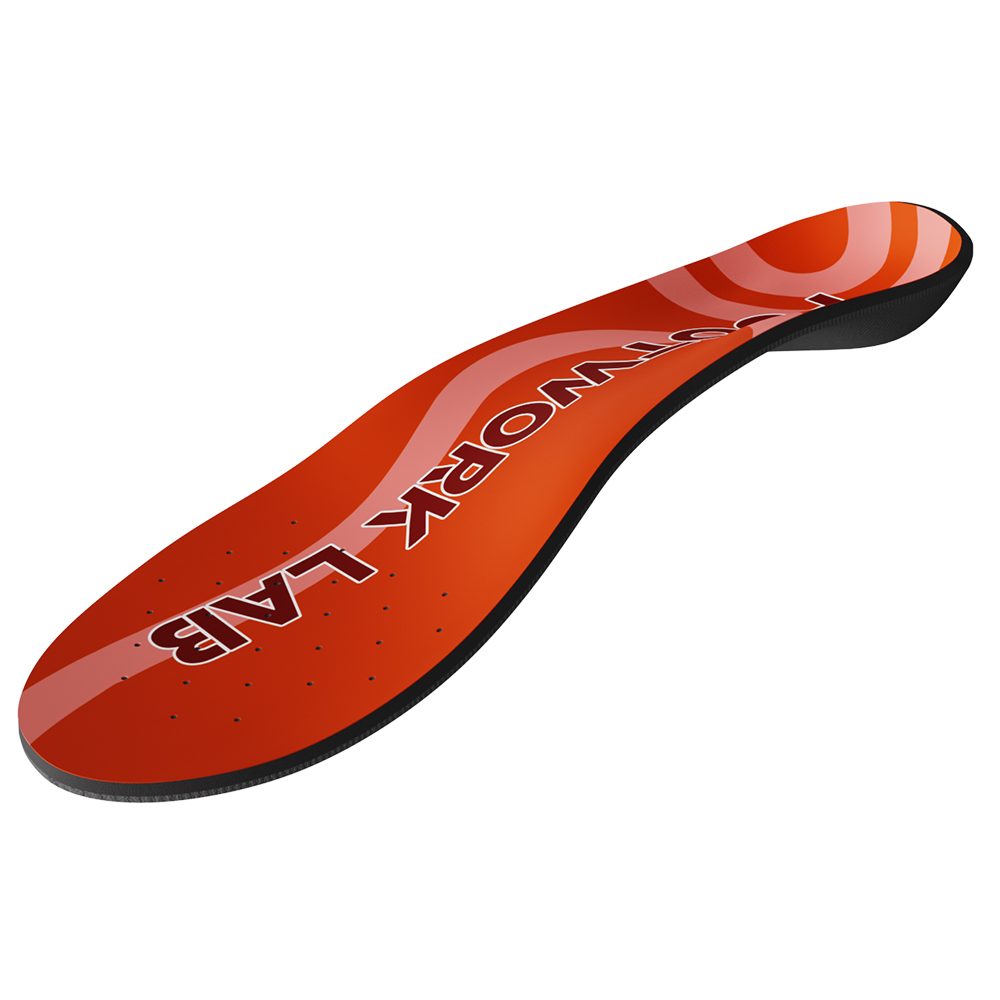
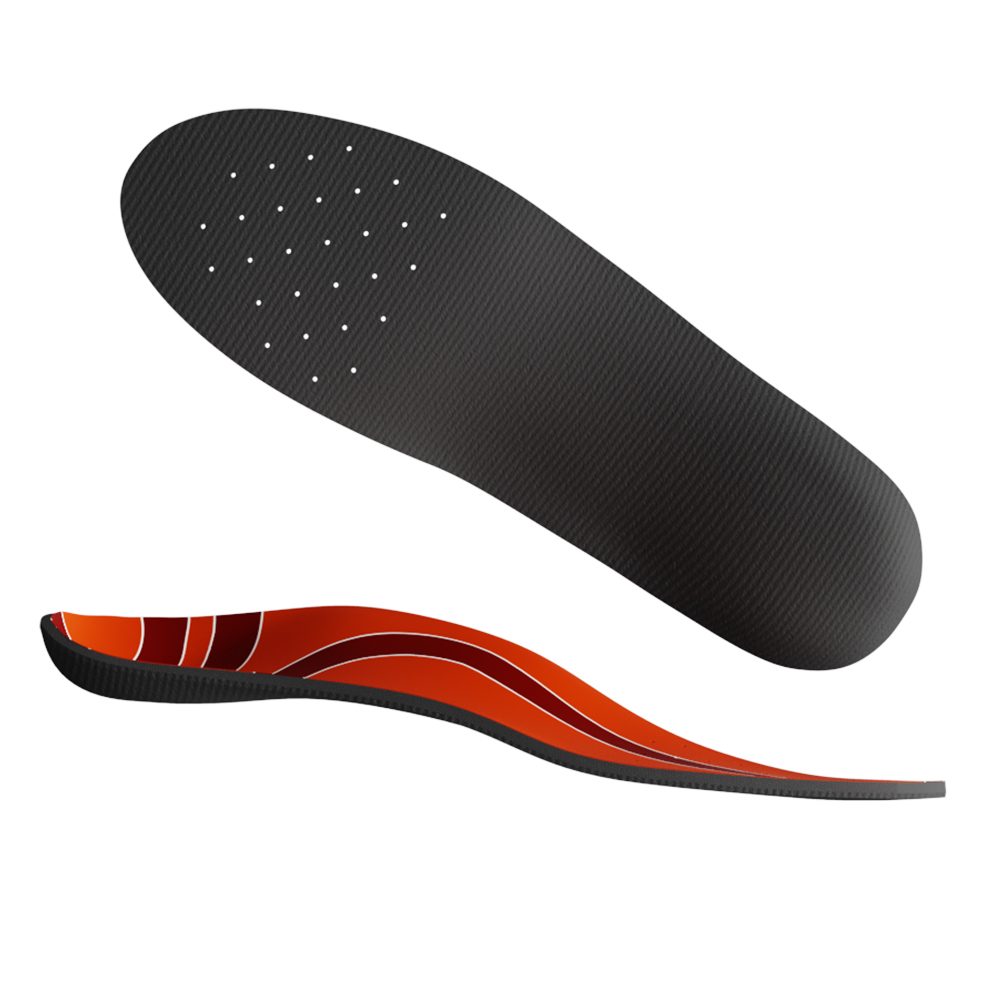
Where an insole is part of the answer, the four grades give the coach and the fitter a shared vocabulary. Support describes how much contour the build holds under the arch. Anti-torsion describes how much the board resists a twisting sole. Cushioning describes what sits under the impact points. Starting ability describes how readily the build lets the foot leave the ground — a grade that matters to a basketball player and very little to a member who trains on a rower. The combination, not the sport name, is the specification.
The stock and grade decisions that follow the block
A gym that offers insoles quickly discovers that the range, not the pair, is the product. Members arrive in different sports, different shoes and different sizes, and a shelf holding one build in three sizes serves almost nobody. The workable arrangement is a small range across the common sizes, chosen so that the four grades are represented and the stock can be replenished without a long lead time.
Our own minimum for insoles is two hundred pairs, mixed styles and sizes, which is the quantity at which a studio can hold a genuine range rather than a single line. Samples ship within three days, so a coach can put a build into a real shoe before committing. Production runs at roughly five hundred to a thousand pairs a day, which matters to a chain planning a season across several sites rather than to a single studio.
The reorder rhythm follows the block, not the calendar. Daily-wear builds in our guidance last four to six months, and heavy sport shortens that: the cushioning compresses, the cover abrades, the board holds its shape longer than the foam around it. A gym running two testing windows a year will find that the members who bought at the first window are due at the second, which is a convenient coincidence rather than a sales trick.
Stock decisions should also respect what the record actually showed. A member whose loading is even and whose training is recreational does not need the most structured build on the shelf, and saying so is what keeps the recommendation credible. The studios that sell the top grade to everyone lose the trust that made the foot station worth installing in the first place.
What a gym session must not claim
The pressure map is a set of measurements: peak and mean pressure by region, contact area, the percentages of the contact and flat phases, foot axis angle, the speed and path of the centre of pressure, and camera images of alignment. Each of those is a recorded quantity with a date attached. None of them is a diagnosis, and a gym that lets the language drift towards one is borrowing authority it does not have.
Nor is a foot station a medical screen. It will not tell a member whether a symptom is serious, and it should not be presented as a reason to skip a clinical appointment. When a member arrives with a complaint rather than a training question, the right move is to record what can be recorded, hand the report over, and suggest the professional who should read it. That is a service, and members remember it as one.
Two limits of ours belong here as well. We do not promise that a scan, a session or a pair of insoles will improve performance, reduce injury risk or change a member’s results; those claims belong to whoever is willing to defend them, and we are not. We also do not make shape-scanning hardware — a gym planning to mill custom shapes from a surface model is shopping in another category, and a pressure record will not substitute for it.
What remains is modest and durable. A member sees how they load, a coach gets a fixed reference point, and the retest at the end of the block answers a question that would otherwise be settled by memory. That is what a foot station earns in a testing menu, and it is enough to justify the twelve minutes.
Frequently asked questions
Where exactly should the foot record sit in a testing session?
After the intake conversation and before the first loading test. The member should be rested, the feet should be at their ordinary state rather than swollen from exercise, and the operator should already know the working day and the shoes. Putting it at the end turns a measurement into a demonstration.
How long does the foot station take?
About twelve minutes of a testing slot for a standing capture, a short walking pass where the floor allows, and a balance trial in a quiet room. Add a few minutes for the report to be read back to the member, which is the part that decides whether the session is remembered.
Do members need to be barefoot?
Yes for the pressure record, because the sole and its load pattern are the object being measured. Shoes and socks come off, the capture follows the on-screen prompts, and the condition is noted in the file so the next visit is taken the same way.
What has to stay identical for a retest to be comparable?
Time of day, the shoes worn into the building, the warm-up state, the operator, the plate position and the protocol. Any one of them changing can move the record more than the member’s training did. Where a condition cannot be controlled, it should at least be written down.
Can the record tell a coach which insole grade to use?
It informs the choice rather than making it. The four grades — support, anti-torsion, cushioning and starting ability — are selected against the shoe, the training block and the loading pattern the record shows. That selection is a fitter’s judgement, and it is worth writing down so the next pair can be specified the same way.
How many pairs should a gym hold in stock?
Enough to cover the common sizes across the grades the membership actually uses, ordered at the two-hundred-pair minimum with styles and sizes mixed. A single build in three sizes is not a range, and a member who cannot be served on the day rarely comes back for the second conversation.
Is the report something the member should keep?
Yes. It carries the date, the conditions and the findings, which makes the next session comparable and gives the member a reason to return for the retest. A report that stays in the gym’s software only is a record the member has no relationship with.
What we would do next
Take the testing card and mark where the foot station goes before you buy anything: after intake, before loading, in the quiet block. Then write the six conditions on the same page and decide which of them the gym can actually hold. If two of them cannot be held, the station will still produce records — they just will not be comparable, and the gym should know that going in.
If the plan includes insoles rather than a device alone, the insole range page lists the three series and the four grades in the factory’s wording, and the contact page is the fastest route to a sample conversation. Tell us the sports your membership actually plays and the sizes you sell most; that shapes the first order far more than a catalogue choice does.
This article is intended for professional and educational reference. It is not medical advice. Foot assessment equipment produces measurements and images; clinical interpretation and any decision about care remain the responsibility of a qualified professional. Certification scope is limited to the documentation we hold: European Union certification and ISO quality system certification.