
A customer at the counter asks for something under the heel, because a colleague told them a raise would take the strain off. The request is one of the most common in the category and one of the least examined. Raising a heel is a small mechanical change with a surprisingly wide reach: it moves where load enters the foot, it changes the angle the shoe holds the leg at, and it eats volume inside a shoe that was not designed to give any up. Done for a reason and fitted into the right shoe, it is a reasonable adjustment. Done because someone said it helps, dropped into whatever shoe was worn that day, it is a guess wearing the clothes of a recommendation. This article takes the request apart. It describes what a heel raise physically does to the position of the ankle and the path of load through the foot, what it costs in shoe volume, how an insole-built raise differs from a loose insert under the existing footbed, when the honest answer is that the shoe is the problem rather than the foot, what a raise cannot do, and how a fitter should decide — with a record, and within limits we state plainly. We make insoles; we do not promise outcomes, and this is one of those topics where the limits matter more than the claims.
What a heel raise physically does
Start with the geometry, because the geometry is uncontroversial. A foot that stands on a level surface sits at one angle through the ankle. Put a wedge under the heel and the ankle joint is held at a different angle: the shin leans forward slightly relative to the foot, the calf complex works across a shorter range, and the position where the leg meets the foot has moved. None of that is a treatment claim; it is what a wedge does, the way a ramp does what a ramp does. The questions that matter are whether the new position suits the person, and what else changed as a side effect.
The side effects are the part that rarely gets mentioned at the counter. Tilting the foot back shifts load towards the heel and away from the forefoot, so the regions that carried the most may carry less and the regions that carried little carry more. The toes sit at a different angle inside the toe box. The point where the foot flexes when walking moves as well. A raise is not a local edit to one spot under the heel; it is a global re-set of how the foot sits in the shoe, and the whole pair has to be read again after it is made.
This is why we treat a raise as a deliberate prescription decision rather than an accessory sale. A modest raise built into a custom pair, specified from a record and fitted into a shoe with room for it, is a coherent piece of work. The same raise bought loose, slipped under a footbed that already has its own shape, inside a shoe already tight across the instep, is a different object entirely, and usually a worse one. The wedge is the same in both cases. The system around it is not.
The load path moves before the foot does
People talk about heel raises in terms of what they relieve, and that vocabulary is exactly backwards for our purposes. What we can describe is load: how much of the body’s weight passes through which regions of the sole, and how that distribution shifts when the foot’s angle to the ground changes. A raise moves load backwards along the foot. How far it moves depends on the height of the raise, the shape of the foot, and the shoe holding the whole arrangement in place — three variables no counter sentence can compress into one promise.
The honest way to know what changed is to measure before and after, and this is where the assessment equipment earns its keep. A standing record with and without the trial raise shows the shift in plain terms: less contact and load under the forefoot regions, more under the heel, the centre of pressure sitting further back. The numbers are the customer’s to read and a professional’s to interpret, but the shift itself is not a matter of opinion. A fitter who shows the two records side by side has done more for the customer’s understanding than an hour of assurances.
What the record cannot show is whether the new arrangement will suit the person over a month of wear, and we say so. Load distribution on the day of fitting is a fact; comfort over time is a judgement that only the wearer can make, in their own shoes, on their own weeks. This is why our guidance to clinics is to present the shift, set a review point, and stop. The record supports the adjustment; it does not certify it. We expand on what a pressure measurement can and cannot report in a separate article, and the boundary applies double when the change being judged is our own work.
Shoe volume: the cost nobody mentions
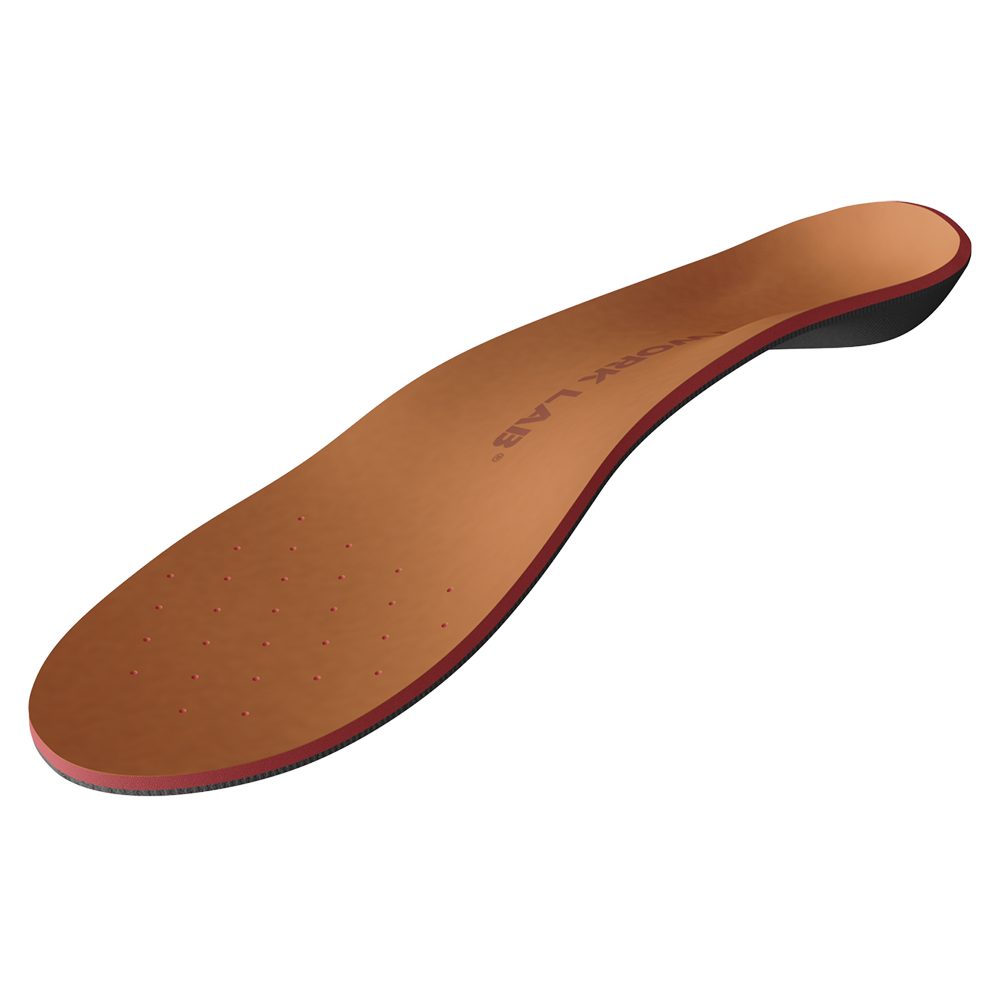
A raise has to go somewhere, and where it goes is inside the shoe. Depth under the heel has to be found from the shoe’s interior volume, and shoes are cut close to the foot by design. Add material under the heel and one of three things happens: the heel sits higher in the shoe and the heel counter grips a different part of the foot, the instep tightens because the foot has ridden up into the throat, or the foot starts to slide forward as the wedge angles it downhill towards the toes. Any of the three can end the experiment before the raise has done anything worth doing.
This is why shoe choice decides the ceiling of what a raise can be, and why we ask to see the actual shoes rather than a description of them. A deep, laced shoe with a removable footbed has room to trade; a shallow slip-on has almost none. In shoes with a built-in heel element of their own, adding another on top stacks two geometries that were never designed to meet. The fitter’s question is not only whether a raise suits the foot. It is whether this shoe can host the raise the foot might want, and if the answer is no, the honest conversation is about the shoe.
There is a practical check that takes a minute and saves returns. Fit the shoe with the trial raise in place and have the customer walk the length of the shop several times, then sit and remove the shoe and look at the foot. A heel lifting inside the counter, red marks across the instep, or toes curled to hold position all say the volume has run out. No measurement on any report overrides those observations. The shoe votes last, and pretending otherwise is how a sensible adjustment gets returned as an uncomfortable product.
Built into the pair, or slipped under it
A raise reaches the foot by one of two routes: built into the custom pair during manufacture, or added as a separate insert under whatever the shoe already contains. The two routes look similar on a shelf and behave differently on a foot, and the difference is worth spelling out at the counter before the customer decides for themselves by trial and error.
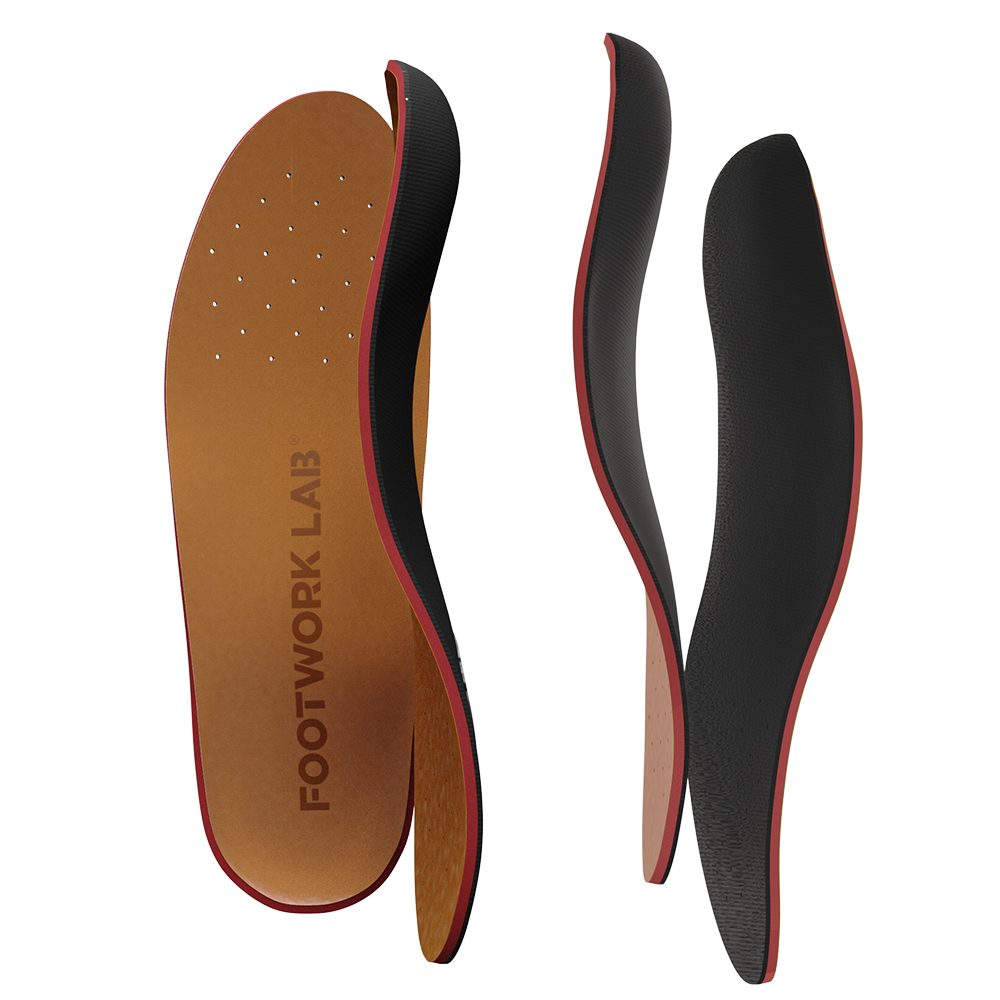
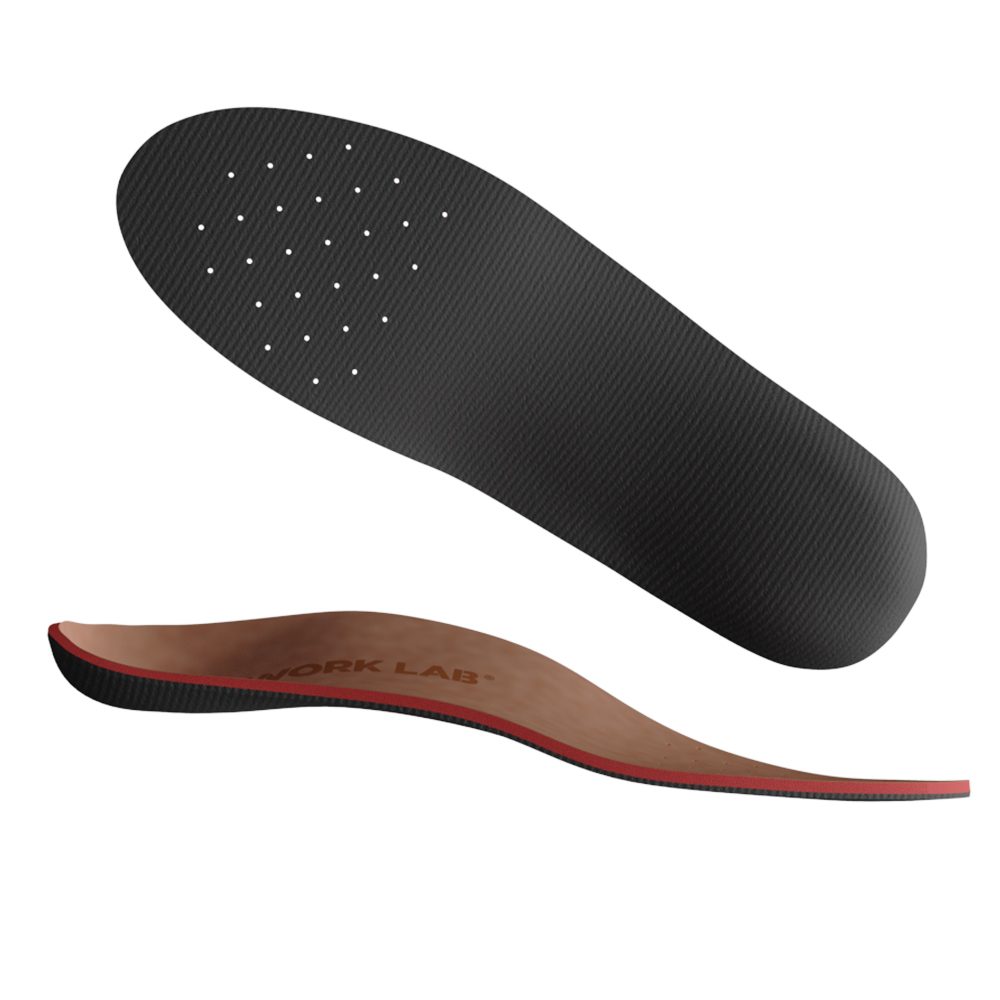
A raise built into a custom pair is part of the design from the first sketch. The contour above it is shaped to suit the new angle, the layers beneath it are chosen to carry load across the whole platform rather than at a single edge, and the transition to the forefoot is gradual instead of a step. The pair is one object, made as one object. A loose raise under an existing footbed, by contrast, creates a junction: two surfaces that meet at an edge, load concentrating where they overlap, and a footbed above it that no longer sits flat on the support below. Sometimes that is acceptable — a short trial before committing to a build, for instance — and we say so. But a trial insert and a finished pair are different tools, and only one of them was designed to stay.
The same logic runs in reverse at the replacement stage. A customer who has worn a built-in raise for a long time and tries to substitute a loose insert under an ordinary footbed is not getting the same arrangement cheaper; they are getting a different arrangement, with its own edge and its own behaviour. We tell them so plainly, and some still choose the loose insert because it fits a shoe the custom pair does not. That is a legitimate choice about shoes. It is not, and we do not present it as, an equivalent product.
When the shoe is the problem, not the foot
A noticeable share of requests for a raise are, on inspection, requests for a different shoe. A heel that feels strained by evening in a completely flat, thin-soled pair may be reporting the shoe, not the foot; the same foot in a shoe with some structure under the heel may never generate the complaint. Before any prescription conversation, the useful questions are about the shoe that prompted the visit: how old is it, what is under the heel already, how much has the sole compressed, and is this the shoe the customer spends their longest days in. We ask these before we talk about anything under the foot, because the answers often close the case.
The worn-out shoe is the classic version. Soles compress with use, and a pair that has lost what it had under the heel holds the foot at an angle its owner never chose. Putting a wedge into such a shoe treats the symptom and keeps the cause in service. The fitter’s honest recommendation in that situation is a shoe conversation, and a fitter who cannot bring themselves to recommend replacing the shoe — because it would cost them the insole sale — will meet the customer again within the season, less satisfied.
There is also the mismatched shoe: a pair cut for one kind of wear, asked to do another. The dress shoe worn for a ten-hour day, the flat plimsoll taken on long walks, the fashion boot with nothing beneath a hard heel. In these cases a raise inside the shoe is asking the shoe to host a change it has no room or structure for, and the conversation goes back to footwear. None of this is reluctant on our part; it is the category working correctly. An insole business that never sends a customer back to the shoe rack is selling against its own evidence.
What a raise cannot do, and what we will not claim
The limits deserve their own section, because this is the topic where counter language drifts fastest. A heel raise repositions; it does not repair. It does not strengthen anything, it does not lengthen anything, and it does not correct the structure of a foot. We use the words support, alignment and load distribution because they describe what the change actually is, and we do not use language about fixing, because it is not what the change actually does. A fitter who tells a customer a raise will resolve their complaint has made a claim that belongs to a clinician, in a consultation, on evidence we do not have.
Nor does a raise suit everyone who asks for one. Some feet have spent a lifetime at the angle they stand at, and a sudden change of angle — however modest in amount — asks the whole leg to work differently, which some people notice as new discomfort in places that were previously quiet. This is why our guidance is to start at the smaller end of what the decision supports, wear it in gradually, and review. Bigger is not better; appropriate is better, and appropriateness is a judgement made from the record, the shoe and the person, not from enthusiasm.
And there is a boundary we hold even when it costs us the sale. Where a customer’s account suggests something beyond a fitting matter, the right recommendation is an appointment with a qualified professional, not a wedge. We are a manufacturer and a workshop; our records describe feet, our pairs hold feet, and neither is a substitute for clinical judgement. Every fitter we train learns the sentence early: what you have described deserves someone qualified to look at it, and this pair cannot be that. Stating limits is not a weakness of the category. It is the reason the category is trusted by the people who refer into it.
How the decision should be made, and what we keep on file
Put the pieces together and the working method is short. A record first: standing, and where relevant walking, so the load pattern and the alignment are on paper with a date. Then the shoe: what is worn now, what it contains, what volume it offers, how it is actually used. Then the decision, which belongs to the fitter and the customer together within those two sets of facts — whether a raise is part of the build at all, and if so, at the modest end of what the record supports. Then a wear-in plan and a review date, written down, so that both parties know what “give it time” means in weeks rather than in vibes.
What we keep on file is what makes the second visit easy. The prescription as built, the shoe it was made for, the record it was made from. When the customer returns, the question is not whether the raise is still fashionable but whether the arrangement still suits the foot and the shoes actually being worn — which may have changed. Records turn a vague product into a documented adjustment, and a documented adjustment can be revisited, revised or retired on evidence. We have written before about how the record comes before the plan, and a raise is the clearest example of the rule.
One last sentence for the counter, and it is the same one we give our own workshop staff. A heel raise is a small, real, describable change to how a foot sits in a shoe — no more, and exactly that. Customers are not badly served by modesty; they are badly served by promises, because promises are the only thing in the shop that never wears in. Say what the wedge does, show the record, respect the shoe, and the ones who benefit come back without being asked.
Frequently asked questions
What does a heel raise actually change?
It holds the ankle at a different angle, shifts load towards the heel and away from the forefoot, and re-positions the foot inside the shoe. Those are mechanical facts, and a before-and-after record shows the shift plainly. Whether the new position suits the person is a judgement for them and, where needed, a professional.
Can any shoe take a heel raise?
No. The raise occupies interior volume, and shallow shoes have little to give. If the heel rides up, the instep tightens or the foot slides forward, the shoe has run out of room. In those cases the right conversation is about the shoe, not about trimming the raise until it does nothing.
Is a built-in raise better than a loose insert?
A raise built into a custom pair is designed as one object: contour, layers and transition all suit the new angle. A loose insert under an existing footbed creates a junction and concentrates load at its edge. A loose insert is a fair trial tool; a finished pair is the durable version.
Will a raise correct my foot position?
No, and we do not claim it. A raise supports and repositions while it is worn; it does not change the structure of a foot. We describe outcomes as support, alignment and load distribution, because that is what the change is. Claims about correcting structure belong to clinical practice, not to a counter.
Why did a new discomfort appear somewhere else?
Because the whole foot sits differently, the leg works across a new range, and regions that carried little load now carry more. It is the expected signature of a real change. Our guidance is to start small, wear in gradually, and review; a raise that keeps producing new complaints is retired, not defended.
Do you need a scan before adding a raise to a pair?
We build from a record rather than from a description, because the load pattern decides what the rest of the pair should do around the raise. A standing record with a date is the minimum. Where the request is symptom-driven rather than fitting-driven, we point to a qualified professional first.
What are the order terms for custom insoles?
The minimum order is two hundred pairs, which can mix models and sizes, and both ODM and OEM work are accepted. Sample pairs ship within three days. Machines we sell are tested for seven days before dispatch, with a twelve-month warranty against non-human damage and free parts within it.
What we would do next
If you fit this category, write the three questions on the wall of the fitting room: what does the record show, what shoe will host the change, and what review date goes in the diary. A raise that passes all three is a documented adjustment. One that fails any of them is a conversation about shoes or a referral, and both of those are better outcomes than a returned pair.
The insole categories page shows the range the Rehab series sits in, and our article on why the record comes before the plan is the method behind this one. Three more pieces extend the topic: gait treatment belongs to the clinic draws the boundary we hold on claims, what a pressure measurement can report explains the evidence a fitting decision should rest on, and choosing insole materials covers the layers a raise has to live within.
This article is intended for professional and educational reference. It is not medical advice. Foot assessment equipment produces measurements and images; clinical interpretation and any decision about care remain the responsibility of a qualified professional. Certification scope is limited to the documentation we hold: European Union certification and ISO quality system certification.