
An insole arrives at a clinic with a printed card listing three materials, and the fitter reads it twice without learning anything she can use. The card names a mesh, a foam and a board, which is accurate and almost useless: every build in the room contains a mesh, a foam and a board, and the differences that matter are in how much of each, how firm, how thick and how joined. Buyers ask about materials because materials are the only part of an insole they can name, and suppliers answer in materials because the answer sounds technical. This article takes the stack apart in the order the foot meets it — the face, the middle, the plate underneath — says what each layer is actually doing, shows how the same three ingredients produce three quite different feels, and sets out the three mistakes that turn a sensible material conversation into a bad order.
Three words doing very different amounts of work
Mesh describes a surface. Foam describes a family of cellular materials with a wide range of behaviour inside it. Board describes a sheet of polymer that has been given a shape and a stiffness. Put those three words on a card and a buyer has been told the architecture of the build and nothing about its character, in the same way that saying a house has walls, a floor and a roof says nothing about whether it is warm.
The reason the words persist is that they are the only shared vocabulary in the trade. A buyer in one market calls the top layer a cover, another calls it a lining, a third calls it the sock; all three mean the cloth the foot rests on. The middle layer is foam, cushioning, padding or a soft layer depending on where the catalogue was printed. The bottom is a shell, a plate, a board or a core. Agreeing on the words is the first useful step in any material conversation, because most disagreements about insoles turn out to be disagreements about nouns.
What the vocabulary cannot do is predict the feel. Two builds can list identical materials and behave differently in the hand, because behaviour comes from proportion, thickness, bonding and grade rather than from the presence of an ingredient. That is why a sample in the post settles more than a page of specification, and why we would rather send three builds than describe one.
The face layer: the only surface the foot touches
The top cloth has one job that is easy to overlook and several that are easy to overstate. It manages friction between the sole and the insole, it lets moisture move away from the skin rather than holding it in place, and it takes the abrasion at the heel and under the ball, which are the two places a cover fails first. A weave that is too open lets grit work its way under the cloth; one that is too closed holds warmth and moisture against the foot through a long shift.
Friction is the part fitters notice without naming. A slick cover lets the foot slide a little inside the shoe on every step, which the wearer experiences as the insole feeling loose or the shoe feeling roomy in a way it did not before. A cover with a light texture holds the foot where it was placed. Neither is better in the abstract; a sports build and a dress-shoe build want different answers, and the counter conversation should reflect that rather than reaching for whichever sample feels nicer in the hand.
Adhesion is where the face layer decides the life of the article. The cover is bonded to the layer beneath, and the failure almost always begins at the heel cup or along the outer edge, where the cloth has to follow a curve and where the shear from walking is highest. A buyer can test this in seconds: press a thumbnail along the edge and see whether the cloth lifts away from the substrate. If it lifts on a sample that has never been worn, it will lift in the field.
What the face layer cannot do is change the shape of the build. A soft cover over a firm plate is still a firm build; a thick cover over a soft middle is still a soft one. Buyers sometimes ask for a particular cloth believing it will soften a build they found too hard, and the honest answer is that the cloth is the wrong lever for that question.
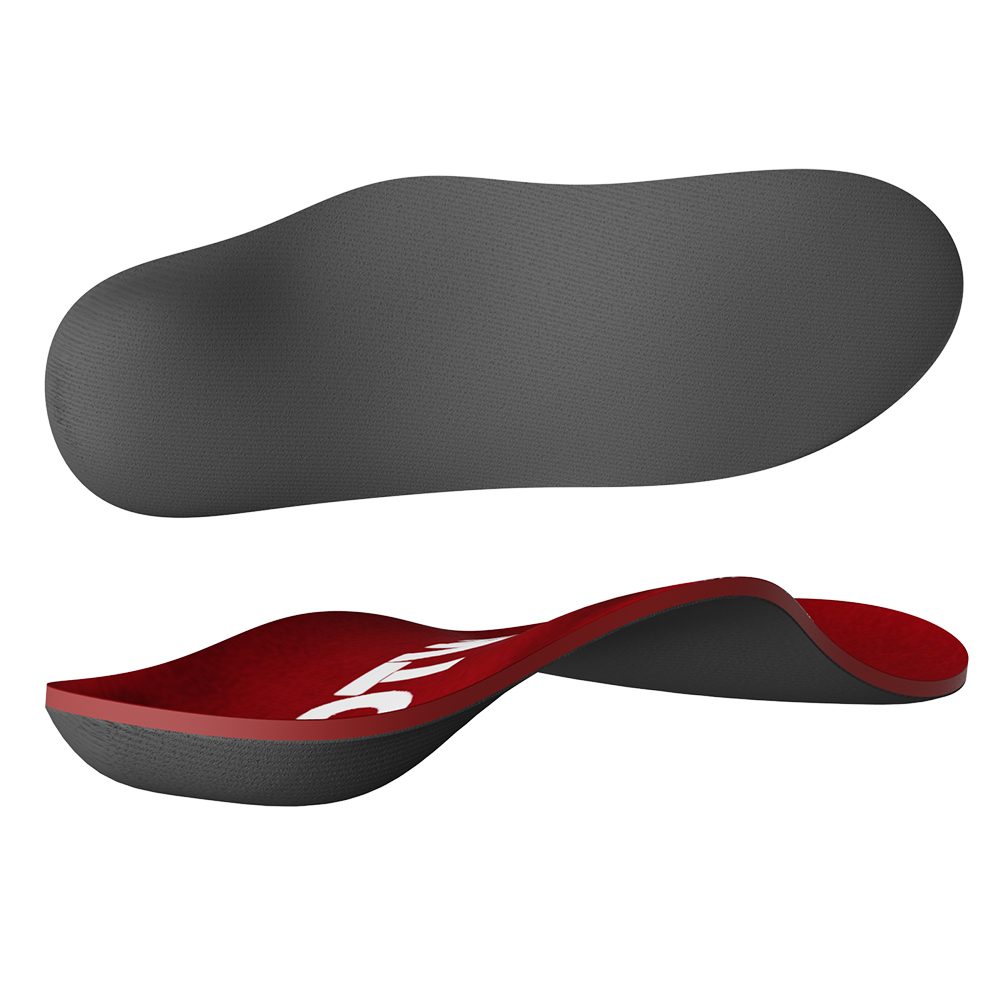
The middle: cushioning is a rate, not an ingredient
Foam is described on most cards as if it were a substance that either is or is not present. What actually matters is how it behaves under a load applied for a long time. A cellular layer compresses when the foot lands and recovers when it lifts, and the character of that cycle — how far it travels, how quickly it returns, how much it remembers — decides whether the build feels supportive, soft, or dead.
Thickness and firmness trade against each other in a way that surprises buyers. A thick soft layer feels generous in the shop and can bottom out under a heavier wearer within a season, at which point the foot is effectively standing on the plate. A thinner firmer layer feels unremarkable on the first day and behaves the same on the three-hundredth. Neither is a fault; they suit different people, different shoes and different expectations, and the fitter’s job is to match the pair to the wearer rather than to the sample that photographs best.
There is a hard limit worth stating plainly. A cushioning layer spreads load and takes the edge off impact; it does not hold a position, and it cannot change how a foot aligns. A build that relies on foam to do the work of a plate will collapse into the shape the wearer’s foot imposes on it, which is the opposite of what a shaped insole is for. The plate decides the geometry; the foam decides the manner in which the foot meets it.
Volume belongs here too, because it is decided by the middle more than by anything else. A generous middle takes up room inside the shoe, and a shoe that was comfortable with a thin factory footbed may become tight with a built one. Fitters who keep a couple of shoe types on the bench and test the sample inside them avoid the most common return in the category, which is not a fault of the insole at all but a mismatch of volume.
The board: the layer that decides whether a build holds
The plate underneath is the part that makes an insole an orthotic rather than a cushion. It is a sheet of polymer formed to a shape, and its contribution is positional: it holds the arch where the shape puts it, controls how the build resists twisting along its length, and gives the whole stack something to be built on. Take it away and the other two layers become a soft insert with a memory of nothing.
Stiffness is graded rather than fixed, and the grading is what allows one construction to serve three quite different customers. A build for a dress shoe wants a plate that flexes enough to sit in a low-volume shoe without levering at the heel. A care build wants more control along the midfoot and less give under the arch. A sport build wants resistance to torsion without turning the forefoot into a plank. Those are three plates, not one plate with three descriptions.
Heat is where the plate becomes interesting to a workshop. Some polymers soften at a temperature a bench oven can reach and can be adjusted to a foot while warm; others are formed under pressure and stay as formed. Both approaches are legitimate, and the choice belongs to the production method and the market rather than to fashion. What a buyer should ask is not which is better but which one their workshop can actually execute consistently, because an adjustable plate that nobody adjusts properly is a fixed plate with extra steps.
The plate is also where a build’s honesty shows. A shell that has been shaped to look impressive but carries no control along the midfoot is decoration; a shell that has been shaped for a purpose can be explained in one sentence by the person who made it. Ask for that sentence.
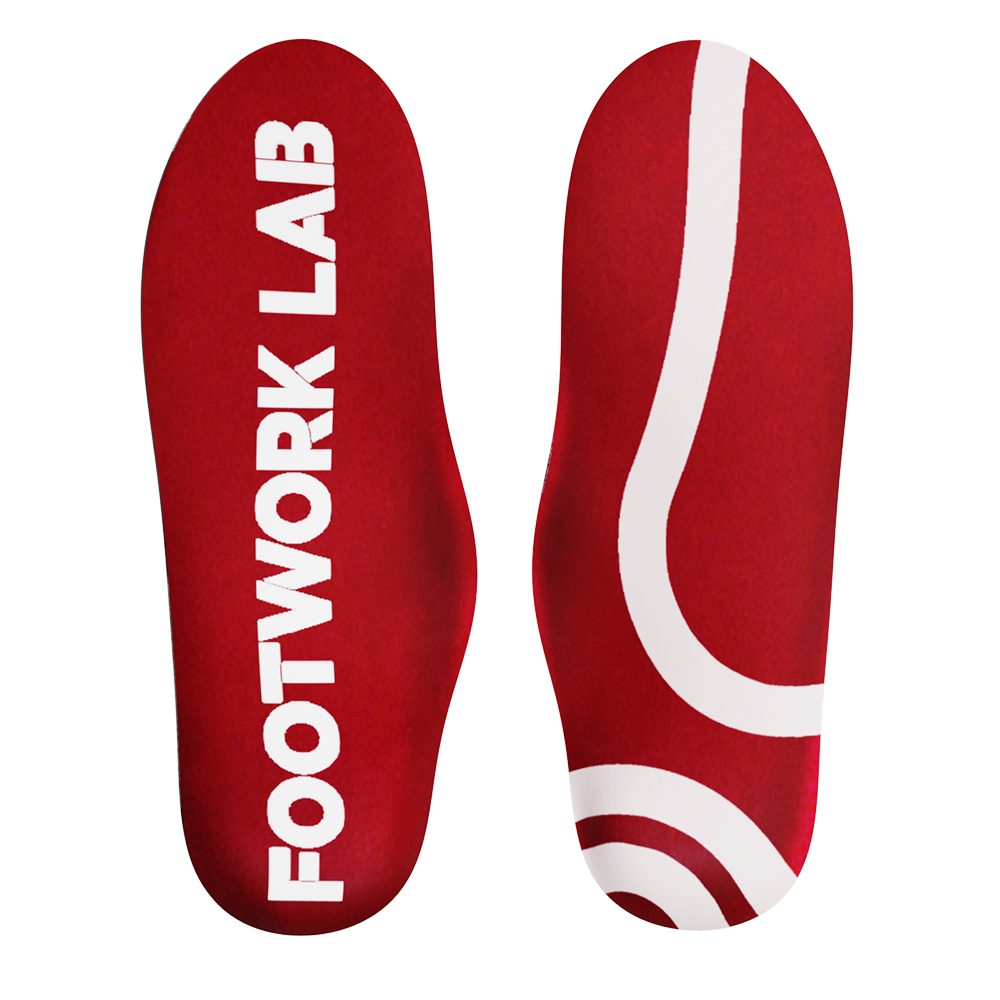
Three combinations, three feels
The daily build is the easiest to describe and the hardest to get right, because it is judged by people who never think about insoles. A textured cloth face, a middle that spreads load without taking up much room, and a plate that holds the shape of the arch while staying flexible enough for an ordinary shoe. The result should feel unremarkable in the best sense: the wearer notices the shoe fits better and does not spend the day aware of what is under the foot.
The care build moves the balance toward control. The plate carries more of the position, the middle is chosen to spread load away from the areas that complain rather than to feel plush, and the face is selected for durability under daily wear. This is the build where a fitter’s questions matter most, because the record says where load sits and the build has to answer it without over-correcting in a way the wearer cannot tolerate.
The sport build changes the priorities again. Torsion resistance rises, the forefoot stays free enough to push off, and the middle is tuned to the surface the sport is played on — a court shoe and a trail shoe ask for different things from the same three layers. The four gradings we publish for the range — support, torsion resistance, cushioning and kick-off — exist precisely so that a conversation about a sport can happen in numbers rather than in adjectives.
Put the three side by side and the point of the article becomes visible: identical vocabulary, three different articles. A buyer who specifies “mesh, foam and board” has specified the category. A buyer who specifies which mesh, which density of middle and which grade of plate has specified a product, and can reorder it.
There is a fourth variable that sits outside the stack and still changes everything: the shape. Two builds made from the same three materials, pressed on two different forms, will feel like different products, because the geometry decides where the foot is asked to sit. Buyers who spend an afternoon on material samples and five minutes on the form have optimised the smaller variable. Ask what the shape was built for — a shoe type, a foot pattern, a sport — and the material conversation gets a purpose.
Three mistakes, and one boundary we keep
The first mistake is buying by material name. A purchase order that says the build must contain a particular cloth tells the factory almost nothing about what the buyer wants the pair to do, and it invites a substitution argument later when the same performance arrives under a different face. Specify the behaviour and the grade, and let the material follow.
The second is choosing the softest option because soft reads as comfortable. Softness is a first-day impression; support is a third-month impression, and the two are frequently in opposition. A wearer who chose the plushest sample in the shop often returns for a firmer build once the first pair has compressed. Fitters who explain that trade at the point of sale keep more customers than fitters who let the hand decide.
The third is expecting the stack to do clinical work. A build can hold a position, spread load and change how a foot meets the ground; it cannot be specified to produce an outcome, and any supplier who maps a material to a result is selling a story. We do not make claims about what a material does to a body, and we would rather lose a specification conversation than win it with a promise the workshop cannot keep.
Two boundaries belong alongside those. We do not scan feet to produce a shape file — our equipment records plantar pressure and alignment, and there is no surface reconstruction and no laser in the unit, so a workshop that mills shells from individual geometry is shopping in a different category and we say so early. And we do not publish prices, because a build cost depends on the mix of layers, the grade, the size curve and the packaging, and a number printed in an article is wrong before the article is old. What we do publish is structure: two hundred pairs as the minimum, mixed styles and sizes, samples out within three days, and production running at roughly five hundred to a thousand pairs on a working day.
Frequently asked questions
What does each layer of an insole actually do?
The face manages friction and moisture and takes abrasion. The middle spreads load and absorbs impact. The plate holds the position and controls how the build resists twisting. Change the proportion or grade of any of the three and the same materials produce a different article.
Is a softer insole more comfortable?
On the first day, usually. Over a season, a soft middle can compress and leave the foot effectively on the plate. Softness and support are different properties, and the right balance depends on the wearer, the shoe and how long the pair will be worn each day.
Can the foam correct how a foot aligns?
No. Cushioning spreads load and softens impact; it does not hold a position. The plate provides the geometry. Anything beyond that is a matter for a qualified professional examining the person, not for a material specification.
What is the difference between a daily, a care and a sport build?
Mostly where the control sits. The daily build keeps volume low and flexes with an ordinary shoe, the care build carries more position along the midfoot, and the sport build raises torsion resistance while keeping the forefoot free to push off.
Can the plate be adjusted after it is made?
Some polymers soften with heat and can be adjusted while warm; others stay as formed. Both are legitimate. The useful question for a buyer is which method the workshop can execute consistently, because an adjustable plate that nobody adjusts is a fixed plate with extra steps.
Do you supply the materials on their own?
No. We build finished insoles to a specification, in the standard range or to a buyer’s own requirement. Material supply is a different trade with different minimums, and we would not be the right source for it.
What are the order terms?
Two hundred pairs as the minimum, mixed across styles and sizes, with samples dispatched within three days. Production runs at roughly five hundred to a thousand pairs on a working day, and insoles accept both ODM and OEM.
What we would do next
Send the shoe, not the adjective. A photograph of the footwear the build has to live in, one line about who will wear it and how long each day, and the record if there is one, tells us more than any description of a preferred material. The contact page reaches the same team that builds the samples.
The insole range page sets out the three families with their layer construction and gradings, which is the shortest route from a description to a build code. Four articles go further into the stack: heat mouldable orthotic insoles covers the plate side, gel sport orthotic insoles versus a structural build takes the cushioning argument apart, a custom moulded insole begins with a mould explains the tooling, and an orthotic insole for flat feet shows how the three layers are arranged for one common request.
This article is intended for professional and educational reference. It is not medical advice. Foot assessment equipment produces measurements and images; clinical interpretation and any decision about care remain the responsibility of a qualified professional. Certification scope is limited to the documentation we hold: European Union certification and ISO quality system certification.