
A sports shop in a shopping district holds its autumn open day, puts a footprint board on a folding table at the back, and by ten in the morning there are fifteen people in the queue. The owner has two worries. The first is throughput: five minutes per visitor, or the queue walks. The second is the one that actually decides whether the day works: how to run the board without turning it into a sales pitch, because visitors can smell a pitch from the back of a queue and the afternoon collapses into suspicion. The board’s job at an event is narrow and honest. It takes a footprint of each visitor under stated conditions, the operator says one descriptive sentence, the visitor keeps the print, and the day moves on. Rooms that keep that narrowness book assessments for weeks afterwards. Rooms that abandon it sell nothing and damage the name on the banner.
What a footprint board does at an open day
A footprint board is the most approachable instrument in the assessment trade, and that is exactly why it belongs at a public event. There is nothing to attach, nothing to configure while people watch, and no screen for the queue to crowd around. A visitor takes off shoes and socks, steps on, steps off, and a print of the foot’s contact under stance exists — physical, on paper, in the visitor’s hand within the minute. Everything else on a busy stand moves visitors past a demonstration; the board brings them into it.
The print itself is a record of contact shape: how the heel landed, how the forefoot spread, where load concentrated while the visitor stood still. It is a measurement, taken under conditions the operator states, and it says what it says and nothing more. That completeness is the board’s credibility at an event. It does not offer an opinion, so the operator does not have to defend one, and the visitor leaves holding evidence rather than a claim. Among stalls promising things, a table that only measures is immediately recognisable, and the queue forms around it for that reason.
Designing the five minutes
Five minutes per visitor is a budget, and it only holds if the routine is fixed before doors open. The version we watch work on busy stands runs in six steps. Greet and take a name, half a minute. Shoes and socks off, towel and wipe offered, half a minute. The capture — both feet on the board, one short instruction: step on with your weight even, look ahead, and hold — under a minute. The print lifted and inspected, half a minute. One descriptive sentence, half a minute. Hand over the print with the date and conditions written on it, wipe the board, and the next visitor steps up.
The sheet on the table carries those six steps in the operator’s own handwriting, because the routine belongs to the protocol, not to whoever is standing there that day. New staff inherit it, busy afternoons do not erode it, and visitors watching a second person go through the same steps see a room with a method rather than a manner. The card is also the honest check on throughput: if five minutes regularly takes eight, the problem is visible in the steps, and one step gets fixed rather than the routine being quietly rushed.
What gets cut when the queue grows long matters. The capture never gets shortened and the one sentence never gets dropped; what gives way is the small talk and the marathon story from another decade. Those are pleasant losses. A capture taken in a hurry or a sentence that turns into a diagnosis are neither, and both cost the room appointments the queue was there to book.
The queue is part of the protocol
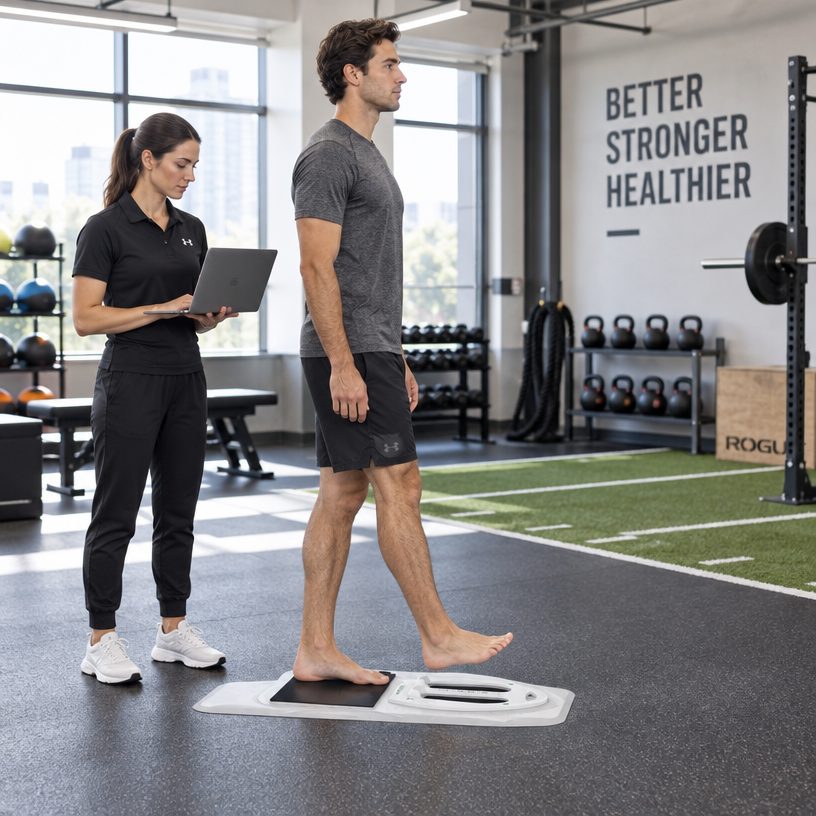
At an open day the queue is not an inconvenience to be hidden; it is the second audience, and it watches every capture. That visibility is the demonstration. Waiting visitors see shoes and socks come off, the board wiped between visitors, and hear the same kind of sentence — descriptive, unhurried, never a verdict — repeated twenty times before they reach the table. By the time they step up, the trust the table runs on was built while they were standing in line.
The queue also runs better with a job attached to it. One person holds the table and runs the six steps; a second person keeps the line, takes names, answers the same three questions a hundred times — how long is the wait, does it hurt, do I have to take my shoes off — and hands each visitor the towel before they reach the table. If only one person is available, put a sign-up sheet at the end of the table, write times next to names, and accept a slower afternoon rather than compressing the honest part of the routine.
The table itself needs less than people expect: wipes and towels, spare print sheets, a stool, a bin, pens and the takeaway cards, plus the routine card. Nothing on the table should be needed mid-capture, because the capture stays under a minute and interruptions show in the print.
One sentence per visitor: what we say and what we do not
The discipline is simple: describe the print, not the person. The sentence sounds like this: your heel took most of the landing, the front of the foot spread a little wider on the right, and the load line between the two feet sat fairly even. Every word in it is visible on the paper the visitor is holding. Nothing in it is a conclusion, a condition or a recommendation. Visitors hear hundreds of claims at an event; they remember the one sentence that only said what could be seen.
What the operator does not say is just as fixed. No diagnosis, no condition names, no this means you need, no promise about what an insole would change. When a visitor asks whether the print means something is wrong, the answer is the same every time: the board produces a measurement, interpretation belongs to a qualified professional, and the honest route is an appointment in the room where a fuller assessment can be made. The sentence takes ten seconds, it never varies, and it is the reason the queue keeps growing instead of thinning. Visitors repeat it to each other in the line, which does more for the room’s reputation than anything on a flyer.
The harder test comes from the visitor who arrives with a foot problem already on their mind and wants the table to settle it. The operator does not screen, grade or compare. The routing sentence handles it: what you are describing deserves a proper assessment, here is the card, bring this print with you. That is not evasive. The instrument records load distribution and contact under stated conditions, and it is not a diagnostic instrument at a folding table any more than it is one in the clinic.
Children, elders and the restless
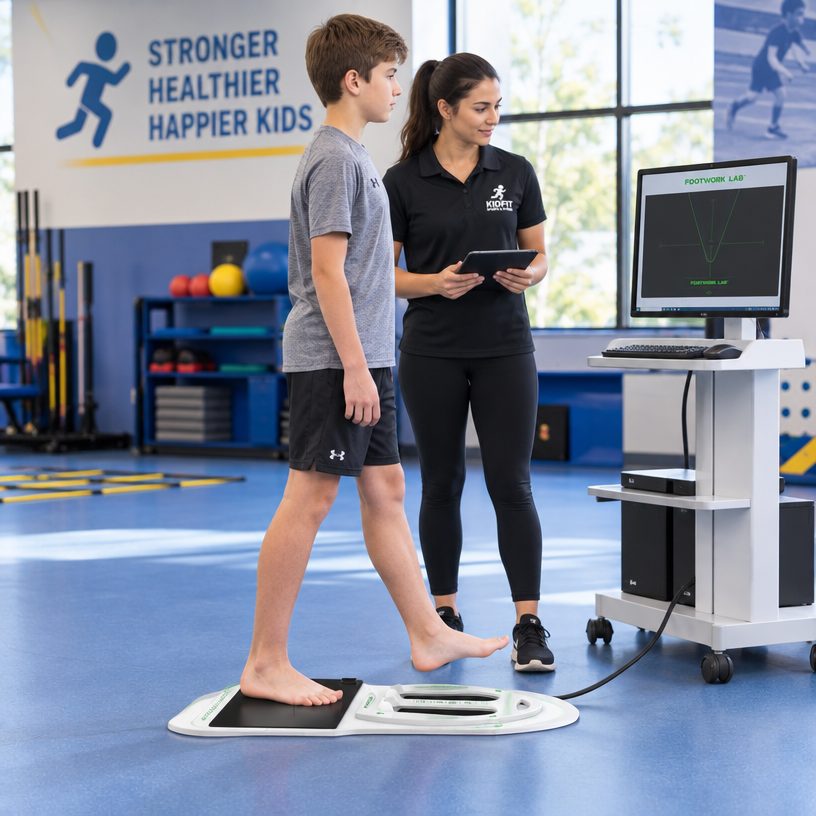
An open day queue is not a clinic schedule, and it produces every kind of visitor the room sees in a month. Children treat the board as a game, and they rarely land a settled print on the first try. Take two or three prints, keep the one that reads settled, and say so out loud — the kept print and the reason it was chosen are part of the routine, not an embarrassment. Parents in the queue watch this and draw their own conclusions about how the room treats records, which are the right ones.
Older visitors may need a hand on the rail or a steadying arm, and some take longer at every step of the five minutes. The budget bends for them without apology; the routine does not. A visitor who cannot hold still gets a second print rather than commentary, and experience says the second or third print usually settles — the same principle that applies on a pressure platform, where movement in a first capture is expected and planned for. Restless visitors are not a category of problem at an event. They are most of the visitors, once shoes come off in public and an audience forms.
The two things never to do with a difficult capture are to rush it or to talk through it. Rushing produces a smeared print and a visitor who feels processed; narrating the difficulty in front of the queue turns measurement into spectacle. The quiet fix is repetition: again, exactly the same, look at that mark on the far wall. It costs nothing, works on children and company directors alike, and it is the same phrase the room uses every day — which is the point of writing the routine down.
The takeaway card
The print leaves the table with writing on it, and the writing is what turns a souvenir into a record. Three lines, thirty seconds: the date and the event, the conditions — standing, barefoot, which print was kept out of how many — and one short descriptive line, the same one the operator said out loud. A print without its conditions asks whoever reads it later to guess. The card also carries the room’s details and one invitation line: bring this to an assessment, where it becomes a starting point instead of the whole record.
The habit continues after the event, and it is the same habit the room runs with every new customer: what gets reported back in the first fortnight is what the next visit is built on. Our article on what a customer should be asked to report in the first two weeks covers the follow-up side. A print that comes back through the door attached to a booked assessment has done its full job; the same print left in a coat pocket did the room none.
What the board cannot do at an event
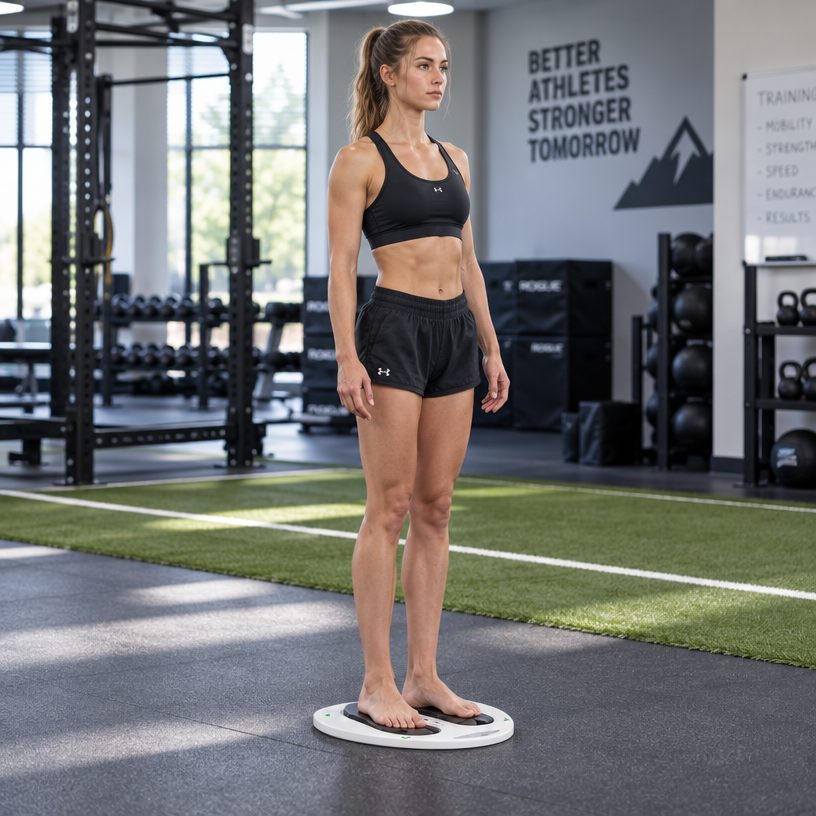
There is a line the table does not cross, and stating it plainly is part of running the day well. The board records contact shape and load distribution under stated conditions. It does not diagnose, it does not screen for conditions, it does not predict how a foot will behave in ten years, and it does not tell anyone what to buy. When a visitor asks the table to do any of those things, the routing sentence moves the question to where it can be answered properly, and the queue watches the line hold. That consistency is what separates a measurement table from every other stall in the hall.
The same discipline applies to the operator’s own enthusiasm, the subtler risk. Nobody sets out to overclaim; it happens in the hundredth repetition, when the sentence drifts towards interpretation because the honest version has been said forty times already. The routine card exists for that moment. Read the sentence as written and let the record be smaller than the conversation. A room that keeps its claims small at an event is a room whose larger claims get believed later, in the assessment room, backed by fuller records.
It is also worth saying what the board is not: the clinic’s full assessment. The room’s standing and walking capture, with posture recorded alongside the pressure data, produces a larger record, and the board print is an introduction to it rather than a substitute.
Selling without pitching
The paradox of the open day is that the table sells most when it sells least. Visitors who received an honest measurement, one accurate sentence and a card they can reread come back as appointment bookings for weeks, and they come back because nobody at the table tried to close them. The queue watched every capture and heard the same sentence twenty times; by the afternoon the room’s tone had been demonstrated rather than claimed.
The insole conversation belongs in the room, not at the table. When a visitor asks what can be done about what the print shows, the answer is an appointment: a fuller assessment on standing and walking capture, with posture recorded alongside the pressure data, as described on our equipment page. If insoles come out of that assessment, they come from the ranges on our insole categories page, built from the customer’s own record rather than from a board print alone. The separation — board at the event, assessment in the room — is what keeps the open day credible and the calendar full.
One last point exhibitors forget: the table also demos the room to people who will never book an assessment — distributors, other clinicians, the venue’s own staff. A table that measures honestly, five minutes at a time, is the cheapest reputation an assessment business can buy, and the queue that formed at ten in the morning is the visible proof.
Frequently asked questions
Can one person run a footprint board at a public event?
Yes, with a fixed routine. One operator can run the five-minute cycle — greet, capture, one descriptive sentence, hand over the print, wipe down — provided someone keeps the queue moving and collects names. If only one person is available, put a sign-up sheet at the table and accept a slower pace rather than shortening the honest part of the routine.
What do we say when a visitor asks whether the print means something is wrong?
Describe the print, not the person: where contact concentrated, how the forefoot spread, how the heel landed. Then say plainly that the board produces a measurement, interpretation belongs to a qualified professional, and the honest route is an appointment where a fuller assessment can be made. A verdict at the table is the fastest way to lose the queue’s trust.
How do we keep the event from turning into a sales pitch?
Fix the script before doors open: one descriptive sentence per visitor, no offers at the table, no product talk during capture, and a takeaway card instead of a brochure. Appointments are booked by inviting visitors to bring their print to the room. Selling happens later, in the assessment room, where the conditions allow the conversation to be complete.
Should visitors keep the printed footprint?
Yes. Write the date, the event and the conditions on it — standing, barefoot, which print was kept out of how many. The print is a record of contact shape under stated conditions, and it gives the next professional something concrete to start from instead of a memory of a conversation at a folding table.
How many prints do we take per visitor?
Two or three is normal at an event, because first prints often carry movement. Keep the settled one, say so out loud, and note on the card how many were taken. Nothing about the discarded prints needs to be hidden; the routine is the same one the room uses every working day with its own records.
What should be on the table besides the board?
Wipes and towels, spare print sheets, a stool, a bin, pens and the stack of takeaway cards, plus a small card with the six-step routine for the operator. No screens are required, and nothing on the table should be needed mid-capture — the capture itself stays under a minute, and supplies are restocked at the top of each hour.
Does the board need much setup at a venue?
No. It sets up on an ordinary stable table wherever visitors can stand barefoot, and it runs on ordinary room power. The habit that matters is rehearsal: run a few test prints after transport and before doors open, the way a room checks any instrument after it has been moved. Modular construction keeps transport and setup straightforward.
What we would do next
Write the six-step routine on a card this week — greet, capture, lift, one sentence, hand over, wipe — and rehearse it on staff before the next event, watching where the routine wobbles rather than timing it. Print the takeaway cards in quantity, because the handwritten conditions are what make the print worth keeping. Then decide who holds the table and who holds the queue; the two jobs are different and both matter. The FAQ page carries the operational answers we give most often by message, and if you are planning events as a distributor rather than a clinic, the partner page is the direct route to us. Send us the routine you drafted and we will tell you honestly what we would change.
This article is intended for professional and educational reference. It is not medical advice. Foot assessment equipment produces measurements and images; clinical interpretation and any decision about care remain the responsibility of a qualified professional. Certification scope is limited to the documentation we hold: European Union certification and ISO quality system certification.