
The customer stepped off the board, the assistant reached for the cloth, and the owner stopped her: look at it first, it is already fading. That small exchange contains most of what a temperature sensing footprint board is about. The mark on the surface is not a pressure image and does not pretend to be one. It is a thermal trace: a record of where skin touched the board and how long it stayed there, written in warmth rather than in force. It forms without any instruction to the customer, it starts changing the moment the foot lifts away, and it answers a different question from the one a pressure platform answers. Shops like it because it costs seconds and gives the customer something visible to talk about. The mistakes we see happen when someone asks the mark to do more than that, reading it as a force value or as a finding. This article goes through how the mark forms, why it has to be read while it is fresh, how it differs from a pressure record, what a shop can legitimately do with it in a working day, and where the honest line sits, because the line is what keeps the instrument useful.
What a warm mark actually records
The foot is nearly always warmer than the surface it stands on. Wherever skin meets the board, heat moves from the warmer body into the cooler one, and the surface keeps a memory of that exchange for a short while afterwards. A temperature sensing footprint board is built around exactly this: a sensing surface that registers the warmth of contact and displays it as an outline the eye can read. There is no force measurement in it, no load cell anywhere in the path. What lands on the display is a map of contact, drawn by temperature.
What the mark encodes, then, is two things at once: where the foot touched, and for how long. A spot that carries light contact but carries it for a long, still stand can leave as strong a trace as a region that takes heavier load for a brief moment. Duration and contact area are the variables the surface knows about. Magnitude is not among them, and nothing on the image will remind a reader of that fact, because nothing on the image looks like a caveat.
This is the first thing we explain to buyers, because the confusion is natural and it happens at the counter within the first minute. A customer looks at a dark, dense mark under the heel and says the heel takes all the weight. The mark says the heel was in firm, sustained contact, which is a different statement and often a perfectly ordinary one. The board records presence and persistence. Reading it as pressure is the single most common misreading, and it is worth correcting gently, every time, before it hardens into a habit the whole shop inherits.
How the mark forms, and why it is already changing
The mark is never finished while the foot is on the board. Heat flows continuously from skin to surface, so a standing foot keeps deepening its own trace second by second, and a walking foot lays down overlapping traces with every step that lands. Nothing freezes at the moment of contact. The image the operator finally looks at is the accumulation of everything the foot did on that surface, weighted by time, which is why the same customer produces a different mark standing than walking, and a different one again after a minute of standing than after ten seconds.
Once the foot lifts away, the mark does not hold still either. Heat keeps moving: it spreads sideways into the surrounding material, the sharpest edges soften first, the contrast between the densest and the faintest regions drops, and the surface drifts back towards room temperature until the trace disappears altogether. How quickly all of this happens depends on conditions nobody controls from the software: the temperature of the room, the temperature of the board when the customer arrived, whether a door is open nearby, whether the previous customer stood on it for a long time and warmed it up.
We mention the shop floor deliberately. A board near the entrance in winter behaves differently from one in a warm fitting room in summer, and a board that has served five customers in a row starts each trace from a warmer baseline than one that has been idle for an hour. None of this is a fault. It is the physics doing what physics does, and it is the reason the mark should be read as a fresh impression rather than as a stable, archivable figure. The board gives its best answer immediately, and a slowly fading one afterwards.
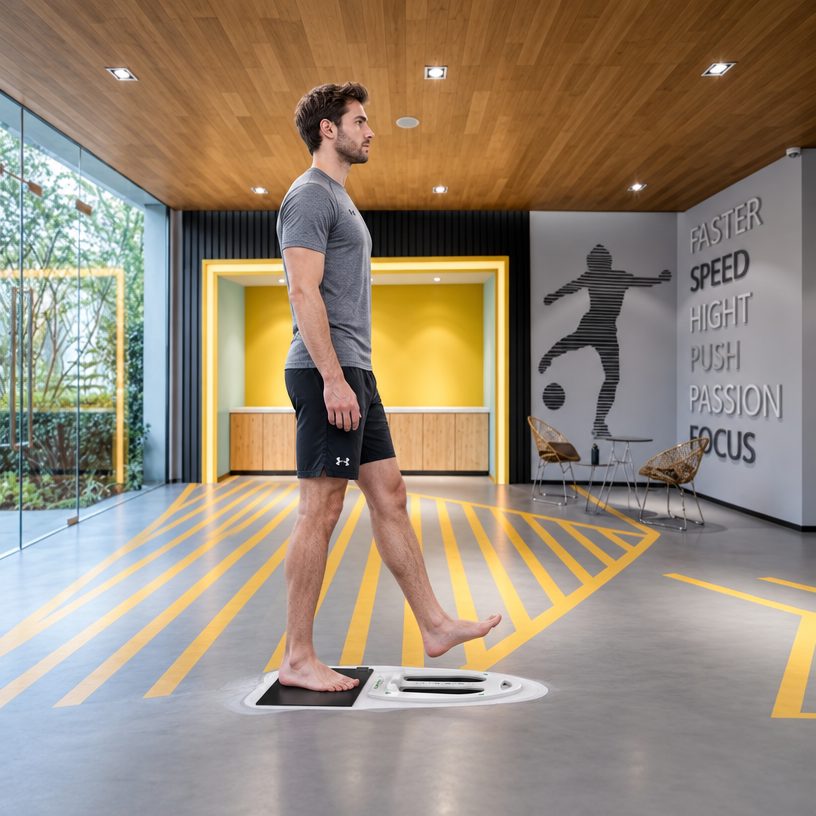
Reading a mark that will not wait
The practical consequence is simple: the mark is at its most informative in the first moments after the foot leaves. That is when the edges are sharpest and the difference between dense and faint regions is widest. An operator who finishes serving one customer, serves another, and comes back to read the board is reading a blurred summary of what was once a clear impression. Reading fresh is a habit, not a feature, and it is the habit that separates rooms that get value from the board from rooms that own one.
If the impression is worth keeping, it should be captured on the spot, with the camera of a phone if that is what is at hand, and the capture should carry its own context: which foot was which, whether the customer stood or walked, roughly how long the contact lasted. A photograph taken from the same angle each time makes one impression comparable with the next from the same customer. A photograph taken whenever someone remembers makes a folder of pictures that cannot be laid honestly side by side.
It also helps to decide, before the customer steps on, which kind of pass the room wants. A standing pass gives a settled contact outline, useful for width and general shape. A few walking passes give a composite of repeated contacts, denser where the foot lands often and longer. The two look similar to an untrained eye and answer different questions, and the difference between them is exactly the sort of detail that should be written down with the image rather than carried in someone’s memory until the next visit.
What the mark answers that a pressure record does not
A pressure platform answers a quantitative question: how much force arrives, where, and in what order as the foot rolls through contact. Its output is a set of named values on a report, and those values can be compared between visits taken under the same conditions, which is what makes a pressure folder worth keeping across seasons. The warm board answers a presence question: where did contact happen, and how long did it stay. There are no named values on a thermal mark. Nothing on it can be carried forward as a figure, and that is by design rather than by omission.
The two instruments are not competitors, and we say this to buyers who arrive intending to choose between them. They sit at different depths of the same conversation. The thermal impression costs half a minute and no preparation; the pressure session takes minutes, a settled customer and a consistent protocol. A shop that wants direction before it wants detail uses the board first. A room that needs comparable numbers, season over season, needs the pressure side, and no amount of careful mark reading will substitute for it.
The honest framing we give at demonstrations runs like this. If the question at the counter is which size and which direction of footwear to start pulling from the shelves, the mark often answers enough, and quickly. If the question is how load behaves through the roll of the step, or whether one side differs from the other in a way worth documenting, the board is the wrong tool for it, and the right answer is a pressure session rather than a harder stare at a fading impression. Saying that plainly early saves both of us a difficult conversation a year later.
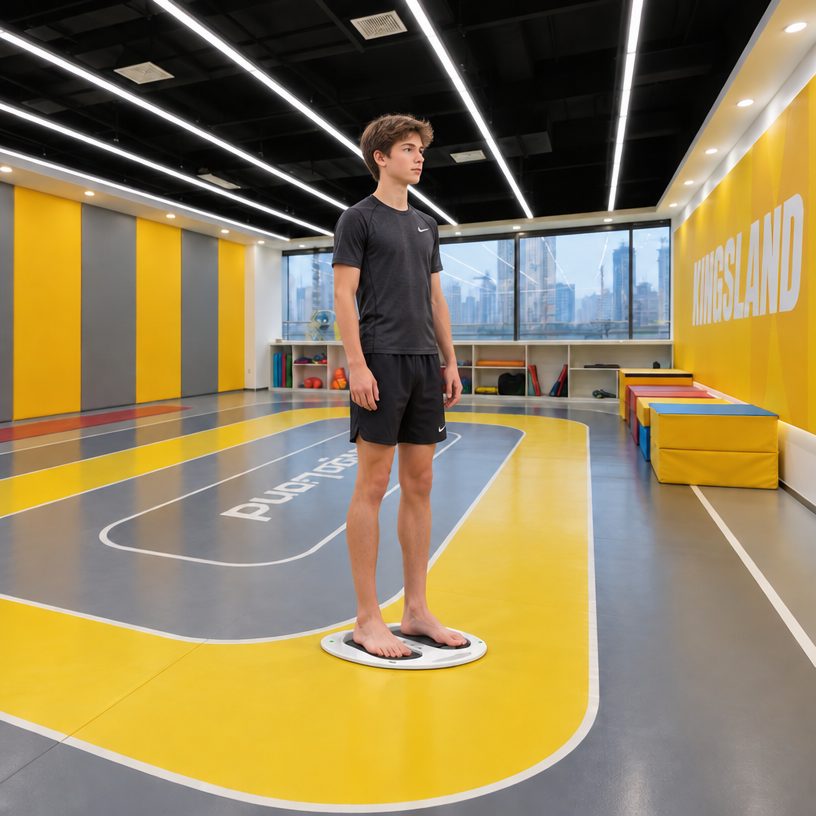
What a shop can actually do with it
In a working day, the board earns its place in three ways. The first is the quick contact outline. Before any box comes off the shelf, the impression shows the width across the ball, the shape of the heel, whether the arch line reads strong or faint, and how the two feet compare at a glance. That is enough to choose a starting size and to point the fitting towards the models whose volume and shape match what the surface just showed. It compresses the first ten minutes of a fitting into the first one.
The second is the conversation it starts. The customer can see their own outline on the board, and a discussion that begins from shared evidence goes differently from one that begins with the assistant’s assertion. The customer points at their own heel; the assistant explains what the impression shows and what it does not; the fitting acquires a reason the customer can remember. On a crowded floor, where several conversations compete for attention at once, an instrument that makes the customer do half the explaining quietly is worth more than its footprint in the room suggests.
The third is as the opening step of a fuller assessment. Rooms that follow the quick impression with a proper session, when the customer’s interest justifies it, get both speed and depth: the board selects who goes further, and the fuller session documents what was selected. The sequence works because each instrument is used for the question it actually answers. The sequence fails when the board is asked to be the whole assessment, which is a use we would argue against in any shop, whatever it buys and from whom.
What no one should conclude from a mark
The line we would draw starts here: the board produces an image of contact, and an image of contact is not a diagnosis. It does not examine the foot in any clinical sense, it does not identify a condition, and it does not rank one customer against another. Clinical interpretation belongs to qualified professionals, and a shop that keeps its language inside contact, shape and fit stays comfortably on the right side of that line without needing to think about it again.
The second line follows from the physics: the mark carries no force value. A dense impression is not a heavy one, and a faint one is not a light one; a cool foot, a brief stand, a thin sock or a cold surface can all produce a faint trace from a foot that contacts perfectly normally. Nobody should quote a mark as a number, because there is no number in it to quote, and inventing one verbally, in front of the customer, attaches a figure to an impression that cannot support figures of any kind.
The third line concerns comparison. Impressions taken on different days, in different room conditions, after different standing times, are not comparable, and two photographs of marks taken a season apart do not form a measurement of change no matter how persuasively they sit side by side. If a room wants to track anything over time, that is pressure territory, with conditions written down and protocol held steady. The mark supports the conversation of today; it does not support a comparison across months, and pretending otherwise is where thermal impressions lose rooms their credibility.
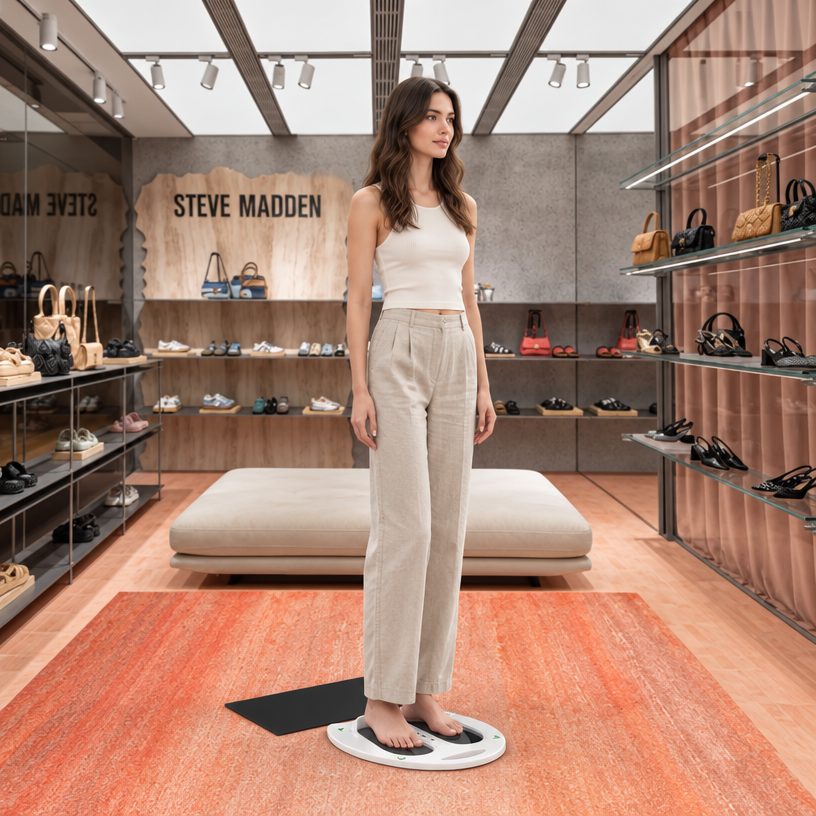
Writing the conditions beside the mark
Because the impression fades and the conditions never appear on the image, the note next to it does the work the image cannot. The short list is this: the date, whether the customer was barefoot or in socks, whether the pass was standing or walking, roughly how long the foot was on the surface, and anything unusual about the room that day. Five short items, written in the time it takes the customer to put their shoes back on, and the saved photograph becomes a record instead of a souvenir.
The capture habit matters as much as the note. Same angle each time, the board filling the frame the same way, the file named with the date rather than left to the camera’s numbering. None of this is elaborate, and all of it is the kind of detail that seems unnecessary on the day and decisive the day a returning customer asks whether anything has changed since last spring. The staff member who kept the notes answers in a minute. The one who did not answers with an apology.
There is a quieter reason for the discipline, and it is about trust. A shop that can show a customer their own impression from eight months ago, together with the conditions it was taken under, demonstrates that it writes things down and knows what its instruments can and cannot claim. That demonstration sells more pairs than any claim about the equipment, because it is the kind of proof a customer can hold. The board, read honestly and noted properly, is a small instrument for building exactly that kind of reputation.
Frequently asked questions
Does the warm mark show how much pressure the foot applies?
No. The mark records where the foot contacted the board and for how long, through the warmth of contact. A dense impression means sustained or repeated contact, not heavy load. Force measurement is a different category of instrument, and the two should not be described to customers as if they were interchangeable.
Why does the same customer leave a different mark on different days?
Because conditions change the trace: room temperature, the warmth of the board when the customer arrived, how long the foot stayed on it, whether the customer stood or walked, and what they wore on their feet. None of these appear on the image, which is why the conditions belong in a written note beside every saved photograph.
How quickly should the mark be read?
Immediately. The edges are sharpest and the contrast widest in the first moments after the foot lifts away, and the impression fades continuously from then on. If the mark is worth keeping, photograph it at once, from a consistent angle, with a note of the conditions. A blurred mark read late still says something, but less than it said a minute earlier.
Can two customers’ marks be compared with each other?
Not meaningfully. There are no values on a thermal impression to compare, and differences in foot temperature, contact time and room conditions will outweigh any real difference in contact shape. The mark works within one customer, one visit, one conversation. Across customers and across months, a pressure record taken under fixed conditions is the appropriate tool.
Is a faint mark a sign that something is wrong?
No. A faint trace can come from a cool foot, a brief stand, a thin sock or a cool surface, none of which says anything about the foot itself. The mark describes contact under the conditions of that moment. If a customer asks what a faint impression means, the honest answer is what the conditions were, not a conclusion about their feet.
Can the board replace a pressure assessment?
No, and we would not describe it that way. The board answers a quick presence question in half a minute; a pressure session answers quantitative questions with values that can be filed and compared across visits under the same conditions. Rooms that need both use both, each for the question it was built for. The board selects and starts conversations; the pressure side documents.
What should staff write down when they save a mark?
The date, whether the foot was bare or socked, standing or walking, roughly how long the contact lasted, and anything unusual about the room that day. One line beside the photograph. Without it the saved image is a picture; with it, the same image is a record a returning customer’s question can be answered from months later.
What we would do next
Decide where the board sits in your routine before it arrives: as the first half-minute that selects and starts the conversation, never as the whole assessment. Train the two habits that carry it, reading fresh and noting conditions, the same way you train any other step on the floor. What a pressure measurement reports, and what it cannot see sets the boundary between contact and load in more detail, the anatomy of an assessment report, page by page shows where a saved impression and its note fit into a customer file, and the product page describes the equipment in its own terms for rooms comparing options.
This article is intended for professional and educational reference. It is not medical advice. Foot assessment equipment produces measurements and images; clinical interpretation and any decision about care remain the responsibility of a qualified professional. Certification scope is limited to the documentation we hold: European Union certification and ISO quality system certification.