
Two products both claim to measure the foot, and buyers routinely compare them as if one were an upgrade of the other. A stationary pressure platform sits in a room and records a person walking across it. A wearable insole sensor sits inside a shoe and records a person walking through their day. They produce numbers that look similar, answer questions that are not the same, and fail in different ways.
Choosing between them is not a matter of budget or brand. It is a matter of what decision the data has to support. If the decision is “what build should this insole have”, a platform recording taken under controlled conditions is usually the more reliable input. If the decision is “how does this person load the foot over a working day”, a platform cannot answer it, because the platform is not there.
FOOTWORK LAB manufactures foot assessment systems and custom orthotic insoles in our own plant in Ruichang, Jiangxi Province. We build the platform side, and we specify insoles from data produced by both kinds of source, so this article is written from the position of someone who has to make the brief work rather than the position of someone selling one category.
The question each source actually answers
A stationary platform answers a laboratory question: given a controlled approach, a defined surface and a set number of passes, how does this foot distribute load? The word controlled is doing the work. The path is straight, the speed is roughly constant, the surface is identical between visits and the recording is made in a room where nothing else is happening.
A wearable sensor answers a field question: what happens across a day of real use? Different shoes, different surfaces, different speeds, fatigue in the afternoon, a long queue at the airport. The recording is noisier because the world is noisier, and it contains something a platform can never produce: duration.
Both are legitimate. The mistake is buying one and expecting the other’s answers. Clinics that buy a platform and then ask it how a patient loads the foot at work will be disappointed, not because the platform is poor but because the question is outside its design.
What a stationary platform records well
The core strength is comparability. Two recordings taken a month apart, on the same platform, by the same routine, can be placed side by side and read as a change or as no change. That is what a build brief needs, and it is what a follow-up appointment needs.
The second strength is spatial resolution under load. A platform records the whole contact area at once, so the shape of the contact patch, the position of peak load and the path of the centre of pressure are all visible in one dataset. Reading a pressure map is a skill, but the map itself is honest: it shows what it measured, where it measured it.
The third is the posture view that usually accompanies it. Camera-based capture of alignment from the front and rear sits alongside the pressure data in the same session, which means the brief can reference both without the clinician having to reconcile two separate appointments.
These strengths come from the setting. A platform is a controlled measurement, and controlled measurements are what production needs when a specification has to be repeated.
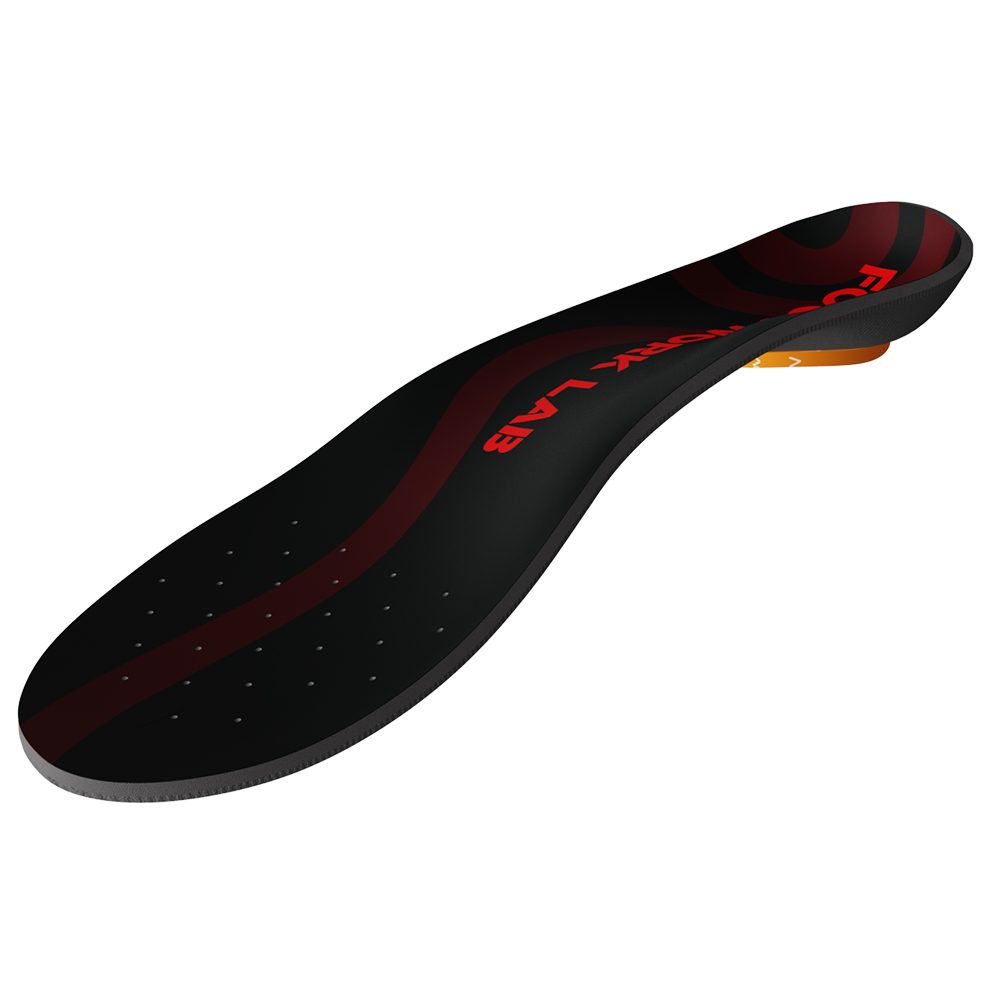
What wearable insole sensors record well
Duration is the headline. A sensor in the shoe can record for hours, which means it can show cumulative load, the balance between feet over a working day, and the difference between the first hour and the eighth. None of that appears in a platform recording, because the platform only sees the patient for a few minutes.
Context is the second advantage. The sensor records in the shoe the patient actually wears, on the surface they actually walk on. If a patient reports that a problem appears only on hard floors, a field recording taken across a day can show whether that is true, and a platform cannot.
The third is repetition without an appointment. A wearable can be sent home with a patient and returned, producing data that would take several clinic visits to match. For follow-up and for research, that is a genuine advantage.
Where each one struggles
A platform struggles with anything that requires time. It sees a few passes, not a day. It also struggles with patients who cannot walk naturally in a clinic setting — the very young, the very anxious, anyone who needs a walking aid — because the routine depends on a reproducible gait.
A wearable struggles with position. A sensor that shifts inside the shoe records a different foot. Sensor insoles are also a compromise between measurement and comfort, and the compromise changes how the foot loads. Add the practicalities of charging, cleaning, sizing and consent, and the field dataset becomes something that needs managing rather than something that simply happens.
Both struggle with the same thing: turning data into a decision. Neither produces a brief. A clinician still has to read the recording, decide what the insole should change, and write it down in terms production can hold.
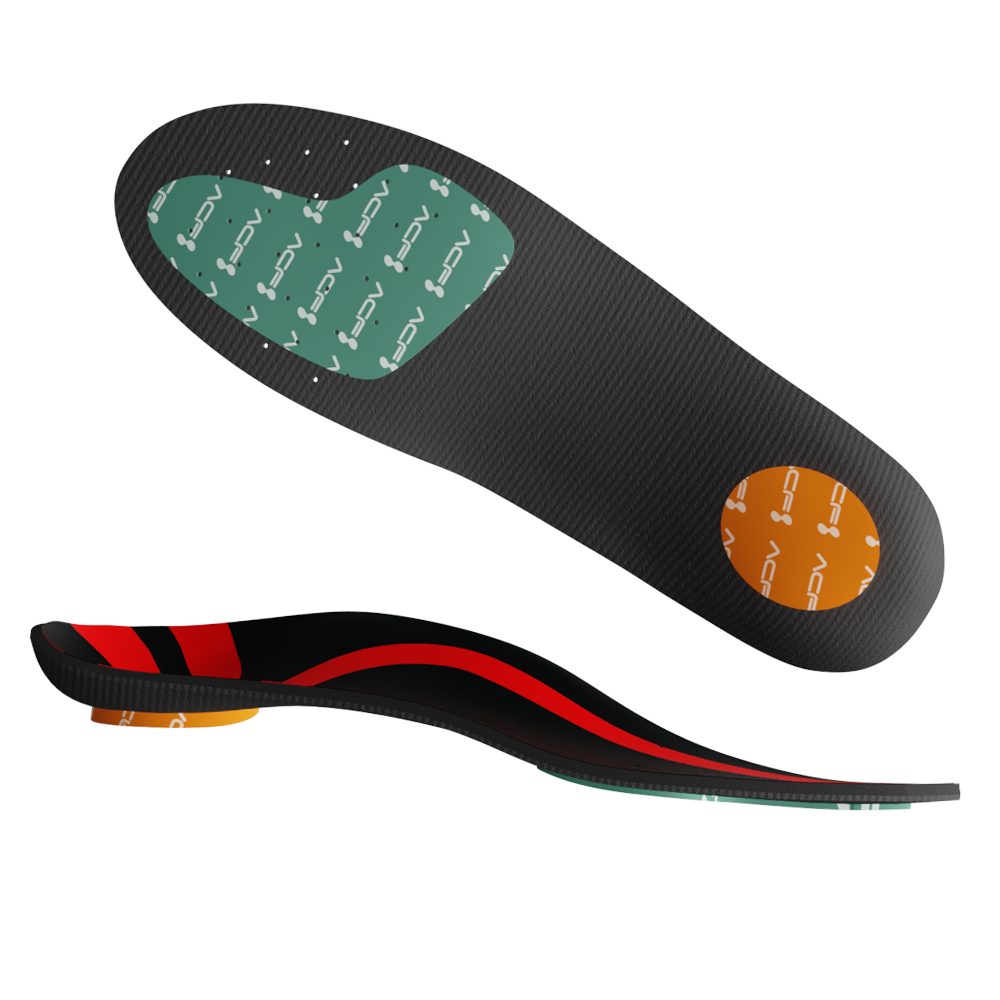
What the output actually looks like
It helps to know what actually comes back, because the two outputs are less similar than the marketing suggests. A platform session typically returns frames across the stance phase, a peak pressure map for each pass, a centre of pressure trajectory, and the contact area at defined moments. The dataset is bounded: you know how many passes you recorded and you can compare them pass by pass.
A wearable session typically returns a time series: samples at a set interval for as long as the patient wore the device. The useful unit of analysis changes from the pass to the period. Instead of asking which pass showed the highest medial load, you ask which hour did, and whether that hour corresponds to a commute, a shift on a hard floor or a training session.
That difference in unit shapes the conversation with the patient. A platform recording supports a specific statement about a controlled task: this is how your foot loaded across these passes. A wearable supports a statement about a day: this is when your foot carried the most load. Neither statement is better. They answer different questions, and a patient hearing the wrong one will draw the wrong conclusion.
It also shapes storage. Platform recordings are compact and easy to file against a patient record. Wearable datasets are large, need cleaning, and often contain periods where the device was not worn. Clinics that buy the wearable first usually discover this in the first month, and the discovery is organisational rather than technical.
Do you need both?
Most clinics do not, at least not at the start. A clinic building an insole service needs a repeatable capture that supports a brief, and a stationary platform with posture capture does that job. A sensor system added on top produces more data without necessarily producing better insoles, and the extra data has to be stored, cleaned and read.
The case for adding wearables appears later, and it is usually specific: a sports practice tracking load across a training week, a research programme, a clinic whose patients cannot reproduce a gait in a laboratory. When the question is duration, the answer is a wearable. When the question is specification, the answer is a platform.
The case against buying both at once is organisational. Two datasets from two systems, recorded by two routines, rarely reconcile. Clinics that run both successfully usually designate one as the primary source for build briefs and regard the other as supporting evidence, rather than regarding them as equals.
From data to a build brief
Whichever source is primary, the brief looks the same. Shell material and stiffness, arch fill geometry, heel cup depth and extent, cushioning layer and position, top cover, and the footwear the pair is intended for. The source of the data changes the confidence behind those decisions, not their form.
What changes is the language of the justification. A platform-based brief can say “medial border loaded through midstance across three passes”, which is a statement about a controlled recording. A wearable-based brief says “medial loading sustained across the working day, higher in the afternoon”, which is a statement about duration. Both are useful; both should be written down accurately rather than blended into a general impression.
This is also where a factory can help most. A production team that receives briefs from many clinics learns which descriptions actually predict a build that works. That knowledge belongs in the brief template, not in a conversation after the first batch.
A buying sequence for a small clinic
Start with the decision you need to support, and work backwards. If the decision is “what do I put in this pair”, buy the capture that produces the most repeatable specification input, which is a stationary platform with a written routine. If the decision is “how does this patient load the foot over a day”, buy the wearable and accept that the brief will lean on clinical judgement more heavily.
Then check the boring things. Is the routine short enough to run inside a normal appointment? Can a second operator reproduce it? Does the software export something a factory can read without a translator? Is there a written record of what was captured, or only a screen that shows it once?
Ask one more question before signing: who reads the recording when the clinician is away. A dataset that only one person can interpret is a bottleneck disguised as a purchase.
Finally, ask what happens after the sale. Our own arrangement is a dedicated WhatsApp group per system, direct engineer access, remote assistance where the site allows it, and over-the-air updates for connected units. Machine warranty runs twelve months on non-human damage. Those terms matter more in year two than in week one.
Maintenance, drift and consumables
Equipment that is never serviced does not fail loudly. It drifts, and the clinic gradually calibrates itself to the drift without noticing.
A platform needs calibration and a clean surface. Dust, grit and worn top covers all change the recording, and a clinic that never services the platform slowly acquires a systematic error it cannot see. Put calibration on the calendar, not on the to-do list.
Wearables need charging, cleaning and a stock of sizes. Sensor insoles wear out faster than the electronics, which means the consumable is the part that touches the foot. Budget for replacement per patient rather than per device, and the cost becomes predictable.
Both need a data policy. Who can see a recording, how long it is kept, how it is deleted on request. That is a legal question in most markets and a trust question everywhere, and it is much easier to answer before the first patient than after the hundredth.
One maintenance question deserves an answer before purchase rather than after: what happens when a recording looks wrong? A platform with a worn top cover produces a contact map that is subtly too broad, and the clinic has no way of knowing unless someone looks at the cover. A wearable with a shifted sensor produces a map that is subtly too narrow. Both failures are invisible in the report and obvious in the hardware, which is why a physical check belongs in the routine alongside the software check.
Keep a spare top cover and a spare set of sensor insoles in stock. The cost is small, the delay when something wears out is not, and the alternative is a week of recordings that nobody trusts.
Frequently asked questions
Can a stationary platform record a full working day?
No. A platform records a defined number of passes under controlled conditions. Duration requires a wearable sensor in the shoe. The two answer different questions, which is why clinics that need both usually designate one as the primary source for build briefs.
Are insole sensors accurate enough to specify a build?
They produce useful load data, but the sensor itself changes how the insole feels and how the foot loads, and its position inside the shoe can shift. For specification we regard field data as supporting evidence and a controlled platform recording as the primary input.
Do your systems include wearable sensors?
Our assessment systems are stationary platforms with plantar pressure measurement and camera-based posture capture. We do not present them as wearable technology, and we would rather describe the scope accurately than stretch a category.
How often should a platform be calibrated?
Follow the service schedule that comes with the unit and keep a written log. Dust, worn top covers and heavy use all affect the recording, and an unlogged calibration is difficult to defend when a brief is questioned months later.
What does a session record in total?
Static stance pressure, dynamic pressure across walking passes, and posture views from the front and rear. The output is measurement data and images; interpretation and any decision about care remain with the qualified professional.
Can the data be exported for a factory?
Yes. A production brief normally includes the recordings plus a written specification covering shell, arch fill, heel cup, cushioning, top cover and intended footwear. Our team reads briefs in that form daily.
What support is included after purchase?
A dedicated WhatsApp group, direct access to our engineers, remote assistance where the site allows it, and over-the-air updates for connected units. Machine warranty is twelve months on non-human damage, with free replacement parts.
What we would do next
Write down the decision the data has to support before you compare anything. If it is a build brief, start with a platform that captures pressure and posture in one session — our F2 and FMP platform is built for that, and the core technology page explains the capture chain. If it is duration, be honest that a stationary platform will not produce it.
For how the resulting brief becomes a pair, see our walkthrough of a production order and the insole categories page. Terms are on the FAQ page, and the contact page reaches the team directly.
This article is intended for professional and educational reference. It is not medical advice. Foot assessment equipment produces measurements and images; clinical interpretation and any decision about care remain the responsibility of a qualified professional. Certification scope is limited to the documentation we hold: European Union certification and ISO quality system certification.