
The question usually arrives after a demonstration, not before it. A clinic has seen a footprint on a mirror plate and a colour map on a screen, both described as essential, and now has to choose. The two instruments look like competitors because they are sold into the same room, but they answer different questions at different moments of a consultation. A podoscope shows the shape of the sole under load. A foot scanner adds how that load is distributed, how the leg and posture sit above it, and a record you can compare next visit.
Buyers who read the choice as a brand decision tend to overbuy. Buyers who approach it as a workflow decision usually end up with one instrument that earns its space every day, and sometimes a second one that earns it once a week. The difference is not budget. It is knowing which question you ask most often.
We build the Q1P, which sits in the podoscope category in the sense that it captures a weight-bearing view of the sole, and we also build systems that record plantar pressure and posture. That position means we sell into this comparison rather than around it, so this article is written to help you decide against a purchase as easily as for one.
Two instruments, two different questions
A podoscope answers a shape question. The client stands on a transparent plate, a mirror or camera below shows the sole, and the practitioner reads the outline: how much of the arch is in contact, where the heel sits, whether the forefoot carries more load on one side. It is a single, immediate, weight-bearing image, and its value is that it is honest about load in a way that a non-weight-bearing examination is not.
A foot scanner answers a distribution question. The same standing position is recorded, but through pressure sensors rather than an outline alone, and the software reports where the peak load sits, how the contact area is shaped, and how the left and right sides compare. Add a camera and the same session can capture posture and alignment of the lower limb, so the practitioner can see whether the foot is compensating for something above it.
Both are assessment tools. Neither makes a clinical decision. That distinction matters commercially, because a buyer who expects the instrument to tell them what to do will be disappointed by both, and a buyer who expects it to hand them a defensible record will be well served by either.
The practical difference shows up in what you can do with the output six months later. A photograph of a mirror plate is a memory aid. A pressure recording with a timestamp and a stored baseline is a comparison. If your practice revisits clients on a schedule, the second is worth more than the first.
What a podoscope records, and what it leaves out
The strength of the podoscope is honesty about load. Barefoot standing on a plate shows the arch as it behaves when the body’s weight is on it, which is often not the arch you see on a couch. For a first consultation, that single view does a lot of work: it starts a conversation, it is easy to explain to a client, and it produces an image they recognise as their own foot.
What it leaves out is quantification and context. The outline shows contact, not magnitude. Two soles can look identical in shape while carrying very different load at the first metatarsal head. The image also says nothing about the knee, the pelvis or the shoulder line, so a practitioner who suspects that the foot is compensating for something above it has to record that separately, in their own notes.
There is also a documentation gap. A mirror view is usually captured by eye and described in words. Words vary by practitioner and by mood. If the practice later needs to show a client, an insurer or a colleague what changed, a written description of an arch is weak evidence compared with a stored recording.
None of this makes the podoscope obsolete. In a busy screening setting, the immediate visual is worth more than a report nobody reads. It is simply a different job.
What a foot scanner adds
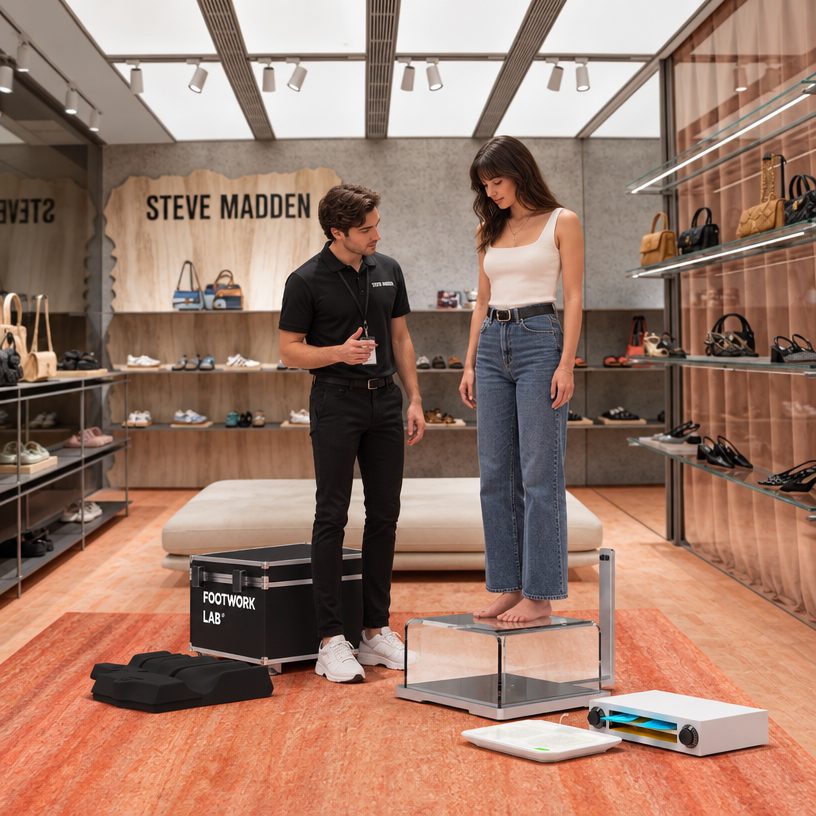
A scanner adds numbers and a second channel. The pressure layer converts contact into a distribution you can read as a map, with peak locations, regional loading and left-right comparison. The camera layer, where the system includes one, records posture and alignment while the client stands or walks, so the foot data arrives with the body attached to it.
The second addition is time. A recording can be repeated, and two recordings can be compared. That turns a consultation into a sequence rather than a series of isolated visits, which is where most of the clinical value of assessment equipment actually sits. It also changes the commercial conversation: a clinic that can show a client a comparison has a reason for a review appointment that is not a sales call.
The third addition is the report. A structured output, with images, regional readings and a place for the practitioner’s own notes, replaces a verbal description. In our own systems the software assembles this automatically from the session data, and the practitioner edits the interpretation. The division is deliberate: the system reports what it measured, the professional decides what it means.
What a scanner does not add is judgement, and it does not replace a hands-on examination. A pressure map does not tell you whether a client’s loading pattern is a problem worth acting on. It tells you where the load is. The rest is clinical work.
Where the two overlap, and why that matters to a buyer
The overlap is the standing, weight-bearing view of the sole, and it is the reason the two products get compared at all. If that single view is all your workflow needs, a mirror plate does the job at a fraction of the cost and complexity. If you need a record, a comparison or a posture view, the overlap stops being decisive.
There is a second overlap that buyers rarely plan for: room and routine. Both instruments want the same floor space, the same privacy and the same slot in the consultation. A clinic that buys both without redesigning the appointment will find that one of them sits unused, usually the one that takes longer to set up.
The commercial version of this overlap is the demonstration. A vendor will show the most visual output the instrument can produce, which flatters the scanner and undersells the mirror plate. A buyer should ask to see the ordinary output, the one the practitioner will actually look at on a Tuesday afternoon with a waiting room full of people.
Workflow is the deciding variable
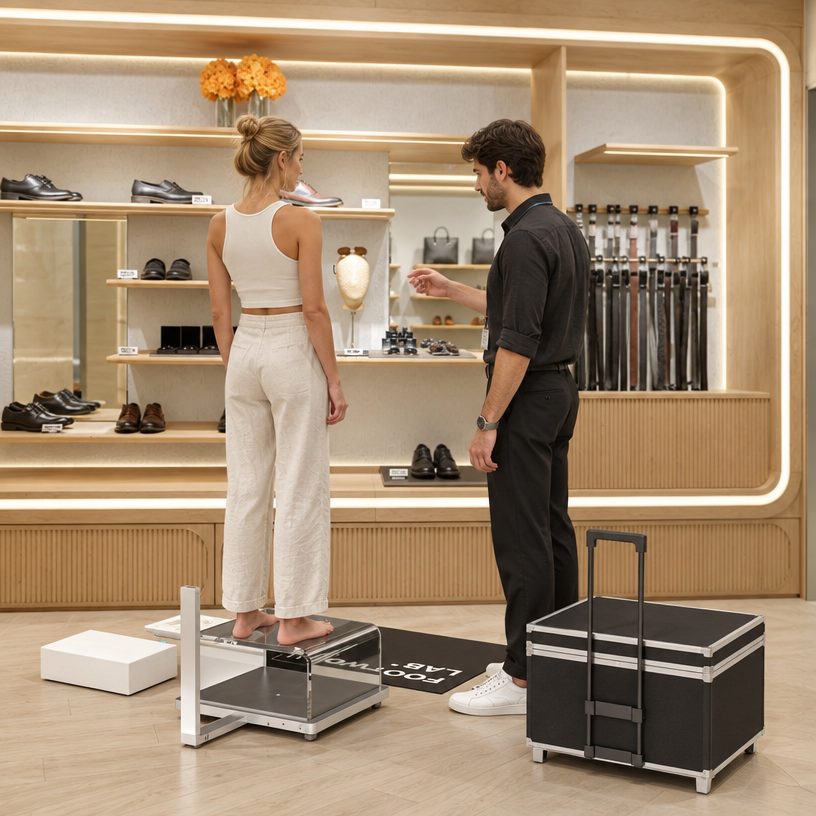
Start with the appointment. If the typical consultation is short, screening-oriented and ends with a recommendation, the instrument has to deliver a usable view within a couple of minutes and require almost no setup. A mirror plate wins on that measure. If the consultation includes a documented assessment, a follow-up and a record that leaves the room, the instrument has to produce a file, and a scanner wins.
Then look at who operates it. An instrument that needs a trained operator for every capture will be used less than one that a receptionist can start. Ask the vendor to demonstrate the full capture routine with someone who has never seen the system, and time it. That single test predicts adoption better than any specification sheet.
Then look at what happens to the output. Where does the report go, who reads it, and does it survive a change of staff? A system whose data lives only inside one practitioner’s habits is fragile. A system that exports a clean file is an asset.
Finally, consider the sales conversation with the client. Some practices sell on the image, some on the measurement, some on the follow-up comparison. The instrument should match the story the practice tells, because the instrument is part of the story.
Cost of ownership beyond the invoice
The purchase price is the smallest part of the comparison over five years. Space is the first recurring cost: a plate that needs a dedicated room changes your rent. Setup time is the second: an instrument that adds minutes to every consultation reduces how many clients you can see, and that lost capacity is a real number even though it never appears on a quotation.
Training is the third. Any system that produces a structured output also produces a way to misread it, and the cost of that misreading lands on the practice’s reputation rather than on the equipment budget. Ask what training is included, what happens when a new practitioner joins, and whether the vendor can re-train remotely.
Service is the fourth. Ask what the warranty covers, how spare parts are supplied, and whether the unit can be updated without a site visit. Our own systems ship with a dedicated WhatsApp group, direct access to our engineers, remote assistance where the site allows it, and over-the-air updates for connected units. The machine warranty runs twelve months on non-human damage with free replacement parts. Details of that kind are worth more than a longer feature list, because they determine whether the instrument still works in year four.
Consumables deserve a line of their own. Some systems need nothing beyond cleaning; others use covers, pads or markers that have to be re-ordered. Ask for the consumable list in writing before you sign, and price a year of it against your expected case volume. A cheap plate with an expensive consumable habit is not a cheap plate.
There is also an opportunity cost that buyers rarely put on paper. The instrument occupies the slot that could have held a second appointment. If your clinic is fully booked, the honest comparison is not between two devices but between a device and the revenue that the same room and the same twenty minutes would otherwise produce. That comparison usually favours a faster workflow over a richer feature set.
How to decide in one afternoon
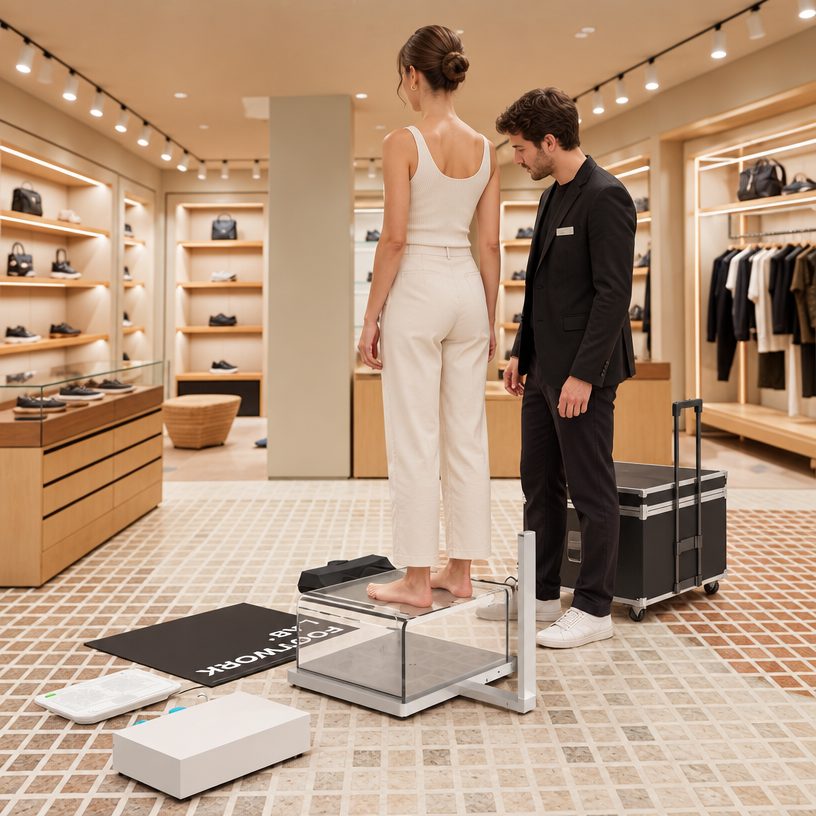
Write down the three questions you ask most often in a consultation, in the words you actually use with clients. If two of the three are about shape and contact, a mirror-view instrument covers you. If two are about distribution, comparison or posture, you need the scanner layer.
Then run the same client through both instruments, if a vendor can arrange it, and compare the two outputs against those three questions. Not against the feature lists. Ask which output you would actually put in front of the client, and which one you would keep in the file.
Then apply the honest test: would you use the second instrument weekly, monthly, or only when a case is unusual? An instrument used monthly is still worth owning if the cases it serves are the ones that bring referrals. It is not worth owning if it is bought to complete a set.
One more test is worth running before you commit: ask each vendor what their instrument cannot do. A supplier who can describe the boundary clearly is usually describing a product they understand. A supplier who claims the instrument covers every assessment need is telling you something about the sales process rather than the equipment.
If the answer is both, buy in sequence rather than at once. Start with the instrument that fits the current appointment, learn what the data does to your decisions, and let that experience specify the second purchase. Very few practices regret buying one instrument and adding a second later. Plenty regret buying two at the same time and discovering that the routine only supports one.
Frequently asked questions
Is a foot scanner simply a digital podoscope?
No. A podoscope captures the outline of the sole under load. A scanner records how that load is distributed, and systems with a camera also record posture and alignment. The standing view overlaps; the data layer does not.
Can a podoscope be enough for a small clinic?
Often yes, if the workflow is screening and the output is a conversation rather than a file. The limit appears when the practice needs to compare visits or hand a record to someone else.
Do we need both instruments in one room?
Only if both are used in the same appointment. Two instruments sharing a slot usually means one is set up and the other is furniture. Sequence the purchase instead of stacking it.
How long does a capture take on your Q1P system?
The standing capture itself is quick; most of the appointment is preparation and conversation. Ask for a timed demonstration with an operator who has never used the system, because that is the number that predicts daily use.
What certification do your devices carry?
Certification scope is limited to the documentation we hold: European Union certification and ISO quality system certification. We do not claim anything beyond that, and we do not quote approvals we cannot produce.
Can we buy a single unit and add more later?
Yes. Machine orders start from one unit, and we accept ODM on equipment. If you plan a multi-room build-out, tell us at the first order so the software setup is consistent across units.
What support comes with a unit?
Each unit ships with a dedicated WhatsApp group, direct access to our engineers, remote assistance where the site allows it, and over-the-air updates for connected units. Warranty runs twelve months on non-human damage with free replacement parts.
What we would do next
If you are still deciding, take the three-question test above and send us the answers. We will tell you which of our systems fits, and we will say so when neither does. The Q1P product page covers the screening configuration, the product overview lists the rest of the range, and the FAQ page answers the commercial questions about minimum order, ODM terms and logistics. For a wider read on how clinics specify this class of equipment, our article on choosing a scanner for a foot clinic covers the appointment-flow side in more detail.
This article is intended for professional and educational reference. It is not medical advice. Foot assessment equipment produces measurements and images; clinical interpretation and any decision about care remain the responsibility of a qualified professional. Certification scope is limited to the documentation we hold: European Union certification and ISO quality system certification.