
A rigid orthotic shell is not a firm insole. It is a different product with a different process, a different failure mode and a different commercial logic, and workshops that move from soft insoles into shells discover the difference on the first batch rather than in the plan.
The machine floor changes first. A soft insole is forgiving of small differences in heat and cooling; a thin rigid shell is not, because its whole value lies in holding a geometry that a foot will load heavily. Variation that produced an acceptable comfort product produces an unacceptable shell.
This article covers what changes on the floor when the product becomes rigid: the tooling and fixtures, the temperature and cooling discipline, the finishing that a thin shell demands, the inspection that decides whether a shell is acceptable, and the commercial implications. It is written for laboratories and factories considering the move, and for clinics specifying rigid work.
What “rigid” changes about the process
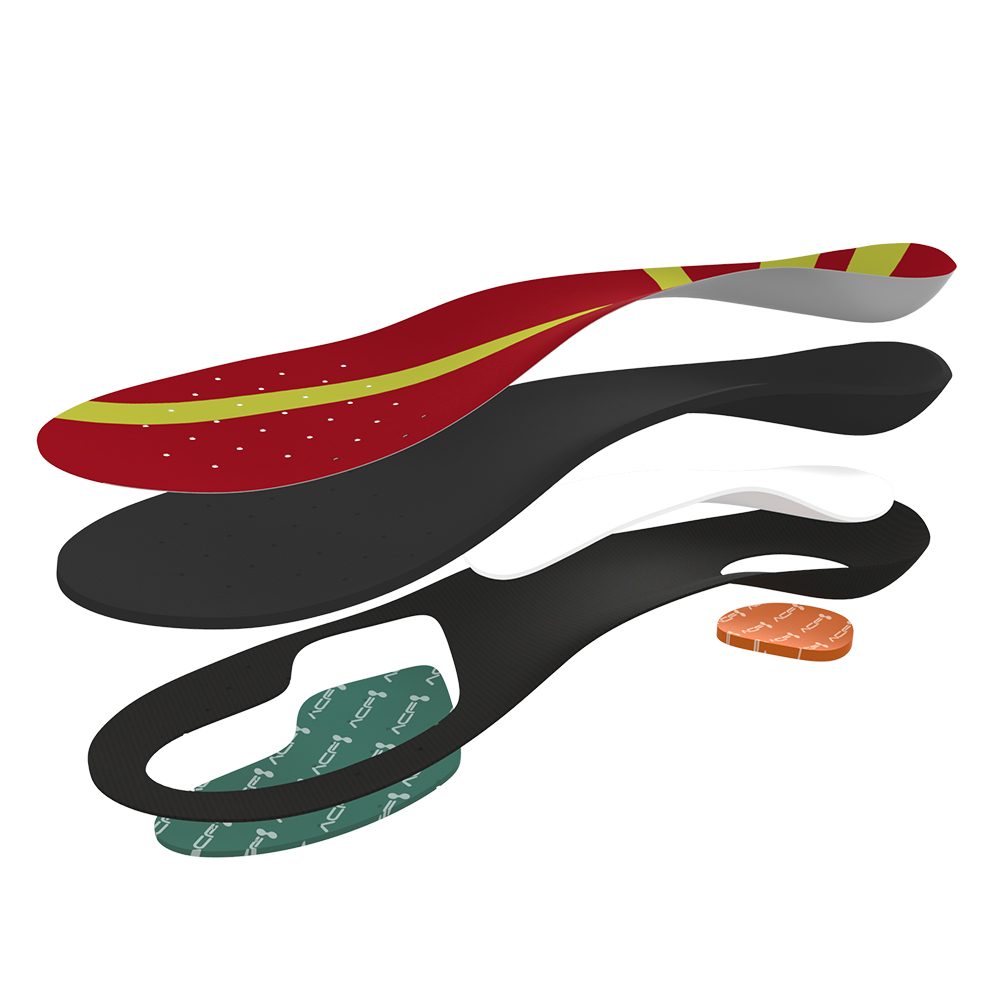
A rigid shell is thin, stiff and dimensionally committed. It cannot accommodate a foot the way a soft insole does, so the geometry has to be right at production rather than adjustable in the shoe. That single property drives every other difference.
The material behaves differently too. Stiffer materials need a different heat profile, hold less tolerance for uneven heating, and cool into a shape that is harder to change afterwards. A shell formed on a slightly uneven surface will keep that unevenness for the life of the shell.
Finishing becomes a precision activity. A soft insole’s edge can be smoothed generously; a thin shell’s edge has to be finished without changing the intended geometry, because a bevel that is too deep alters how the shell sits under the foot.
The commercial logic shifts as well. Rigid work is specified rather than chosen, sold to a clinical customer rather than a retail one, and supported by records that justify the specification. The product is smaller in volume and larger in consequence.
Tooling and fixtures
A rigid shell needs a positive model or a matched tool, and the quality of that tooling shows in every pair. A tool that is slightly off produces shells that fit the bench and not the foot, and the error repeats indefinitely.
Tooling strategy is therefore a central decision. Matched tooling gives repeatability and costs per model and size; a carved or milled model gives flexibility and costs per pair. A workshop producing the same shapes repeatedly should invest in tooling; one producing one-offs should not.
Fixtures matter as much as tools for thin shells. Holding a shell while it cools, while it is trimmed and while it is bonded requires supports that do not distort it. Improvised supports are the most common cause of a twist that nobody notices until the fitting.
Ownership of the drawings is part of the same decision. A workshop that owns its tooling drawings can reproduce, modify and move production; one that does not is dependent on a supplier for every change, which is a commercial risk rather than a technical one.
Why rigid work is specified rather than chosen
A soft insole can be chosen from a range and adjusted. A rigid shell has to be specified, because its geometry is the product: arch height, heel cup depth and posting are decisions that have to be made deliberately rather than selected from a shelf.
That makes the assessment and the specification the real work, and the machine floor the execution. Workshops that buy equipment before they can write a specification produce shells that are technically well made and clinically arbitrary, which is the most expensive outcome available.
It also explains why rigid work is often produced by laboratories rather than by retailers. The capability that matters is the ability to measure, decide and document, and that capability sits upstream of any press.
Heat, dwell and the cooling that decides the shape
Rigid materials demand tighter control of the heat cycle, because the consequences of getting it wrong are structural rather than cosmetic. Under-heated material forms at the surface and relaxes later; over-heated material thins where the shape is deepest, which is exactly where load concentrates.
Uniformity across the blank matters more than the absolute temperature. A shell that is hotter at one end forms unevenly, and the unevenness shows up as a thin patch on the medial arch, invisible at the bench and obvious after a month of wear.
Cooling under load is not optional for a thin shell. The geometry has to be held until the material is stable, and the support has to be even. A shell cooled on a flat bench while still soft will flatten slightly, and the loss of arch height cannot be recovered.
The practical discipline is a written routine with a verification step: a temperature check on the blank rather than the platen, a dwell that matches the material, a cooling time that is timed rather than judged, and a first-off pair compared against a retained reference.
The tooling decision, in money
Tooling is the largest upfront cost in rigid work and the one buyers most often underestimate. Matched tooling per model and size is expensive to create and cheap per pair; carved or milled models are the reverse. The crossover point depends on volume and on how often the same shape is repeated.
A workshop with a stable range should invest in tooling and regard it as an asset with a life. One producing bespoke shapes should not, and should instead invest in the accuracy of its carving or milling and in the fixtures that hold a shell while it is worked on.
Ownership of drawings belongs in the same decision. Tooling that a supplier owns ties the workshop to that supplier for every new model; tooling the workshop owns can be reproduced, modified or moved, which is a commercial asset independent of any machine.
Finishing a thin shell
Trimming a thin shell is a different operation from trimming a soft insole. The trim line follows the shoe, the edge is finished without removing material that the geometry depends on, and the shell must not be distorted by the pressure of the tool.
Edge finishing is where most rigid work is judged. A rough edge on a thin shell is felt immediately, and an over-beveled edge changes the contact area. The right finish is smooth, consistent and minimal.
Bonding a top cover to a thin shell needs care with pressure. Too much pressure during bonding can flatten a contour that took the whole forming cycle to produce, and the loss is not recoverable. A controlled press with a soft interface is better than a heavy hand.
Marking matters more here than in soft work, because a rigid shell is durable and will be compared over years. A pair without a batch mark cannot be traced, and traceability is what allows a clinical customer to reorder with confidence.
Fitting a rigid shell changes the appointment
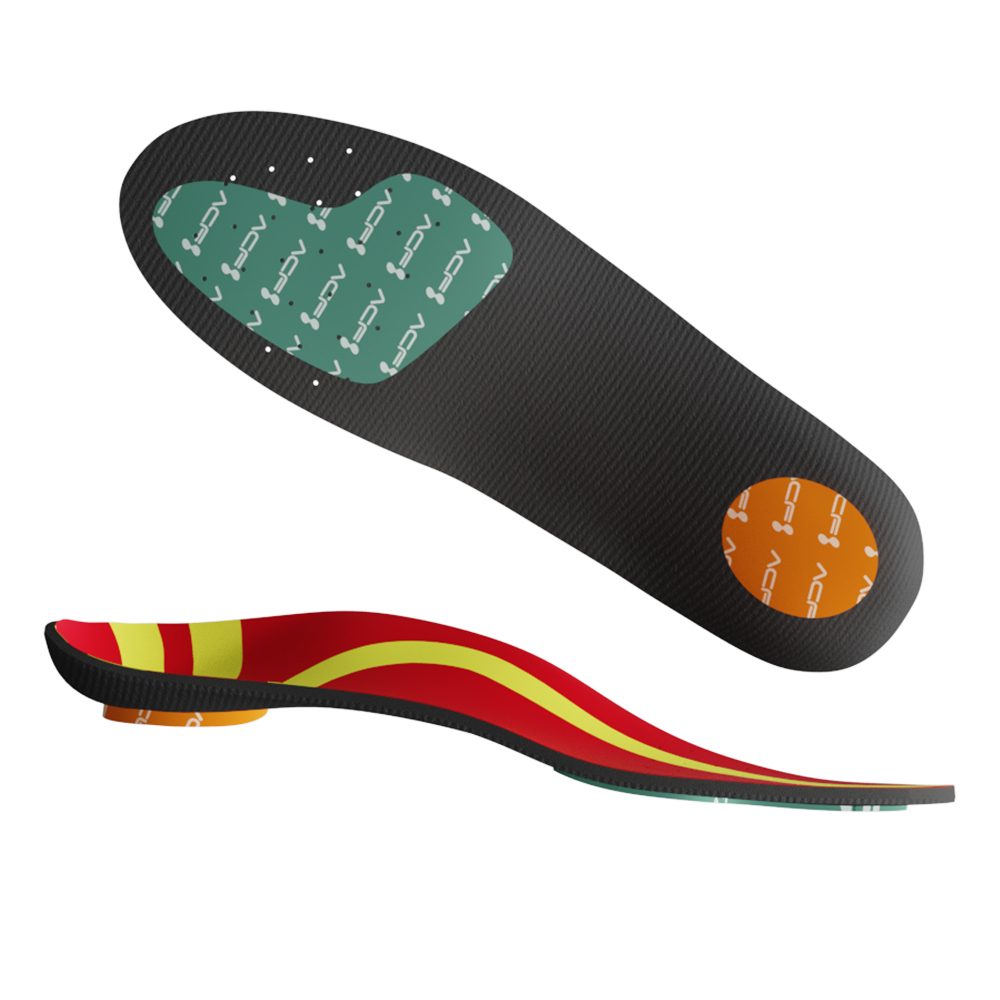
A rigid shell cannot be adjusted in the shoe the way a soft insole can. The fitting appointment therefore becomes a verification rather than an adaptation: the practitioner confirms that the pair matches the brief and that the footwear is suitable, and the conversation about what to expect becomes more important than the adjustment.
Footwear suitability is the constraint that most often decides the outcome. A rigid shell in a shoe with no removable liner or a shallow toe box will not work, whatever the quality of the shell, and the fitting is the last point at which that can be discovered cheaply.
The appointment also needs to cover the adaptation period, which is longer for rigid work. A customer who expects to feel nothing on the first day will report a problem that is simply unfamiliarity, and a customer who was told what the first fortnight feels like will persist through it.
Recording the fitting outcome matters more here than in soft work, because the next pair will be built on the assumption that the last one was acceptable. Without that record, the workshop is guessing about its own history.
Inspection: what makes a shell acceptable
Inspection has to be against a written standard, because a rigid shell invites opinion. The standard should name what is checked: geometry against the model, thickness at defined points, edge finish, symmetry between left and right, surface condition and marking.
Symmetry deserves particular attention. A pair that is individually acceptable but not symmetrical will be felt by the wearer, and the complaint will describe a fit problem rather than a production one.
Comparison against a retained reference pair is the fastest reliable check. Handling a new shell next to an approved one reveals differences that a measurement can miss, and it takes less time than a full dimensional inspection.
The record of the inspection is part of the product. A clinical customer buying a rigid shell is buying a specification and the evidence that it was met, and a workshop that cannot produce that evidence is competing on price alone.
Quality control that fits the product
Rigid work rewards a first-off check more than any other product in this category. A shell produced at the wrong point in the thermal cycle looks acceptable and behaves differently, and the difference is only visible when compared against a reference.
The check should be quick and specific: geometry against the model at the arch and heel, thickness at the points that matter, symmetry between the pair, edge finish and surface condition. Five items, two minutes, recorded.
Retaining one shell per approved batch is the cheapest quality system available. It costs a pair, it settles arguments, and it is the reference against which a future batch is compared when a clinician reports that something has changed.
Scrap discipline matters as much as inspection. A shell that is out of tolerance should be recorded with the settings used, not quietly discarded, because the pattern of scrap is the only feedback the process gives before a customer does.
None of this is a reason to avoid rigid work. It is a reason to enter it deliberately, with the assessment and the specification in place before the tooling is ordered.
The commercial shift
Rigid work changes who the customer is. Soft insoles sell to a broad market; rigid shells sell to clinicians, laboratories and specialist retailers who need a specification and will pay for documentation. That market is smaller, slower to enter and more loyal once entered.
It also changes the sales conversation. A rigid shell cannot be sold on comfort, so it has to be sold on the quality of the assessment and the precision of the build. That means the workshop’s value sits partly upstream of the machine floor, in the measurement and specification process.
Volume economics differ as well. Rigid work has higher unit value, lower volume and higher consequence per defect. A workshop built for volume will find the transition uncomfortable unless it changes its measures from pairs per day to first-time acceptance.
What a clinician should ask a supplier
Four questions separate a workshop that can produce rigid work from one that has bought a machine. What is the material and its grade; what tooling is used and who owns the drawings; what the inspection standard is; and what happens when a pair does not match the brief.
The answers should be documents rather than reassurances. A material grade that can be named, tooling that can be described, an inspection standard that can be read and a disposition process that can be followed are all evidence of a production system rather than a capability claim.
Clinicians should also ask what the workshop will not do. A workshop that declines work outside its process is more reliable than one that accepts everything, because the boundary is where quality is protected.
Frequently asked questions
Can the same machine produce soft insoles and rigid shells?
Often it can form both, but rarely equally well. The two products sit at different points in the material and cycle range, and a machine tuned for one will usually compromise on the other. Ask what the equipment holds consistently rather than what it can process.
Do I need matched tooling for rigid work?
For repeat production of the same shapes, matched tooling gives the repeatability rigid work depends on. For one-off shapes, a carved or milled model is more economical. The decision is about volume per model rather than about quality.
Why does a rigid shell lose arch height after forming?
Usually because it was released before it was stable, or because it cooled on an uneven surface. A thin shell has to be held under load, on even support, until it is fully cool.
What should an inspection standard cover?
Geometry against the model, thickness at defined points, edge finish, left-right symmetry, surface condition and marking. A retained reference pair makes the comparison fast and consistent.
What is the minimum order for rigid shells produced to specification?
Two hundred pairs for insoles, mixable across models and sizes, with samples dispatched within three days of specification approval. Rigid work is quoted from the specification rather than from a catalogue.
Do you supply the tooling or the presses?
No. Our scope is foot assessment systems and finished custom orthotic insoles. We produce rigid work in our own plant and can describe what the process demands, but we do not sell presses or tooling.
What support comes with your assessment systems?
A dedicated WhatsApp group, direct access to our engineers, remote assistance where the site allows it, and over-the-air updates for units connected to the internet. Machine warranty runs twelve months on non-human damage with free replacement parts.
What we would do next
Before committing to rigid work, run one specification through your existing routine and inspect it against a reference pair. The result will tell you more about the gap than any equipment brochure. Our insole categories page shows the ranges we produce to specification, including rigid work, and the FAQ page covers minimum order and samples.
This article is intended for professional and educational reference. It is not medical advice. Foot assessment equipment produces measurements and images; clinical interpretation and any decision about care remain the responsibility of a qualified professional. Certification scope is limited to the documentation we hold: European Union certification and ISO quality system certification.