
The player set both shoes on the counter, pulled a pair of thick, padded socks out of one of them, and said the last insoles he tried only worked on days he wore the thin ones. Nobody in the room was surprised. A basketball shoe is a crowded place: cushioning under the heel, structure through the midfoot, a padded collar, a sock liner of its own, and then whatever the player wears on the foot and around it. Volume disappears fast in that chamber, and every layer added pushes the fit somewhere new. A build that measures perfectly in the assessment room can feel wrong on court, not because the foot changed but because the conditions around it did. So before anything about an insole is fixed — its length, its thickness, its trim line — the layers above it need to be settled: which sock the player actually wears, whether ankles get taped, which shoe the pair is expected to live in. This article works through those decisions in the order a serious room asks them, with the questions the player hears first and the build decisions they settle.
Volume is the scarce resource inside a court shoe
A basketball shoe is built with intent. Cushioning under the heel, torsional structure through the midfoot, a padded collar around the ankle, a shaped sock liner over the footbed — every one of those layers occupies space by design, and the foot shares the chamber with all of them. Add a thick game sock and the room left for anything underneath the foot shrinks again. Players feel this immediately and describe it precisely: the shoe that fit in the shop feels tight by the third quarter, the toes crowd on hard stops, the heel lifts on a different pair. The foot did not change. The interior did.
That is why the working question is never only what the foot does, but what the shoe leaves room for after everything else is inside. Court sports also load the foot differently from straight-line running: lateral pushes, hard pivots, landings that arrive at the very edge of whatever sits under the foot. A build that ignores the layers above it optimises for a shoe that does not exist. The order of operations matters, and it starts with the layer closest to the skin, which is where every honest fitting session starts too.
The practical habit that follows is simple: ask the player to bring both shoes and both socks to the assessment, not just the pair he likes best. Rooms that do this discover the fit problem at capture time instead of at the first complaint, and they discover it in the player’s own vocabulary, which is the vocabulary the build spec should be written in anyway. A shoe box left in the corner of the assessment room is a cheap piece of equipment, and it prevents more rebuilds than any setting behind the software.
Start with the sock the player actually wears
The sock is the first layer of the fit, and it is the one most often skipped. A padded game sock changes contact under the foot, takes up volume around the toes and midfoot, and alters how the shoe closes over the top of the foot. A thin sock does none of those things, which is exactly why the two feel like different shoes. Capturing the foot in a thin dress sock and building for the result describes a fit the player never plays in, and the player will report it in those words after the first training session.
So the sock question comes early and it is asked plainly: which socks do you play in, always, or do you switch? Players who alternate between a padded sock and a thin one are common, and the honest answer is to capture under both conditions and label each record. The decision about which condition the build targets then belongs to the player and the room together, and it goes into the build spec in writing. That one line — game sock worn at capture, model named — costs nothing on the sheet and settles arguments in the shop months later, when the pair comes back and somebody asks why it feels different from the demonstration.
Tape and braces change the foot you are building for
The next layer is tape. A taped ankle adds bulk around the rear and midfoot, changes how load arrives through the heel on landing, and alters the way the shoe closes. A lace-up brace changes more again. None of this is exotic; every team sport room deals with it weekly. But it means the foot inside the shoe on a taped day is a different fitting problem from the same foot on an untaped day, and a build fixed for one quietly misbehaves on the other. Players often do not mention taping at assessment because it seems like a detail about the ankle, not the foot. The room asks anyway.
The practical rule is to build for the condition that dominates the player’s season. A player who tapes every session gets a pair assessed and built for taped days, with the tape applied the way they apply it. A player who tapes only after a knock gets the untaped build and a clear note about what to expect on the days tape goes on. What is avoided is the silent middle: a build made from an untaped record for a player who tapes most days, discovered weeks later. The condition decision is small at capture time and expensive to reverse afterwards, which is the pattern most fitting decisions follow.
Full-length, or what the shoe leaves room for
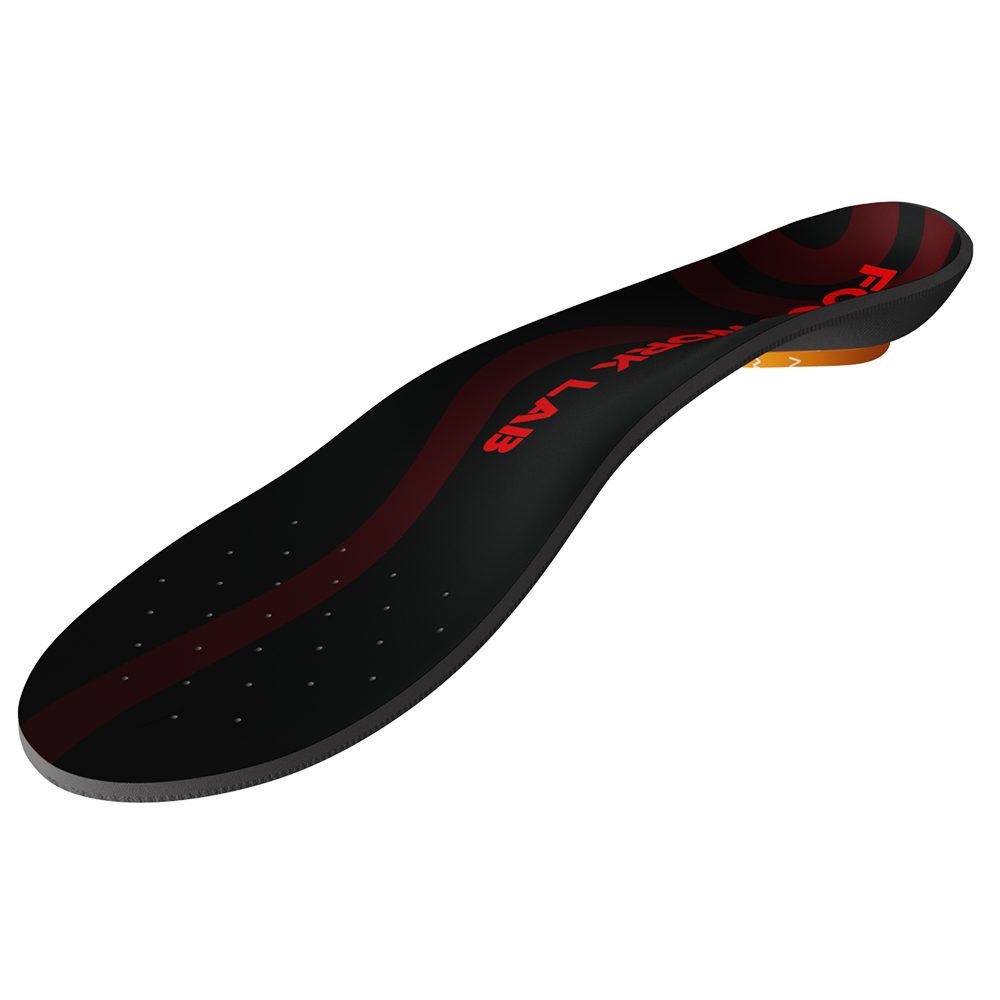
With sock and tape settled, the construction question can be faced honestly. A full-length insole carries the foot from heel through to forefoot, which suits players whose forefoot does most of the work in a sport of jumps and hard stops. But full-length construction also occupies the most volume, and some court shoes — especially low-profile models — have little to spare once the padding and collar have taken their share. The shoe decides as much as the foot does. Before the construction is fixed, the stock footbed comes out and the shoe is checked with the player’s actual game sock inside it, because that is the only condition that predicts how the pair will sit on court.
Removing the stock footbed usually returns most of the space a custom build needs, and where it does not, the honest options are a slightly slimmer build, a shorter construction, or a different shoe. What is not honest is trimming the build until it fits and hoping the change does not matter. The trim line is part of the build decision, not an afterthought at the workbench. Rooms that check the shoe with the sock in place before fixing the spec rarely have the conversation that starts with the player saying the pair only works in one of his two shoes.
Capture the foot the way it plays
With the conditions settled, the capture itself can be planned. A static standing record describes contact and shape at rest; dynamic passes describe how load arrives in motion, and court motion is its own category — lateral pushes that load the edges, quick stops that throw weight onto the forefoot, landings that arrive faster than a jog ever does. Our article on court sports and the edge of an insole covers what those loads ask of a build. The capture plan takes the passes that match the sport, and the conditions — sock, tape, footwear — are stated the same way they will be stated on the build spec, so the record and the instruction never drift apart.
A capture plan for a court player usually runs shorter than rooms expect: one quiet standing record for shape and contact, and a handful of dynamic passes taken in the player’s own stance rather than a generic walk. What makes the plan work is not the number of passes but the conditions staying constant across them — same sock, same tape state, same point in the session. A comparison between passes only holds when nothing but the movement changes between them, which is the same discipline that keeps any two records comparable anywhere else in the room’s work.
The boundary stays where it always stays. The equipment records how load distributes at the ground under stated conditions; it produces measurements and images. What those findings mean for this player’s foot, and what the build should do about it, is decided by a qualified professional in the room. That division is not a formality. It is what keeps the record trustworthy on the day the player comes back with a complaint, because everyone involved knows what was measured, what was decided, and who decided it.
From record to pair: how the build is made and delivered
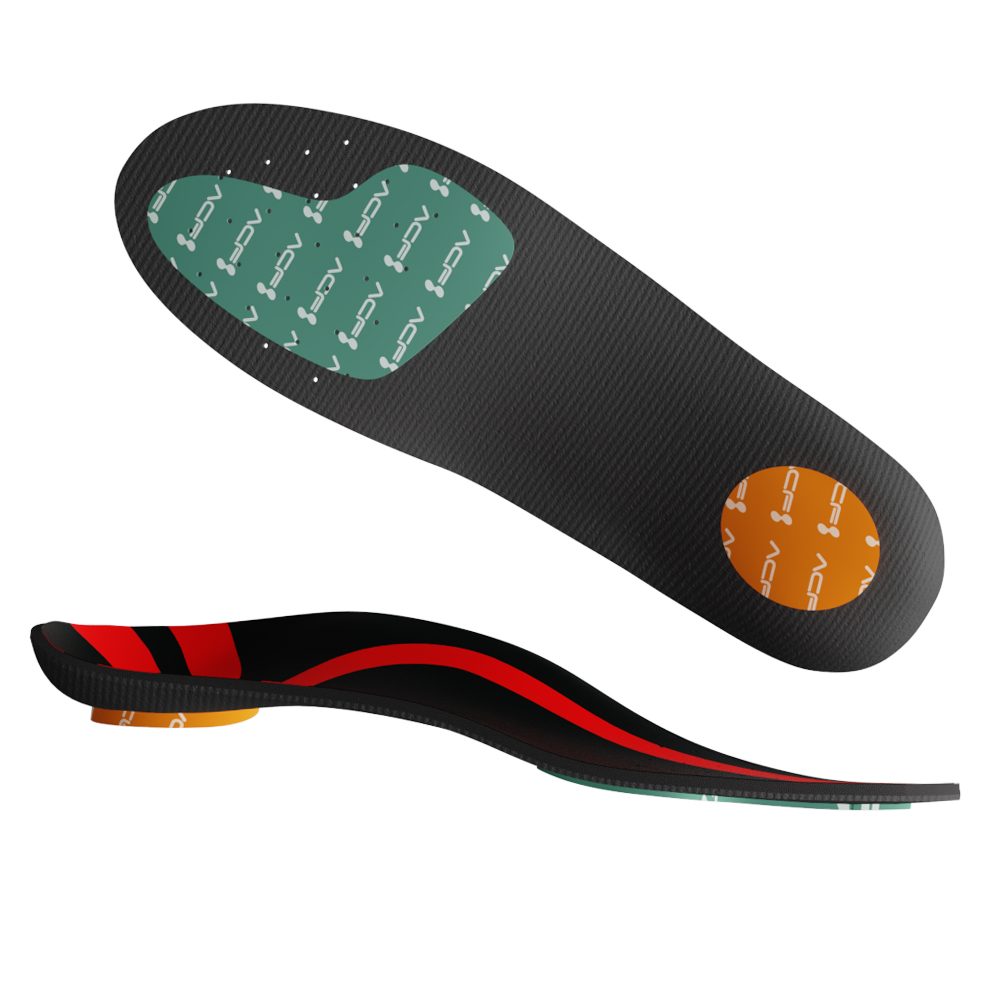
Behind the fitting conversation sits a production process, and since we run it ourselves it is worth describing plainly. The inputs to a build are the pressure record, a mould or cast of the foot, and the build spec the room has written — our article on a mould, a cast and a pressure record as three inputs to one build walks through how those are reconciled. Every pair is made individually rather than picked from a catalogue, which is why a sample pair can be built and shipped within three days of the spec being agreed, so the room and the player can judge the real thing before any larger commitment.
For rooms ordering at scale, the minimum order is two hundred pairs, and those pairs can be mixed across models and sizes within one order, which is how a retail or clinic programme actually buys. We build insoles under both ODM and OEM arrangements, and production capacity runs from several hundred pairs a day up to around a thousand, so the wait after sample approval is transport more than queueing: express delivery lands in six to seven working days, air freight in ten to twelve, and sea freight in roughly a month and a half depending on destination. The after-sales channel is a dedicated group with the engineers who built the line, so a fit question six weeks later reaches the same people who made the pair.
What the first weeks on court should tell you
The pair goes into the shoe and the season starts, and the first fortnight decides most of what needs deciding. The player should be asked specific questions rather than a general how is it going: how the pair sits in each of his shoes, what changes when he switches socks, whether taped days feel different, where his attention goes during play. Our article on what a customer should be asked to report back in the first two weeks is the checklist we hand to rooms. Vague feedback produces vague adjustments; specific questions produce answers that map onto build decisions.
Most pairs settle in without changes. When something does need adjusting, the adjustment is made against the conditions written at capture — same sock, same shoe, same tape state — so the comparison means something. And when a player changes shoe models mid-season, the honest answer may be that the pair was built for the old one: check the new shoe’s volume with the game sock in place before assuming the build is at fault. Feet change slowly; shoe models change every season, and the layers above the insole change with them.
Keep the pair’s paperwork with the conditions it was built for. When the player changes shoe models, socks or taping habits, the conditions change with him, and the honest room says so instead of blaming the build. A short note in the file — new shoe model this season, thinner socks since summer — takes a minute to write and keeps every later conversation anchored to what actually changed rather than to memory. That habit, more than any single fitting decision, is what separates rooms whose builds hold up across seasons from rooms whose builds drift quietly into complaints.
Frequently asked questions
Should the player be captured in the game sock or a thinner one?
In the sock the player actually wears on court. Sock thickness and padding change how contact presents and how the shoe fits, so a record taken in a thin sock describes a fit the player never plays in. If the player alternates between socks, capture under both conditions and label each record, then decide with the player which one the build targets.
Does ankle taping change the insole we should build?
It can. Tape and braces add bulk and change how load arrives through the foot, so a build fitted to an untaped foot may sit differently on taped days. Decide with the player whether the pair is for taped or untaped use, capture under that condition, and write the decision into the build spec before the build starts.
Is a full-length insole always the right choice in a basketball shoe?
Not always. Full-length construction suits players whose forefoot does most of the work, but some court shoes have little room to spare once the padding and collar have taken their share. The shoe decides as much as the foot: remove the stock footbed and check the internal volume with the player’s game sock inside before the construction is fixed.
Can one pair of insoles move between different court shoes?
Sometimes, but only when the shoes share similar internal shape and volume. A pair trimmed for one model can sit proud or slide in another. If the player rotates between models, say so at capture time, because the build decision and the trim line depend on which shoes the pair is expected to live in.
What is the smallest order for custom insoles?
Two hundred pairs, mixed across models and sizes within the one order. That minimum exists because every pair is built individually rather than picked from a catalogue. Rooms testing the product first can start with a sample pair, which we ship within three days of the build spec being agreed, before any larger commitment.
How quickly does a full order arrive after the sample is approved?
Express delivery takes six to seven working days, air freight ten to twelve, and sea freight roughly a month and a half depending on destination. Insole production runs from several hundred pairs a day up to around a thousand, so the wait after approval is mostly transport rather than a production queue.
Will a custom insole make a court shoe feel tighter?
It occupies volume, so something has to give. Usually the stock footbed comes out first, which returns most of the space. If the fit still feels tight, the next layer to look at is the sock: a thinner game sock often recovers more room than any adjustment to the build. Fit is always checked with the player’s actual sock before the pair leaves.
What we would do next
Put the layer questions into your capture routine this week, in this order: which sock, taped or not, which shoe — and write the answers onto the build spec in the player’s own words. Then check the shoe itself with the game sock inside before any construction is fixed. The custom insole categories page shows the constructions we build for court and other sports, the FAQ page carries the ordering and delivery answers in full, and if you want to talk through a player programme with the people who build the pairs, start at the contact page — the conversation reaches our own production team, not a middleman.
This article is intended for professional and educational reference. It is not medical advice. Foot assessment equipment produces measurements and images; clinical interpretation and any decision about care remain the responsibility of a qualified professional. Certification scope is limited to the documentation we hold: European Union certification and ISO quality system certification.