
The customer came back holding the insole she had bought at a pharmacy two years ago and asked the question straight: can I wear yours on top of mine? The operator did not answer about the insoles. She asked to see the shoes the customer actually wears, because the question sounds like a question about products and is really a question about volume. Two inserts stacked in one shoe raise the foot inside the shoe, and everything above the raised foot has to renegotiate its terms: toe room, heel grip, the collar, the lacing, the way the footbed under it all now sits. Sometimes the answer is no before anyone has discussed support at all. Rooms get this question weekly, from customers who bought something over the counter, from customers handed an insert years ago, from customers who simply do not want to throw away a thing they paid for. This article works through the decision the way experienced rooms handle it: when the existing insert comes out, when layering is a genuine plan, what the customer checks at home in the first weeks, and what the build side needs to know at order time so the pair fits the shoe it will actually live in.
The question as it arrives at the counter
The customer rarely phrases it as a fitting question. It arrives as loyalty to the old insert, as thrift, or as simple curiosity: yours sounds better, but mine cost money, and the shoe already feels fine with both. The operator’s first move is not to defend the custom pair. It is to ask for the shoes, not the inserts, because the shoe decides this question long before either insert gets an opinion. A room that answers from the counter, without the shoe in hand, is guessing about the one variable that matters.
The existing insert is worth a look before anything is said about it. Its wear pattern shows where the customer’s foot has actually been loading; its compression shows how much life it has left; its thickness and its edges show what the shoe’s original build expected. Our article on reading a footbed you did not make covers what a worn footbed still tells an experienced eye. None of that is a diagnosis. It is context for the volume conversation that follows, and it usually changes the customer’s own position on whether the old pair should stay.
What the operator does not do is promise that stacking improves anything. The honest position, said plainly at the counter: more material under the foot is not more support, and whether two inserts can share a shoe is a question about space, answered by the shoe, checked with the shoe in hand. Customers accept that framing quickly once they feel the volume for themselves, which is the next section.
Volume first: what two inserts do to a shoe
Stacking raises the foot. That single fact propagates everywhere above it. The toe box loses height and the toes press the upper; the heel sits higher and grips the collar differently, sometimes slipping where it never slipped before; the lacing pressure redistributes and the tongue starts to bite; the footbed underneath compresses unevenly because the load on it has changed shape. None of this is about quality. It is geometry, and geometry does not negotiate. The customer who says the shoe felt tighter after adding the second insert is describing exactly this, accurately.
Shoes differ in how much they can absorb. A thin-soled dress shoe or a low-volume court shoe has almost nothing to give; our piece on football boots, a thin sole and very little room describes the extreme end of that range, where even one insole is a fit decision. High-volume hiking boots and winter boots carry far more interior space and tolerate a thicker build, which is why the same customer can layer comfortably in one pair and not at all in another. The shoe’s own footbed thickness counts against the budget either way.
The practical test happens in the room, with the customer’s own shoe: existing insert in, proposed custom pair on top, foot in, laces done as the customer actually does them. Toes wiggle or they do not. The heel lifts when the customer walks a few steps or it stays. That minute of walking answers more than any discussion at the counter, and it gives the operator something concrete to explain rather than a rule to assert.
The usual answer: take the existing insert out
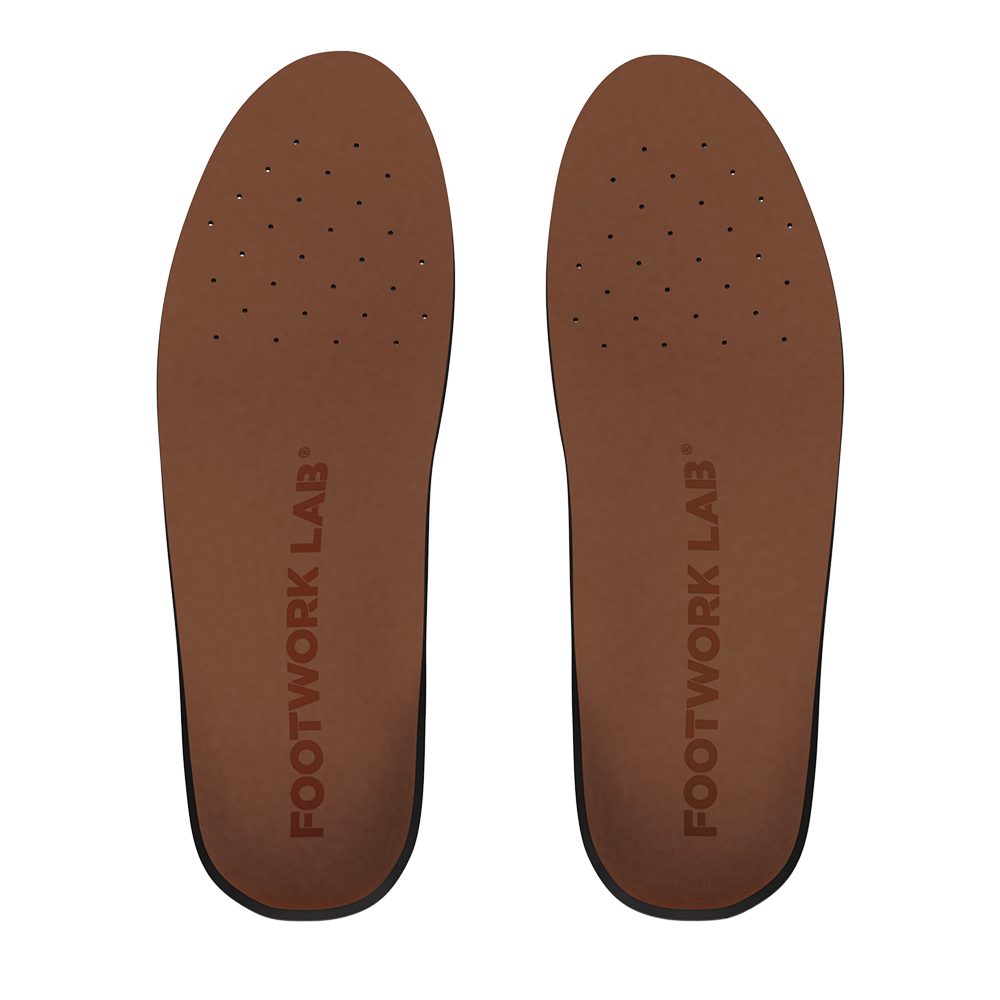
Most shoes hide a removable footbed under whatever the customer has been standing on. Lift the insole the customer brought, or lift the shoe’s original footbed, and check underneath: in the large majority of shoes one of them comes out, and that is the space the custom pair is built to occupy. The custom insole is designed against the shoe’s interior volume, not against the shoe plus somebody else’s insert. Keeping both doubles the thickness under the heel, raises the whole foot, and spends the shoe’s volume budget twice on the same space.
So the working phrase at the counter is simple: yours replaces, it does not stack, unless we built it to stack. The customer keeps the old pair at home as a spare, or retires it; nothing is lost by swapping rather than layering, because the custom build already occupies the old insert’s job. What the customer should not do is trim the custom pair to squeeze both in, which is occasionally attempted at home and ruins the build’s contact with the shoe’s floor.
The exception that stops this conversation short is the glued-in cover: some shoes bond their footbed to the sole and offer no removable layer at all. That changes the plan, and it is discoverable in thirty seconds in the room. It is also the single most useful thing the customer can find out before the order is placed, because it moves a decision from after delivery, when nothing can be adjusted, to before the build, when everything can.
When layering is genuinely the plan
Layering is not a failure state; it is a legitimate build brief, and some rooms use it deliberately. The obvious case is the shoe whose footbed cannot come out. The customer likes the shoe, the shoe has no removable layer, and the choice is a thinner custom build worn over the factory cover or no custom pair in that shoe at all. Another case is the thin neutral top cover a customer already owns and likes, worn under a custom build for surface comfort, where the combined stack still fits the shoe’s volume. And there is the seasonal pair, the winter boots that come out for a few months, where a thicker build makes sense precisely because the boot’s volume allows it, as our article on the pair that only comes out in winter describes.
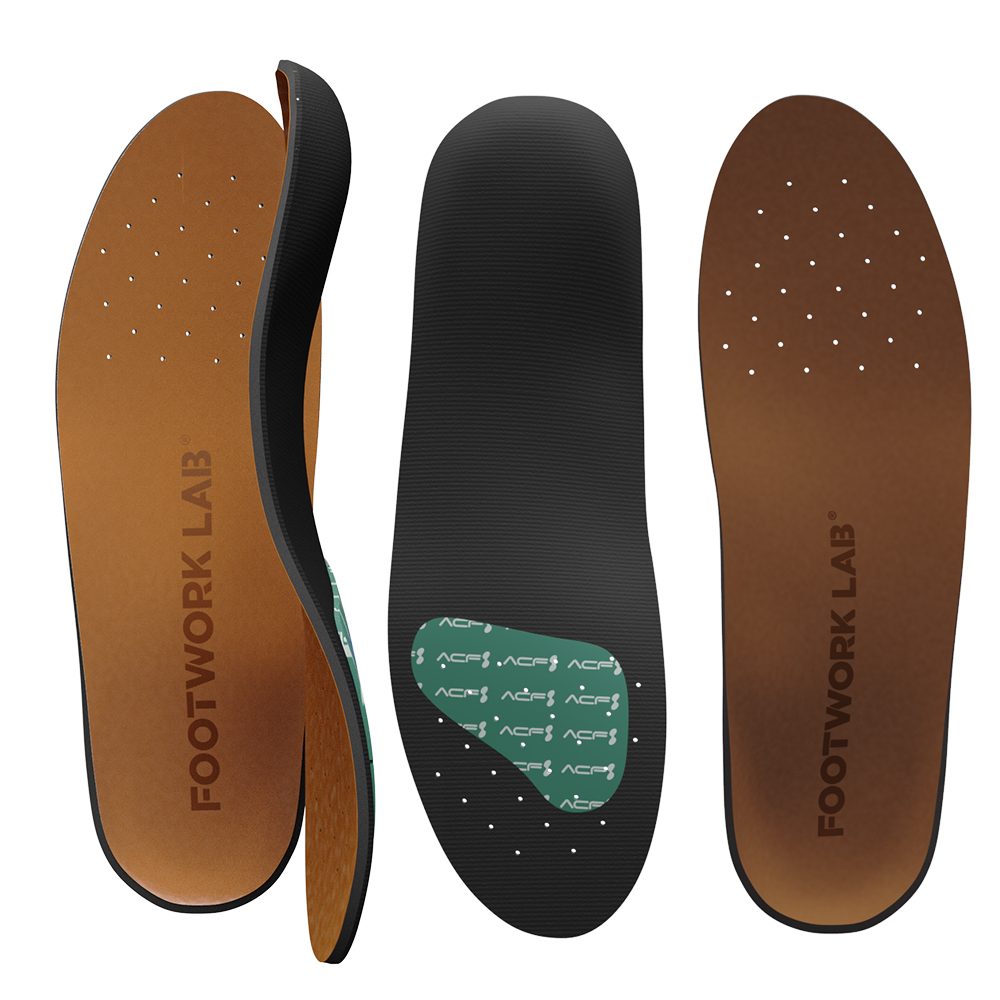
What makes layering work is that it is decided at order time, not discovered at delivery. The build side can accommodate a stacked use: a thinner construction, a top cover chosen for the friction and feel of sitting on another layer, an edge profile that will not catch against the insert beneath. None of that happens by accident, and none of it can be inferred late. This is why our process runs from the customer’s own words to a written build specification, as our article on turning the customer’s own words into a build spec walks through: the sentence “this pair will be worn on top of the shoe’s own cover” belongs on that spec, in writing, before production.
The honest framing for the customer: layering is a fit solution, not a support upgrade. The build underneath is still what it is; adding a layer does not make it stronger or more corrective, and the combined stack is judged by whether the shoe still fits and holds the foot, not by how much material is under the arch. Rooms that say this clearly rarely have to revisit the decision later.
What the customer checks in the first weeks
Whichever arrangement was chosen, replacement or stacking, the same short list applies at home. Heel lift when walking: a little settle is normal in the first days, a repeated slap means the heel is sitting wrong or the stack is too tall. Toe room: the toes should wiggle in the shoe as laced, and numbness or pressure across the top of the foot means the volume is spent. Lace tension: most stacked setups need one adjustment looser at the midfoot, and that is expected rather than a fault. Same socks as the visit, or socks of similar thickness, because the fit was checked against what the customer wore that day.
The structured version of this is the first-two-weeks report, and rooms that ask for it catch a mis-judged volume decision before it becomes a discarded pair. Our article on what a customer should be asked to report back in the first two weeks gives the exact questions. The answers separate the settling-in that every new insole asks for from the fitting errors that need the pair back on the bench.
When the report says something is wrong, the pair comes back and the room re-checks against its own record rather than starting over. The assessment from the first visit, the pressure record and the posture capture, stays in the folder; what changed is the shoe, the stack or the use, and the comparison between the first record and the situation now is precisely what makes the correction quick and defensible.
What the build side needs to know at order time
The order notes carry the decision so it survives past the counter: which shoe this pair is for, whether the shoe’s footbed comes out, whether the pair will be worn alone or over an existing layer, and what the customer actually said about how they use the shoe. A room ordering for many customers keeps these notes per pair, not per customer, because the same customer often has different answers for the work shoes and the weekend pair.
From the factory side, this is routine rather than special. Custom insoles are offered as ODM and OEM builds; the minimum order is 200 pairs, and styles and sizes can be mixed within that order, so a room with a varied customer base does not have to over-order any single model. Samples ship within three days, which lets a room check the fit in the actual shoe before the batch moves, and production capacity runs in the range of 500 to 1000 pairs a day, so a written change to a build spec does not stall a season. Rooms reselling under their own name handle the packaging and labelling side of that, which our article on private label insoles and the order behind them covers in detail.
One warning worth writing on the order form itself: if the pair is meant to stack, say so, and if it is meant to replace, say that too. The builds are not interchangeable. A replacement-depth pair worn over a footbed sits too high in the shoe; a stack-depth pair worn alone sits loose and the heel may slide. The difference costs nothing to specify and a batch to discover.
What this decision does not change
The layering question is a fitting question, and it does not alter what the assessment showed. The custom build still comes from the foot’s pressure record, the posture capture and the professional’s reading of them; the equipment produced measurements and images, and interpretation belongs to a qualified professional. Whether the pair is worn alone or over a cover, it is the same measured foot and the same build logic underneath. Nothing about stacking makes the foot’s record more favourable, and nothing about replacing it makes the assessment more thorough.
It also does not change what the room will not claim. We do not promise outcomes from an insole, layered or not; we describe what the build was made to do under the conditions it was specified for, and the room’s professional decides what it means for the customer in front of them. A customer who hoped that two inserts would double the benefit is told the truth at the counter: the shoe’s volume, not the stack height, sets what is possible.
The decision is worth an extra minute because it is the difference between a pair that gets worn and a pair that gets drawer-ed. Most returns that trace back to volume were answerable at the counter with the shoe in hand, thirty seconds of checking whether the footbed comes out, and one sentence on the order form. That is a cheap habit next to a season of pairs nobody wears.
Frequently asked questions
Can a custom insole be worn on top of the shoe’s original insert?
Usually no. Most shoes have a removable footbed, and the custom pair is built to occupy that space; leaving the original in doubles the thickness and steals toe room and heel grip. Layering works only when it was specified at order time, with a build made for stacked use, or when the shoe has no removable layer.
What if the shoe’s footbed is glued in and cannot come out?
Check it in the room before the order is placed, not after delivery. A glued cover is a normal situation and the build can be made thinner for stacked use with a suitable top cover, but only if it is written into the build spec. Then check toe room and heel grip in the actual shoe once the pair arrives.
Is wearing two inserts more supportive than wearing one?
No. Support comes from the build matching the foot’s pressure record and the shoe it lives in, not from stacked material. Two layers raise the foot, change heel grip and lace tension, and often leave the combined stack sitting where the shoe’s volume cannot hold it. More material is a fit cost, not an upgrade.
Which shoes should the customer bring to the assessment?
The shoes worn most often and the specific pair the insoles are for. The operator needs to see the shoe’s volume, check whether its footbed comes out, and take the record with that use in mind. A pair ordered without the shoe in the room is the most common origin of a fit complaint later.
How quickly can a room receive insole samples?
Samples ship within three days, so the fit can be checked in the actual shoe before a batch is produced. Custom insoles are available as ODM and OEM builds, with a minimum order of 200 pairs and styles and sizes mixed freely within the order, which keeps a varied customer base from over-ordering one model.
Can one order cover several customers with different needs?
Yes. Within the 200-pair minimum, styles and sizes can be mixed, and each pair is built against its own foot’s record rather than to a shared template. The order notes carry each pair’s shoe, use and stacking decision, so the batch ships as individual answers rather than one compromise.
What should the customer do if the layered setup feels wrong after a week?
Stop adjusting at home and bring the pair and the shoe back. Persistent heel lift, numbness across the top of the foot or toes with no room are volume signals, not settling-in. The first visit’s record stays in the folder, so the room compares against it, corrects the build or the stack, and the fix is quick.
What we would do next
Put the counter habit in place this week: every customer who asks about layering gets the shoe check, footbed lifted, toes tested, heel walked, before any answer is given. Add one line to the order form asking whether the pair replaces or stacks, and make the shoe a required field. The insole categories page shows the build ranges a room can order against, the FAQ page carries the operational answers we give most often by message, and the contact page reaches the team that turns a room’s notes, per pair, into written build specs before production starts.
This article is intended for professional and educational reference. It is not medical advice. Foot assessment equipment produces measurements and images; clinical interpretation and any decision about care remain the responsibility of a qualified professional. Certification scope is limited to the documentation we hold: European Union certification and ISO quality system certification.