
By the end of the session the climber cannot tell you which half of the day did the damage: the hour with her toes curled under her on the wall, or the hour standing in a harness watching her partner work the route above her. Both halves happened in the same building, on the same evening, in the same pair of feet. The climbing shoe gets blamed first, because it looks uncomfortable and it is uncomfortable. But she spent the rest of the session standing still on a hard floor, absorbing her partner’s falls through her legs, and no amount of shoe shopping will explain that part. She limps to the car and books a session with someone who deals with feet for a living.
For the clinics, physiotherapy practices and footwear professionals who meet people like her, climbing is a useful case because it splits one person into two load profiles inside a single evening. Everything that follows is about reading that split properly: what the performance shoe does and does not explain, what the standing half of the session contributes, where a build can realistically live, and which questions separate a complaint about the shoe from a complaint about the belay.
Two footwear worlds in one sport
Almost every committed climber owns at least two pairs of shoes that never exchange duties. The first pair is the performance shoe: aggressively downturned, snug to the point of encroaching on the toes, built so the foot becomes a hook. Nobody wears it to the shop, to work, or beyond the climbing session, and most climbers peel it off between routes. The second pair is everything else — approach shoes, trainers, the comfortable pair worn to drive to the gym and to stand around in afterwards. The sport asks for both, and the feet live at the intersection.
This matters professionally because a complaint can belong to either container, and the two containers pull in opposite directions. The performance shoe compresses and holds; the everyday shoe supports and cushioned; the standing, waiting, walking hours happen in the second one. A professional who only hears “my feet hurt after climbing” and reaches for a single explanation has skipped the most informative question in the case: which shoe were you in when it started, and which shoe are you in when it will not stop?
There is a third container worth knowing about. Outdoor climbers add the approach — the walk from the car park to the crag base, often over rough ground, often downhill on the way back — and that walk happens in a third shoe or in the everyday pair. A gym climber and a crag climber present similar-sounding complaints built on different foundations, so the footwear inventory is not trivia. It is the first thing to establish, before any measurement, before any discussion of a build.
Ask the client to bring the whole system to an appointment: the climbing shoes, the everyday pair, and the approach shoes if the calendar includes outdoor days. Lining the three pairs up on the bench next to each other usually does more to organise the conversation than twenty minutes of open questioning, because the client can point at the pair that bothers them and the pair that does not.
What the downturned shoe does, and what it does not
The performance climbing shoe earns its reputation honestly. It funnels load onto a small area under the forefoot, curls the toes into a position they would never choose voluntarily, and asks the small muscles of the foot to work in a compressed space for the duration of every route. Over a session, that is a demanding and repetitive job, and the foot finishes it tired in a very specific way: sore through the toes and the ball of the foot, sometimes cramping along the arch, occasionally with pressure marks where the upper presses hardest.
What the shoe does not do is stand in for the rest of the day. The toes and forefoot complaints that follow a session map fairly cleanly onto the shoe’s job description. The heel and calf complaints that follow the same session usually do not — they track the standing half of the evening, the belay stance, the waiting, the falls absorbed with locked legs. Keeping the two stories apart is the core diagnostic habit for this population, and it costs nothing except a disciplined question: does it hurt inside the shoe, or does it hurt when the shoes come off?
There is also a simple physical fact that shapes everything downstream. A performance shoe has no spare room inside it. The foot fills it completely by design, which means there is no meaningful space for an added layer under the foot, and attempting to introduce one changes the fit in ways the climber will feel immediately on the wall. Climbers guard their shoe fit jealously, and rightly so — the fit is the performance. Any recommendation that begins by modifying the inside of a performance shoe should expect resistance, and in most cases should not be made at all.
So the honest scope of the professional’s job, for most climbing clients, is the other containers: the everyday shoe, the approach shoe, the hours of standing and walking that bracket the session. That is not a consolation prize. For a client who climbs three evenings a week, the bracket hours can exceed the wall hours, and they are where the persistent complaints tend to settle.
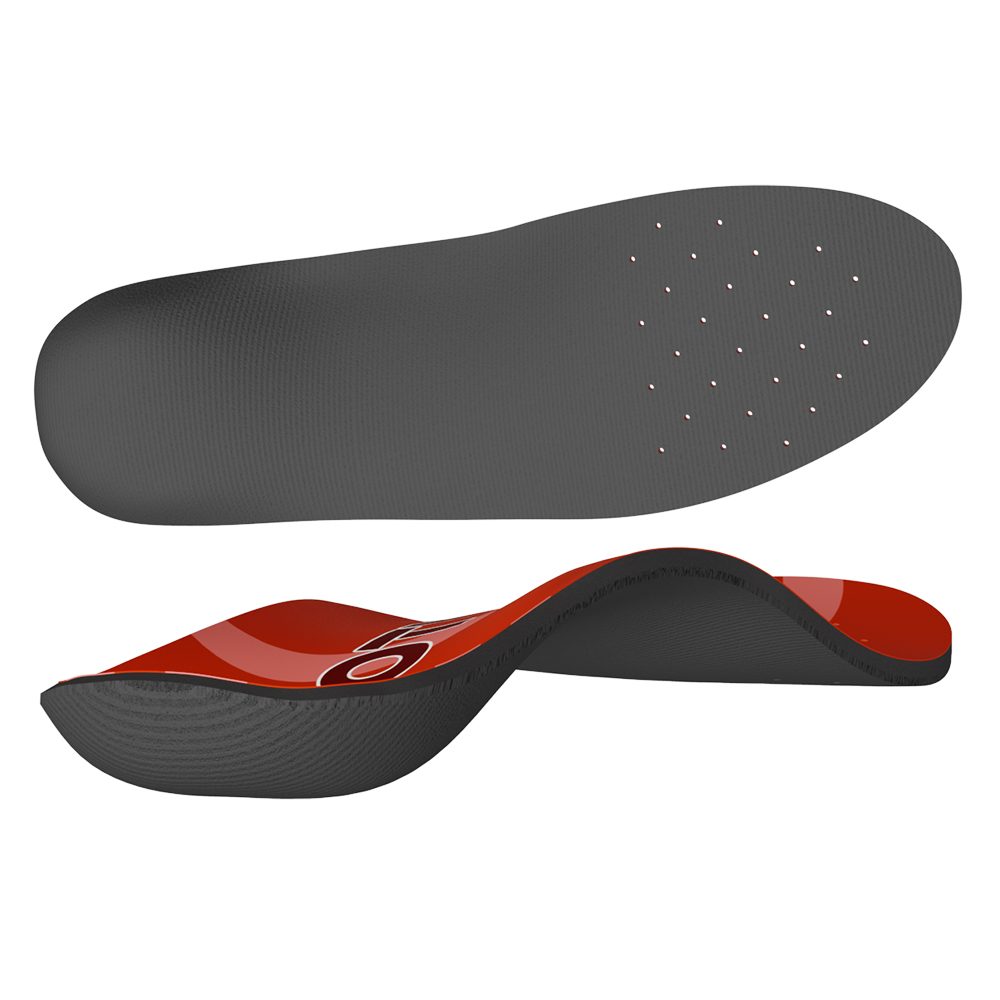
The other half of the day: the belay stance
Ask a non-climber what a climbing session looks like and they will picture movement. Ask the climber and a surprising fraction of the answer is stillness. In roped climbing, the partner on the ground — the belayer — stands in one spot for long stretches, feeding rope, watching, and holding position. On a busy gym evening this can add up to more time on the floor than the time spent climbing. The surface is usually a hard, smooth gym floor. The harness adds nothing to the feet, but the posture does: weight back, feet planted, attention up.
Then there are the falls. When the leader falls, the rope comes tight and the belayer’s legs absorb the catch, sometimes a small hop, sometimes a genuine swing upward. The load arrives suddenly, vertically, through feet that were resting after minutes of stillness. Repeated over an evening, this is a pattern of long static plateaus punctuated by sharp impacts — and neither half of that pattern resembles ordinary walking, which is what most footwear and most generic footbeds are tuned around.
The standing half has its own familiar signature by now for anyone who works with fixed-station workers: load parked on the heels and the forefoot, calves that feel full and heavy by the end of the evening, weight shifting slowly between the legs as the body looks for relief that the position never grants. The gym climber finishing a session is, in foot terms, partway to a shop assistant who spent the shift behind one counter, except that the shop assistant never absorbed a fall.
This is why the complaint timeline matters so much. A client who reports that the ache builds while belaying, or arrives the morning after a long session of catching falls, is describing the standing profile, not the shoe. Establishing this does not require equipment — it requires the client to notice when the discomfort starts, which most of them can do once asked directly, because climbers are unusually observant about their own bodies.
Landings, approaches and the walk back down
Bouldering, the unroped variant, removes the belay stance and replaces it with something else: landings. Every attempt ends with the climber dropping or falling onto padded mats, from a height that varies with the move, absorbing the impact through legs and feet that are often already fatigued from the attempt itself. A serious bouldering session can contain dozens of these. The load profile is repeated vertical impacts with stopping, not the rolling rhythm of running, and the padding underneath changes the feel without changing the demand on the foot’s own structures to decelerate the body each time.
Outdoor climbing adds the approach, and the approach is where the everyday footwear finally meets real terrain. Rough paths, scree, wet grass, and — the part clients consistently underestimate — the return. Descending is harder work for the forefoot than climbing up is: every step brakes, the toes grip inside the shoe, and the load concentrates under the front of the foot for the whole way down. A climber who drove two hours to a crag, walked in, climbed for four hours, and walked out has done three distinct jobs in one day, in at least two different pairs of shoes.
For the professional, the useful action here is to make the client recount a representative day as a sequence of containers and surfaces, out loud, in order. Car and drive. Approach in. Sessions on the wall. Rests and belays. Approach out. The sequence usually takes two minutes to narrate and immediately shows where the hours actually went. Clients are routinely surprised by the tally — most believe they spend far more time climbing than the arithmetic supports, and the difference is precisely the standing and walking load that a build may need to serve better than the wall does.
Keep that sequence in the notes. It becomes the reference at follow-up: if the complaint moved from one container to another after intervention, the sequence tells you where to look, and if it stayed put, it tells you the intervention never reached the right container in the first place.
Where the build actually goes
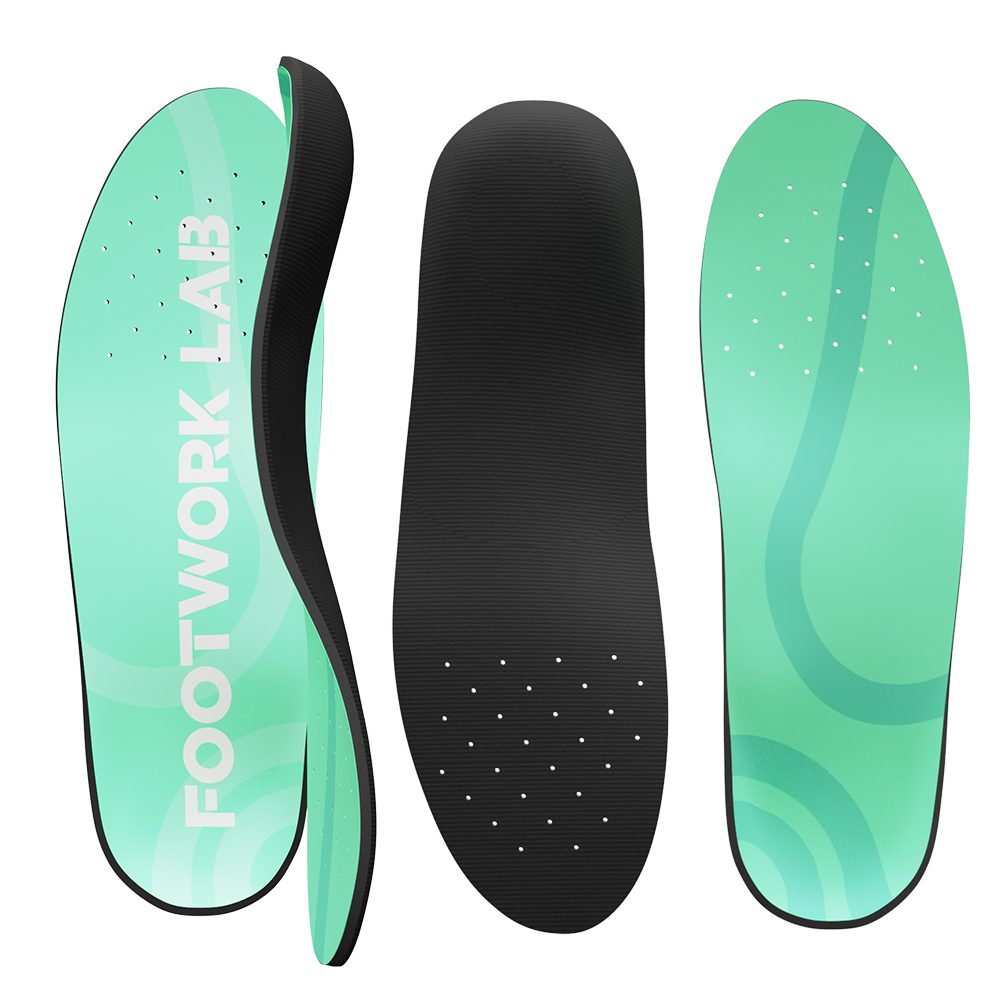
Given the shoe situation, the practical question writes itself: if the performance shoe has no room and should not be altered, where does a pair of custom orthotic insoles go for a climber? In the great majority of cases, into the everyday shoe or the approach shoe — the containers that carry the bracket hours. This is not a compromise forced by circumstances; it is a rational reading of where the load lives. The wall time belongs to the shoe, and the shoe’s designers were managing a different problem than comfort. The hours around the wall are where a build can actually work, and where the client will actually feel it.
The follow-on rule that keeps this honest: build for the container in which the complaint lives. If the client’s story is heavy heels and calves after long belay stints, the everyday shoe they stand around in is the target. If the story is the walk out from the crag, the approach shoe is the target. If the client insists the climbing shoe itself is the problem, the professional conversation is about session structure, shoe rotation, and fit — not about adding a layer into a shoe that has none to give.
One further practical point deserves its own sentence: the build must be assessed inside the shoe it will live in, not just on the foot in isolation. An everyday trainer and an approach shoe differ in rigidity, insole depth and interior shape, and the same pair can behave differently across them. If the client’s week includes both gym evenings and outdoor weekends, decide up front whether one build serves both containers or whether the containers are different enough to justify separate advice. Making that decision at the fitting, in the room, with the shoes on the bench, prevents the most common disappointment in this population — a pair that feels right in the clinic and wrong on the path.
Questions to ask a climber before you build anything
A short structured intake separates the shoe story from the standing story faster than any single measurement. Four areas cover it, and all four can be handled in the time it takes the client to untie their trainers.
First, the session split. Ask the client to estimate last week’s hours in three buckets: on the wall, belaying or resting, and walking or approaching. Most climbers answer with a pause and then a number that surprises them. The ratio decides where the professional attention goes, and it is the single most predictive question in the intake.
Second, the shoe inventory. All pairs on the bench, as described earlier, plus how old each pair is and how many sessions a week each one carries. A performance shoe near the end of its life changes shape and fit, and it changes the story too.
Third, the geography of the complaint. Toes and forefoot, in the shoe, during climbing — one story. Heels and calves, after the session, while standing — another. Arch cramping, timing unclear — the ambiguous middle that deserves a proper assessment before anyone reaches conclusions. Ask the client to place their complaint in one of those three boxes; most can, immediately, and the ones who cannot are telling you something important about the case.
Fourth, the calendar. Sessions per week, indoor or outdoor, back-to-back days or spaced. This decides the follow-up cadence as much as anything measured. Write all four answers into the record — a climber case that comes back for review without the session split and the shoe inventory documented has to start the conversation over, and clients notice when it does.
Following up once the pair is on the path
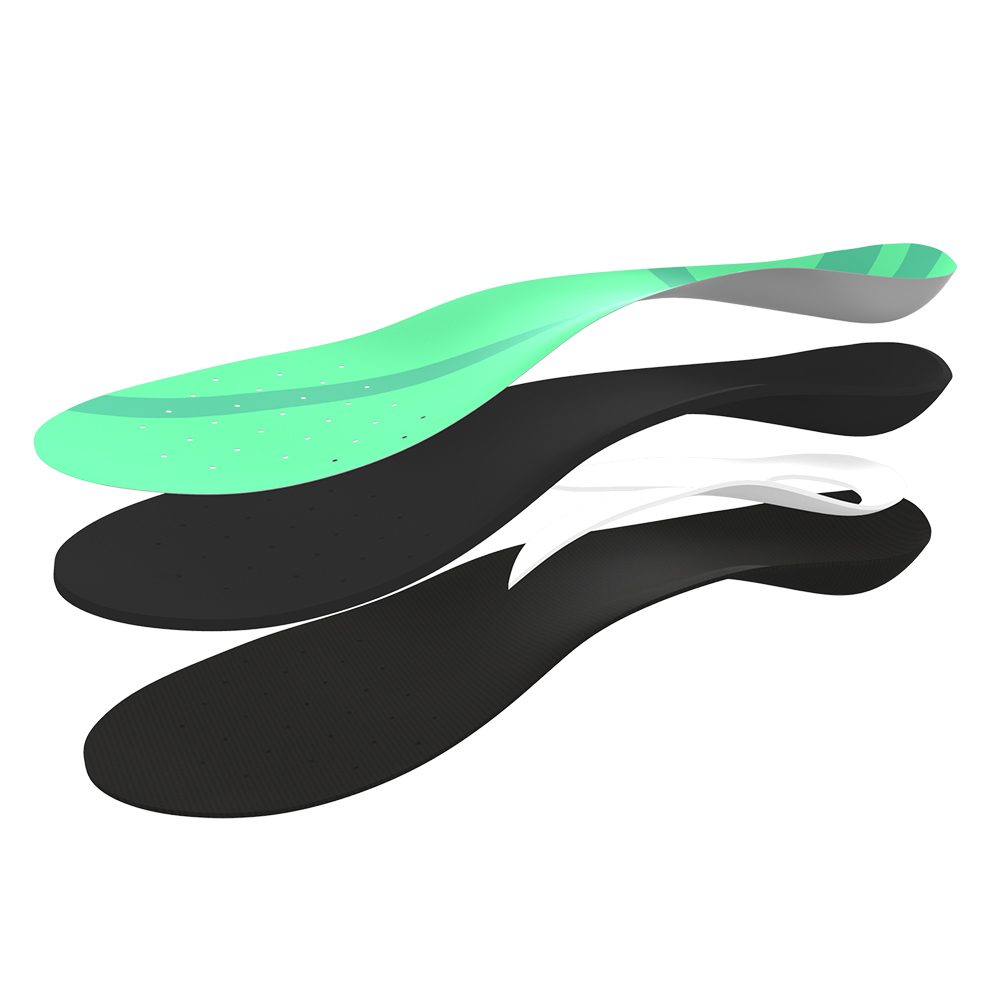
Set the follow-up before the client leaves, roughly a month out and after a dozen or so sessions, and use the interval deliberately. New load distribution takes an adjustment period to settle; advising the client to build up session by session, rather than jumping into the longest day of their calendar in the first week, prevents the classic failure where one punishing weekend sours the whole plan and the pair ends up in a drawer.
At the review, read the wear surface on the build first. Where the material has taken its load is the physical record of where the hours went: wear concentrated under the heel and forefoot says the belay and bracket hours dominated, exactly as the intake predicted; wear elsewhere says the sequence was different from the story, which is itself a finding worth discussing. Pair the wear reading with a fresh run of the intake questions — the session split, the geography of the complaint — and compare against the notes from the first visit.
What the review should not turn into is a verdict on the client’s body. We manufacture measurement systems and builds, and we do not interpret records or promise outcomes; the interpretation belongs to the qualified professional who can see the whole case. That boundary is worth stating to the client too, because climbers — like most dedicated athletes — tend to want a single answer, and the honest answer in this sport is usually a management question about containers and hours rather than a structural one.
If the review shows the complaint has genuinely migrated — from the standing story to the shoe story, or the reverse — that is a good outcome to work with, because it means the first layer of the case was handled and the next layer is now visible. It raises the question every climbing professional eventually faces, which we will leave at the end of this piece.
Frequently asked questions
Do climbers put insoles inside their climbing shoes?
Almost never, and usually they should not. Performance climbing shoes are fitted tight by design and have no spare interior room, so adding a layer changes the fit the climber depends on for performance. In this population a build normally goes into the everyday or approach shoe — the containers that carry the standing, belaying and walking hours around the session.
Is the foot ache from the climbing shoes or from standing?
Both patterns exist and they have different signatures. Toe and forefoot soreness felt inside the shoe during climbing tracks the shoe’s job. Heavy heels and calves that build while belaying or resting, and that arrive after the session, track the standing profile. Asking the client when the discomfort starts, and in which shoe, usually separates the two faster than any equipment.
Can you assess a climber barefoot and build from that alone?
A barefoot record is the standard baseline and worth having, but it captures the foot, not the sport. The shoes, the session split and the surfaces are part of the case, so the assessment is strongest when the measurement is paired with the footwear inventory and the sequence of a representative day, taken in the client’s own words.
Should climbing shoes be brought to the fitting appointment?
Yes — all of them, including the everyday pair and any approach shoes. Lining the containers up on the bench lets the client point at where the complaint lives, lets the professional check interior depth and rigidity for any build, and usually organises the conversation faster than open questioning.
How is bouldering impact different from running impact?
Bouldering landings are vertical decelerations with stopping, repeated dozens of times on padded mats, often on legs already fatigued from the attempt. Running is a rolling rhythm with load passing through the foot stride by stride. The two patterns stress the foot differently, which is why footwear and builds tuned for distance running are not automatically right for the wall.
How long before a new pair feels normal for a climber?
Most people need an adjustment period during which load sits differently under the foot, and it is sensible to build up session by session rather than starting with the longest day of the calendar. By roughly a month of regular sessions the adjustment should be over, which is why the follow-up review belongs in the diary at the fitting itself.
When should a build for a climber be reviewed or rebuilt?
At the review, read the wear surface first: where the material took its load is the physical record of where the hours went. Pair that with a fresh run of the intake questions — session split and complaint geography — against the notes from the first visit. If the complaint has moved from one container to another, the case is progressing and the next layer can be addressed.
What we would do next
If a climber lands in your schedule next week, start with the four-question intake before anything else: session split, shoe inventory, complaint geography, calendar. It costs a few minutes, it can be written into the record verbatim, and it will save you from building for the wrong container — the most common and most avoidable mistake in this population. For the broader pattern behind repeated vertical impact in sport, our earlier piece on skateboarders and grip-tape impact covers a load profile that rhymes with bouldering more closely than most people expect.
We manufacture custom orthotic insoles and the assessment systems used alongside them, and where a trade or sport produces a distinctive load pattern we build a category around it — see the insole categories for how we sort those patterns. What we do not do is interpret records or promise structural outcomes; that judgement stays with the professional in the room.
And the question we promised: when a client’s sport demands a shoe that no added layer can live inside — climbing, cycling, some dance — where do you draw the line between modifying the container you can modify and leaving the performance shoe alone? We have watched experienced professionals land on different answers, and the reasoning behind each is worth hearing.
This article is intended for professional and educational reference. It is not medical advice. Foot assessment equipment produces measurements and images; clinical interpretation and any decision about care remain the responsibility of a qualified professional. Certification scope is limited to the documentation we hold: European Union certification and ISO quality system certification.