
A coach fills in an intake form for a new athlete and stops halfway: the foot section is easy, but the questions she really wants answered sit above the ankle — one shoulder riding lower, a knee that seems to lock back when the athlete stands still. The clinic across town has the mirror problem: the therapist has plantar pressure numbers on one screen and a posture note in a paper file, and nothing that puts the two in the same record. This is the gap buyers are reaching for when they type “biomechanical assessment tool” into a search bar. This guide is for rehabilitation hospitals, sports training institutions and podiatry clinics weighing whether one device can hold foot data, lower-limb alignment and whole-body posture in a single session — and what that changes about how the record is written and read.
What a biomechanical assessment tool is being asked to cover
The phrase gets typed by people with different rooms. A podiatrist usually starts at the plantar surface: arch type, pressure distribution, how load moves across the foot. A physiotherapist in a rehabilitation hospital starts higher, at the knee and pelvis. A coach at a training institution starts somewhere in between — she wants the foot data because it feeds shoe and insole decisions, and she wants the posture picture because it feeds coaching conversations with parents and athletes. Until recently those were three appointments on three days with three different forms, and the connection between them lived in one person’s memory.
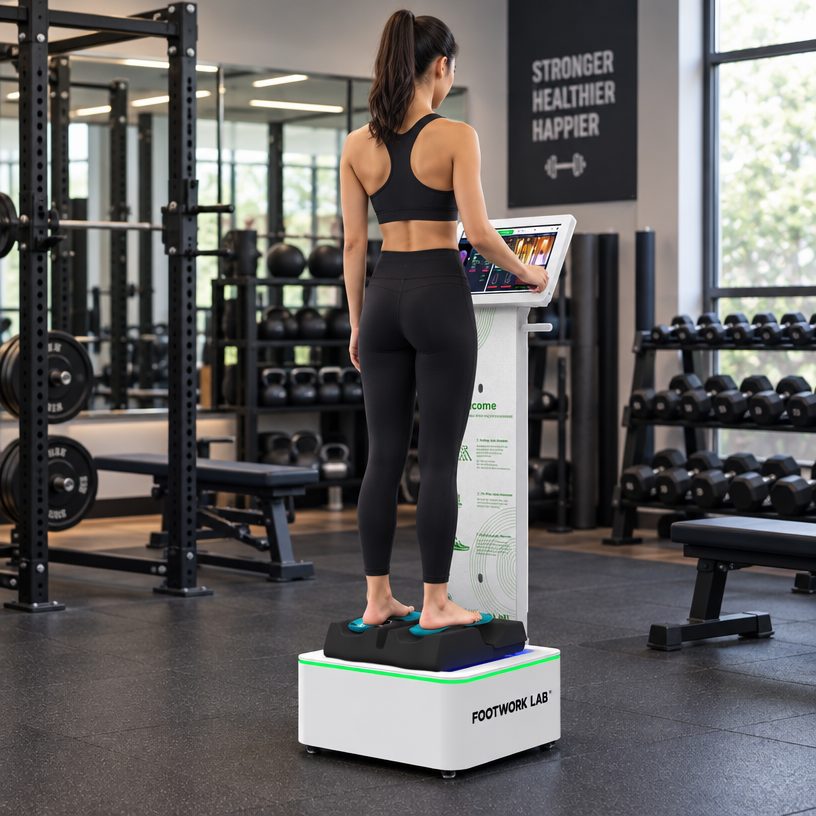
The X5 manual answers that request directly. It names the system a Foot & Posture Detection Insoles Customization System and describes it as integrating foot data detection, lower-limb biomechanical alignment detection, whole-body posture detection, analysis and evaluation, and insole customization. In practice that means the hardware carries three capture zones: a plantar collection area under the feet, a lower-limb data acquisition camera, and a body posture data collection camera, all feeding a touch screen display that runs the session. The machine vision layer behind it is BodyftAi, and the report comes back through AI-assisted report generation — a phrase we use deliberately, because the software assembles measurements and images for a professional to read rather than issuing conclusions of its own.
The session itself is short enough to fit inside a normal appointment slot, and that shapes how the room uses it. The person being captured takes off shoes, steps onto the plantar collection area for the standing records, then turns for the side-view posture capture and faces the camera for the front view. There is no walking pass to repeat, no wires to attach, and the operator follows the on-screen prompts rather than a memorised sequence. In a rehabilitation hospital that means the assessment fits between two therapy blocks; in a training institution it means an entire squad can be captured across one afternoon, each athlete filed under their own name for the season.
What makes this a biomechanical assessment tool rather than a pressure plate with extras is exactly that span. The manual lists the working scenarios as sports training institutions, rehabilitation hospitals, sports venues, shoe stores, podiatry practices and gyms — six rooms that ask overlapping but not identical questions. The same session structure serves all of them, which is the quiet argument of the product: the foot, the lower limb and the posture belong in one record because the professional reading it thinks across all three anyway.
One session, three capture zones
A session on the X5 moves through the zones in sequence. The plantar collection area records foot data — arch type, foot dimensions and pressure distribution under static loading. The lower-limb camera records biomechanical alignment from the knee down. The posture camera then captures the standing body from the side and the front, which is where the posture items come from. The touch screen walks the operator through each step with on-screen prompts, which matters in a busy room where the person running the session is not the person who bought the machine.
The matching list tells you what the room needs beyond the cabinet itself: a floor mat that fixes the standing position, a proofreading board, a heating box, a shaping pillow set that covers adults, children and auxiliary accessories, a WiFi module for report delivery, and customizable magnetic stickers. None of it is dramatic, but each item earns its place. The mat and the stickers are what make a second session comparable to a first; the shaping pillow set and heating box are what carry the on-site customization module, where a biomechanical insole is formed at the end of the assessment instead of being ordered from a catalogue afterward.
Posture items are angle records, not structural conclusions
The posture screen is the part of the X5 that draws the most questions, so it is worth describing precisely what it does. The software marks the posture items as: neck tilt, shoulder droop, pelvic tilt with anterior and posterior position, knee hyperextension, and X-shaped or O-shaped legs. For each item the screen prints an angle value beside the capture image — a number that describes where the person stood during that session. That is all the number does, and the design of the report keeps it that way.
At a Canton Fair booth last spring, a visitor who runs a youth training institution stood through a full demo and then asked the question we now expect: does the system tell you the athlete’s legs are structurally wrong? The answer we gave him is the one the manual supports. The system records angles. It does not classify a skeleton, it does not name a condition, and it does not tell a coach that anything needs correcting. A knee hyperextension reading is a statement about one standing capture under one set of instructions; the same athlete captured after a heavy training day can read differently, and neither record is a verdict. What the angle record does is give the professional a fixed, comparable observation to carry into their own judgement — and, in a training setting, a concrete way to show an athlete where they stood this month versus last.
This boundary is not hedging for its own sake. A posture angle that drifts out of its usual range is often the reason a client books a session in the first place, and the most useful thing the record can do is describe the drift accurately rather than decorate it with a conclusion the software is not qualified to make. The report deliberately stops there. The professional decides what the angles mean for the person in front of the camera.
Where the same record serves two very different rooms
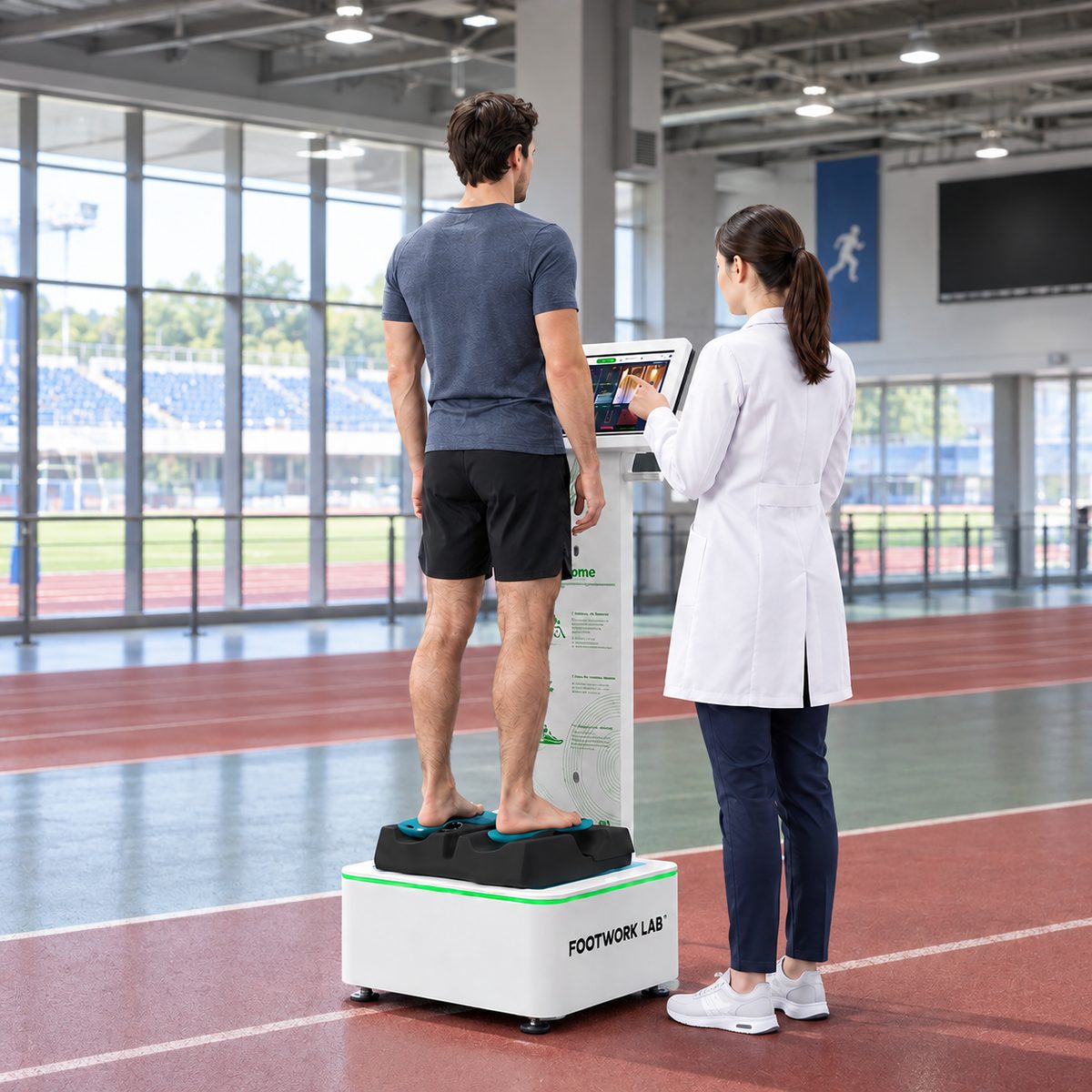
In a rehabilitation hospital, the X5 session slots into an existing intake. The therapist already has a case history; what the record adds is a set of foot, alignment and posture measurements captured the same way every time, stored under the same user, so that a follow-up visit lands beside the baseline without rebuilding anything. The plantar picture, the lower-limb alignment image and the posture angles sit in one report, which shortens the conversation between departments — the foot numbers and the posture numbers no longer need to be reconciled from two sources.
In a sports training institution the same record works differently. The institution is not treating anyone; it is tracking athletes across a season and opening conversations. Here the posture angles do their best work as a trend line: a baseline capture at intake, a repeat at mid-season, and a screen the coach can show a parent instead of describing from memory. And because the on-site customization module sits at the end of the same session, an insole order starts from the athlete’s own foot data rather than from a shelf guess — the shaping pillow set forms the biomechanical insole right there, sized from the record the machine just produced.
Shoe stores and gyms use the record a third way: as the opening move of a conversation. A fitter who can put a plantar picture, an alignment image and a posture summary on the screen in front of a customer is no longer arguing about cushioning preferences — the discussion starts from the customer’s own capture. The store does not interpret the angles clinically; it uses the record to justify a shoe recommendation or an insole order, and the on-site customization module turns that order into a product formed before the customer leaves.
Our engineers see the difference the capture routine makes on support calls. One training institution had compared two months of posture records that refused to line up, and the cause surfaced on a WhatsApp group call in minutes: the first operator had the athlete stand facing one way on the bare floor, the second used the mat and let the athlete self-position. Nothing was wrong with the hardware. The engineers helped them fix a written routine — mat down, stickers marking the foot line, same instruction wording — and the next set of records finally read against each other. That is a recurring theme with this category of equipment: the record is only as comparable as the ritual around it.
Frequently asked questions
What exactly does the X5 record in one session?
Per the manual, one session covers plantar data detection, lower-limb biomechanical alignment detection, ankle data detection and whole-body posture detection, with an on-site customization module for biomechanical insoles at the end. The posture items are neck tilt, shoulder droop, pelvic tilt (anterior and posterior), knee hyperextension, and X-shaped or O-shaped legs, each printed as an angle value beside the capture image.
Are the posture angles a structural conclusion about the body?
No. The software records angles from a single standing capture under defined conditions. It does not classify structure, name a condition or write a correction plan. The angle values are measurements for a qualified professional — coach, therapist or clinician — to read and interpret for the specific person.
Can a training institution run the X5 without clinical staff?
The manual lists sports training institutions, rehabilitation hospitals, sports venues, shoe stores, podiatry practices and gyms as the intended scenarios, so non-clinical rooms are squarely within scope. The touch screen guides the operator through each capture step. What the institution must respect is the boundary of the record: angles and measurements are documented for professionals and parents to discuss, not treated as clinical findings.
Does the X5 make the insoles on site as well?
Yes — on-site customization of biomechanical insoles is a manual-listed module. The session data feeds the customization, and the shaping pillow set (with sizes for adults, children and auxiliary accessories) plus the heating box handle the forming at the location. This keeps assessment and product in one appointment instead of two.
What is the minimum order and how is the X5 supported after delivery?
The minimum order for equipment is one unit. Every unit is tested for seven days before dispatch and carries a twelve-month warranty against non-human damage with free parts. After delivery, support runs through a dedicated WhatsApp group with our engineers, remote assistance where a screen can be shared, and over-the-air updates for connected units.
Can two X5 records be compared across visits?
They can, and that is the point of storing sessions under a named user — the follow-up report lands in the same layout as the baseline. Comparison only holds when capture conditions match, so we recommend a written routine: floor mat in place, magnetic stickers marking the standing line, the same operator instructions each time.
What we would do next
If you are equipping a clinic or training room, write down the three zones you intend to capture — foot, lower limb, posture — and who will run each session. Send that with your floor dimensions and we will confirm which configuration fits and where the mat, camera clearances and heating box need to sit. The X5 foot and posture detection system page carries the hardware overview, and our FAQ page lists order, warranty and delivery terms in full.
If you already capture posture or foot data separately and want to see whether one record would hold both, ask us for a demo session with your own operator standing in — the fastest way to judge the workflow is to run one real intake through it. For a deeper read on how a record differs from a conclusion, see how a biomechanical analysis ends in a report, not a number, and why posture capture starts at the feet.
This article is intended for professional and educational reference. It is not medical advice. Foot assessment equipment produces measurements and images; clinical interpretation and any decision about care remain the responsibility of a qualified professional. Certification scope is limited to the documentation we hold: European Union certification and ISO quality system certification.