
A distributor we first met at the Dubai show keeps our F2 on the same catalogue page as examination chairs and gait belts, and he made a point at dinner that has stayed with us: the line card can carry the product, but it cannot carry the conversation. When one of his clinic customers asks what the machine records, what happens when a part fails in the second year, whether the reports can carry his own logo, and whether another reseller will appear across town next quarter, the catalogue has nothing to say. Those answers have to come from the manufacturer, and the distributor’s margin depends on having them ready. This article is written from that seat. It sets out what a catalogue entry for a foot pressure scanner has to explain before a clinic will sign: what the three record types each answer, how the software and reports can be branded, how spare parts and training travel, what the repair and warranty terms say in plain wording, and where we stand on territory — including the promises we deliberately do not make.
What the catalogue line has to answer for
A distributor’s catalogue is a document of compression. Each line item gets a name, a photograph, a category and perhaps two sentences, and every one of those slots has to earn its place on the page. A foot pressure scanner sits awkwardly in that format, because what a clinic is actually buying is not the plate on the photograph — it is the session the plate makes possible, the report the session ends with, and the service that stands behind both for years after the invoice. Those three things do not compress into two sentences.
So the real explaining happens in meetings, and the distributor is usually the one in the room. A clinic owner will ask what the machine records, in what state the person is measured, who reads the numbers, what the customer walks out with, and who answers the phone when something stops working. In our experience the technical questions rarely sink an order; the unsupported ones do. A catalogue that cannot hand over the answers forces the distributor to guess, and a guessed answer delivered in front of a clinic is expensive.
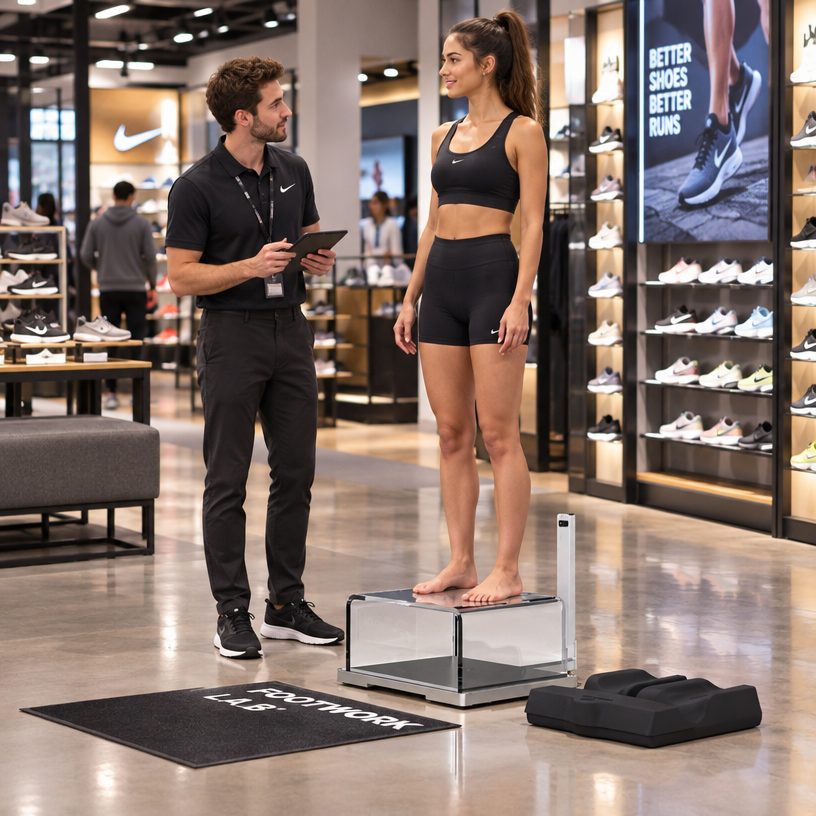
The F2 itself is a plantar pressure detection system rather than a shape scanner. It records static, dynamic and balance pressure through a Sinmec Fabric sensing layer, captures the alignment of the leg and body through dedicated cameras, and assembles the session into an AI-generated report covering items such as foot axis angle, contact and flat phase shares, peak and average pressure, contact area and the centre-of-pressure path. The hardware breaks down into a main unit, a pressure acquisition board and a carry case, which is the whole inventory a distributor needs to picture.
That description is the floor of the conversation, not the ceiling. The rest of this article walks through the five questions that come up most often in distributor meetings — the three record types, the software and report branding, spare parts and training, repair and warranty terms, and territory — with the wording we actually use when we sit on the distributor’s side of the table. The F2 system page carries the full functional description for cross-reference.
Static, dynamic and balance: three records, three questions
The three record types exist because a clinic asks three different questions of a foot, and no single measurement answers all of them. A catalogue that lists static, dynamic and balance as three bullet points, without the questions behind them, leaves the distributor to improvise — and improvised expectations are the ones that come back as complaints. The wording below is what we use ourselves, and a distributor is welcome to carry it verbatim into a clinic meeting.
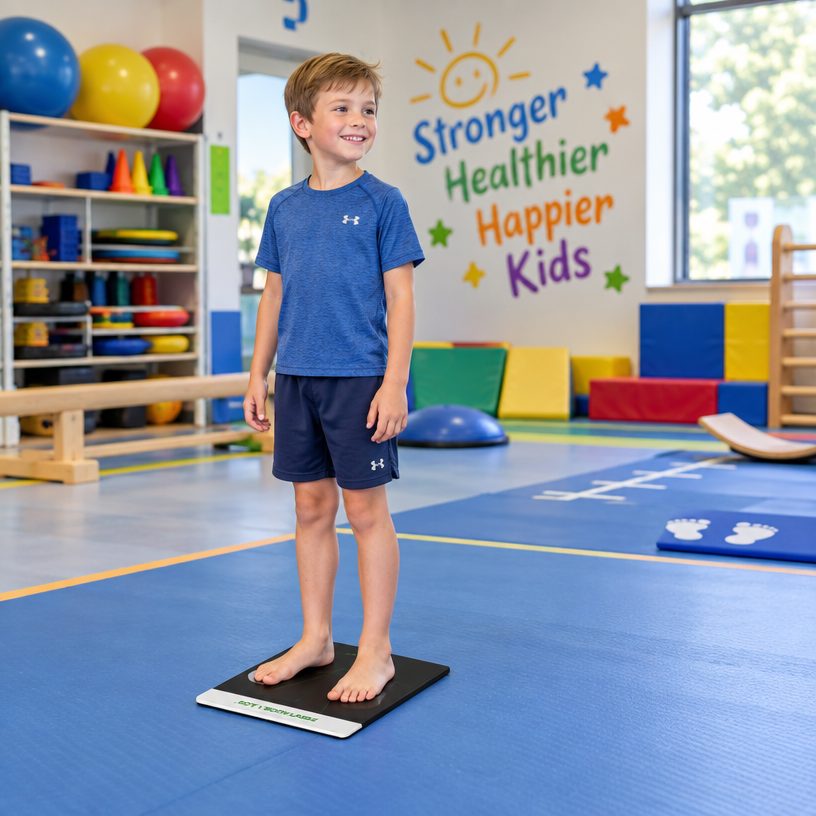
Static answers where load rests. The person stands on the plate and the record shows the distribution under each foot at rest: the shape of the contact area, how the load is shared between heel, midfoot and forefoot, and how the two sides compare with each other. It is the simplest record to explain to a customer because the picture matches the intuition — a standing foot, seen from underneath, with nothing moving to interpret.
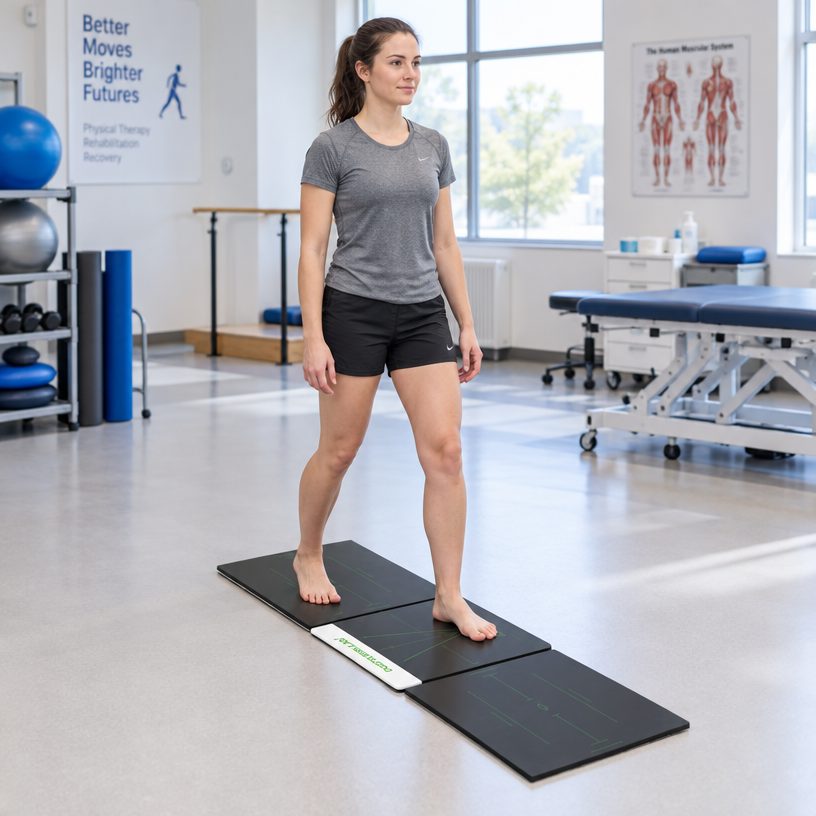
Dynamic answers how load moves. The person walks across the plate and the record captures the sequence: which region touches first, how load travels forward, how long the contact and flat phases last, and the path the centre of pressure draws on its way through the step. Our article on dynamic plantar pressure mapping on the F2 covers this record in detail, because it is the one clinics most often build a follow-up programme around.
Balance answers a stability question instead of a load question: what small corrections a person makes to stay upright, and how evenly the two sides participate. In a rehabilitation or training setting this record often matters more than peak pressure, and it is the one that surprises buyers who assumed the machine was only a pressure map. Our piece on dynamic balance measurement walks through what the record contains and where it is used.
A distributor who can say those three sentences — where load rests, how load moves, how a person steadies — has already covered most of what a clinic needs to hear about the records. What remains is who reads them, which is a boundary worth stating before the first demonstration rather than after the first complaint: the machine records quantities, and the interpretation belongs to the qualified professional running the session.
Reports and software: what a partner can put its name on
Branding questions arrive early in every distributor conversation, and they deserve a precise answer rather than a reassuring one. The report is the surface the clinic’s customer actually sees, so it is where partner identity matters most. Report layouts can be customised to a partner’s or a clinic’s format — header, logo, arrangement of the record items — and that customisation is quoted separately from the hardware, as a software service rather than bundled into the machine price.
The machines themselves are open to ODM work: a distributor with its own market positioning can take the F2 platform as an engineering base and build its product identity around it. What we do not offer, and say so plainly, is re-labelling the measurement core as a partner’s proprietary technology — the sensing approach is Sinmec Fabric, the vision capture is BodyftAi, and we think honesty about what is inside the case is worth more in a clinical sale than a mystery box with someone else’s name moulded onto it.
The software side carries its own support rhythm. Units that stay connected receive over-the-air updates, so a report improvement or a language addition reaches the installed base without a service visit. Report language, layout and the set of printed items are the three levers distributors most often ask us to move, and all three sit on the software side of the line between what can change and what cannot.
One boundary worth rehearsing before a clinic meeting: the report records quantities and prints reference bands, but it does not issue a clinical conclusion. A partner who sells the report as an automatic diagnosis will be correcting expectations for the life of the account. A partner who sells it as a record for a qualified professional to interpret keeps the account. Our article on how biomechanical analysis ends in a report is written for exactly that conversation.
Spare parts, training and how the first order is carried
The commercial frame first, because distributors need it verbatim: minimum order for equipment is one unit, so a channel partner can start with a demonstration and stock unit rather than a container. Every unit runs a seven-day test on our own line before dispatch, and the warranty runs twelve months against non-human damage with free parts. Those three facts answer a large share of first-meeting questions on their own, and we would rather they were in the catalogue than in a follow-up email.
Training is the part buyers underestimate and the part we push hardest. A pressure system produces different records in different hands: standing instructions, walking speed, footwear condition and operator habit all change the picture. We train the distributor’s team first — installation, the capture routine, and report reading at the level a counter conversation needs — and the distributor trains the clinic. Where a session can be run remotely, an engineer joins the clinic’s first working days through the dedicated support group rather than sending a manual and hoping.
Spare parts follow the same logic as the warranty. A fault is first narrowed down in the support group, often with a remote session in which the clinic’s screen is shared and the engineer watches the system run. If a part is at fault inside the warranty window, the replacement ships free; outside the window, the part is quoted and shipped through the same channel. The design intention is that diagnosis happens in days and the wait is for shipping, not for an appointment.
Consumables and adjacent stock matter for the channel as well. Insole minimum order is two hundred pairs, mixed across models and sizes, and sample pairs ship within three days of confirmation — which lets a distributor attach a consumable programme to the machine account without tying up capital. Express freight runs six to seven working days, air freight ten to twelve days and sea freight thirty to thirty-five, and we put those ranges in writing rather than letting a partner promise shorter ones to a clinic.
Returns, repairs and the warranty clause in plain wording
Warranty language is where distributor trust is won or lost, so we prefer the plain version. The machine carries a twelve-month warranty. If a component fails inside that window and the failure is not human damage, the replacement part is free. The diagnosis runs through the dedicated support group, with engineers available directly and remote assistance wherever a screen can be shared. That is the whole clause, and we would rather a distributor read it once calmly than discover its shape during a dispute.
Transit is a separate question with a separate answer. Equipment travels by express, air or sea depending on the market, and a unit that arrives damaged is a freight claim before it is a warranty case. We ask partners to film the unboxing — it sounds bureaucratic until the first dented crate, when the recording is the difference between a same-week replacement and a months-long argument. Every unit we ship has already survived a seven-day test, so transit is the likeliest remaining point of failure and we treat it that way.
Out-of-warranty repairs stay inside the same channel: the same group, the same engineers, parts quoted and shipped through the route the account already uses. What we do not do is promise on-site engineer visits in every market — the honest position is remote-first support, with a parts pipeline sized so that a repair is limited by courier speed rather than by a diary. A distributor who prefers to offer an on-site tier to their clinics can build it locally; several do, and we support the arrangement.
One more clause worth stating in the catalogue meeting: returns of working equipment are not part of the model, because machines are built to order and tested for a week before shipping. What replaces the comfort of a returns window is the pre-sales work — floor plans, capture-space checks, the territory questions in the next section — and we invest our effort there instead, because a correctly specified order rarely needs to come back.
Territory: what we will and will not promise a partner
Regional exclusivity is the request we decline most often, and the reasoning is worth a distributor hearing in full. A young channel cannot yet show what it will do with a market, and an exclusivity promise made at the first meeting is a bet on enthusiasm rather than on performance. We do not promise exclusive territories — not in the catalogue, not in the contract, and not verbally at a show when the question arrives after the second coffee.
What we do instead is manage the channel honestly. If a second enquiry arrives from the same market, we tell the existing partner. Priority on leads, on show inventory and on pre-sales support goes to the partner who is actively working the market, and that priority is earned continuously rather than granted once. Partners who prefer certainty can look at the profile of our longest-standing distributors: none of them hold an exclusive stamp, and all of them hold the active account.
For a clinic-side conversation, the territory question usually matters less than the partner assumes. What the clinic wants is a working system, a report in its own format, and a person who answers. Those are delivered by whichever partner is in the room, backed by the factory’s support group. The partner page sets out how we work with distributors, and we would rather a prospect read it before the first meeting than after it.
The wider point for a catalogue entry is that saying what will not be promised is itself a selling act. A line card that carries the exclusivity disclaimer in the same breath as the warranty terms reads as honesty rather than hedging, and in clinical channels honesty is the differentiator that survives a price comparison. We have watched orders move between suppliers over a single sentence someone was unwilling to write down; we would rather write ours down first.
Frequently asked questions
Can a distributor put its own brand on the reports?
Yes. Report layouts can be customised to a partner’s or clinic’s format, including header and logo, and the customisation is quoted separately from the hardware. Machine hardware is open to ODM work. We do not re-label the measurement core as a partner’s proprietary technology — the sensing and vision components inside the case are named as they are.
What does each of the three record types answer?
Static answers where load rests under a standing foot; dynamic answers how load travels through a step, including contact and flat phase shares and the centre-of-pressure path; balance answers how a person corrects to stay upright. Each is a separate record with its own use, and none of them is a clinical conclusion on its own.
What is the minimum order for a first unit?
Equipment minimum order is one unit, so a distributor can start with a demonstration and stock machine rather than a container. Every unit is tested for seven days before dispatch. Insole stock is separate: minimum order is two hundred pairs, mixed across models and sizes, with sample pairs shipping within three days.
How do warranty and repairs work?
The machine warranty runs twelve months against non-human damage, with free replacement parts inside the window. Diagnosis starts in the dedicated support group, often with a remote session, and parts ship through the same channel. Out-of-warranty repairs use the same route with parts quoted. Support is remote-first rather than promising on-site visits in every market.
Does FOOTWORK LAB grant regional exclusivity?
No. We do not promise exclusive territories. Instead we tell an existing partner when another enquiry arrives from the same market, and priority on leads and support goes to whichever partner is actively working that market. The arrangement rewards performance continuously rather than granting a one-time stamp.
How is a clinic’s team trained?
We train the distributor’s team first — installation, the capture routine, and report reading at counter level — and the distributor trains the clinic. Engineers are available directly through the support group, remote sessions are used where a screen can be shared, and connected units receive over-the-air software updates.
Does the report diagnose the patient?
It does not. The report presents recorded quantities — pressure distributions, phase shares, alignment angles — beside population reference bands. Interpretation and any decision about care belong to the qualified professional running the session, and our software stops short of a clinical conclusion deliberately. Partners who sell the report as a record rather than a verdict keep their accounts.
What we would do next
Put the five answers on one page of your catalogue and test them at your next clinic meeting: the three records, the report branding, the warranty clause, the training route and the exclusivity position. If any of the five draws a blank when a clinic asks, send us the question and we will fill in the wording. The F2 system page carries the functional description, and our FAQ page carries the order, warranty and transit terms in full.
If you are building a channel rather than a single order, tell us the markets you cover, the clinics you already call on and the consumable volume you could support, and we will map the machine and insole programme onto it. Where a demonstration unit makes sense we will say so; where a market is not ready, we would rather say that too. The contact page reaches the export team directly, and the useful conversations usually start with a floor plan rather than a quotation.
This article is intended for professional and educational reference. It is not medical advice. Foot assessment equipment produces measurements and images; clinical interpretation and any decision about care remain the responsibility of a qualified professional. Certification scope is limited to the documentation we hold: European Union certification and ISO quality system certification.