
The same worker stood on the same surface on a Monday in March, once before the shift began and once after it ended, and the two pages did not agree. The heel was broader on the evening record. The arch sat lower. The forefoot carried more of the load, and the whole contact area had spread outward at the edges. Nothing had been done to the foot between the two recordings except a full day of standing on a concrete floor in safety boots. Anyone who has tried to answer a question about foot pressure after standing all day has met this pair of pages, and the temptation is to decide which one is wrong. Neither is wrong. They describe the same foot under two different conditions, and the whole discipline of keeping records useful is the discipline of knowing which conditions you are comparing. This article works through what actually changes across a working day, which of those changes belong to the body and which belong to the boot, what has to be held fixed before two records may be placed side by side, and why a single session, however clean, should never be treated as a fixed baseline for anyone who spends their working hours on their feet.
Three recordings, one foot, one working day
Start with the arrangement itself, because it is more common than most buyers expect. A room inside a plant books a worker three times across one shift: at clock-in, somewhere in the middle, and at the end. The operator uses the same equipment, the same stance instructions and the same walking route each time. On the page, the differences arrive anyway. The morning record is usually the narrowest, with a clearly defined heel and the least contact at the midfoot. The midday record begins to widen. The end-of-shift record is the widest of the three, with the forefoot taking a larger share of the load and the edges of the contact area looking softer and less distinct.
None of this is an equipment fault, and it is worth saying plainly because the first reaction of a new operator is to suspect the machine. The machine is recording what is presented to it, and what is presented to it at six in the evening is not what was presented at eight in the morning. A foot is not a fixed object that a session merely photographs. It is a living structure under continuous load, and load changes it within hours, visibly, in ways the record is designed to capture. The system doing its job properly is precisely why the pages disagree.
The practical question is therefore not how to make three recordings agree. They will not, and a room that keeps adjusting its procedure until they do is chasing something that was never achievable. The practical question is what each recording is for. A morning record answers one set of questions, an end-of-shift record answers another, and a room that writes down which one it took has preserved the value of both. A room that does not has two pages and no way to interpret either.
Swelling is the largest single source of the difference
The dominant mechanism behind the morning-to-evening change is fluid. Over a day of upright work, blood and tissue fluid settle downward under gravity and accumulate in the lower leg and foot. The foot that arrives at the surface in the evening is a larger and softer foot than the one that arrived in the morning. The contact area grows, the arch appears lower because the soft tissue beneath it has filled out, and the pressure that was concentrated on a smaller morning footprint is now spread across a broader one. Every one of those effects shows up on the page, and none of them requires a pathology to explain.
This is worth stating to staff and to the people being recorded, because the widening is easily misread. An operator who does not know about the daily cycle looks at an evening contact area, compares it with the morning one, and reports a change in foot type that never happened. The foot did not become flatter between nine and five. It became fuller. The distinction sounds like pedantry until you see what hangs on it: a build recommendation, a size choice for a pair of insoles, a note in a personnel file. Each of those decisions made from a single late-day recording inherits an error that a morning recording would not have carried.
Two consequences follow for anyone running a room. The first is that the time of the recording must be written on the sheet, next to the date, every time. That single habit turns a confusing pair of pages into an interpretable one, because the operator comparing them next season knows immediately which direction the daily cycle runs. The second is that if the room intends to follow the same worker across months, it should fix the hour of the appointment and keep it fixed. A programme of measurements taken always before the shift is a programme. The same programme with appointments scattered across the day is a pile of pages.
Fatigue changes the walking, not only the foot
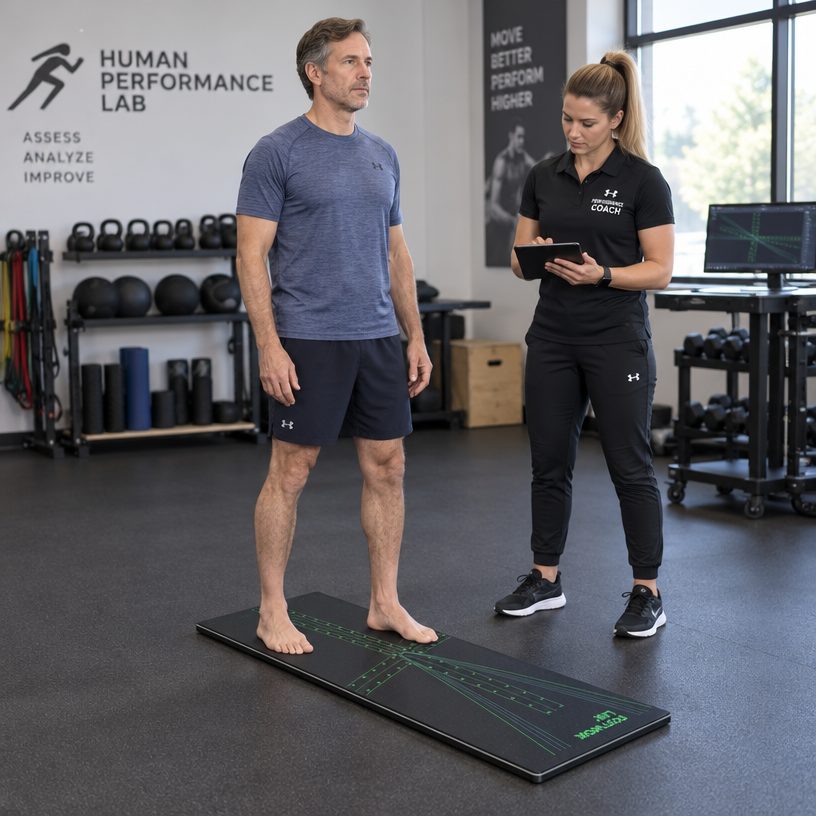
Swelling explains the static differences, but the walking records carry a second source of variation that is easy to overlook: by the end of a working day, people walk differently. The pace drops, steps shorten, and the time each foot spends flat on the ground lengthens. Tired workers also tend to stiffen through the trunk and to let the hip do less of the work, which shows up as a heavier, flatter contact at the sole and a slower travel of load from heel to forefoot. None of this is visible as an error. The page still prints, and the numbers still have names.
This is why an end-of-shift record answers a genuinely different question from a morning one, and both questions are legitimate. A morning record, taken on a rested foot at a natural pace, describes the foot’s ordinary arrangement. An end-of-shift record describes the foot as the job actually leaves it, which for a workplace assessment is often the more relevant description. If the purpose of the session is to understand what a concrete floor and a full shift do to the people who stand on it, the tired walk is not contamination. It is the finding.
The mistake runs in both directions. A room that only ever records fresh feet will describe a workforce that does not exist, the rested version of people who spend their days tired. A room that only ever records end-of-shift feet, and then compares those pages against records from another site taken in the morning, is comparing two different experiments and calling the difference a result. The operator’s defence is the same in both cases: write the conditions down, decide in advance which condition the question needs, and stop treating whichever page disagrees as the faulty one.
The boot and the sock are part of the measurement
A third source of difference has nothing to do with the body at all. What the worker was wearing during the hours before the session changes the foot that arrives on the surface. A heavy safety boot with a stiff sole spreads load differently from a trainer, and a foot that has spent nine hours in a tight, laced boot arrives differently from one that has spent the day in something loose. Thick work socks compress and then release the tissue; the foot that comes out of them is not identical to the one that came out of a thin dress sock. Even the change into bare feet for the recording, if it happens quickly after the boots come off, leaves a temporary imprint on the sole.
The practical rules here are dull and effective. Record the footwear worn that day on the session sheet, in a word or two. Give the foot a few minutes out of the boot before the standing pass, the same few minutes every time, because a fixed recovery interval is what makes two sessions comparable; an arbitrary one is not. And when the comparison that matters is between a worker and their own history, hold the boot constant too. A February record taken in winter boots and a June record taken in light shoes carry one more variable than either page admits, and it is the easiest variable to have removed in advance.
Rooms that assess workforces tend to resist this, on the reasonable grounds that people wear what the job requires. That is fair, and it does not defeat the rule; it just relocates it. If the boot cannot be held constant, then the comparison being made must be one that tolerates the boot as a variable, which in practice means comparing a worker with their own record taken in the same boot at the same hour, and refusing the wider comparisons that the data cannot support. The discipline is not that every variable must be frozen. It is that the room must know which ones were not.
What has to be held fixed before two records may be compared
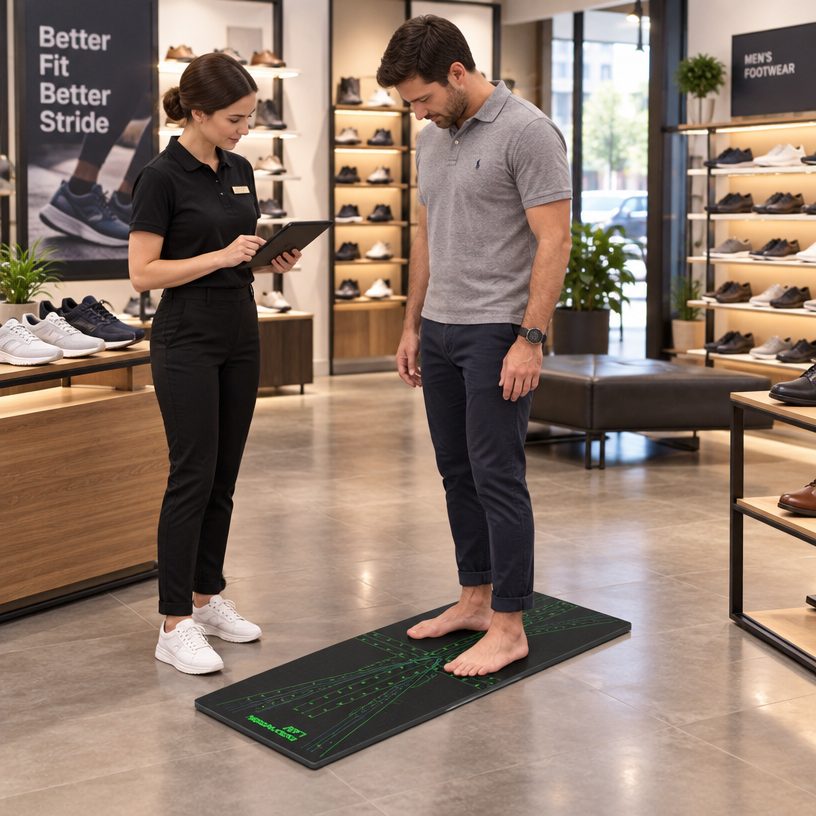
Putting the pieces together, a comparison between two recordings of the same foot is honest when a short list of conditions matches. The hour of day, written on both sheets. The footwear worn before the session, noted on both. The same stance instructions, delivered from the same card, in the same words. The same walking route, with the same run-up before the measurement area, at a natural pace. The same recovery interval between removing shoes and recording. None of these is difficult, and together they cost a few minutes a session. Without them, the two pages are two experiments, and the operator comparing them is doing analysis that the data cannot carry.
There is one more item on the list, and it is the one rooms forget most often: the same operator, or at least an operator trained the same way. Much of what makes a record clean is judgement applied in the room, such as discarding a hurried pass or noticing that the worker steadied themselves on the chair. Those judgements differ between people, and a file assembled by three operators under three interpretations is three files wearing one cover. How staff are trained to run the scan matters here because consistency of procedure is not a personality trait; it is a training outcome, and it can be written down and rehearsed.
A brief word on what the fixed list does not include. It does not include the worker’s weight on the day, which will move and should simply be noted rather than adjusted for; the record describes the person as they arrived. It does not include the season or the workload of the week, which are part of the story rather than noise from it. The aim of holding conditions fixed is not to make the foot look the same. The foot will not look the same, and it should not. The aim is that when it looks different, the room can say why.
When to re-measure, and how to schedule around shifts
A re-measurement is worth booking when something has changed that the current record cannot describe. The obvious trigger is time: a workforce programme that measures annually should measure annually, and a record two years old should not be presented as a current description of anyone. The sharper triggers are changes in the work itself, such as a move to a different floor surface, new footwear issued across a site, or a role change from standing to driving. Each of those alters the load the foot lives under, and the old record describes a job that the worker no longer does.
Shift patterns shape the scheduling, and they deserve a sentence of planning rather than improvisation. For a workforce on rotating shifts, fixing the hour is harder, so fix the relation to the shift instead: always before the shift begins, or always a fixed interval into it, and let the record state which. For a workforce on a single steady shift, fix the clock time and hold it. Where a room wants both a rested and a loaded description of the same worker, book the pair deliberately, morning and end of the same shift, and keep the pair together in the file, because each page explains the other and neither should travel alone.
Between scheduled re-measurements, the session sheet earns its keep. A worker who mentions that something has changed, in comfort, in the job, in the boots, is carrying information the next appointment would otherwise miss, and the operator who writes that remark beside the date has preserved it. How a second record and a re-testing habit are built covers the rhythm in more detail, and the short version is that re-measurement works when it is boring: same hour, same route, same instructions, same card by the desk. Surprise is the enemy of comparability, and the schedule is where surprise is kept out.
A snapshot, not a baseline: how to file the day’s pages
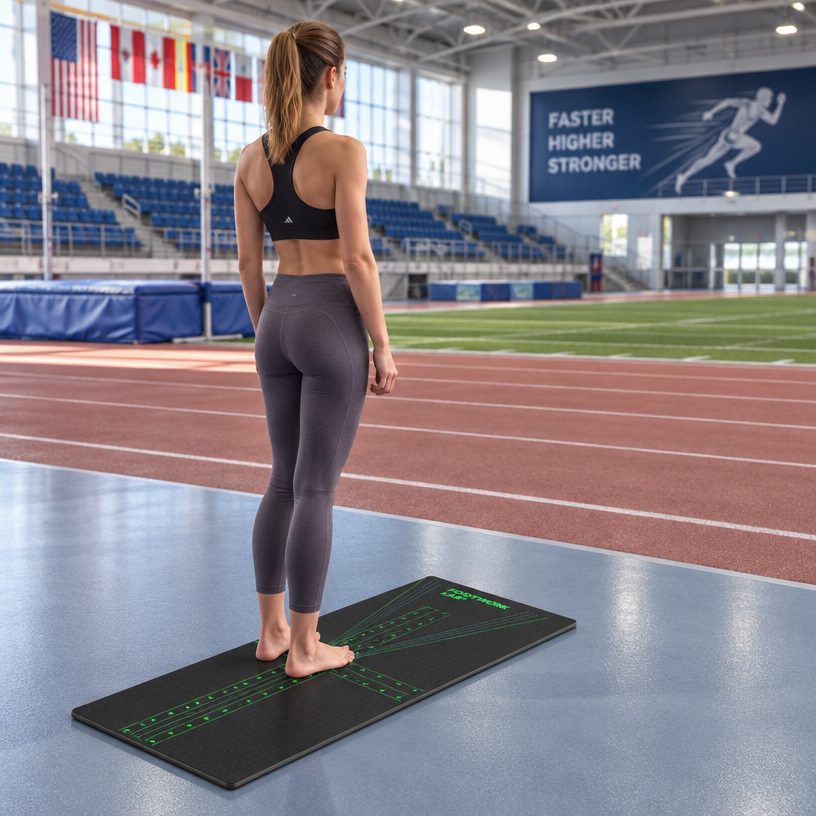
The last habit is one of language, and it costs nothing. A record taken on any single occasion, under any single set of conditions, is a snapshot of a moving foot on a moving day. The word baseline carries a promise the snapshot cannot keep, namely that future pages can be measured against it as against a fixed mark. For someone who sits at a desk, a single clean session is close enough to a baseline for practical work. For someone who spends their working day standing, the honest framing is different: this page describes this foot at this hour, in this boot, on this floor, after this much standing. Everything beyond that framing belongs to comparison, and comparison belongs to the conditions list above.
This framing also changes what the room promises the worker. A page handed over with the conditions written on it invites the right question, which is what this particular description means for the boots, the floor or the build being considered. A page handed over as a standing verdict invites the wrong one, which is what the worker’s foot is going to do for the rest of their career, a question no measurement answers. The operator who says plainly that the record shows a moment, and that the value comes from comparing moments taken the same way, is delivering the more useful document and the shorter conversation.
Filing closes the loop. The page goes into the worker’s folder with the date, the hour, the footwear note and any remark made on the day. When the next session is booked, those four lines are what make the two records a pair instead of two strangers. What a pressure measurement can report, and what it cannot sets out where the reading stops, and the boundary holds for every hour of the working day: the equipment produces measurements and images, and what they mean for a person’s health is a judgement for a qualified professional, made with the conditions in view.
Frequently asked questions
Why do morning and evening records of the same foot differ?
Fluid settles into the foot over a day of upright work, so the evening foot is fuller: a wider contact area, a lower-looking arch, and load spread more broadly. Fatigue also changes the walking itself. Both effects are real and expected, and neither means the equipment has drifted.
Which time of day should a room standardise on?
Whichever matches the question. For describing a foot’s ordinary arrangement, record before the shift. For describing what the job actually leaves the foot with, record at the end of it. Pick one, write the choice into the procedure, and keep it there across visits.
Can a morning record be compared with an evening one?
Only as a deliberate pair, taken to show what a working day does. Kept together and labelled, the two pages are informative. Compared casually, without the hour written down, they produce a false story about the foot having changed type within a day.
Does standing all day change the pressure picture?
Yes, visibly. The contact area widens, the arch presents lower, and the forefoot carries more of the load by the end of a shift on a hard floor. This is why the hour of the recording belongs on the session sheet next to the date, every time.
How often should a shift worker be re-measured?
On a fixed rhythm set by the programme, and sooner when the work changes: a new floor surface, new issued boots, or a different role all alter the load the foot lives under. A record describing a job the worker no longer does has lost its purpose.
Does the boot the worker wore matter to the recording?
It does, both during the day before and in the minutes after it comes off. Note the footwear on the sheet, give the foot a fixed recovery interval out of the boot, and hold the boot constant when comparing a worker with their own history.
Does the session give a diagnosis?
No. It produces measurements and images with names and dates, and what those mean for a person’s health is decided by a qualified professional. The operator’s contribution is a clean record with its conditions written down, not an interpretation of it.
What we would do next
Write the hour and the footwear into the session sheet from the next appointment onwards, and fix the relation to the shift before fixing the calendar. Then rehearse the stance instructions until every operator says them identically, because the conditions list only works when the wording is not one of the variables. The F2-PRO system page sets out the record items and session types in the equipment’s own terms, and the FAQ page carries the operational answers we give most often by message.
This article is intended for professional and educational reference. It is not medical advice. Foot assessment equipment produces measurements and images; clinical interpretation and any decision about care remain the responsibility of a qualified professional. Certification scope is limited to the documentation we hold: European Union certification and ISO quality system certification.