
The customer arrived in an oversized knit jumper and a scarf she never took off, and the posture capture ran anyway. The operator noted the appointment, seated her on the platform edge, lifted the camera view, and took the standing frames in ninety seconds flat. On screen the record looked ordinary: a figure, standing still, front and back. Only when the report was drawn did the trouble show itself. The shoulder line was drawn wide and low, because the jumper’s shoulders were wide and low. The pelvis reference sat somewhere under the hem of a long cardigan, which is to say it was placed where the software guessed. The knee lines followed the fabric of wide trousers rather than the knees inside them. Nobody had written down what she wore, so three months later, when her second capture drew a different set of lines, the folder had nothing to say about why. Questions about posture capture in clothing reach us regularly, and they reduce to one practical worry: the camera can only judge what it can see, and most people do not arrive dressed to be seen. This article works through what loose fabric hides at each judgement line, what hair and accessories do to the frame, where the standing marks belong, when a customer should be asked to change or the visit moved, and how the capture condition belongs on the report next to the date.
What the camera is actually judging
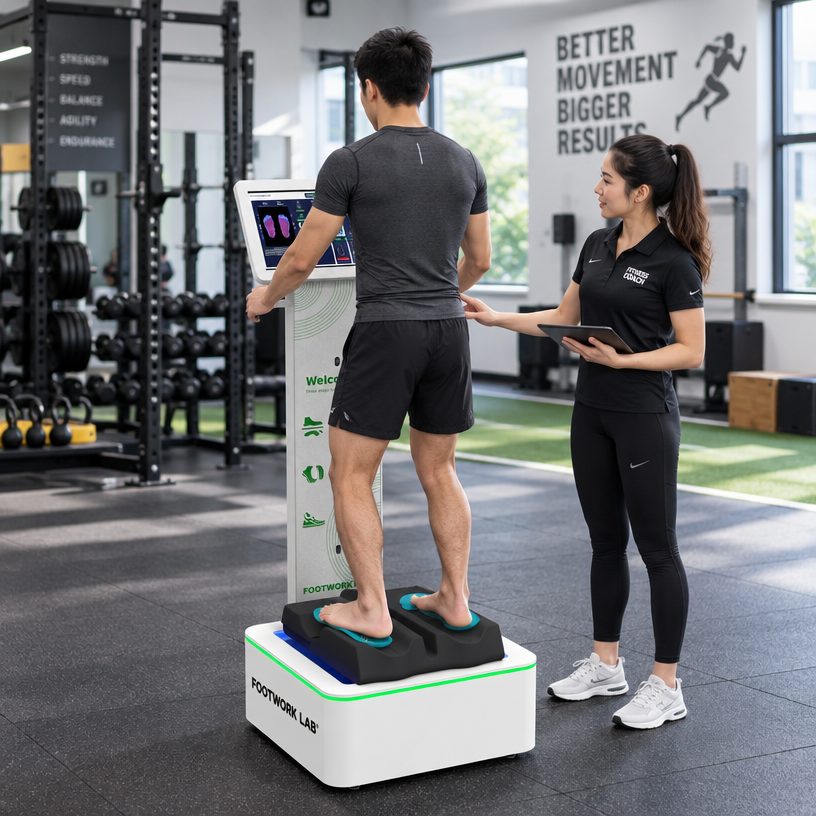
A posture capture is a set of photographs taken against a fixed reference, with the customer standing on the platform in a standard stance. The pressure layer underneath records how load arrives at the ground; the camera records how the body is stacked above it. The analysis software draws its reference lines from what appears in the frame: a vertical through the heel, lines across the ankle, the knee centres, the pelvis level and the shoulder line, usually in a back view and a front view. Every one of those lines is traced from the visible outline of the customer. The software does not know where the knee is. It knows where the edge of the fabric is, and on a good day the two are the same place.
This is why the capture condition matters as much as the camera position. A knee centre marked through the fabric of wide trousers is a plausible-looking point that carries no information about the leg. A shoulder line drawn across a padded jumper describes the jumper’s tailoring, not the slope of the shoulders beneath. The image never announces the substitution. It looks like any other capture, and the report that follows looks like any other report, which is exactly why the condition has to be controlled in the room rather than detected on the page afterwards.
None of this makes the camera capture fragile. With the outline genuinely visible, the reference lines are stable and repeatable, and the same customer standing the same way produces the same picture season after season. The work is not technical. It is wardrobe, and wardrobe is the one variable in the room that the customer controls completely and the operator often forgets to ask about.
What loose fabric covers, judgement by judgement
Work down the body and the losses are predictable. At the knee, the judgement concerns the direction the knee points relative to the line below it, and that judgement needs the knee centre visible on both sides. Wide trousers, long skirts and thermal layers move the visible edge outward by the thickness of the fabric and its folds, and a fold on one side only tilts the apparent line without anything in the body having moved. At the pelvis, the reference wants the level of the belt line or the top of the pelvis visible; a long top or a waistband sitting high replaces it with a fabric edge that rises and falls with the garment, not with the customer. At the shoulders, a bulky knit or a padded jacket adds its own shoulder shape on top of the real one, and the shoulder line, which is one of the most-read features on the report, ends up describing the coat.
Two smaller habits quietly do the same damage. Hands in pockets pull the shoulders forward and hide the outline at the hip, and a phone in a back pocket changes the silhouette at the pelvis by exactly the depth of the phone. Neither belongs in a capture. Customers do these things without thinking, because standing with hands in pockets is how people stand when they are being looked at and feel unsure.
The repair is conversation, not software. One sentence before the first frame — knees and shoulders visible, hands out of pockets, coat off — recovers most of what loose clothing takes away. The operator who says it every time stops needing to wonder afterwards why two captures of the same back drew different shoulder lines.
Hair, scarves, hats and everything else above the collar
Above the collar the frame gathers its own collection of problems. Loose hair falling over both shoulders is the commonest: it covers the shoulder line completely and adds a soft, mobile edge that no reference line can hold still. A tie or a clip costs ten seconds and restores the line. Scarves hide the neck and the junction between head and shoulders, which matters because head position is read relative to that junction. Heavy earrings and large collars are smaller issues, but a high collar can obscure the lower neck, and anything that swings during the frames — a lanyard, a long necklace, a hood drawstring — leaves the reviewer guessing about posture that was never actually visible.
Hats raise a different question, which is whether head position belongs in the judgement at all on that visit. A wide-brimmed hat does not change how the pelvis stacks, but it can change how the reviewer reads the head line, and if the report includes head position, the hat has inserted itself into the record. The clean habit is to ask for hats off and glasses on as normal, note anything that stayed on, and let the reviewer see the condition instead of inferring it.
Bags, coats and outer layers come off before the frames, without exception, and it is worth having a hook or a chair ready so the request feels like routine rather than fuss. A customer asked to stand awkwardly holding her own coat will hold it however she must, and the frame will show it. The room that plans for the coat gets a cleaner record and a calmer customer in the same gesture.
Where the standing marks belong
The stance marks are the quiet half of the protocol. They belong where they can do two jobs at once: guide the feet into a repeatable position on the platform, and sit inside the camera frame so the reviewer can see that the stance matched last time. Marks placed on the platform itself, one per foot, at the width the room has decided to standardise on, do both. Feet aligned to the marks, weight even, arms hanging free, eyes forward: that is the whole instruction, and it takes less time to give than to write.
Placement has one rule that rooms get wrong when they improvise: the marks must survive the clothing problem rather than add to it. If the customer stands on marks at the back of the platform and the camera has to look down past a long coat to find the feet, the coat wins. Marks near the centre of the platform, with the camera far enough back to take in the whole figure from head to platform, keep the outline in one frame and keep the operator out of the awkward business of repositioning a customer mid-capture.
The marks also carry the comparison burden. A capture taken with feet guided by the marks is comparable to another taken the same way; a capture taken wherever the customer happened to plant herself is comparable to nothing, not even to itself on a good day. The marks, like the wardrobe, belong in the written protocol, and the protocol belongs beside the platform where a new operator can find it without asking.

Asking a customer to change, or moving the visit
There is a level of dressing that a sentence cannot fix. A thick winter jumper cannot be flattened by instruction, and a layered outfit with a thermal base layer under a loose shirt hides the same lines either way. In those cases the room has three options, and the order matters. First, offer a change: most clinics keep a small stack of plain fitted t-shirts in a few sizes for exactly this, and most customers accept without ceremony once the reason is said plainly — the camera reads the surface of the clothing, and we need to see the line of your shoulders. Privacy makes the request easy; it is a counter question, not a personal one.
Second, capture anyway and write the condition down. Some customers cannot or prefer not to change, and a record taken in a jumper, honestly labelled, is still a record: it supports today’s conversation and it warns whoever reads it later that the lines describe the outfit as much as the person. Third, move the visit. This is the right call when the capture is meant to be a baseline for future comparison, because a baseline taken in a jumper has quietly broken every future comparison before it starts. One appointment costs the diary a slot; a folder that contradicts itself costs every conversation that touches it.
The judgement is simpler than it looks. If the capture only serves today’s fitting, capture with notes. If it is meant to be compared later, either get the condition right or move the date. Operators who ask themselves which kind of visit this is decide the question in five seconds, and customers rarely object to either a spare t-shirt or a rescheduled slot when the reason is given plainly.
Writing the capture condition into the report
The condition line is one sentence and it earns its place twice: on the internal session sheet and on the printed report that travels. What it should carry is short. What the customer wore on the upper body — fitted top, jumper, jacket removed. Whether hair was tied or loose. Which accessories came off and, if any stayed on, which. What was on the feet, because a barefoot stance and a socked stance are separate conditions of their own. Anything unusual, such as a capture taken seated or with support, though that is a different article entirely.
The habit lives or dies on the script. The operator asks about clothing the same way they ask about footwear and today’s discomfort, in the same breath before the first frame, and writes the answer down rather than holding it in memory. Rooms that fold the question into the routine keep clean folders without thinking about it. Rooms that leave it to individual operators meet the gap the first time a customer returns and the shoulder line has moved, with the movement belonging to a knit jumper that nobody wrote down.
It is worth saying why the printed report carries the line and not just the sheet. A record that goes to a second professional or back to the customer leaves the room, and once it has left, the sheet stays behind. Whoever reads the report next has no way of knowing whether the shoulder line was measured through a fitted top or through a puffer jacket, and the two can differ more than most genuine change does between seasons. The line at the top of the page is the only thing that travels with the record.
Two visits, two outfits: whether the records can be compared
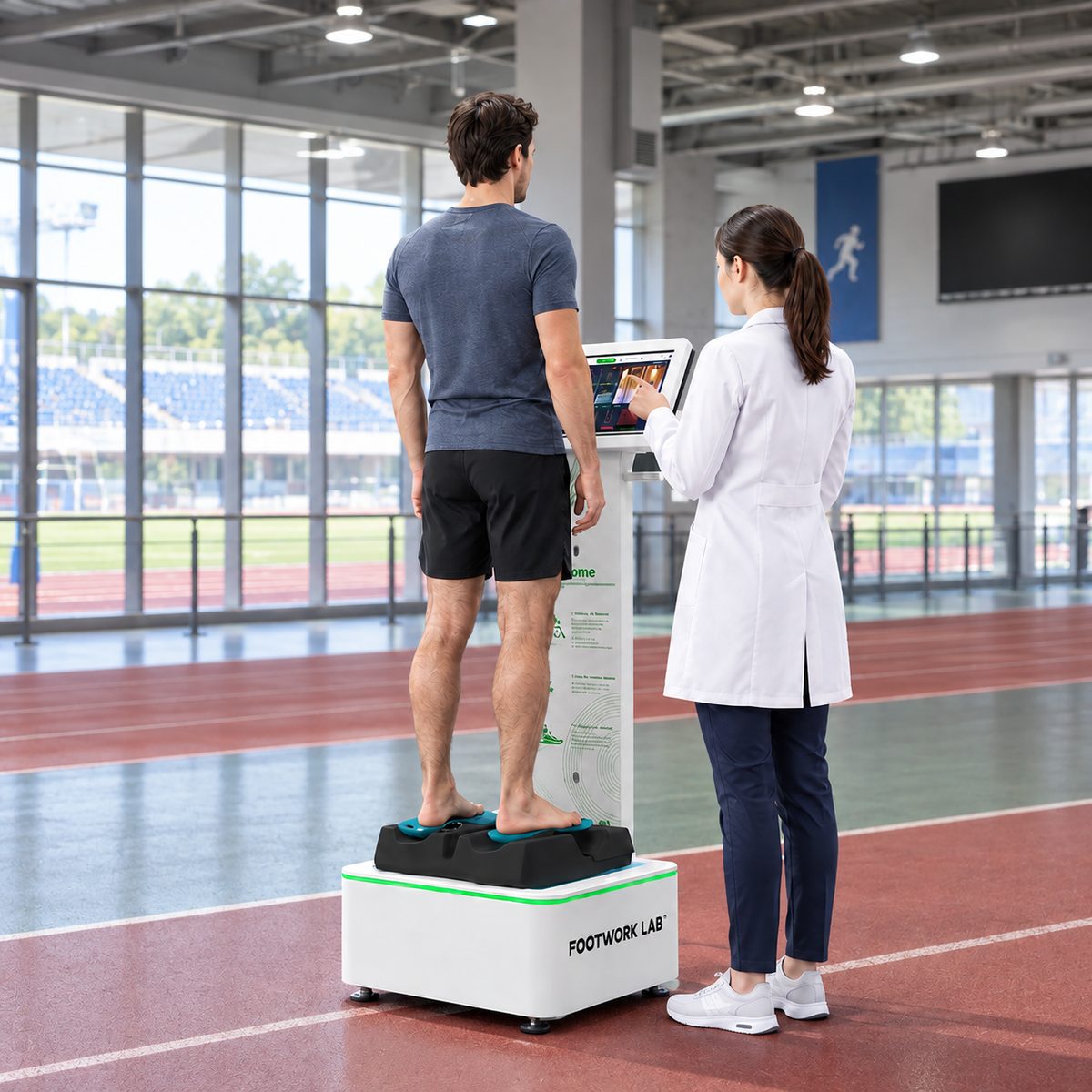
The comparison question arrives the second time a customer stands on the platform, and the honest answer is: only if the capture conditions match. A capture taken in a fitted top with hair tied is one instrument; the same customer in a winter jumper with hair loose is a different instrument, and readings from different instruments are not a before-and-after, whatever the calendar says. The differences will all be attributed to the customer, because the customer is what the report is about, and the jumper appears nowhere on the page.
Where the conditions do not match, the room has two honest moves. Retake the capture under the right conditions if the customer is still in the building or can come back, which is usually the cheapest moment the mistake will ever have. Or keep both records and annotate the comparison openly: the shoulder line differs; the second capture was taken in a bulkier garment; the difference is not evidence of change. That annotation is uncomfortable to write and far more comfortable than defending a comparison that a careful reader will unpick.
Bodies do change between visits, and some of that change is real. But clothing moves the reference lines further than most real seasonal change does, which is why the wardrobe check comes before the image in every comparison conversation. The framing we give buyers is the same one operators can give customers: the record supports comparison of the same person captured the same way over time, and it says nothing reliable when the way changed. A customer who asks whether their posture has shifted deserves the check of the session sheet before any conversation about the picture, because the sheet often answers the question before the picture is even open.
And when the second visit cannot be matched to the first — the customer arrived straight from work in layered winter clothing and the baseline was taken in August — the better service is a short appointment another day rather than a report neither record can support. The room that reschedules on those grounds keeps folders worth rereading. The room that captures in whatever walked through the door keeps folders that argue with themselves, and the argument surfaces years later in a conversation nobody prepared for.
Frequently asked questions
Does a customer have to undress for a posture capture?
No. The requirement is a visible outline, not undress: a fitted top and trousers are enough. What belongs off is the outer layer — coat, scarf, bag — and hair should be tied if it would cover the shoulders. The request is about seeing the body’s lines, and customers accept it easily once it is explained in those terms.
Can the software see through clothing?
It cannot. The reference lines are drawn from the visible outline of whatever the camera sees. Loose fabric reads as the body surface, so a knee centre marked through wide trousers is the fabric’s centre, not the leg’s. This is why the condition is controlled in the room rather than corrected afterwards.
Does what the customer wears affect the pressure measurement?
The platform measures at its own surface, so jumpers and coats above the waist do not touch it. What sits between foot and surface is the variable there — bare feet, socks or shoes — which is a separate condition with its own rules and its own line on the session sheet.
Where should the stance marks be placed?
On the platform, one per foot, at the stance width the room has standardised on, inside the camera frame so the reviewer can confirm the stance matched previous visits. Marks guide the feet into a repeatable position and document that position in the same gesture, which is what makes captures comparable across seasons.
What should the report say about the capture conditions?
One line, on both the session sheet and the printed report: what was worn on the upper body, hair tied or loose, which accessories were removed, and what was on the feet. It travels with the record, because whoever reads it later has no other way of knowing what the reference lines were drawn through.
Can a capture taken in one outfit be compared with one taken in another?
Not directly. A fitted top and a bulky jumper act as two different instruments, and the differences between them describe the clothing, not the customer. Where conditions cannot be matched, either retake the capture under the right conditions or annotate the comparison openly so no reader mistakes clothing for change.
Does clothing affect any judgement about alignment?
The equipment produces images and measurements, not a diagnosis; interpretation belongs to a qualified professional. But a reader working from hidden knee centres or a pelvis level guessed under a cardigan is working from points the camera never actually saw. The condition line on the report lets the reader judge the record on its real terms.
What we would do next
Write the wardrobe sentence into the phone script and the condition line into the session sheet, then check the last twenty folders for both, and where they are missing, note the gap rather than compare across it. Socks, bare feet or shoes: what changes when you measure covers the other half of the capture condition, the part that sits between foot and platform, who runs the scan: training staff on a foot scanner is where the asking-and-writing habit either takes hold or does not, and a clean record on a crowded shop floor handles the room conditions that decide a capture on busy days. The X5 system page describes the camera capture in the equipment’s own terms, and the FAQ page carries the operational answers we give most often by message.
This article is intended for professional and educational reference. It is not medical advice. Foot assessment equipment produces measurements and images; clinical interpretation and any decision about care remain the responsibility of a qualified professional. Certification scope is limited to the documentation we hold: European Union certification and ISO quality system certification.