
At the alteration counter, mid-morning, the machine is running and nobody is standing. A hem, a zip, a taken-in waist: each job is a few minutes at the pedal, then a few steps to the mirror, then back to the chair. Across a full working day the pattern adds up to thousands of small pedal strokes from one foot, a few hundred short walks on hard flooring, and very little that anyone would call effort. Ask the wearer where the day went and they will point at the neck, the eyes, the lower back.
The feet rarely get mentioned, which is exactly why clinics and fitting studios that serve this trade should pay attention. The load is small but almost perfectly one-sided, the posture at the ankle is held rather than moved, and the complaints arrive late and vague: an end-of-day ache, a foot that feels asleep, a first step out of the chair that has stiffened over the years. None of it looks like an injury. All of it shows up in a record, if anyone thinks to take one.
A chair, a pedal, and four short steps
Start with the working posture, because it is stranger than it looks. A tailor or seamstress sits with the trunk slightly turned toward the needle, one foot resting on the pedal with the ankle held in partial plantarflexion. On an electric machine the heel often stays pinned to the plate while the forefoot rocks through a small arc, and the knee does most of the actual driving. The range of motion is tiny. What matters is that it repeats, with the foot under partial load, for hours at a time, and that it always repeats on the same side.
Between jobs the pattern inverts. The wearer stands, walks to the mirror for a fitting, crosses to the pressing station, reaches the overlocker, returns to the chair. These standing segments come in short bursts, usually on concrete or tile, in shoes chosen for how easily they slip on and off. The transitions matter as much as the segments: the foot that has been held half-flexed for twenty minutes is suddenly asked to push off, turn, and carry the body across the room.
Compare this with a standing trade and the signature becomes obvious. A shop assistant varies position constantly but loads both feet roughly equally. A seamstress loads less overall, but almost entirely asymmetrically: one limb works through thousands of small flexions while the other waits, then both take the standing bursts. And the pedal side is not chosen by the foot. It is set by where the machine sits in the room, which is why two tailors in the same workshop can develop mirror-image patterns.
What a light load does over ten years
The arithmetic of repetition is easy to underestimate. A few hundred pedal strokes per hour is a small number per hour and an enormous number per career. Tissues do not respond to how impressive a load looks; they respond to repetition, duration and the postures held between loads. A force that would never be called work, repeated ten thousand times a week for a decade, shapes the foot just as surely as a heavy one, only more quietly.
The sustained ankle posture does its own work. Holding the foot in partial plantarflexion for long stretches reduces the pumping action that walking normally provides, which is one reason many people in seated trades describe a full, heavy feeling in the feet by late afternoon. Then the standing segments begin: the first few steps after a long spell at the machine are often the stiffest of the day. On the pedal side, the callus pattern frequently tells the same story as the pedal, with more load evidence under the forefoot than the wearer’s own account would predict.
None of this presents as an incident, which is why it goes unreported for so long. There is no day the tailor can point to, no dropped box, no twisted ankle. The adaptation is gradual and the wearer compensates without noticing, by shifting in the chair, by favouring the other foot on the stairs. A record taken early catches the pattern while it is still an observation rather than a complaint, and that is the whole argument for asking about the pedal before anything hurts.
Four questions to write on the intake sheet
Before any pair is specified for a client from this trade, four lines on the intake sheet do most of the work. First: which foot works the pedal, and how many hours of the day are spent at the machine versus on the floor? The answer splits the client’s day into two different loading environments, and the split is rarely what the client assumes. Second: what does the pedal actually demand? An old rocking treadle, an electric control with the heel pinned, a knee-driven setup — each asks a different thing of the ankle, and the client usually knows the answer immediately.
Third: what is worn at the machine, and what is worn at the counter or the cutting table? In this trade the two are often different shoes, and the difference decides whether one pair needs to serve both environments or whether the recommendation should be two pairs with different jobs. Ask the client to bring both. Fourth: what do the standing segments look like? A home sewing room with a carpeted floor and a commercial workshop with a concrete one are different cases wearing the same job title.
None of these questions takes more than a minute, and all four can be answered by the client without a single measurement. They belong on the sheet before any device is switched on, because they frame how the record will be read. A record taken without them invites over-reading: the asymmetry that shows up on the map has a mundane explanation, and the four questions are usually where that explanation lives.
Reading a record from a seated trade
Capture both parts of the day if the appointment allows it. A static standing capture shows how the client stands when they stand, which matters because the standing segments are when the delivery work happens. A dynamic capture, taken after the client has been seated for a while, shows something closer to the real working state: the first steps out of the chair, the transitions, the gait that follows a long spell of holding still. The two views often disagree, and the disagreement is information, not noise.
Expect left-right differences that track the pedal side. In this population, asymmetry between the two feet is occupational context before it is anything else, and the history you took in the last section is what keeps the reading honest. A pressure platform makes the asymmetry visible within minutes; what the asymmetry means, and whether it warrants any action at all, stays with the qualified professional reading the record. The device produces the measurement. It does not produce the conclusion.
The discipline worth stating out loud: a regional hotspot under the pedal-side forefoot is a finding, not a verdict. It may simply confirm the occupational history. It may prompt a second capture under different conditions. What it should not do, on its own, is drive a dramatic recommendation. In a trade where the load is small and the history is clear, restraint is the professional skill, and the record exists to support restraint, not to replace it.
The shoe problem at the machine
Footwear in a sewing workshop is chosen for convenience, not for support. Slip-ons, ballet flats, thin-soled canvas shoes: the wearer wants to feel the pedal and get shoes off and on quickly at the fitting mirror. That preference is rational and it constrains what can be built, because a thin, low-volume shoe cannot accept much inside it without changing the fit. Ask what is actually worn at the machine before assuming the client’s nicer street shoes describe the environment.
The counter or cutting table is often a different story: many people in this trade keep a more supportive pair for the standing work and change at the machine, or the reverse. This is why the question about footwear belongs on the intake sheet rather than in the conversation afterwards. One pair asked to serve a thin slip-on and a laced walking shoe is being asked to do two incompatible jobs, and the honest answer is usually a second pair, rotated, rather than one compromise.
Practical fitting notes, for whoever does the fitting: seat the device fully in the heel cup of the workshop shoe, because a slip-on offers nothing to hold it forward; check that the foot does not slide inside a flat sole, since sliding defeats the whole purpose; and have the client work the pedal for a few minutes with the pair in place before leaving. Pedal feel is personal. If the client reports that the foot no longer speaks to the pedal clearly, that is a fitting problem to solve in the room, not a week later by phone.
What insoles for tailors actually have to do
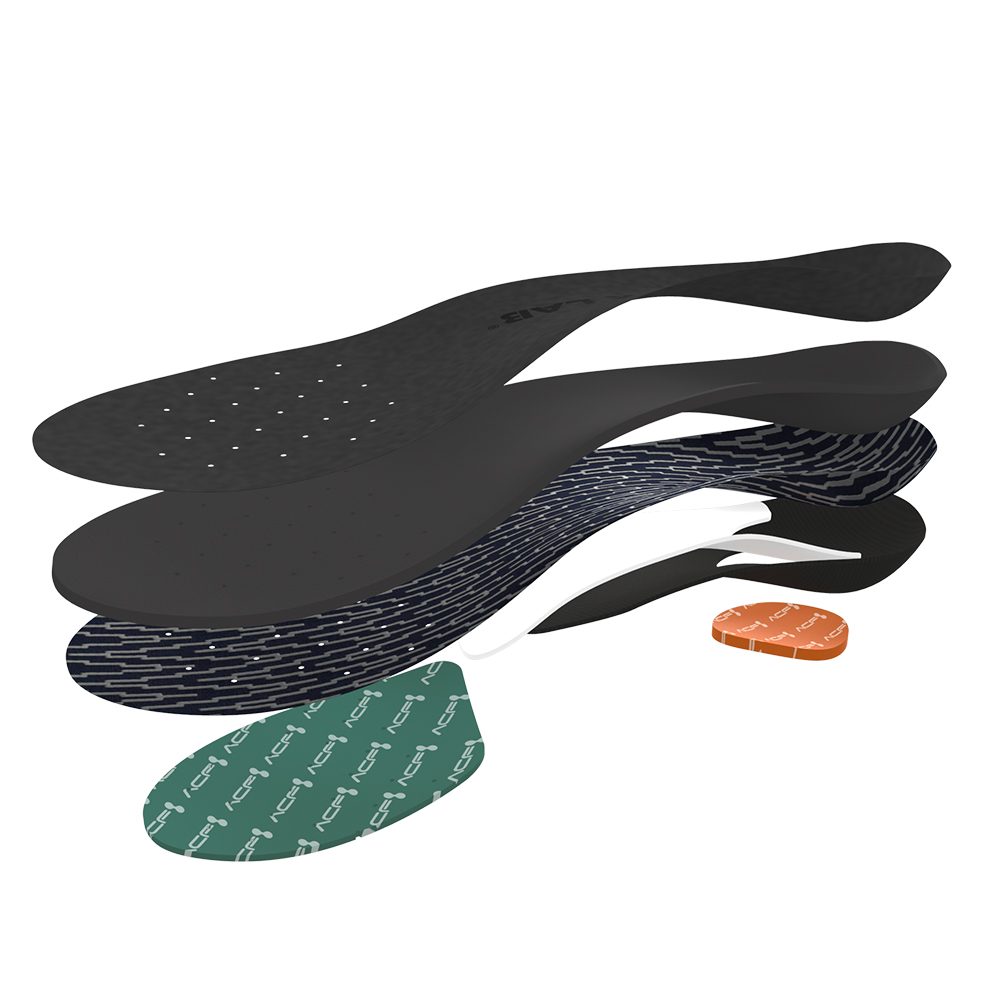
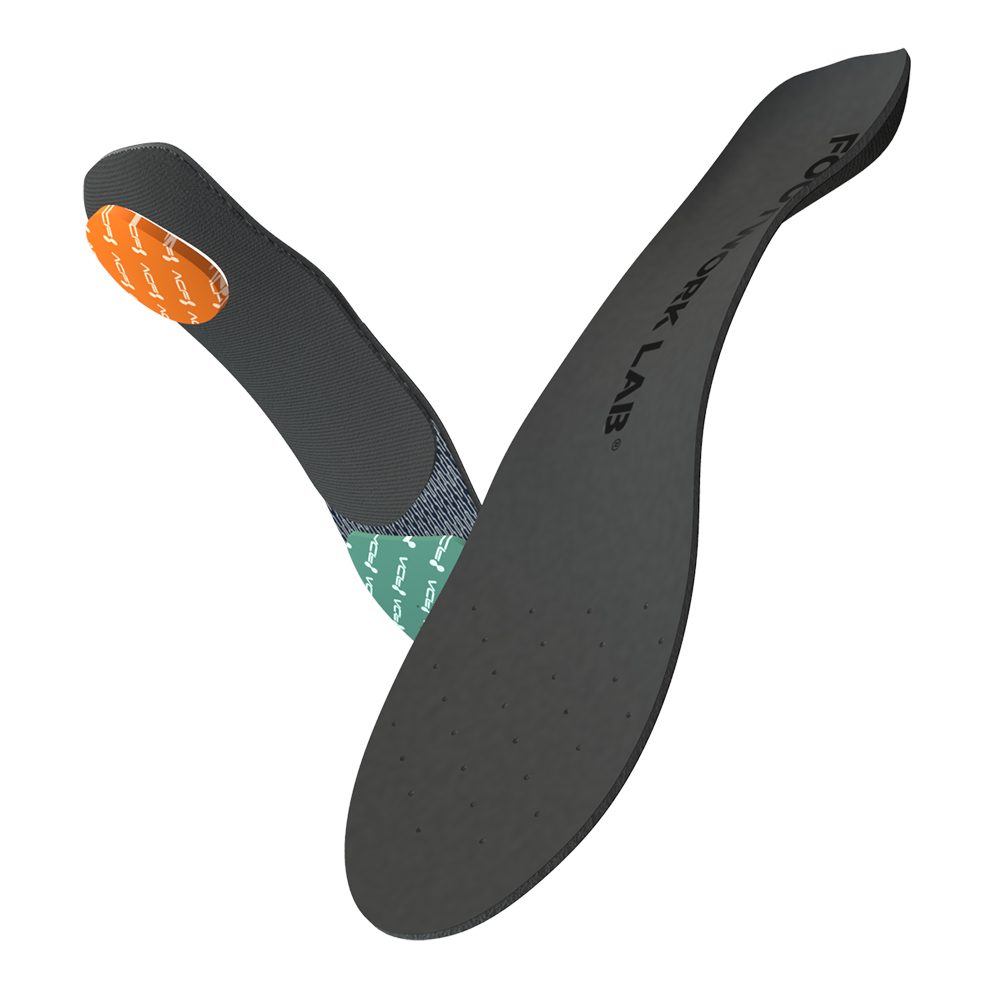
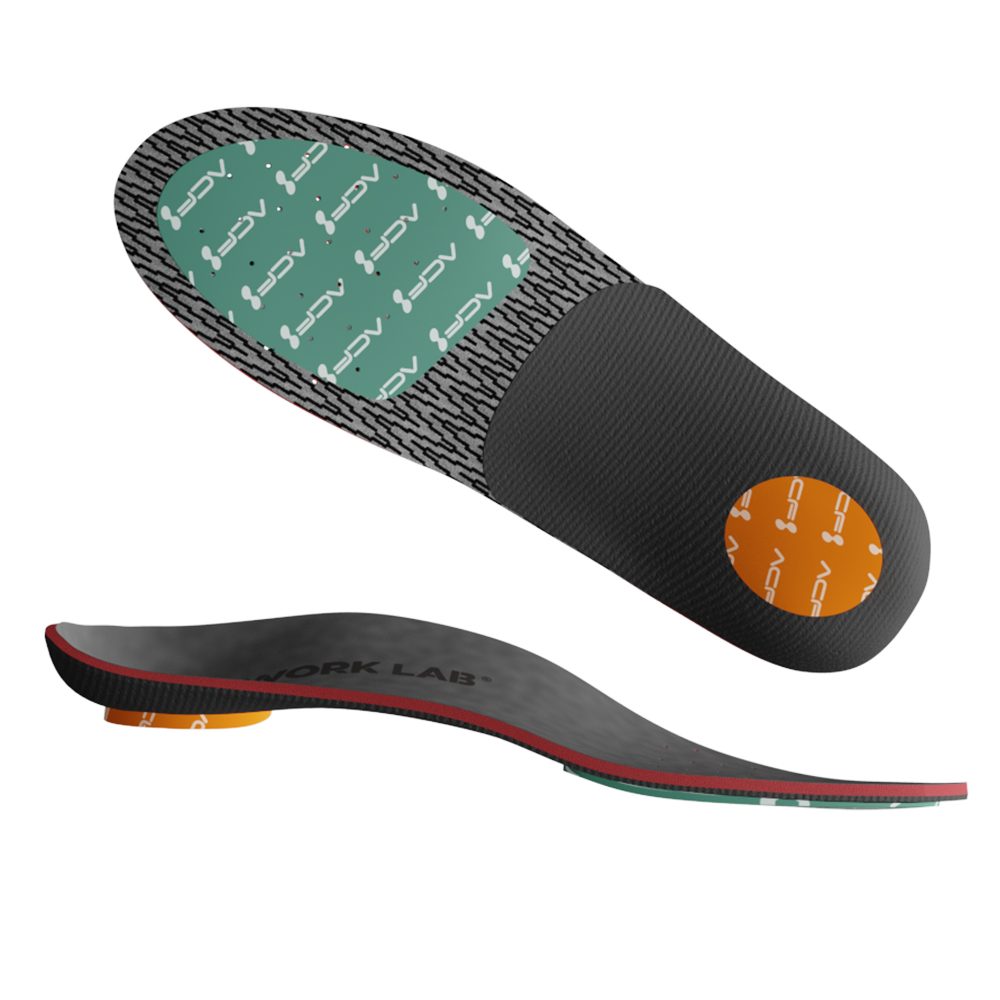
The job description is narrower than a general-purpose pair. At the machine, the heel is pinned and the forefoot rocks through a partial range, so whatever sits under the arch has to provide support through that partial range without fighting it. On the floor, the standing bursts need load spread across the sole rather than concentrated where the day already concentrates it. Support, alignment, distribution: those are the honest verbs. Nothing in this trade needs a dramatic intervention, and a pair that changes too much will simply be left in the drawer.
This is also where the boundary of the claim belongs. A pair built from a measurement does not correct the structure of a foot, and it does not treat a condition; it supports, it distributes load, and it is specified with the occupational history in view. The interpretation of the record and the decision to build sit with the clinician or the qualified fitter, and the manufacturing side — which is where our own work happens, producing custom orthotic insoles to the specification a professional defines — follows that decision rather than leading it.
The practical test at handover is the pedal test already mentioned, plus a tolerance period. Most wearers need a short adjustment window, and it is worth telling the client explicitly what to expect: a different contact pattern under the arch, a possible few days of unfamiliarity, and a pedal that feels slightly different under the ball of the foot. Ask them to report back after the first full week, not after the first hour, because first-hour impressions in this trade are almost always about the pedal and almost never about the support.
Fitting the change into a workshop day
The good news about this trade is that the day already contains the breaks. The walk to the mirror, the crossing to the pressing station, the trip to the overlocker: these are the moments when the ankle gets to move through its full range instead of its working range. A simple habit worth suggesting to clients is to use the pressing station as a cue — while the iron heats or while pressing a seam, rise onto the toes and lower slowly a few times. It costs nothing, it fits inside the existing rhythm of the day, and it addresses exactly the stiffness that accumulates at the machine.
Rotation is the second habit. If the recommendation ended up being two pairs — one for the machine environment, one for the floor — the rotation should be deliberate, not mood-based: machine pair stays with the machine, floor pair stays with the floor. Where only one pair exists, drying and rest between days still matter, because a pair worn twelve hours a day in a small workshop ages faster than its owner expects and its support character drifts before its appearance does.
Re-assessment has clear triggers rather than a fixed date. A new machine with a different pedal, a change of workshop flooring, a change of daily footwear, or a seasonal rush that doubled the hours: each of these is a reason to look again, because each changes the loading the original pair was specified against. Between triggers, an annual look-in is plenty for most clients in this trade, and the record from the first visit is what makes the comparison worth anything.
Frequently asked questions
Do tailors really need insoles if they sit for most of the day?
Seated work loads the feet differently, not less. One foot works the pedal for hours in a held posture, then both feet take short standing bursts on hard flooring. Whether a pair is warranted is a professional decision made from a record and a history, not from the job title alone.
Does it matter which foot works the pedal?
Yes, for reading the record. Left-right differences that track the pedal side are expected in this trade and should be read as occupational context first. The side is set by machine placement, so two people in the same workshop can show mirror patterns.
Can one pair cover both the workshop and the street?
It depends on the footwear in each environment. If the machine shoes are thin slip-ons and the street shoes are supportive lace-ups, one pair cannot serve both honestly. Two pairs with different jobs, rotated deliberately, is usually the cleaner answer.
Will an insole change how the pedal feels?
Usually slightly, and it is better to know in the room than a week later. Have the client work the pedal with the pair in place during fitting. If pedal feedback feels blunted, the fitting needs adjusting before the client leaves.
How soon should a pair be reviewed?
Ask the client to report after the first full week, once the tolerance period has passed. After that, re-assessment follows triggers: a new machine or pedal, changed flooring, changed daily footwear, or a season with much longer hours.
What does an assessment involve for a client like this?
A history covering the four intake questions, a static standing capture and a dynamic capture where the appointment allows. The equipment produces measurements and images; the interpretation and any decision to build belong to the qualified professional.
We run a workshop, not a clinic. Who fits a pair?
The record and the specification belong to a qualified professional. Workshops usually come to this through a partnering clinic or fitting studio. We manufacture custom orthotic insoles to professional specification and do not diagnose or promise outcomes.
What we would do next
If this trade sits in your client base, the cheapest next step costs nothing: add the four pedal questions to your intake sheet this week and see how many existing records you would now read differently. If you are specifying a pair for the first time for a client from this trade, the insole categories page shows the range we manufacture to professional specification, and the FAQ page covers the practical questions about minimum order quantities and sample lead times. For a neighbouring seated trade with a very similar loading signature, our piece on insoles for dentists covers the four-handed, foot-on-pedal workflow in detail.
One question we keep coming back to at trade shows: which foot works the pedal for most of the clients you see from this trade, and has anyone actually written it on the sheet? We ask because in our conversations the answer splits almost exactly in half, and the split never matches the machine layout of the workshop the client works in. If your records tell a different story, we would genuinely like to hear it in the comments.
This article is intended for professional and educational reference. It is not medical advice. Foot assessment equipment produces measurements and images; clinical interpretation and any decision about care remain the responsibility of a qualified professional. Certification scope is limited to the documentation we hold: European Union certification and ISO quality system certification.