
The floor is hosed down twice before the first customer arrives, and it stays wet until the last one leaves. A butcher’s working day runs on hard tile kept deliberately damp for hygiene, on rubber boots chosen for what spills rather than how they fit, and on cold rooms that pull the temperature down every time the door swings open. By the middle of the shift the feet have absorbed all three: a hard surface, a constant chill and a wet-cold seam against the ankle.
Clinics and fitting studios that serve food-trade workers see this profile regularly, and it behaves differently from a dry standing trade. The cold changes how the foot reports load, the boots change what can be built, and the standing posture at the block is more static than most standing jobs. A pair specified for a shop assistant will disappoint here. What follows is how the day actually loads a butcher’s feet, and what to ask before building anything.
A floor designed against the feet
Walk through a working butcher shop and notice that almost every surface decision was made for hygiene, not for people. Tile because it scrubs. Wet because it must be hosed. Drains set where water pools. Concrete beneath the tile because it has to take the weight of counters and refrigeration. There is nothing accidental about any of it, and nothing in it was chosen with the feet in mind. The result is one of the least forgiving standing environments in any trade that serves the public.
The work itself is more static than visitors assume. Cutting at the block means a stable stance, feet roughly shoulder-width, weight settling onto both heels while the arms and shoulders do the moving. The saw, the slicer, the mincer: each station has its own spot on the floor, but the posture at each is braced and grounded rather than walking. Between stations there are short, careful steps on a surface the wearer does not fully trust, because everyone in this trade has slipped at least once.
Put together, the day is long periods of planted stillness interrupted by cautious movement, on a hard, damp, cold surface, in boots that were bought for the hose. Every element of that sentence points somewhere different on the foot: the stillness at the heels, the caution at the forefoot, the cold through the whole sole. A record taken at the end of a shift shows the sum of it far more clearly than the wearer’s own description, which is usually just tired.
Cold, damp, and what it does from the ankle down
Cold is the variable most assessments ignore, and in this trade it will not stay ignored. As the feet cool, the tissue report changes: sensation dulls, so the wearer adjusts stance later and less precisely than they would on a warm floor. Stiffness creeps in from the ankle down, and the small constant corrections a bare foot makes on hard tile go quiet. The wearer does not feel the hot spot forming under the metatarsal heads; they feel it later, at home, when the feet have warmed back up.
Damp adds its own layer. A boot seam that stays wet against the skin keeps the local temperature down and softens the skin, which is why people in this trade deal with more skin trouble on the feet than their workload alone would predict. None of that is a reason to keep feet dry on a floor that must stay wet — the hygiene rules win, always. It is a reason to read any foot complaint from this trade with the environment in mind before blaming the load pattern.
The combination explains a familiar pattern: complaints arrive at the end of the day, feel vague, and fade by morning, so nothing gets done for years. A record changes that arithmetic only if it is taken with the environment noted. Cold feet, wet boots, hard tile and long static stands belong on the same sheet as the pressure findings, because they change how the findings should be read.
Standing still at the block: the posture nobody trains
Cutting posture is worth describing precisely, because it is the opposite of what gait assessment usually assumes. The feet plant, the weight settles, and the body pivots above them: shoulders and arms carry the knife, the saw, the ribs. The feet’s job is to be a stable base, which they achieve by going quiet. Long static stands load the heel and the midfoot in a way that walking never quite does, because in walking the load keeps moving and in standing it parks.
The trade’s own habits partially compensate. Good butchers shift, rest one foot on the edge of the footrail if the block has one, and step back between cuts. Where the shop has anti-fatigue matting, it is usually only at the block. The variations between shops are worth asking about: matting at one station and not another, footrails present or absent, the distance between block and slicer. Small details, all of them changeable, all of them load-bearing in the literal sense.
For the practitioner, the practical read is this: a butcher’s record taken after a rest day will look different from one taken after a long shift, and both are honest. The static component of this trade rewards a wider, more even distribution across the standing foot than a walking-focused build would. If the pair is only ever specified from a walking capture, it is being specified for the minority of the working day.
Rubber boots: the container that decides the build
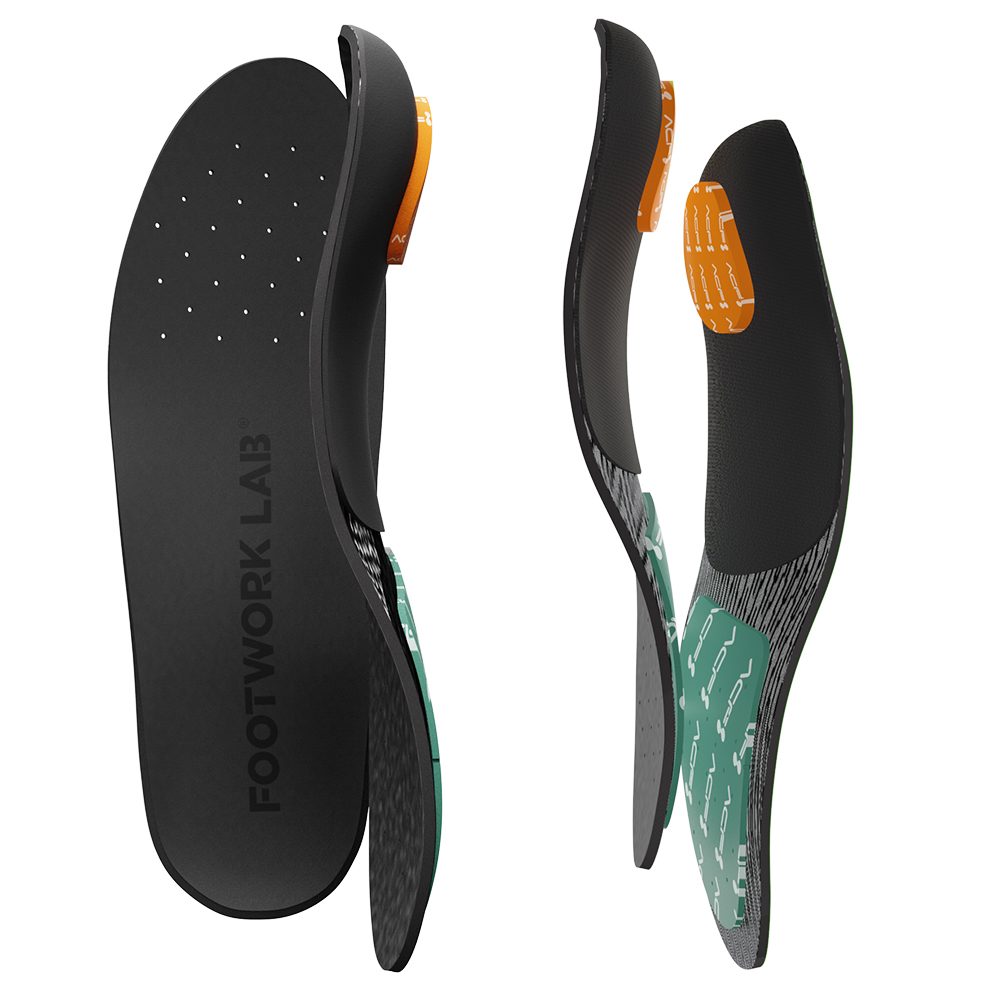
Before any discussion of what goes inside, respect the container. Rubber or PU safety boots in this trade are thick-soled, roomy, waterproof, and almost universally a half size or more loose, bought for sock layers and for easy removal at the door. The insole the trade actually uses is either the flat factory liner or whatever the nearest shop sold in the right size. Everything a clinician might want to build has to fit inside that environment and survive it.
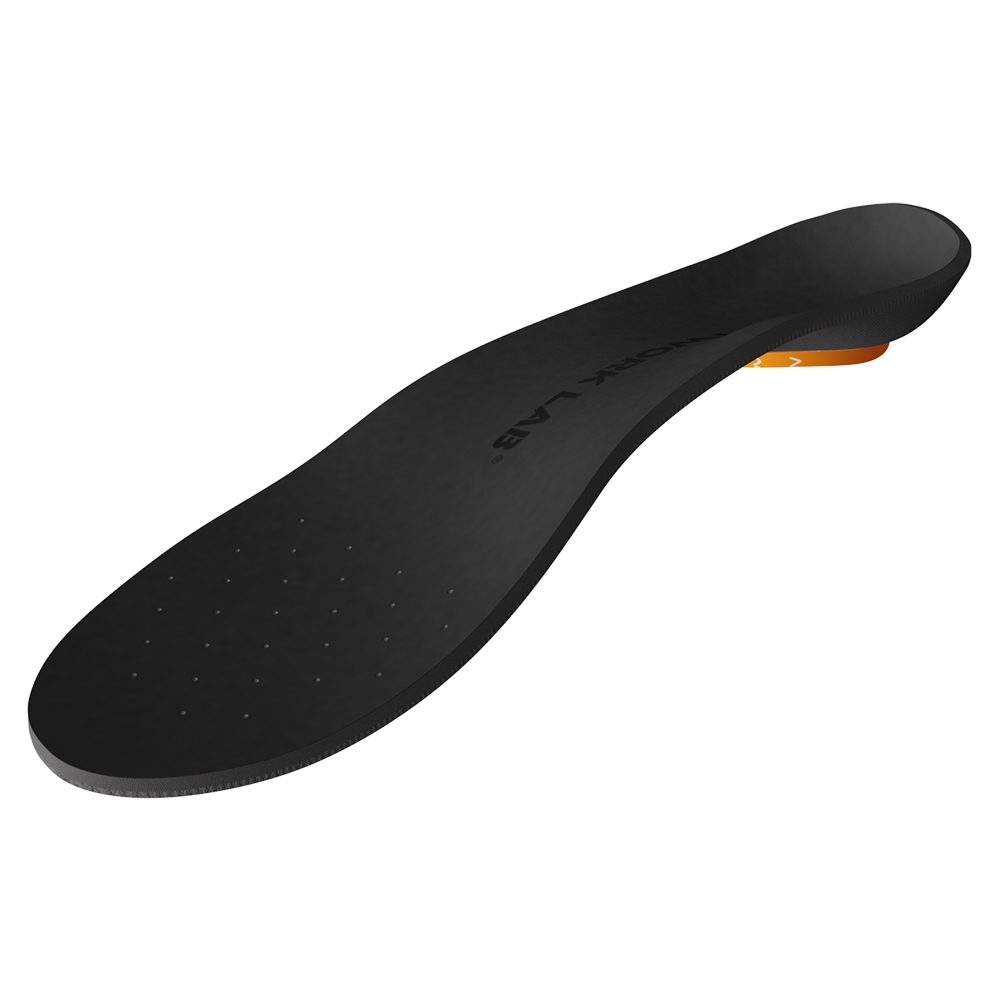
Three consequences follow. First, volume: there is usually room, which is the good news, but the fit of the boot on the day matters more than the size on the label, so the client should bring the actual boots to the fitting. Second, moisture: whatever sits inside a boot that gets hosed, steamed and chilled will see water eventually, so the specification conversation includes how the pair is dried overnight. Third, temperature: an insert that adds warm air space and lifts the foot off the cold sole of the boot is doing two jobs at once in this trade, and the second job matters more here than almost anywhere else.
One honest boundary belongs in this section. We manufacture custom orthotic insoles to the specification a qualified professional defines, and we do not promise what a pair will or will not fix in cold, wet conditions. The measurement and the interpretation stay on the professional side of the counter. What the manufacturing side can state plainly is what the trade asks us for most often from this environment: support that survives a boot, and a build that tolerates damp.
Five questions before you build a pair
The intake for this trade runs wider than the usual standing-job questions, and five lines cover it. First: how much of the shift is cold-room work versus shop floor, and how cold does the room actually run? Cold-room time changes both the build conversation and the rotation advice. Second: which boots, exactly — ask for the model, because sole stiffness and depth vary more between rubber boots than clients expect. Third: how much of the day is static cutting versus moving between stations? The static share decides how much the standing distribution matters.
Fourth: what does the wearer do about socks, and does the boot fit change seasonally? In cold trades the sock is part of the footwear system, and a pair specified around thin summer socks will sit wrong under winter wool. Fifth: who hoses the floor, when, and does the wearer’s area get hosed while they stand in it? It sounds like a joke question; it is not. It determines how wet the inside of the boot actually gets, which is the difference between a build that dries overnight and one that never does.
Write the answers on the same sheet as the record. A year later, when the client reports that the pair has gone flat or the boots have changed, those five lines are what make the follow-up a comparison instead of a guess. They cost four minutes at intake and they are the difference between an occupational build and a generic one.
What the record shows after a butcher’s shift
Time the capture for information, not convenience. A capture taken after a rest day shows the foot’s baseline; one taken at the end of a long shift shows the trade. Where the appointment allows, both are worth having, and the difference between them is often the most instructive page in the file: the regions that gained load over a shift are the ones doing the trade’s work. A pressure platform will show the shift plainly enough; what it means for any decision remains with the qualified professional reading it.
Expect heel-weighted static loading and forefoot evidence from the cautious stepping, and expect the two feet to be more symmetrical than in trades with a dominant-side tool habit — the knife works above the feet, not with them. Where the record surprises you, the environment notes explain more than re-testing does: cold-room day, wet boots, new boots, a station moved across the shop. This trade rewards reading the notes before re-reading the map.
The restraint point deserves its own sentence. Nothing in a butcher’s record diagnoses anything. It documents how a particular pair of feet carried a particular shift on a particular floor, and it gives the professional a baseline for deciding whether support, footwear advice, workplace changes or simply a review date makes sense. The record supports the conversation; it does not replace it.
Rotation, drying and the second pair
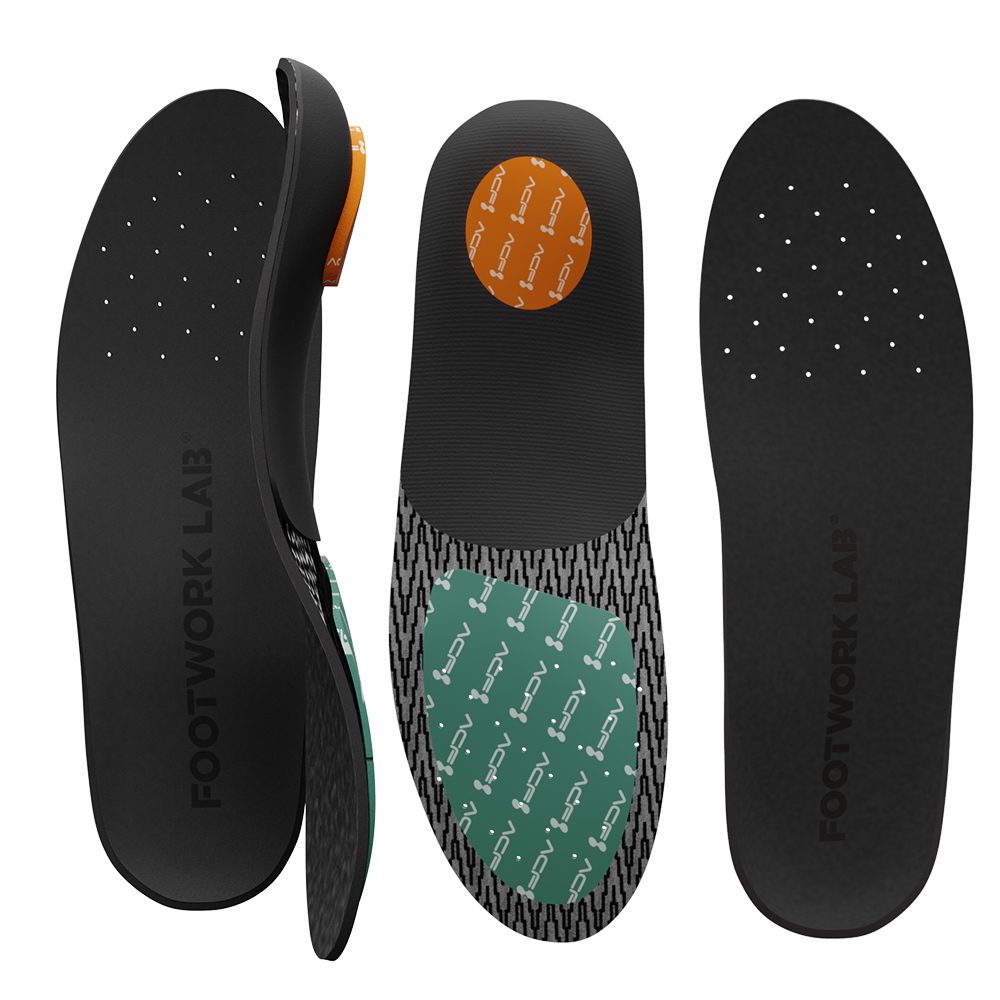
In this trade the second pair is less a luxury than a hygiene item. Whatever lives inside a rubber boot all day needs to come out, dry and breathe overnight, and a pair worn seven shifts a week never gets that chance. Two pairs, alternated daily, roughly double the effective life of each and keep both closer to their original support character. For clients who rotate two boots between days, matching the pairs to the boots is cleaner than matching them to the calendar.
Drying deserves specific advice rather than a shrug. Pull the pair out of the boot at the end of the shift, stand it on its side away from direct heat, and let the boot itself dry with the heel opened. Radiator drying and boot-dryer heat shorten the life of many builds, and clients in cold trades are exactly the people who own boot dryers. A gentle habit, explained once at handover, prevents the most common return complaint from this trade, which is a pair that aged in months instead of years.
Review triggers follow the environment: a new boot model, a change of station, a move to more or less cold-room work, or a seasonal shift in socks. Between triggers, an annual look is enough for most clients. The first record is what makes the later ones comparable, so the file that starts with the five intake questions and the shift-day capture is the file that keeps paying off for years.
Frequently asked questions
Do rubber boots change what kind of pair can be built?
They change the constraints more than the principle. A rubber boot is roomy but thick-soled and often loose, so the fit of the actual boot matters more than the size on the label. The client should bring the boots to the fitting, and the build has to tolerate damp and dry overnight.
Will a pair help with cold feet in the cold room?
Lifting the foot off the cold boot sole adds an insulating air layer, which is one of the reasons this trade asks for support that survives a boot. How much warmth any pair adds depends on the sock system and the boot. We make no warmth claims; the professional decides what the specification should be.
Should the capture be taken after a shift or after a rest day?
Both are informative and they show different things. The rest-day capture is the baseline, and the end-of-shift capture shows what the trade adds. Where only one is possible, note which it was on the sheet so a later comparison is honest.
How many pairs does someone in this trade actually need?
Two alternated daily is the common recommendation, because the inside of a rubber boot never dries within a single night. Rotation roughly doubles the life of each pair and keeps support character closer to the original build for longer.
Does standing at the block load the foot differently from walking?
Yes. Long static stands park the load on the heel and midfoot, while the cautious short steps between stations load the forefoot. A build specified only from a walking capture is specified for the minority of this working day.
What breaks a pair fastest in this environment?
Heat and constant damp. Radiator drying and boot dryers age a build quickly, and a pair worn every shift never dries at all. Pull it out nightly, dry it on its side away from direct heat, and rotate two pairs.
Who decides whether a pair is appropriate at all?
A qualified professional, working from a record and a history. Equipment produces measurements and images only. We manufacture custom orthotic insoles to professional specification and make no claims about outcomes in cold or wet conditions.
What we would do next
If food-trade clients are already in your books, the fastest improvement costs a clipboard: add cold-room hours, boot model and sock system to your intake sheet, and start noting whether the capture was shift-day or rest-day. If you are specifying a first pair for a client from this trade, the insole categories page shows what we manufacture to professional specification, and the FAQ page covers order quantities and sample timing. For the closest cousin trade, our piece on insoles for chefs and kitchen crew covers the hot, wet version of the same floor.
A question for the room, because the answer seems to vary by country more than by trade: how much of the day do your cold-trade clients actually spend in the cold room, and do you record it? We ask because the numbers we hear at exhibitions range wildly, and the build that suits a two-hour-a-week cold room is not the build that suits a full shift in one. Tell us what your intake sheets say.
This article is intended for professional and educational reference. It is not medical advice. Foot assessment equipment produces measurements and images; clinical interpretation and any decision about care remain the responsibility of a qualified professional. Certification scope is limited to the documentation we hold: European Union certification and ISO quality system certification.