
Some readings hold up across sessions and operators; others drift. Knowing which is which before the data is used to specify anything is the difference between a measurement service and a folder of pictures that cannot be compared.
This matters because the marketing of the category invites comparison on the wrong axis. Resolution and sensor counts are easy to print and easy to compare, and they are not what decides whether a record taken in March can be placed beside one taken in September.
We build capture systems and specify devices from them, so we see which numbers survive and which do not. What follows is what makes a reading durable, where drift enters, and what to standardise before a second visit is meaningful.
Two kinds of number
Readings from a foot assessment fall into two groups. The first is stable within a person across short periods: overall load distribution between sides, stance characteristics under a fixed convention, and the alignment observations a camera-based system records.
The second is sensitive to conditions: peak values at particular points, timing measures across a step, and anything that depends on pace. These are useful and they are also the ones that move when nothing has changed.
A service does not have to choose between them. It has to know which it is quoting, because a review appointment that compares a stable number with a sensitive one will report a change that did not happen.

Conditions: the first source of drift
Most apparent drift is conditions rather than change. Footwear on or off, stance convention, settling time, surface, and the instruction given all move the reading, and none of them are recorded unless somebody decides to record them.
The remedy is a conditions line on every report, taking about ten seconds to complete. With it, a change between two visits can be attributed. Without it, the difference is uninterpretable and the equipment gets blamed for a documentation problem.
Operators: the second source
Two competent operators produce different records unless the conventions are written down. Each develops a slightly different habit about instruction, settling time and what counts as a normal stance, and neither can explain the difference in the output.
This is where a protocol earns its keep. Four pages covering the convention, the instruction wording, the settling time and the report structure let a new operator produce comparable records within a week.
Without them, a new operator learns by watching, which means inheriting one person’s habits, including the ones nobody has examined. Practices planning to grow should write the protocol while they are still small enough to agree on it easily.
Equipment: the third source, and the least common
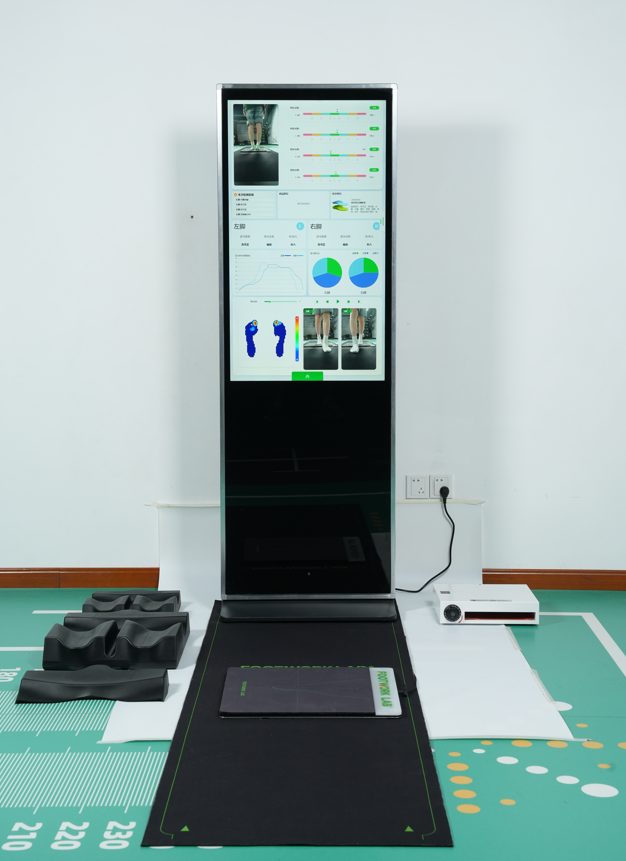
Sensing surfaces drift, and the drift is slow enough to be invisible without a reference. A known load, or a repeat of a reference capture recorded at the start of a session, takes about a minute and is what lets an operator attribute a change to the person.
Recording the check matters as much as doing it. A note that a reference was run on the day turns a disputed reading into a checkable one, and it is the cheapest quality control available to a small practice.
Shape and load are not the same axis
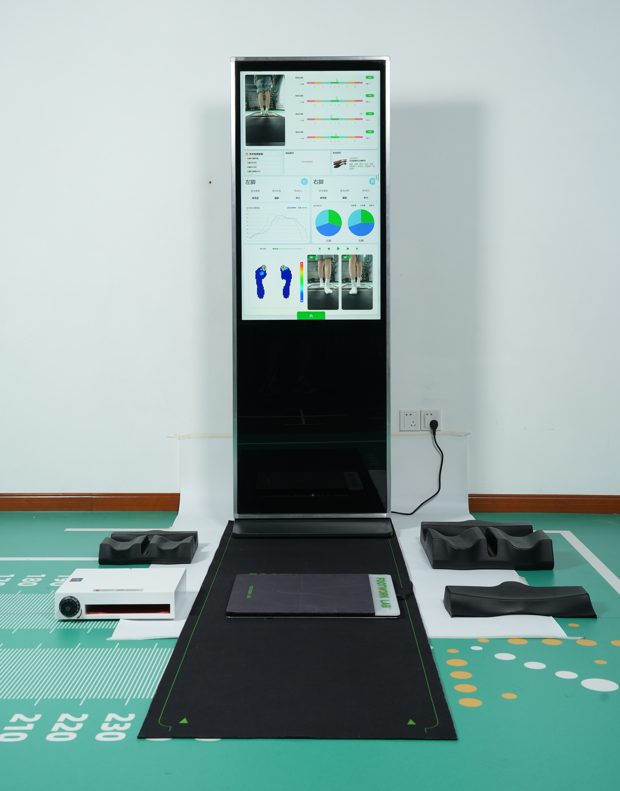
A pressure record describes load. A shape capture describes form. Confusing them is the most common specification error in this category, because a listing will often use one phrase for both.
Where a device is being specified, the question is usually about both: how the foot loads, and what shape the device has to match. A record that provides one and not the other is not wrong, but it is incomplete for that purpose and the gap has to be filled elsewhere.
Stating which the system provides, on the report, prevents the error. It is one line and it removes the most common cause of a pair that is technically correct and practically wrong.
When a number should not be used
Three situations argue against using a reading. A capture taken under conditions that were not recorded. A session where the person’s presentation was obviously unusual — an injury, an unfamiliar shoe, a hurried appointment. And any comparison across operators before the protocol exists.
In each case the honest move is to re-capture rather than to annotate. A re-run takes ninety seconds; an annotated bad record stays in the file and gets compared against later.
What a durable report contains
Five sections, in order: what was captured and when, with the conditions; what the readings show, in language the person can read; what the operator observed; the plan; and the review date.
The third is the one that cannot be reconstructed from data, and the fifth is what turns a measurement into a service. Reports missing either tend to be filed rather than used.
Standardising before the first comparison
The right sequence is: write the conditions line and the protocol, run ten practice captures on colleagues, then start capturing for real. Doing it in that order means the first review appointment has something to compare against.
Doing it the other way round means the first few months of records are unusable for comparison, which is discovered at the first review and usually attributed to the equipment.
What to ask before buying
Three questions. Can the report carry a conditions line the practice writes? Is there a documented reference or calibration routine? And can records be exported and searched by the practice in its own system?
These separate a system designed for a workflow from one designed for a demonstration, and none of them appear on a specification sheet.
Calibration records and the audit question
A calibration routine produces a record, and the record is what answers an audit. One line per session — reference run, date, operator — is enough, and it converts a question about data quality into a checkable answer.
Practices that keep it find it useful for a second reason: it shows when drift started, which is often correlated with something mundane like a change of room, a new surface or a different operator.
The record does not need to be elaborate. A column in the same file as the session notes is sufficient, and it takes seconds to maintain once it is part of the routine.
Comparing across sites
Groups running more than one location face a harder version of the same problem, because conventions differ by site as well as by operator. Two branches with the same equipment can produce records that cannot be compared, and neither knows it.
The remedy is the same protocol, written once and used at both sites, plus a periodic cross-check: the same person captured at each location and the records compared. It takes an hour twice a year and it surfaces convention drift early.
Where a group specifies devices centrally, this matters commercially as well, because a specification sent from one site and built for another has to mean the same thing at both ends.
What to do with an outlier
An outlier is a reading that does not fit the rest of the session: a single pass with unusual timing, one side markedly different without an observation to explain it. The temptation is to keep it and note it.
The better habit is to re-capture. Ninety seconds resolves what an annotation leaves ambiguous, and an annotated outlier tends to be read later as if it were a normal record.
Where an outlier repeats across several captures, it stops being an outlier and becomes a finding worth recording properly: conditions, observation, and a note that it was consistent across passes.
Choosing on repeatability rather than specification
The most useful supplier evaluation in this category is to capture the same person several times and compare. It takes five minutes during a demonstration and it answers the question that matters.
A system that produces five similar records is a system a service can build on. One that produces five different ones will generate an archive that cannot be used, regardless of how impressive the specification looks.
That is not an argument against resolution or sensor count; those matter for particular questions. It is an argument for testing the property a service depends on before buying rather than discovering it after.
Where a group is standardising across sites, the same test run at each location is also the cheapest way to confirm that conventions match.
Two further points on durability. The first is that a record is only as durable as its storage. Reports kept on the capture device are retrieved when somebody remembers to export; reports kept in the practice system are retrieved during the consultation, which is when they are useful.
The second is about naming. A file named after a person and a date is findable by somebody who was not there. A folder of images is technically complete and practically unsearchable, and the difference appears at the first reorder.
A third point worth stating: durability is a property of the process rather than of the equipment, and it is therefore available to any practice regardless of what it bought.
That is the encouraging part. The improvements that matter most here — a conditions line, a protocol, a reference check — cost nothing and can be started this week.
And they make the next purchase decision easier, because the requirement is finally stated in terms of output.
A closing note on what to measure first. Before comparing systems, measure the service: how many sessions run a week, how many reviews are attended, and how many records can be retrieved without asking anybody. Those three say more about readiness than any specification.
Where the third number is low, the fix is documentation rather than equipment, and it is available immediately.
Where all three are healthy, the equipment comparison becomes straightforward, because the requirement is finally stated in terms of what the service needs to produce.
It is also worth deciding what the service will do when the numbers are healthy but the record is incomplete. Re-capturing is the answer, and saying so in the protocol removes the judgement call at the time.
That single rule prevents more unusable records than any amount of equipment precision.
And it costs ninety seconds, which is the cheapest quality control available to any practice.
Where a service is deciding what to standardise first, the order that works is conditions, then protocol, then reference check, then storage. Each is cheap, and each removes a class of unusable record.
What we would do next
Write the protocol and the conditions line before the first real session, and run ten practice captures. Add a daily reference check. Then choose the system that answers the question the service is actually asked. Our FAQ page states what each system records, and a short conversation settles it faster than a comparison sheet.
Frequently asked questions
Which readings are stable across sessions?
Overall load distribution between sides, stance characteristics under a fixed convention, and camera-based alignment observations. Peak values at points and timing measures are more sensitive to conditions.
What causes most apparent drift between visits?
Conditions rather than change: footwear, stance convention, settling time, surface and the instruction given. A conditions line on every report makes a difference attributable.
How do we make two operators comparable?
A written protocol covering the convention, the instruction wording, settling time and report structure. Four pages, and a new operator produces comparable records within a week.
Is a daily calibration check necessary?
Yes, and it takes about a minute. A known load or a reference capture recorded at the start of a session lets an operator attribute a change to the person rather than to the equipment.
Does a pressure record give foot shape?
No. It describes load. Where a device is specified, both load and form usually matter, and stating which the system provides on the report prevents the most common specification error.
What minimums and support apply?
One unit for machines. Twelve months against non-human damage with free parts, seven days of testing before dispatch, installation training, and a dedicated WhatsApp group with engineers and remote assistance.
This article is intended for professional and educational reference. It is not medical advice. Foot assessment equipment produces measurements and images; clinical interpretation and any decision about care remain the responsibility of a qualified professional. Certification scope is limited to the documentation we hold: European Union certification and ISO quality system certification.