
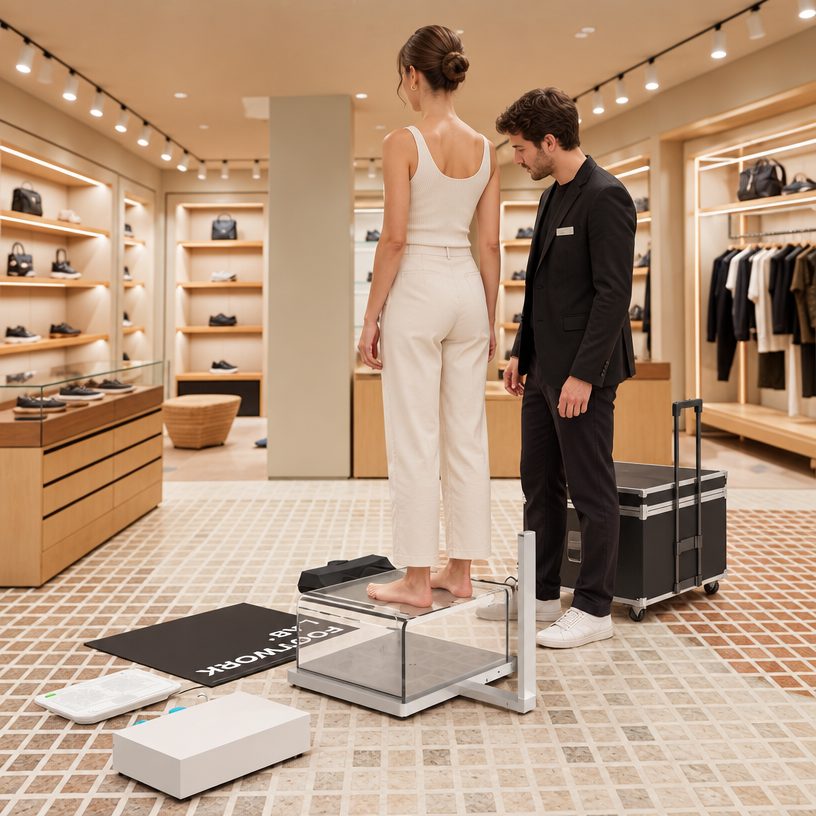
A customer walks in asking for a pair of trail runners, and before the fitter reaches for a single box, she is asked to take her shoes off and stand on a plate for two minutes. It is a small detour, and it changes the shape of everything that follows. The fitter who watched her stand and walk now has a record to talk from: a footprint with a length and a width, an arch that behaves one way standing and another under load, an alignment image showing how her legs sit above her feet. Without it, the same conversation would run on hunches and on whatever the customer remembers about her last pair. This article is about that detour and what it is actually worth. It covers what a foot scan settles before the shoe choice, what it deliberately leaves open, how the last-width and support conversations change when there is something to point at, why the file keeps working long after the till receipt, and where the honest difference lies between buying by feel and buying with a record. It is written from the manufacturer’s side, for retailers deciding whether the two minutes belong in their fitting routine at all.
The F2 is a foot pressure detection system: a fabric-sensing plate taking static, dynamic and balance records, a lower-limb camera and a posture camera capturing alignment in the same session, and AI-assisted report generation assembling the findings into one document. It was built for exactly this kind of room — shoe stores, foot therapy centres, podiatry clinics, gyms — where sessions are short and the record has to earn its keep in a single visit.
What the record is for before the first box comes down
The most common misunderstanding about a pre-purchase scan is that it is a shoe selector. It is not, and the sooner a store’s staff stop describing it as one, the better the sessions go. What the plate records is the foot as it presents today: where load rests at rest, how the sole makes contact through a walk, how the two sides compare. None of that is a shoe. All of it is context that a shoe will have to live with.
The static pass gives the fitter the groundwork. Footprint length and width, the contact area under the sole, the arch presentation at rest, and the balance between left and right. The dynamic pass adds the walk: the foot axis angle, the split between contact phase and flat phase, peak and mean pressure, and the speed at which the centre of pressure travels forward. The cameras add how the leg aligns above the foot while all of that happens beneath it.
What makes this useful before a shoe choice rather than after is timing. A fitter who has watched the record can reach for the right shelf — wider lasts, more structured uppers, a different category entirely — instead of discovering the same thing through three failed try-ons. The customer does not hear a lecture; she notices only that the first pair brought out already accounts for something she never mentioned.
There is a second, quieter use. The scan gives the conversation a shared object. Instead of the fitter asserting and the customer doubting, both look at the same print on the screen. In our experience the disagreements between fitter and customer rarely concern the shoe at all; they concern whose account of the foot is the starting point. The record settles that before it can become friction.
What the scan settles, and what it only narrows
The record settles measurable things. A footprint length that does not match the size the customer believes she wears. A width that runs fuller or narrower than her current shoe suggests. An arch that reads one category standing and another under load. An asymmetry between the two feet that neither she nor the fitter would have named unaided. These are recorded quantities, and they are the parts of the session a store can stand behind without hesitation.
The record narrows other things without settling them. How much support a shoe should carry, how much volume the upper needs, whether a neutral build or a more guided one suits the walk — the record informs each of these, and the fitter’s judgement completes them against the shoes actually on the shelf. Comfort, the use the shoe will be put to, the budget conversation: none of these come off a pressure plate, and pretending otherwise is how stores get into arguments they cannot win.
The division matters commercially. When a customer asks “so which shoe is mine?”, the honest answer runs: the record says this about your foot, those two or three models match it, and the wearing decides. A fitter who claims the scan picked the shoe has promised something the equipment cannot deliver, and the customer who disagrees with her feet on day two has nowhere to direct the disappointment except back at the counter.
One limit belongs here and we state it plainly to every retailer: the equipment records, it does not read. Every report carries a line saying the data is for reference, and the interpretation of the findings belongs to a qualified professional. A fitting conversation that stays inside that boundary is a fitting conversation. One that drifts past it becomes something the store was never equipped to run.
The last width conversation, with something to point at
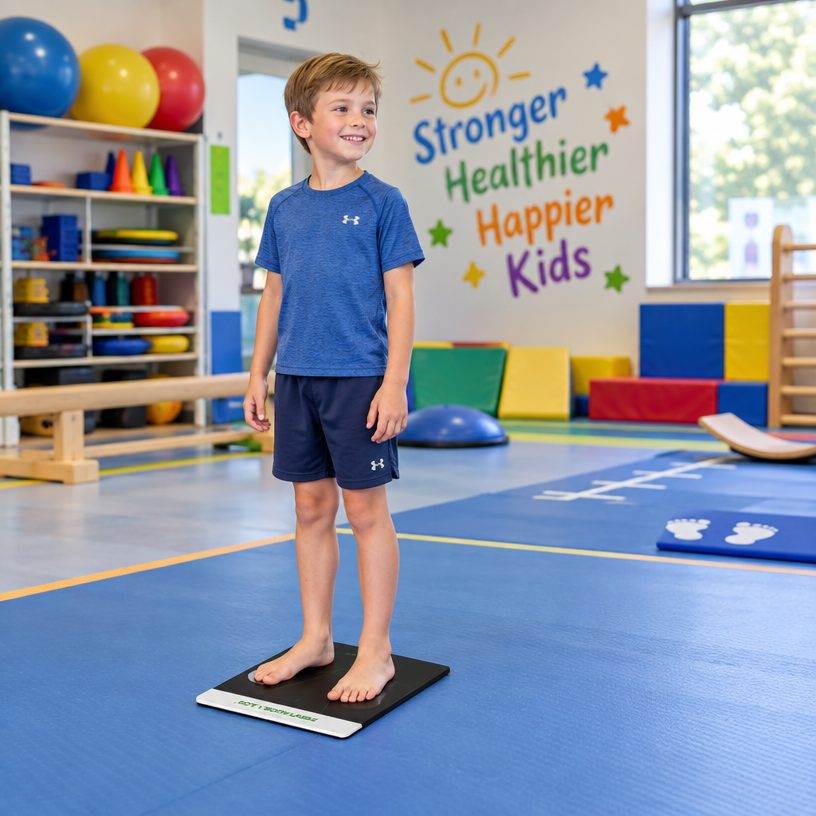
Width is where the pre-purchase record earns the most, because width is where shop fittings most often fail. A shoe can be correct in length and still load the foot badly if the last is the wrong shape for the sole that has to sit inside it. The customer cannot articulate this; she only knows the pair felt fine in the shop and unbearable by Thursday. The record turns that vague history into something visible before it happens.
The footprint on the report shows how load spreads across the sole and where the outline runs full or narrow. Held next to the shoe’s own description, it lets the fitter say something specific: this foot runs fuller through the forefoot than this last allows, or this foot will swim in that shape. The customer sees her own print beside the reasoning, which is a very different experience from being told her size has changed.
Stores that fit width from the record report the downstream effect in returns, and the mechanism is not mysterious. A shoe chosen against a recorded width is chosen against evidence the customer has already seen and accepted. When it fits, she credits the process. When it does not, the fitter has a documented starting point for the adjustment rather than a fresh guess. Either way the store keeps its credibility, which is the asset returns usually spend.
Support advice that starts from a shape instead of a hunch
The second conversation the record changes concerns support. Asked cold, most customers cannot say whether their feet want structure or freedom; asked while looking at their own arch under load, most can follow the reasoning. A foot that presents one way standing and flattens visibly through the walk is a straightforward starting point for a discussion about guided builds. A foot that holds its shape suggests the opposite direction. Neither reading is a verdict; both are better than a hunch.
The alignment cameras add the part the plate cannot see. How the knee tracks above the foot, how the posture sits above that — these images give the fitter a fuller picture of the column the shoe will be asked to carry. A customer whose walk loads the inside edge heavily is a different fitting conversation from one whose load sits outside, even at the same length and width, and the record is often the only way the difference becomes visible in a shop setting.
Where this goes wrong is when the conversation slides from support toward symptoms. A customer who arrived for shoes may mention a heel that has been complaining for months. The record can still be taken, but the reading of a symptom belongs to a clinician, and the fitter who starts interpreting it has taken on a role the shop cannot hold. The house rule we pass on: describe the record, fit the shoe, and refer whenever the opening line is a complaint rather than a purchase.
Referral is not the loss it sounds like. A customer handed a report and a card for the nearest podiatry clinic leaves with next steps instead of a shrug, and she remembers which shop handled it that way. In our experience the clinics return the traffic: people whose records show nothing needing care come back for the fitting, and the shop that drew the boundary honestly is the one they come back to.
The file that stays: why the record outlives the purchase
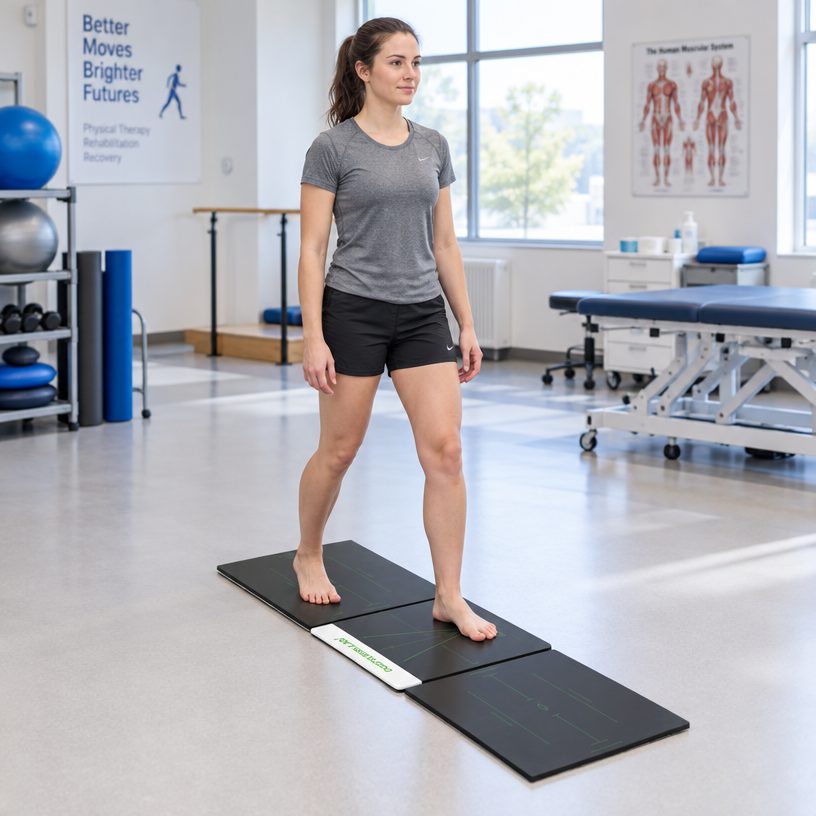
The shoe is worn, the receipt is filed, and the scan is the part that keeps working. A record taken today becomes valuable again in six months or a season, when the customer returns and the question is not “what shoes shall we look at” but “what has changed”. Feet change with age, with workload, with a new job on a harder floor. A store holding the earlier file can run a comparable session and show the difference rather than assert it.
Comparability is the condition, and it is where most programmes quietly fail. The second record only means something against the first if both were taken the same way: same stance instructions, same crossing count, same starting foot, the plate in the same position on the floor. Stores that improvise each session discover the problem at the retest, when the comparison will not hold and nobody can say whether the feet changed or the routine did.
This is why we press retailers on the written routine more than on any feature of the equipment. One page — pass order, counts, balance-trial rule — kept by the plate and briefed to every new operator, does more for the value of the file than anything on a specification sheet. The file is an asset only insofar as the sessions that feed it are repeatable, and repeatability is a discipline, not a purchase.
Retest programmes also carry the commercial life of the scan. Running clubs, corporate boot contracts, a fitting programme for staff who stand all day — these are structures that bring the customer back on a schedule, and the retest is what makes the second visit substantive rather than promotional. The store that treats the file as a service builds a return habit the shoe alone never creates. That habit, in our observation, outlasts any single purchase.
Buying by feel versus buying with a record
Feel is not the enemy. A customer who tries a shoe and reports it comfortable has delivered a verdict no plate can override, and comfort remains the final authority in every fitting. The record’s job is not to outvote the foot; it is to explain, when feel and fit pull in different directions, which of the two is describing the shoe and which is describing an adjustment the foot is making around it.
That case comes up more than retailers expect. A shoe can feel pleasant in a short try-on while asking the foot to work around a last that does not suit it — the discomfort arrives days later, when the adjustment stops being free. The record raises the question before the purchase: the walk loads the inside edge, the width runs tight through the forefoot, and the pair the customer loved is worth a second look. Sometimes the answer is still that shoe; sometimes it is the model beside it. Either way the choice is made with the evidence on the table.
There are customers who decline the scan, and the right response is to let them. The two minutes are an offer, not a gate, and a store that makes the plate feel like an obligation converts a service into a hurdle. Some of the best sessions we have heard described started with a refusal — the customer watched someone else’s session, came back on the next visit and asked for it by name. The plate sells itself to the person standing near it, provided the store lets it.
What we would tell any retailer weighing the routine is this: the scan does not replace the fitter, the feel or the shelf. It replaces the guesswork at the front of the conversation. Everything a good fitter used to infer across three try-ons is on the screen before the first box comes down, and the time it returns to both sides is where the fitting actually happens.
Frequently asked questions
Does the scan pick the shoe for the customer?
No, and a store should not describe it that way. The record describes the foot — length, width, arch behaviour under load, alignment — and the fitter uses it to reach for the right shelf and explain the recommendation. Comfort and the wearing remain the customer’s verdict. The scan equips the conversation; it does not end it.
How long does a pre-purchase session take?
The measurement part is short: a static pass, a few recorded crossings of the plate and, where the room allows, a balance trial. The conversation afterwards is where the value lands, and good stores budget for it deliberately. The whole exchange is still shorter than two failed try-ons, which is what it usually replaces.
What exactly does the report show?
Footprint length and width, contact area, the distribution of pressure across the sole, foot axis angle, the percentages of the contact and flat phases, peak and mean pressure, the speed of the centre of pressure, and the camera images of lower-limb alignment and posture. The findings sit in one report the fitter can read from across the counter.
Is the report a diagnosis?
No. Every report carries a line stating the data is for reference, and reading the findings belongs to a qualified professional. The equipment produces measurements and images. Where a customer’s question concerns a symptom rather than a shoe, the right move for the store is to describe the record and refer onward.
Can the record be compared with one from a previous visit?
Yes, provided both sessions ran the same routine: the same stance instructions, the same crossing count, the same starting foot, the plate in the same position. Stores that keep a written one-page routine get comparable records; stores that improvise each session usually discover the problem at the retest, when the comparison quietly fails.
What if the customer refuses the scan?
Let them. The session is an offer, not a gate, and a store that pushes converts a service into a hurdle. Many customers who decline once ask for the scan on a later visit after watching someone else’s. A fitting can proceed on conversation and try-on alone whenever the customer prefers it.
What does a store need to run the routine well?
A written one-page session routine, floor marks for the plate and cameras, and two operators briefed the same way. On the equipment side, the machine carries a one-unit minimum order, every unit is tested at the plant for seven days before dispatch, and the warranty covers twelve months against non-human damage with free parts.
What we would do next
Decide where the two minutes sit in your fitting routine before the next busy Saturday: after the greeting and before the shelf, with the pass order and the crossing count written on one page. If you want a second pair of eyes on that page, send it through the contact page — we read retailer routines often enough to spot the usual gaps quickly. The F2 system page lists the record types and report items in the equipment’s own wording.
For the store-side view of the same question, a footwear store that fits by record follows one shop’s routine from installation onward, and foot type is a record, not a verdict covers the boundary between describing a foot and judging it. Both are shorter than this article and useful as staff briefings.
This article is intended for professional and educational reference. It is not medical advice. Foot assessment equipment produces measurements and images; clinical interpretation and any decision about care remain the responsibility of a qualified professional. Certification scope is limited to the documentation we hold: European Union certification and ISO quality system certification.