
A tennis point is a series of emergencies: brake, plant, push off, recover, and do it again within seconds, mostly sideways, on a surface that gives nothing back. Players and club coaches who ask about tennis insoles and lateral load are usually asking one question in different words: why does a build that works for a runner feel wrong on a court? The answer is that the two sports load the foot through entirely different patterns. Running repeats one direction of travel at a roughly steady rhythm, and the foot arrives at each step in a predictable way. Tennis and padel interrupt constantly, in every direction, with the foot often turned across its natural line while it does the work, and with all of it landing on a hard court that returns every gram of it. A build specified from a court player’s record has to hold the foot against sideways forces, keep the forefoot alive through hundreds of short braking contacts, and still sit inside a shoe that was cut low and close for exactly these movements. This article works through what stop-start loads actually do on a hard court, how the shoe itself is read before anything is built, what a sport build must allow for, which questions on the intake form separate one player from another, how the first weeks after delivery are handled, and where padel differs from tennis in ways the build should know about.
A sport that never stops moving sideways
Watch a rally from behind the baseline and count the directions. The first step to a wide ball is a push towards the sideline, the recovery is an angled drive back towards the middle, the approach is forward, the smash is up and then down, and between each of these the foot plants, brakes and re-launches on a surface with almost no cushioning of its own. Over a set, hundreds of these contacts accumulate; over a season, tens of thousands. The foot spends most of its court life in the transitions rather than in steady travel, and the transitions are precisely where its structure is loaded across directions at once: the forefoot gripping while the heel is still moving, the outer edge taking the braking, the toes holding the base while the body turns above them.
The hard court multiplies the story. Unlike clay, which lets the foot slide a controlled distance and spreads the braking over a moment, a hard acrylic surface ends each step abruptly, and everything the braking does not absorb arrives in the foot as it stands. Padel adds its own texture: the synthetic turf that covers most padel courts behaves differently again, and the surrounding glass walls keep rallies alive longer, which means more changes of direction per point than the equivalent tennis exchange.
None of this is an argument against the sports; it is the reason their builds cannot be copied from a running specification. The load profile of a court player is irregular by nature, concentrated in the forefoot and the outer margin, and repeated at a frequency that no leisure walking pattern approaches. That is the profile the workshop is actually building for, and knowing it is the difference between a pair that survives the season and one that lives in the drawer.
What stop-start does to a foot on hard ground
Braking is the court’s signature load. Every wide ball ends in a deceleration the foot performs with the outer edge of the forefoot, often with the toes curled for grip, on a surface that stops the shoe instantly. Push-off is its mirror: the same forefoot region drives the body in a new direction, loaded across its width rather than along it. Where a runner’s forefoot shares the work through a rolling contact, a court player’s forefoot is asked to grab and launch, repeatedly, with the shoe often angled across the foot’s own line. The outside of the forefoot and the area behind the smallest toes carry a share of session load that running records never show, and the first metatarsal region works through contacts that arrive from directions the bone column was not pointed at.
This is why the questions court players ask after their first sessions with a new pair are so specific. Where did you feel the difference: braking to the wide side, or the recovery steps, or the serve landing? The answers map onto the load pattern rather than around it, and our article on taking a customer’s own words into a build specification covers how those answers travel from the player to the workshop as usable lines rather than impressions. A pair built from a captured record and refined with this feedback addresses the court’s pattern; a pair bought as a generic “sport” insert usually addresses a runner’s.
Read the shoe before the build
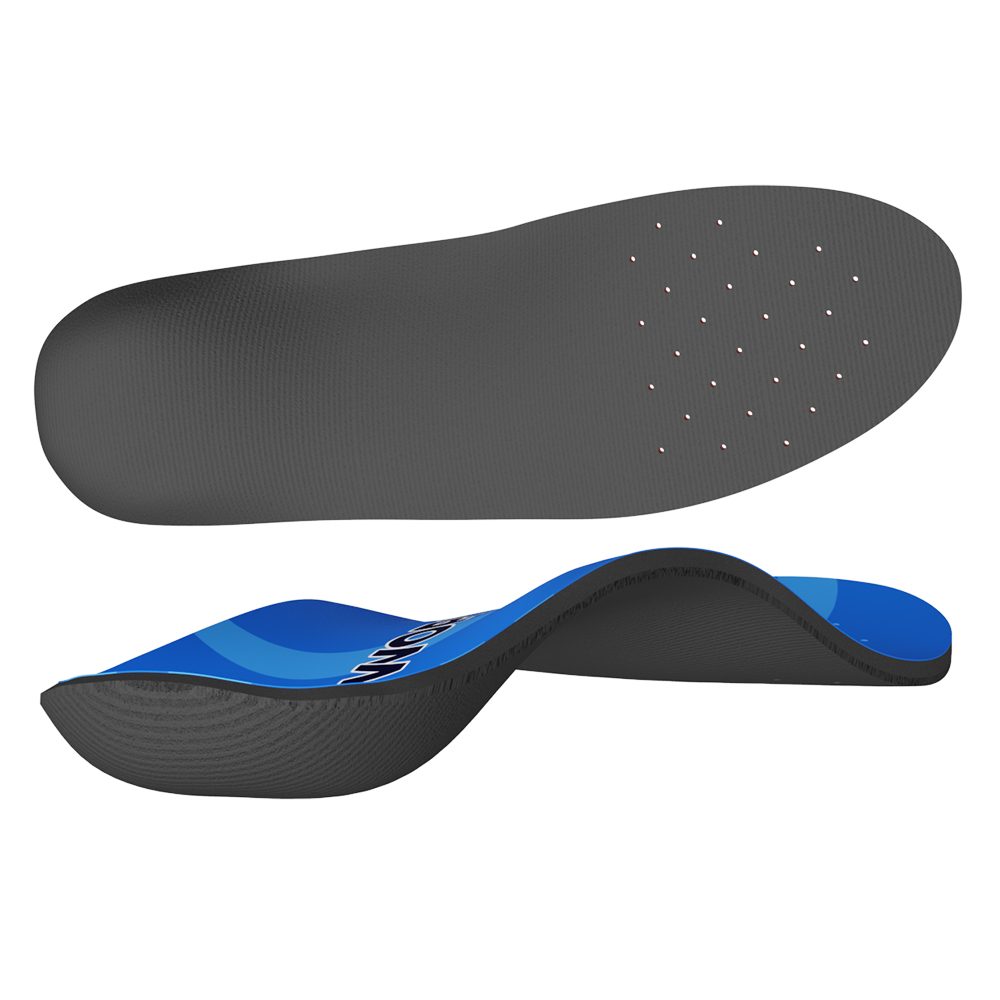
The court shoe is a specialist tool and it tells its own story, so the reading of the shoe comes before any decisions about the build. Outsole first: where is the rubber worn? A player who drags the toe on serves wears the forefoot margin in a signature patch; a player who slides into stops wears the lateral edge; a beginner whose movement is mostly forward-and-back wears the heel and the ball of the foot in a running-like pattern. The outsole wear is a map of what the player actually does, which is often more honest than what the player describes. Inside, the lining and the factory footbed carry the other half of the story: compression under the forefoot, a heel counter that has taken shape around the player’s own heel, and sometimes a print of the foot itself worn into the surface. Our article on reading a footbed inside a shoe that arrived already worn covers this in detail, because the interior of a used court shoe says more about fit than any description.
Then the shoe’s construction, because it constrains what the build can be. Court shoes are cut low and close to hold the foot during lateral work, which means the space available inside is honest about its limits: a full-length build has to be slim through the toe box or it will lift the toes into the roof of the shoe, and our piece on fitting a full-length insole into a low-volume court shoe, socks and all, works through that fitting problem directly. The sole is firm and low to the ground by design, which helps stability and limits how much thickness the build can add before it changes how the shoe behaves. And the fastening matters: a court shoe with solid lacing gives the build an anchor it can trust, which matters more on a court than in almost any other setting, because the alternative is the build and the foot moving slightly differently inside the shoe on every lateral step.
What a sport build has to allow for
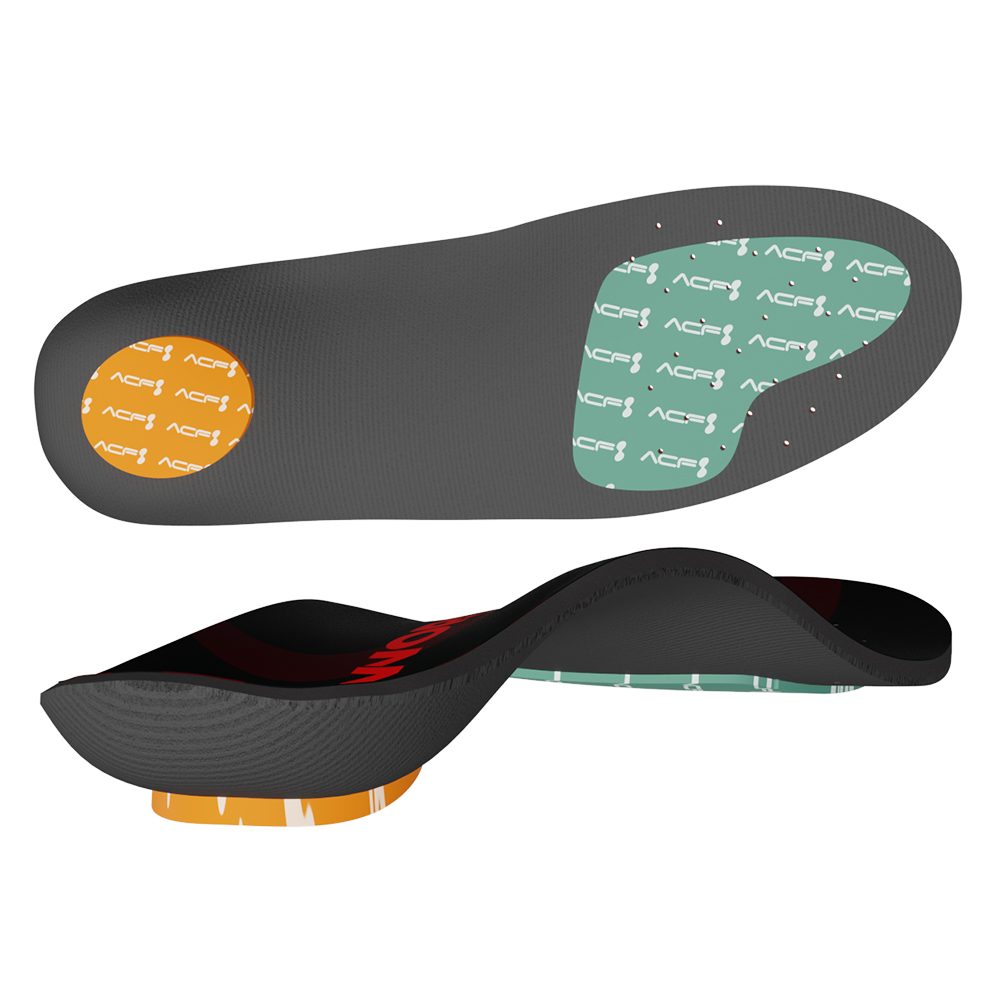
Lateral containment sits at the top of the list. The build’s edges and its shape have to work with the shoe to keep the foot from sliding across the insole during the plant, because a foot that shifts sideways inside its own shoe on every change of direction loses the shoe’s support and adds its own work on top. That is a matter of the build’s contour matching the captured foot closely at the midfoot and forefoot, of a surface that grips rather than glides, and of the shoe’s fastening doing its part. Next comes forefoot behaviour: the build must cushion the repeated short braking contacts without thickening the front of the shoe, because court players need to feel the ground through the forefoot to time their steps, and a soft, thick forefoot takes that feel away. The balance between protection and feedback is the central craft decision in a court build, and our article on where cushioning stops helping sets out the reasoning.
Heel hold and the rear foot follow. Serve landing and hard stops drive load into the heel, and a build that sits still in the shoe lets the shoe’s own heel counter do its work instead of fighting it. Under all of it runs one constraint the workshop respects from the start: the build works with the shoe’s character, low and close and firm, rather than trying to convert a court shoe into a cushioned trainer. Across the insole categories, the court specification is recognisable by what it declines to do as much as by what it adds, and that restraint is deliberate.
What the intake form asks a court player
The form that feeds a court build asks the questions that separate one player’s week from another’s. How many sessions per week, and how long is each? A club player training twice a week and a coach standing through six hours of lessons a day generate different loads even with identical foot structure. Which surface is home: hard court, clay, padel turf, or a mix that changes with the season? Our article on the same foot across different winter surfaces covers how a change of surface changes the record, and the intake needs to know which surface the majority of hours sit on. Singles or doubles, because the volume of wide-ball braking differs. Position and style, where relevant: a baseline grinder and a serve-and-volley player brake differently. And the history line: has the ankle rolled on court before, and if so, on which side? That answer shapes the containment decision more than any pressure number does.
The form also records the shoe, specifically and by name, because a build for a low, firm court shoe is specified differently from one for the higher, softer trainer the player wears to the office. A player with two court shoes in rotation should say so; the workshop may specify the build to work in both or note that it is tuned to the stiffer pair. What the form is really collecting is the week in which the pair has to perform, and the closer the week is described, the fewer surprises the first month holds.
The weeks after delivery
A court pair is brought into play in stages, and the stages are worth insisting on even with players impatient to compete in them. Practice first: short hitting sessions where the movements are known and controlled, so the foot and the build learn each other before a match asks both for maximum effort. Then full practice, then matches. Skipping to match play in the first week is the pattern behind most first-month disappointments, not because the build is wrong but because the foot met it under the sport’s hardest conditions before it had met the build at all.
The feedback that matters arrives in specific sentences, and players should be told which ones to bring back. Where the edge sits after a hard session. Whether the foot stays put on the plant or slides a fraction. How the forefoot feels in the last third of a long session, when fatigue changes everything. Whether anything reads differently in the second session of a weekend compared with the first. Our article on the first two weeks sets out the reporting rhythm that works, and for court players the same rhythm applies with one addition: the report should name the surface and the shoe used in each session, because both change what the build is being asked to do. Adjustments in response to that feedback are part of the build’s life, not a correction of a mistake.
Padel is not tennis
Padel earns its own paragraph because its movement pattern differs from tennis in ways that reach the foot. The turf surface used on most padel courts lets the shoe slide a short, controlled distance on the plant, which spreads the braking that a hard tennis court concentrates, and the walls keep points alive longer, raising the number of changes of direction per exchange. The racket is shorter and the court smaller, so movements are quicker but shorter, and the player spends more time facing the glass and moving backwards than a tennis player ever does. Backward movement loads the foot through patterns that court work in tennis rarely produces, and the build specified for a padel player takes that into account alongside the turf’s own behaviour.
The practical consequences for the pair are modest but real: the same captured record feeds the build, but the specification weighs the sliding surface, the backward travel and the longer points differently, and the shoe involved is usually a padel-specific model with its own tread and its own interior shape. Players who split their week between tennis and padel should say so plainly at intake, because the workshop can then weigh which surface dominates the hours, or in some cases specify for the pair of sports together rather than pretending they are one sport with two names. The honesty costs a line on the form and saves a season of small compromises.
Frequently asked questions
Why does a running insole feel wrong on a tennis court?
Because the load pattern differs. Running repeats one direction of travel at a steady rhythm; tennis brakes, plants and launches in every direction with the foot often angled across its own line. A build specified from a court player’s record prioritises lateral containment and forefoot behaviour, which a running specification was never asked to do.
Can a custom insole fit inside a low court shoe?
Yes, if it is specified against that shoe. Court shoes are cut low and close, so the build is kept slim through the toe box and shaped to the space the shoe actually offers. Bring the shoes, worn, so the interior can be read before the build is specified rather than after it disappoints.
Should I play matches in a new pair straight away?
No. Introduce the pair in stages: short practice sessions first, then full practice, then matches. Players who skip to match play meet the build under the sport’s hardest conditions before the foot has learned it, which is the pattern behind most first-month disappointments.
What should I report back after the first sessions?
Where the edge sits after a hard session, whether the foot stays put on the plant, how the forefoot feels in the last third of a long session, and whether anything differs between the first and second sessions of a weekend. Name the surface and the shoe for each session, because both change what the build is doing.
Does padel need a different specification from tennis?
The same captured record feeds both, but the specification weighs the surfaces differently: padel turf spreads the braking that a hard court concentrates, walls keep points longer, and backward movement loads the foot in patterns tennis rarely produces. Tell the workshop if you split your week between the two, so the pair is specified for the hours as they actually fall.
Why does the workshop ask about rolled ankles?
Because the answer shapes the containment decision more than any pressure number. A player whose ankle has rolled on court before needs a build that works with the shoe’s fastening and heel counter to hold the foot steady through the plant, and the side on which it happened is part of that specification.
How long does a court pair last before it should be reviewed?
It depends on the hours: a coach on court daily and a club player training twice a week wear a pair at very different rates. The top cover and the edges tell the state of the pair better than the calendar, and a review that reads wear rather than age decides whether the pair continues, is adjusted, or is rebuilt.
What we would do next
If a court pair is on the horizon, start with the shoes: bring the pair that does most of the season’s hours, worn, so the interior and the outsole wear can be read before anything is specified. Our article on reading a footbed inside an already-worn shoe shows what to look for, and the insole categories page sets out how a court specification differs from daily and running builds. When the pair arrives, follow the staged introduction and use the reporting rhythm in the first two weeks, naming the surface and the shoe for every session; and if the shoe’s own interior fit needs attention first, our piece on a full-length insole in a low-volume court shoe covers the fitting sequence. The FAQ page answers the questions we handle most often by message, and anything specific to your own week on court goes through the contact page.
This article is intended for professional and educational reference. It is not medical advice. Foot assessment equipment produces measurements and images; clinical interpretation and any decision about care remain the responsibility of a qualified professional. Certification scope is limited to the documentation we hold: European Union certification and ISO quality system certification.