
He slides out from under the van on the creeper, sits up on the concrete, and the first thing he does is rub the outside edge of his heel with his thumb. Not his back, not his shoulders — the heel. He has turned wrenches for twenty-two years and he can tell you the torque value of every fastener on that vehicle, but he has never once thought about what a workshop floor does to a foot that spends half its day braced against a chassis and the other half standing at a bench. He assumed feet simply hurt in this trade, the way hands get greasy.
Garages are one of those workplaces nobody photographs from the ankles down, and that is exactly where the interesting part happens. This piece is written for the clinics, physio rooms and orthotic workshops that meet people like him: what a day of creepers, lift work and cold concrete actually asks of a foot, which questions to ask before you build anything, and how to make the work boots part of the answer instead of part of the problem.
The working day on a workshop floor
Ask a mechanic what he does all day and you will get a list of vehicles, not positions. So it helps to walk the day yourself before you ever put a question to the customer. The morning starts under a car on a creeper: flat on the back, arms overhead, head tipped back against the sill, heels dug into the floor for purchase every time a bolt fights back. Then the vehicle goes up on the lift and the day changes shape — now he is standing, reaching, rotating, half the weight on one leg while the other foot rests on nothing in particular. Brake work pulls him into a half-kneel. Tyre bays keep him walking short, heavy steps between machine and wheel. Somewhere in the middle of all of it there is the bench: standing still on concrete, both feet planted, working with the hands while the feet do nothing but hold.
Three surfaces dominate. Concrete, which is hard, cold and completely unforgiving. The creeper, which puts the body at floor level and the heels and outer edges of the feet under continuous bracing load. And the lift-side stance, which is standing, but standing with a twist — the reach forward and upward moves the centre of gravity and quietly asks the forefoot and the arch to stabilise work the arms are doing. None of these positions register as exercise. All of them compound, hour after hour, shift after shift.
The first move you can make tomorrow costs nothing: before the appointment, ask the customer to bring the boots he actually wears on the floor, not the pair he wears to the shops. Work boots carry information a conversation cannot. A heel counter compressed into a lean, a sole worn slick under the ball of the foot, the lining crushed where the foot braces against every push on a stubborn bolt — each of these is the working day written in material. Read the boots before you read anything else.
What creeper work and concrete ask of a foot
Normal walking is a rhythm. Through the gait cycle, stance alternates with swing, load rolls from heel to forefoot, and each foot gets a rest while the other carries. A workshop day destroys that rhythm almost completely, and it does so in three different ways depending on the position.
On the creeper, the foot stops being a rolling structure and becomes a brace. The heels and the outer edges dig into the floor to stop the body sliding every time the arms push, pull or turn. That is static loading on the smallest possible contact areas, held for as long as the job under the car lasts. Centre of pressure sits rearward and lateral, far from where a walking foot spends its time, and it stays there. On the lift side, the problem inverts: it is prolonged standing on concrete with a forward reach, which pushes weight toward the forefoot and asks the arch to hold a structure steady while the hands do work above it. At the bench it is plain static standing, the quietest and the most cumulative of the three.
Then there is the floor itself. Cold, hard concrete gives back nothing. Every position change, every step to the tool trolley, every pivot at the wheel is a small impact into a surface with no give. Kneeling work adds its own signature — the top of the foot pressed into the floor, the toes folded under, the forefoot carrying weight through a range it never meets in walking.
So when a mechanic tells you his feet complain at the outer heel, under the front of the foot and along the arch, in roughly that order, believe the order. It maps onto the day: bracing, standing, holding, in that sequence, for years. The description is honest, and it is the most useful specification the customer will give you.
Four questions to ask before you build anything
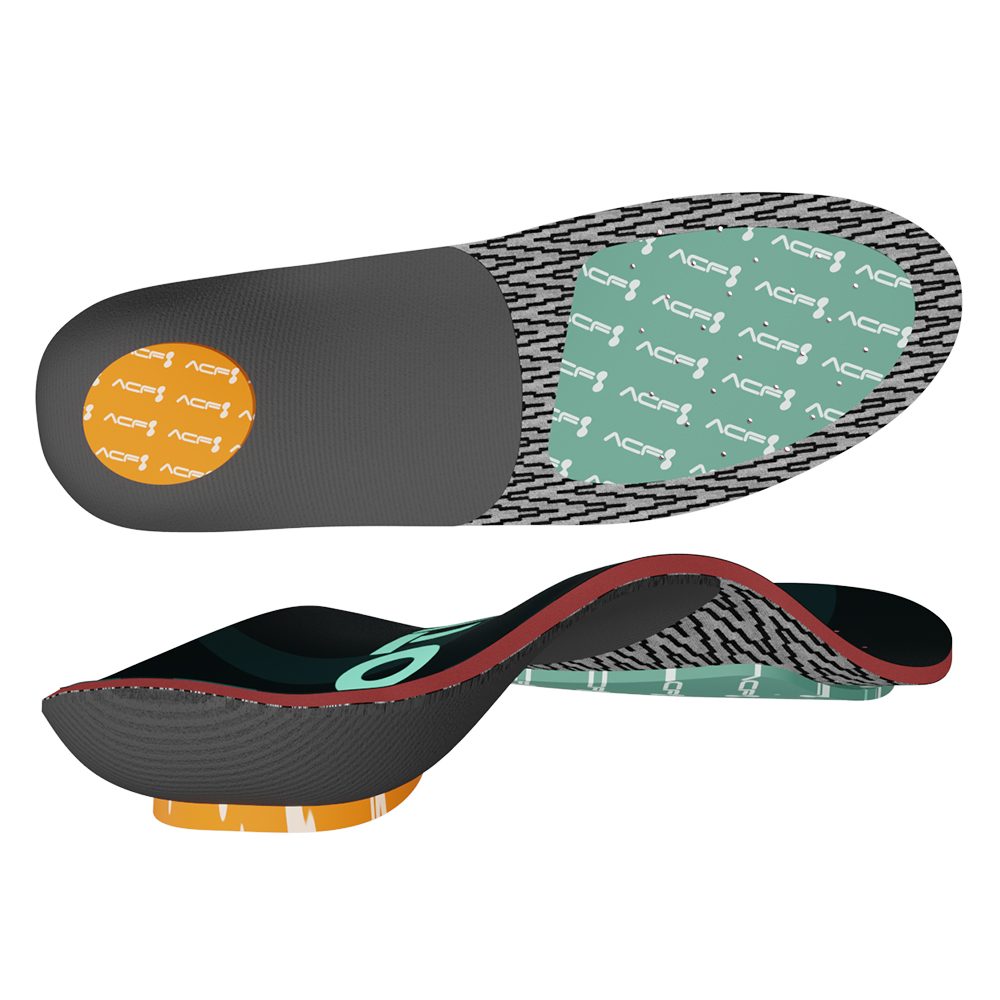
A build that answers the wrong part of the working day fails quietly. The customer wears it, feels nothing either way, and stops mentioning it. Nearly all of those misses are preventable with a short conversation done in the same order every time, before any measurement or moulding happens.
Four questions cover a mechanic’s day. First: how does the day actually split between creeper, lift and bench — a rough split in hours, whatever he can answer honestly, because each position loads a different part of the foot. Second: where does the foot end the day in complaint, in his own words — outer heel, arch, ball of the foot, toes — recorded as description, not interpretation. Third: the boots. How old, how stiff, how much depth is actually left inside, whether he keeps one pair for everything or a separate pair for weekends, and whether the soles are rated for oil the way the workshop demands. Fourth: what has already been tried, from supermarket inserts to something a colleague made, and what became of each attempt. Ask the last question without a smile. The failures customers describe are often the most precise build specification you will hear all day.
Write the four answers as four lines on the sheet and do it identically for every trade customer. Those lines decide more than any single capture: how much interior volume the build must respect, which top cover survives oil and grit, whether the build lives in the work boots or travels between pairs, and — not least — how much of the complaint the boots themselves have been causing for years while everybody blamed the floor.
What a record adds, and where it stops
Both working states deserve a record. A standing capture shows how load sits when the feet are planted, which is the closest a clinic room ever gets to the bench and the lift-side stance. A walking capture shows how the foot behaves in motion, including the short heavy steps the shop floor demands all day. Together they describe a working foot far more completely than either alone, and the disagreement between the two states is often the most informative line on the whole sheet.
You cannot recreate a creeper in your room, and you should not try. The honest approximation is to ask the customer to stand the way he stands mid-job: weight shifted, one foot braced, posture reaching forward the way it does over an engine bay. The equipment then produces its map and its pressure line, and what those images mean is a question for the qualified professional reading them — not for the machine, and not for anyone selling around it. The record is a measurement of a moment. The interpretation, and every decision that follows, belongs to the professional holding the whole file.
Watch, too, for the asymmetry most trade workers carry. One foot braces while the other positions; one side does the pushing on every stuck fastener. When the two feet disagree in the record, that disagreement is a finding to note, not noise to average away into a tidy single result. Each foot gets its own read, its own line on the sheet, and eventually its own answer.
Building into the work boot, not the size
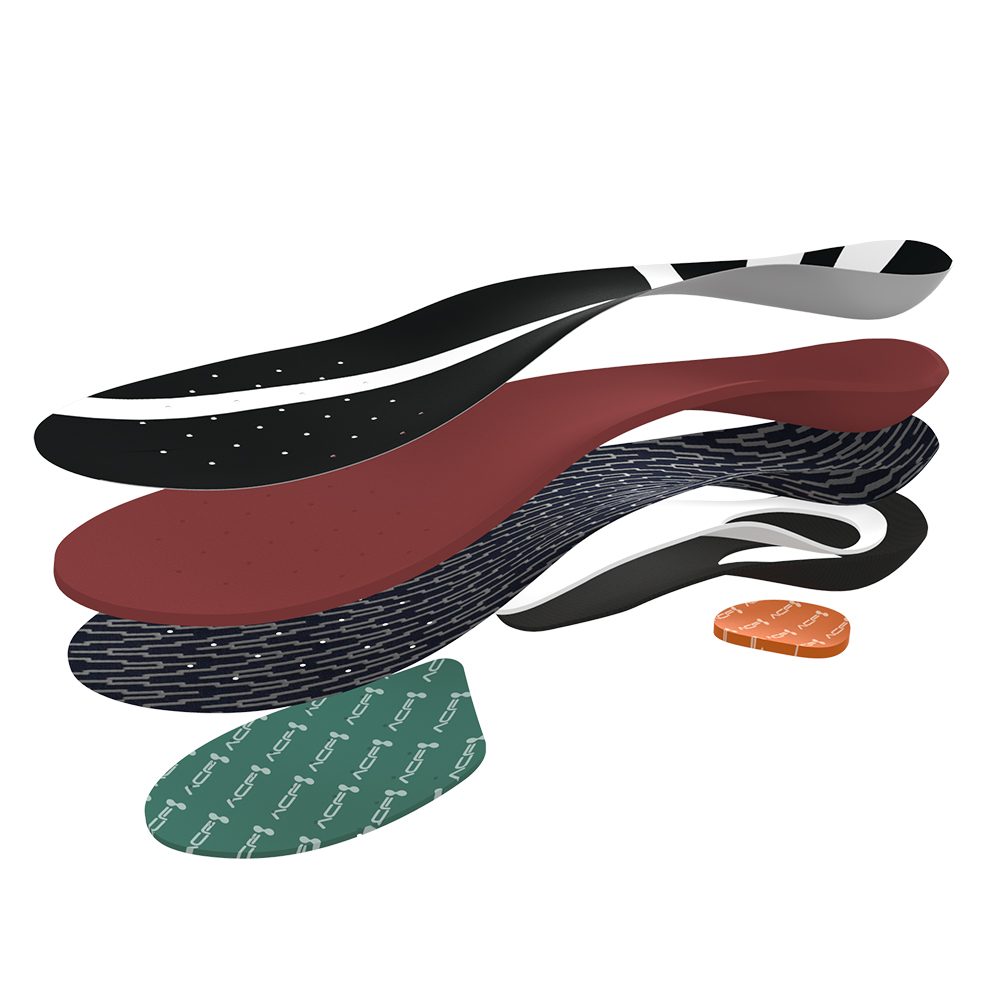
Work boots are hostile territory for anything added under a foot. A safety toe cap steals depth from the top. A stiff, oil-resistant sole refuses to flex where a build expects flex. The lining, compressed by years of bracing, has already claimed space the foot used to own. A build drawn up for a nominal shoe size rather than for the interior of the actual boot arrives, gets fitted once, and fails — not because the foot was measured badly, but because the boot was never measured at all.
This is where a pair of custom orthotic insoles earns its keep: shaped to the boot’s real interior, spreading load across the whole plantar surface instead of letting the outer heel and forefoot carry the entire day, and supporting the arch through the long static holds where nothing else gets a turn. Built that way, the addition becomes part of the boot rather than a visitor inside it, and the customer stops noticing it — which is the compliment that matters in this trade.
Materials deserve the same attention as shape. Oil, coolant and metal dust argue for a top cover that wipes clean and does not hold grit against the skin. The repeated bracing under a chassis argues for enough firmness that the support does not fold out of the way exactly when the foot leans on it. The lift-side reach argues for a heel cup deep enough to steady the heel through a shift of small position changes, hour after hour, vehicle after vehicle. And the whole build needs to respect the safety boot’s own geometry, because a build that makes the boot fit badly is a build the customer will pull out on day two and never mention again.
The old pair and the boots tell the truth
Before anything is finalised, look hard at what the feet have been wearing until now. Old inserts, even cheap ones, carry a readable story: load concentrated under the forefoot and outer heel with the rest barely touched, edges rolled where the foot slides inside the boot, one side worn flat where the bracing foot hammers and the other barely marked. The boot soles repeat the same testimony from underneath. The crushed lining repeats it from within. Three sources, one story, and none of it survives a conversation held from memory.
Put that wear pattern next to the fresh record and compare them. Where the two agree, confidence in the whole picture goes up. Where they disagree, one of them is telling you something the other cannot — usually about the boots rather than the feet, and usually about a habit the customer never thought to mention, like always working the same side of the vehicle. Either way the disagreement gets written down and resolved deliberately, not smoothed over.
This is a habit worth installing across the team, not just for trade customers. We have written about it at length in Walk In, Walk Across: How Many Passes Make a Fair Record, and the short version is this: whatever somebody else built, and however badly it wore out, it wore out honestly, and its wear is evidence no fresh capture can replace. Fifteen minutes with the old pair answers questions the customer cannot, starting with whether the boots deserve half the blame they have been avoiding.
Support and load, in words that hold up
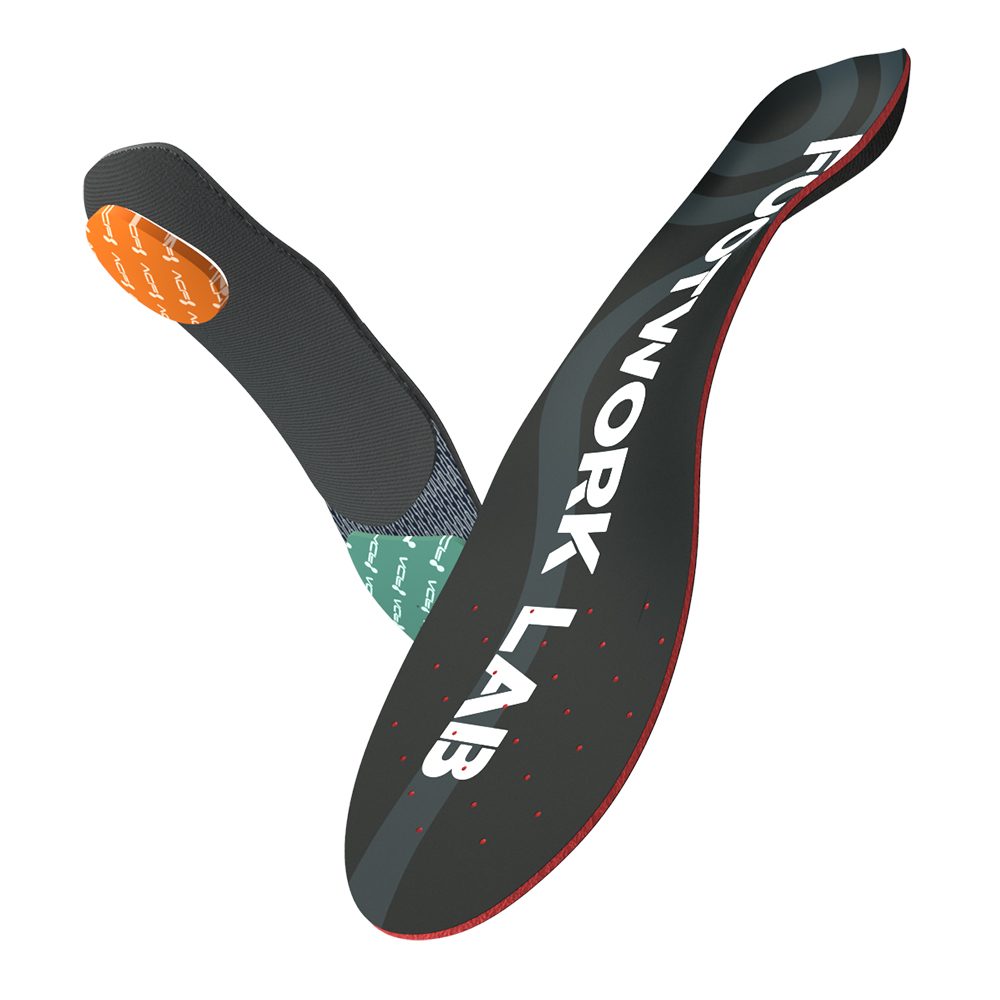
The vocabulary used with a mechanic decides what he expects from the appointment, and this trade responds badly to overselling. Words like support, alignment and load distribution describe what a build actually does: they hold the arch through static work, they keep the foot organised inside a stiff boot, and they move standing load toward the parts of the foot that have been idling while the outer heel and forefoot did everything. Those words are safe because they are mechanical. They describe the object, not the outcome.
The vocabulary of repair is different, and it is not yours to offer. Nothing fitted into a boot corrects twenty-two years of workshop floors, and a customer told that it does comes back in a month out of patience. The honest framing stays the same in every room: the equipment produced a measurement, a qualified professional interpreted it, the build supports and distributes, and how the feet actually feel by Friday is something the scheduled review will find out — not something anybody promises on day one.
A sentence worth using, with small local edits: “This build supports the arch and spreads the bracing load away from the outer heel, so the same three spots stop carrying the whole day alone. What it changes for you over a working week is something we check together at the review.” Then book the review before he leaves the chair, and put the date on the same sheet as the build order, so the two entries travel together and neither depends on anybody’s memory.
Frequently asked questions
Why do mechanics feel it at the outer heel and forefoot rather than everywhere?
Because the workshop day is made of bracing and standing, not walking. Creeper work loads the heels and outer edges as a static brace, lift-side and bench work push weight toward the forefoot on hard concrete, and walking — the position that spreads load across the whole foot — barely appears. The complaint pattern maps directly onto the working positions.
Should the build go into the work boots or the everyday shoes?
Into the boots that do the damage, as a first step. Ask how the day splits between creeper, lift and bench, and which pair gets worn on more days than not. If the same build needs to travel between work and weekend footwear, that requirement changes the shape and depth discussion before anything is made.
Can I assess a creeper position without a creeper?
Not usefully, and not safely. The honest approximation is a standing capture with the weight shifted and one foot braced, plus a normal walking capture for the steps and pivots the shop floor demands. The intake conversation about the working day carries the rest, which is why the four questions matter so much.
What does the compressed lining in old boots tell me?
Where the foot has been pushing and bracing for years: a heel counter leaned over points to bracing load, a toe box crushed at the top points to downhill or toe-drag habits, and a lining flattened under the ball of the foot points to standing load on hard floor. Compare it against the fresh record before deciding what the build has to solve.
Does the safety toe cap change the build?
It changes the depth budget. A safety toe steals interior height, so the build has to be planned against the boot’s real interior rather than a nominal size. Measure the boot, ask which pair is worn on most working days, and agree on the thickness conversation before manufacturing rather than after the first fitting.
Do both feet usually need the same build?
Not necessarily. Most trade workers have a bracing foot and a positioning foot, and the two can disagree in the record. Each foot can be assessed and built on its own evidence rather than averaged into one symmetrical answer that belongs to neither.
What do I tell the customer the build will do?
Describe the mechanics: support for the arch, alignment inside a stiff boot, load distribution away from the overloaded heel and forefoot. Do not promise how the feet will feel by a particular date. The record is a measurement, interpretation belongs to the qualified professional, and the scheduled review is where outcomes are actually discussed.
What we would do next
Add one line to your intake sheet this week, above the signature line: split of the working day between floor level, standing and bench, in hours. It takes the mechanic ten seconds to answer and it reframes everything after it — the boots he brings, the capture order you choose, the vocabulary you use at the end. Trade customers who hear the question asked routinely tend to volunteer the rest of the working day unprompted, including the parts they assumed nobody would care about.
The same logic stretches well past garages. Assembly lines repeat one position ten thousand times a shift (Same Ten Steps, Ten Thousand Times: Insoles for Assembly Lines), and landscapers spend their days on ground that is never level (Nothing Underfoot Is Level: Insoles for Landscapers and Groundskeepers). Every trade has its own version of the creeper — the position that concentrates load where walking would spread it — and the intake line is the cheapest way to find each customer’s version early.
One question back to the readers who run these rooms: when a mechanic tells you the feet only complain after the under-car jobs and never after the bench, what do you write on the sheet — and has that line ever changed the build you went on to make?
This article is intended for professional and educational reference. It is not medical advice. Foot assessment equipment produces measurements and images; clinical interpretation and any decision about care remain the responsibility of a qualified professional. Certification scope is limited to the documentation we hold: European Union certification and ISO quality system certification.