
The booking page says the assessment will tell you exactly what is wrong and what to do about it. The room can only offer a pressure map, a set of images, and an honest conversation. That gap is where reputations quietly go. The first disappointed review is rarely written by someone who was badly treated; it is written by someone who believed a sentence on a website and arrived expecting a different appointment. The sentence was written to fill a page. It has to be maintained by a person, every morning, in front of a customer.
This article is about wording — specifically, how a clinic describes its own foot assessment service on its own site. It is a copywriting question with a practical answer: describe what the appointment contains, name what the equipment produces, and leave interpretation to the qualified professional. What follows is a set of do/don’t pairs a team can apply to a live page today, plus the reasoning behind each. No prices appear here, because a figure written in an article is a figure taken out of context. Nothing in the wording we recommend turns a measurement into a claim the measurement cannot support.
The promise on the page and the promise in the room
Pull up the assessment page of almost any clinic and a familiar tone appears. The service is described in terms of outcomes: it will identify the source of a problem, it will set out a plan, it will settle a question the customer has been carrying for months. The people who wrote those lines were not trying to mislead anyone. They were trying to make a plain service sound worth booking, and they reached for the language that marketing tends to reward — definite, brisk, reassuring.
Now stand in the room. What actually happens is more modest and more useful than the page suggests. A professional takes a history, asks the customer to stand and to walk, captures a static image and a short loaded record, and reads the results alongside the shoes on the bench and the story just told. The equipment produces measurements and images: plantar pressure, the path of the centre of pressure, how load is shared between the two sides. The professional interprets those findings, and any decision about care belongs to that qualified person. That is a real service. It is not the service the page described.
The damage from this mismatch is slow. A customer arrives expecting certainty and meets a careful conversation; the appointment felt smaller than the advertisement. Another arrives expecting a single answer and leaves with a trial and a review date. Neither customer was neglected, yet both write the same kind of review, because expectation is part of the product. A clinic that over-writes its page pays for it at reception, not in the search results.
The fix is not to make the page dull. It is to make it accurate in a specific way: let the words describe the steps, the instruments and the people, and let the customer supply their own hopes. Honest wording sets a booking up to succeed, because the appointment then has room to be useful rather than having to be miraculous.
Why honest wording is a commercial decision
Clinics often treat wording as a small matter compared with the equipment in the room or the skill of the practitioner. It is closer to the opposite. The page is the first appointment: it filters who books, what they expect, and how they judge the visit afterwards. A page that promises a definitive result attracts people looking for a definitive result, and those people are the most likely to leave dissatisfied with a service built on measurement and interpretation. A page that describes the process attracts people willing to take part in it.
There is a second commercial angle. A clinic that writes carefully is easier to refer to. When another professional reads a page and recognises an accurate description of what an assessment can and cannot do, that reader knows what will happen if they send someone over. Vague superlatives do not travel between professionals; precise descriptions do. The same applies to partners and to anyone building a long-term referral relationship.
Honest wording also protects the team. A receptionist who has to walk back a claim made on the website starts the appointment in a small hole. A professional who never made the claim in the first place can spend the session doing the work instead of managing disappointment. The page is a colleague, in a sense: it either sets up the conversation or undermines it before anyone speaks.
None of this requires a redesign or a new section. It requires a read-through with a specific question in mind: for every sentence on the page, can the clinic point to what in the appointment makes that sentence true? Where the answer is no, the sentence is a liability, however good it reads.
Say what happens, not what it will do for you
The first do/don’t pair is about the shape of the description. Do write the appointment as a sequence of steps a person can picture. Don’t write it as a list of outcomes a person can only hope for. A sequence is checkable: the customer can recognise each step when it happens, which makes the visit feel exactly as advertised. An outcome list is a promise about the future, and the room has no way to keep a promise about the future.
A workable sequence for an assessment page names the stages in plain order: the history conversation; the standing capture; the loaded walk or run; the moment the images are reviewed together; the point at which the professional explains what the measurements show and what they do not. Each stage is something the clinic actually does. Write them in the order they happen and resist the urge to add a verb that implies a result.
The second pair is about verbs. Do use reporting verbs: records, measures, captures, shows, compares. Don’t use outcome verbs that suggest the appointment settles a question or delivers a fixed result. Reporting verbs are honest to the instrument, which produces measurements and images. Outcome verbs quietly promote the appointment into something it is not, and the customer will hold you to them.
The third pair is about time. Do say how long the appointment takes and what the customer leaves with — usually images and a professional’s explanation. Don’t imply a single visit closes the case. Many assessments lead to a trial, a review date, or a second capture after something changes. Saying that up front is not a weakness in the copy; it is the clearest possible description of how the service works, and it removes the pressure to make the first visit carry every expectation.
Name the measurement, and stop there
The most common wording failure is a noun problem. Clinics reach for broad, reassuring words when precise nouns are available and safer. The useful nouns are already part of professional vocabulary: plantar pressure, centre of pressure, load distribution, force-line alignment, arch profile, static and dynamic capture. Each describes something the equipment produces or a condition under which a record is made. Each can be written on a page without implying that the machine has reached a conclusion.
Do pair those nouns with the correct subject. A record shows a distribution; images display a pressure pattern; the professional forms an interpretation. Don’t let the equipment become the grammatical subject of a reasoning verb. A sentence in which the platform detects, decides or determines has quietly moved the interpretation away from the qualified professional, and the distinction matters both ethically and in plain accuracy. The instrument measures; the person reads.
There is a related pair about certainty. Do describe the conditions under which a record was made — standing, walking, in a particular shoe, on a particular day. Don’t describe a single record as though it were the final word on the foot. Feet change with load, fatigue, footwear and time; a capture is a snapshot with a date on it. Saying so on the page is a mark of confidence rather than hedging, because it tells the reader the clinic understands what its own record is.
Finally, do state the boundary once, clearly and near the top: the equipment produces measurements and images, and clinical interpretation and any decision about care remain the responsibility of a qualified professional. Don’t bury that sentence in small print or soften it into vagueness. A reader who meets it early understands exactly what they are booking, and the sentence becomes a piece of trust rather than a disclaimer.
A wording do/don’t list you can use tomorrow
Here is the checklist as a list, for teams who want something to put against a live page. Each pair is written as a description rather than a quoted bad sentence, because a quoted bad sentence has a way of being copied by mistake.
Do describe the appointment as ordered steps. Don’t describe it as a set of outcomes the customer should expect. Do use reporting verbs — records, measures, shows, compares. Don’t use verbs that imply a certain or unchanging result, or any language that suggests a fixed outcome is assured.
Do name the measurements: plantar pressure, centre of pressure, load distribution, force-line alignment. Don’t substitute grand claims that sound more impressive but cannot be traced to anything on the record.
Do keep superlatives out of the service description. Don’t claim a ranking, a first place, or a standing that would need evidence the page does not carry. A clinic described precisely is easier to trust than one described as the finest anywhere.
Do say what shapes the cost — the type of assessment, the follow-up, the specification of any insole — without publishing a figure. Don’t print a number that will be wrong next season or misleading once a configuration changes. Prices belong in a conversation where the details are known, not in a general description of a service.
Do mention a named complaint only as a reason someone might book, and keep it in the same breath as the measurement-and-interpretation boundary. Don’t suggest that the appointment ends a specific symptom or delivers a cure; the page has no basis for that, and the professional in the room should not inherit a claim they never made.
Do say who interprets the record. Don’t write sentences that let the equipment appear to interpret it. Do date and qualify a capture. Don’t present one visit as the end of the story. Read the list against your own page once a quarter; it takes less time than drafting a reply to a disappointed review.
What to write when you mention the equipment
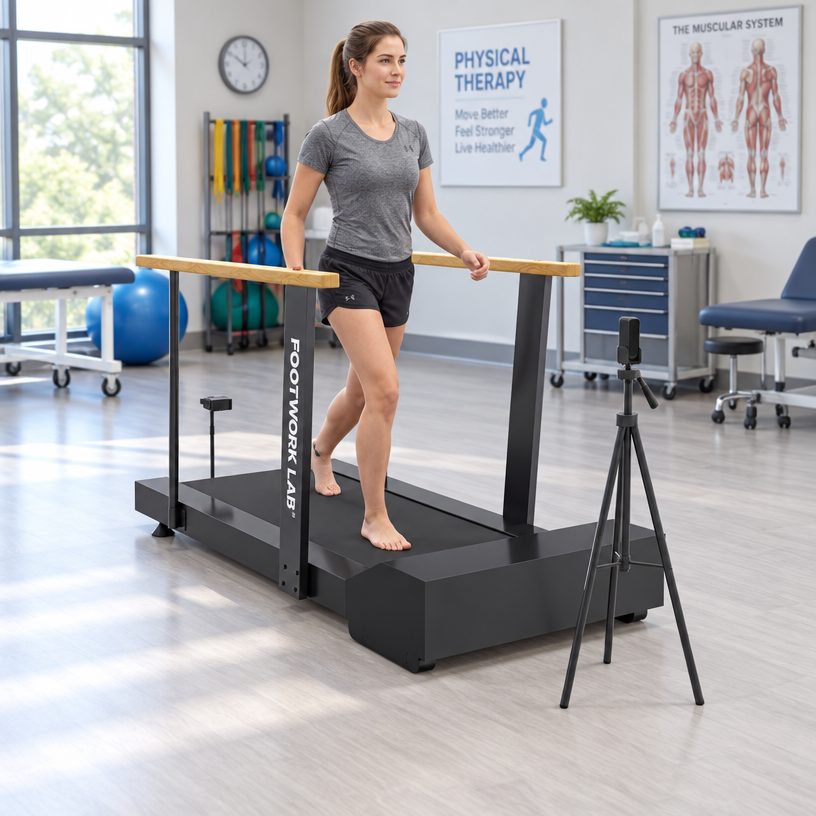
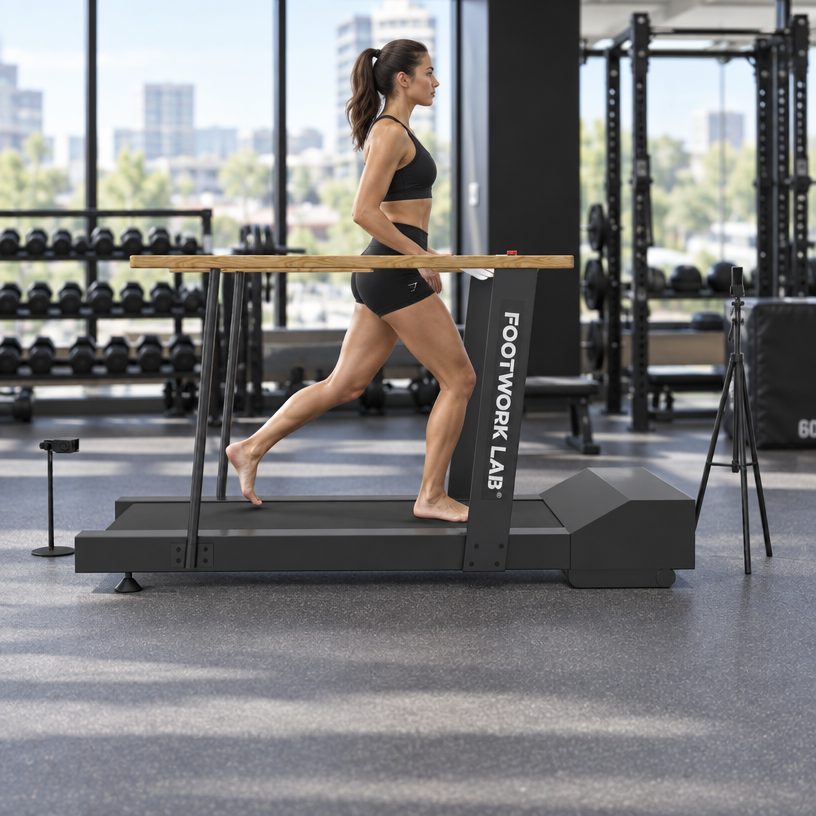
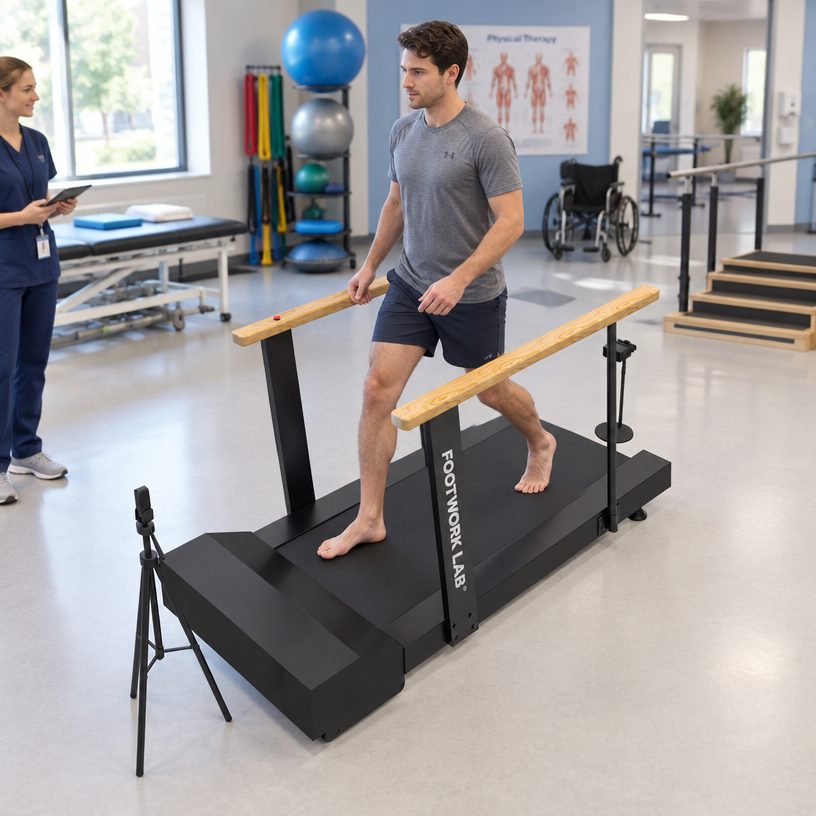
Equipment has a small but real place on an assessment page. Mention it as a tool with a job, in one sentence, and move on. In our own case a pressure and force-line platform, of the kind shown on the F5-LAB page, is used to capture measurements and images that the professional then reads against the history. That sentence names the tool, the output and the reader. It gives a visitor something concrete without asking the machine to carry a claim.
The don’t side is easy to state and worth stating to anyone who writes copy. Don’t describe the platform as though it makes a judgement. Don’t attach a list of impressive-sounding capabilities that a visitor cannot connect to the appointment they will actually have. Don’t let the equipment section grow longer than the section about the professional who operates it; the proportions on the page send a message about who is doing the work.
Teams sometimes worry that a modest equipment sentence undersells a serious investment. It does not. Professionals reading the page know the difference between a tool and a claim, and a precise sentence signals that the clinic knows it too. For a general reader, one clear sentence is more reassuring than a paragraph of adjectives, because it can be checked against what happens in the room.
Behind that sentence sits a manufacturing reality we are willing to state plainly. Every unit is tested for seven days before it leaves our plant, support continues after delivery through remote assistance and a dedicated messaging group, and our certification scope is limited to the documentation we hold — European Union certification and ISO quality system certification. We do not make clinical claims for the equipment, we do not describe it as a diagnostic tool, and we do not quote prices in an article like this. That is the same discipline this article asks of a clinic’s own page.
Keep the page honest as the protocol changes
A page goes stale quietly. The process in the room changes — a new capture sequence, a different shoe policy, a longer review interval — and the wording stays as it was. Six months later the description and the appointment have drifted apart again, through no one’s intention. The remedy is a review rhythm attached to the protocol rather than to the calendar alone: whenever the assessment steps change, someone opens the page and checks the verbs against what now happens.
Give that review a simple method. Read the page as a customer who has never met the clinic and write down, in the margin, what they would expect to happen. Then walk the same sequence with the professional who runs the appointment and mark every place the expectation and the reality part company. The gaps are the sentences to rewrite. This works better than a general editing pass, because it measures the page against the room rather than against a style guide.
Then check the boundary sentence again. It should still say that the equipment produces measurements and images, and that interpretation and decisions belong to a qualified professional. If a later edit moved that sentence or softened it, put it back near the top. Wording drifts most easily in the places that were written with the best intentions — the enthusiastic lines added after a good week, the superlative slipped in to keep up with a competitor’s page.
The honest outcome of a review is sometimes that a service has changed enough to need a new description, not a revised one. That is fine. A page that gets rewritten when the protocol changes is a page that stays useful, and a clinic willing to do that is describing the kind of service customers are glad they booked.
Frequently asked questions
Why does honest wording on an assessment page matter commercially?
The page sets expectations before anyone walks in. A service described as measurement and professional interpretation attracts people willing to take part in that process, while a page that promises certainty attracts people likely to feel short-changed by a careful appointment. Accuracy at the booking stage protects the review later.
What should an assessment page describe first?
Describe the appointment as a sequence of steps: the history, the standing capture, the loaded walk, the review of images, and the professional’s explanation. Each step is something the clinic actually does, so the customer can recognise the visit when it happens.
Which verbs belong in an honest service description?
Reporting verbs such as records, measures, captures, shows and compares. They stay true to an instrument that produces measurements and images. Verbs that imply a certain or unchanging result put the page ahead of what the appointment can deliver.
How should a clinic describe the equipment on its page?
In one sentence, as a tool with a job: it captures measurements and images that the professional reads against the history. Keep the equipment section shorter than the section about the practitioner, and avoid listing capabilities that a visitor cannot connect to the appointment.
Can a page mention a specific foot complaint?
It can mention one as a reason someone might book, but it should sit beside a clear statement that the equipment produces measurements and images and that interpretation belongs to a qualified professional. It should never suggest the appointment ends a symptom.
How should price be handled on an assessment page?
Explain what shapes the cost — the type of assessment, the follow-up, the specification of any insole — without publishing a figure. A number on a general page ages badly and misleads when configurations differ; a conversation can carry the detail properly.
How often should the wording be reviewed?
Whenever the assessment protocol changes, and at least once a quarter. Read the page as a new customer, walk the same sequence with the professional, and rewrite every sentence where the expectation and the room part company. The boundary sentence should always stay near the top.
What we would do next
The action that costs nothing and changes the most is the read-through described above: open your own assessment page, write down what a stranger would expect, and compare it with what happens in the room on a normal morning. Then apply the two strongest pairs from the checklist — steps instead of outcomes, reporting verbs instead of outcome verbs — and check that the measurement-and-interpretation boundary still sits near the top. Neither edit needs a designer, and both can be finished before the next appointment.
Two adjacent reads on this site: turning the screen around to explain a pressure map in plain words, which is the in-room counterpart to an honest page, and what the first footprint promises, and what it does not, which makes the same point about a single capture. Both are useful to hand to whoever writes your copy.
The question we would leave with colleagues: when your assessment page was last edited, was it checked against what actually happens in the room — and if not, who on your team is going to do that read-through first?
This article is intended for professional and educational reference. It is not medical advice. Foot assessment equipment produces measurements and images; clinical interpretation and any decision about care remain the responsibility of a qualified professional. Certification scope is limited to the documentation we hold: European Union certification and ISO quality system certification.