
Every rebound in basketball hands the whole body to one foot, for a moment, at speed. A player rises for a lay-up, comes down on the left, and immediately turns to run back. The next possession repeats it on the right. Hardwood gives back almost nothing, the court shoe guards the ankle as it is designed to do, and the loading underneath keeps its own score. By the last quarter the feet have logged a hundred landings that nobody counted.
Basketball is a landing sport in a way that walking and most gym work are not. The players reaching a foot clinic are usually club or school athletes, not professionals, and their shoes are chosen for grip and appearance rather than for a load pattern. This article works through what those landings ask of the foot, the questions a professional can ask before recommending anything, where a measurement earns its place, and how to run a fair trial when something changes. The equipment produces measurements and images; interpretation and any decision about care belong to the qualified professional holding the record.
A sport measured in landings
Watch a basketball game with the feet in mind and a pattern appears quickly. A player jumps for a rebound, lands, pivots, and accelerates. A lay-up ends with a landing under the basket followed by a turn. A jump shot at the arc ends with both feet arriving almost together, then a recovery step. None of these events is isolated; a single game contains scores of them, and a player who plays twice a week in a league contains hundreds more. The foot is not merely supporting the body during these moments. It is receiving the whole load, usually through one heel and forefoot in quick succession.
The direction of travel matters as much as the vertical drop. A landing from a rebound is rarely a clean vertical event: the player comes down slightly off balance, with a rotational component as they turn toward the basket or back down the court. That rotation has to be absorbed somewhere, and the forefoot and toes do a share of the work, gripping the floor and then releasing as the player pushes away. The shoe’s grip makes the rotation possible and, at the same time, prevents the floor from absorbing it.
Most players never think about the count. They think about the game, the score and the next possession. A professional can change the conversation by making the count visible: landings, not steps, become the unit of interest. That simple reframing is useful because it describes the actual demand — repeated high-load arrivals — rather than the distance covered, which is a poor description of basketball.
None of this makes basketball abnormal. It makes it specific, and a generic walking record will not show a professional what a hundred landings did to the way this person’s feet carry load.
Hardwood and the shoe built for it
Basketball is played on hardwood, on synthetic strips and on outdoor asphalt, and all three are unyielding. Hardwood with a sealed finish gives back very little; the sprung substructure under it helps the surface as a whole but does little for the foot meeting the finish. Outdoor courts are harder still. The landing load that the surface refuses to absorb travels into the shoe and then into the foot, in a chain that ends with the tissues under the sole.
The basketball shoe is built for that chain. A high upper is there for the ankle, and the outsole pattern is there for grip on a polished floor. The midfoot structure resists the twist of a landing that arrives off balance, and the cushioning is tuned for repeated arrivals rather than for distance running. All of that is protective, and all of it has a consequence: a shoe that grips and holds will pass the load along rather than let it slide away. Grip is the mechanism by which a hard floor becomes the player’s concern.
Running shoes are a common sight at club sessions, brought by players who assume more cushion is always better. The cushion is real, but the lateral structure for a turning landing is not, and the foot can travel toward the edge of the shoe as the player comes down off balance. The basketball shoe’s firmness is load-bearing structure rather than a comfort oversight. What can be discussed is what sits between foot and shoe — and that discussion only makes sense after the shoe itself has been read.
The practical summary for a clinic is short: on a hard court, in a gripping shoe, the foot is the last element in a chain deliberately built to pass force down to it. Everything that follows begins with that arrangement.
Who arrives, and when they notice it
The timing of a basketball complaint is characteristic. During a game very little is reported: tissues are warm, attention is on the ball, and the adrenaline of the final quarter covers a great deal. The report arrives later. In the last ten minutes the landing foot starts to feel different on the recovery step; the next morning the first steps out of bed are the moment the foot is noticed. A bruised feeling under the forefoot, a tight calf, an aching big-toe joint or a general heaviness in one shoe are the familiar words of this group. They are reasons to book, not diagnoses.
Who arrives tells its own story. The once-or-twice-a-week league player is the classic case, because several days of ordinary life give the tissues no progressive exposure to landing load. The returning player — back after a season off, an injury elsewhere, or a change of job — arrives with the same novelty problem in a fitter body. Juniors are a separate conversation: their feet change quickly, their shoes are often handed down, and their sessions cluster around school terms. Even the keen regular notices the same words whenever something in the chain shifts: new shoes, a move from indoor hardwood to an outdoor court, a new position that means more rebounds.
While taking the history, notice whether the player points to the foot they land on most. Players often do, describing one shoe that wears differently or one side that feels heavier after a game. That agreement between the story and the movement pattern is worth more, at intake, than most of what follows, and it costs nothing to observe.
The professional then decides what to measure. A pressure assessment describes how load is distributed in stance and through a few loaded steps. It produces images and measurements; interpreting them against the history, and deciding what if anything to do, belongs to the qualified professional. Stating that boundary plainly to the player sets an honest expectation of the appointment.
Four questions before the insole conversation
Recommendations fail most often because they were built on half a history. Four questions, asked in order, cover most of what a basketball player needs a professional to know before anything is suggested, and all four fit inside a normal intake conversation.
First: how many games and training sessions a week, and on which surface? A player who plays one indoor league night and one outdoor run is carrying two different friction arrangements, and the move between them often marks the start of a complaint the player blames on their age. Surface history frequently explains more than shoe history.
Second: when are the feet first noticed? Early in the game points toward footwear and support. Late in the game points toward fatigue and conditioning. Only the next morning points toward the delayed loading pattern described above. The answer sorts most players into three quite different conversations, and it prevents the classic mistake of answering a conditioning question with an equipment answer.
Third: which foot lands hardest, and does the player turn toward one side? Fourth: has anything changed in the last two months? New shoes, a new court, a new position under the basket, a return after a break. Each resets the load pattern and each is a reason the complaint arrived this month rather than last year. Write the answers down as they are given.
Alongside the questions sits one action that costs nothing and earns its keep every visit: put the shoes on the bench and read them before looking at the feet. Check where the outsole is worn smooth, press the midsole and compare the two shoes side by side, see how the uppers lean when the shoes stand alone, and write what you find on the record card. A shoe that has stopped standing upright is reporting what its owner’s foot has been doing for months.
The shoe on the bench
Basketball shoes are useful data sources because their outsoles are designed to show wear and the courts they meet are abrasive. Smoothing under the lateral forefoot of one shoe marks the foot that takes the turning landing. Heavy wear under the ball of one shoe marks a player who plants and pivots on that side rather than sharing the work. Wear that stops abruptly at the midfoot suggests a player whose landings are compact rather than rolling through the step. None of these observations diagnose anything; each narrows the history, and each takes under a minute.
Then compare the pair. In an ideal world the two shoes wear as mirrors; in basketball players they rarely do. The difference between the worn zones of left and right shoe is a rough map of how the two feet have divided the landing work since the shoes were new. A player whose complaint sits on the same side as the heavier wear is telling a coherent story. A player whose complaint sits on the lighter side deserves a second look before anything is concluded, because the foot doing the most work is not always the one complaining.
The midsole deserves its own check. Press it, compare the two shoes, and look for set: a midsole that has stopped recovering means the shoe has been quietly handing more work to the foot for some time, whatever the outsole looks like. Basketball shoes often lose their recovery before the grip pattern wears through, and a player still in a shoe whose midsole has set is effectively playing on a harder court every week.
Photograph the outsoles at every visit, two views per shoe, filed with the record. Two photographs turn the next appointment into a comparison instead of a memory test. The same habit works for midsole set if the press and the photograph are done at the same angle each time.
Where a measurement fits
Questions and shoe wear describe the arrangement from the outside. A pressure assessment describes it from underneath: a record of how each foot distributes load in static stance and through a few loaded steps, with the images to match. It answers narrow questions — how the two feet share the work, where pressure concentrates under each sole, how the loaded pattern differs from the standing one. It produces measurements and images, nothing more; reading them against the history and deciding what to do belongs to the qualified professional holding the record.
What the measurement adds to the basketball conversation is the missing middle. The player has feelings and a story; the shoes have wear; the assessment puts a distribution underneath both, on the same side of the page. When the landing foot, the worn outsole zone and the concentrated pressure region line up, the professional has a grounded starting point for discussing options — footwear choice, session structure, conditioning, or whether custom orthotic insoles are worth trialling for this player’s particular pattern. When they do not line up, that disagreement is itself the useful finding and it redirects the conversation before anyone spends money on the wrong thing.
The assessment deliberately does not predict performance and does not promise that any change will follow. It states how load is distributed now, in this shoe, on this day. For a sport where each arrival passes through one foot, knowing the current distribution before changing anything is the difference between an adjustment and a guess.
One caveat worth saying to players directly: the record is taken in a controlled setting and in shoes that may not be the ones they play in. The measurement frames the conversation; it does not replace the history or the shoe check. The three together are the intake, not any one of them alone.
Trial, adaptation and the return visit
Whatever comes out of the intake — a different shoe, a changed session structure, a first pair of made-to-measure insoles — the trial deserves the same discipline as any other change a professional supervises. The adaptation period comes first and is not optional. Feet that have handled landing load one way for seasons do not accept a new arrangement immediately, and the first fortnight commonly feels different before it feels settled. A player who quits on day three has learned only that change is uncomfortable. The practical version is to use the new setup in practice first, build exposure gradually, and treat the second week as the fairer test.
Keep the log running through the trial. The four intake questions now double as the comparison instrument: when in the game are the feet noticed, where, in which shoes, and on which surface. Two weeks of notes against two weeks of notes is a conversation a professional can have; a single sentence about how the new pair feels is not. Set review dates in advance so the decision does not drift on impression alone.
Then build the return visit into the calendar. Basketball load changes with the season, the court and the shoe, so the arrangement measured in one term is not automatically the arrangement of the next. A re-assessment when anything in the chain changes keeps the record current. The honest outcomes matter as much as the good ones: if nothing has shifted by the review, the conclusions are still useful — the change was wrong for this pattern, or the pattern was never the main story, or the load itself needs restructuring before the equipment conversation continues.
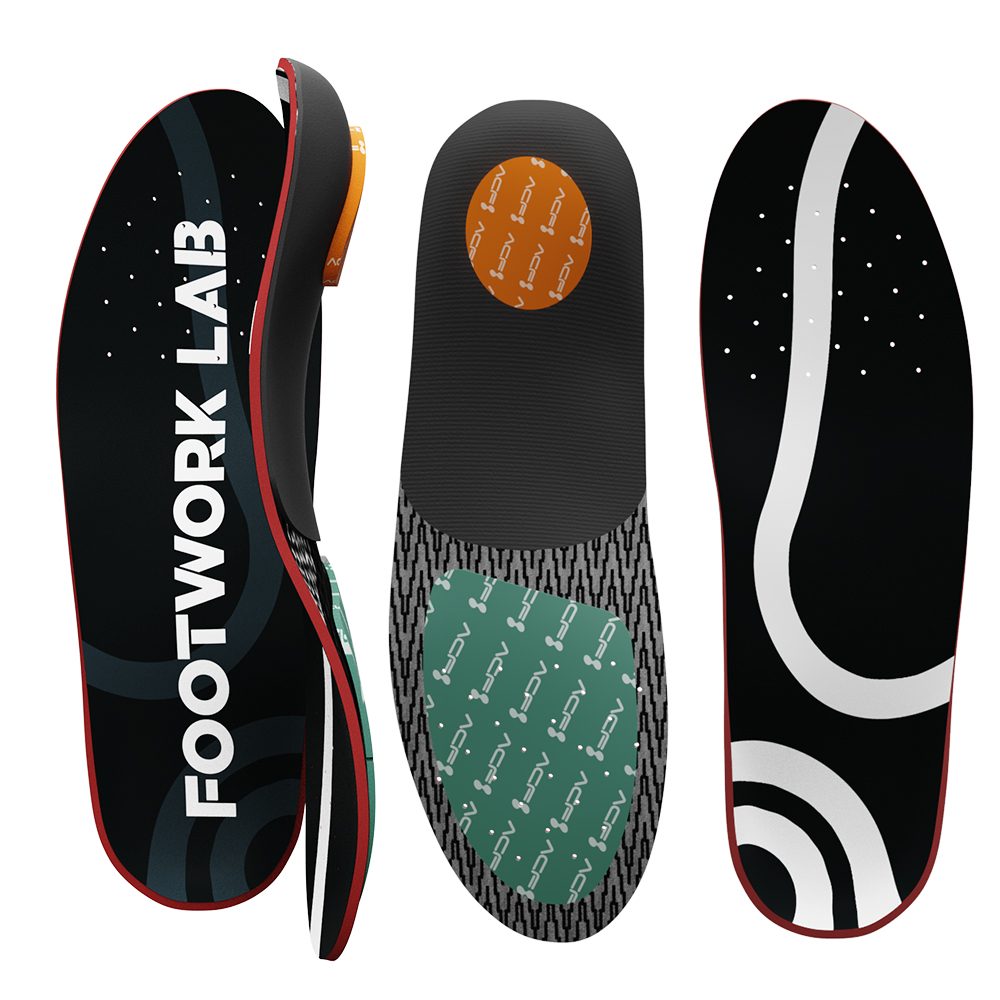
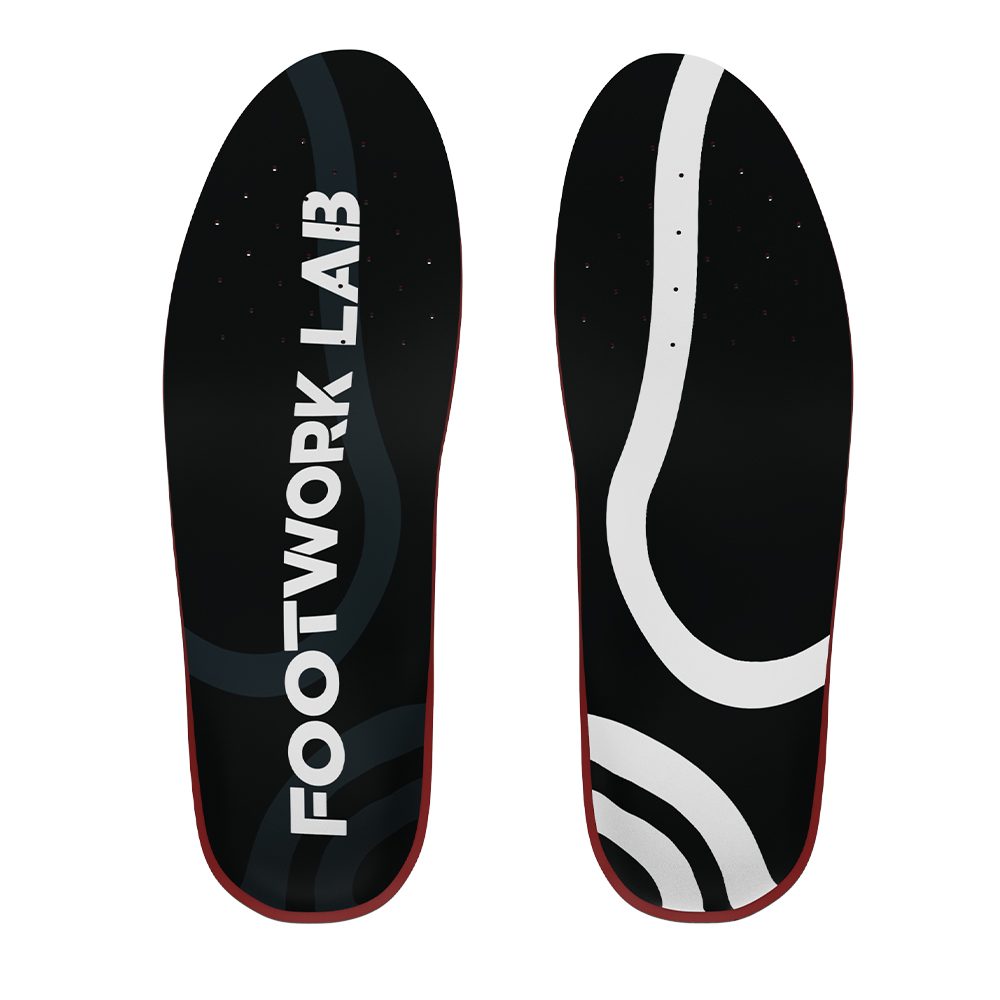
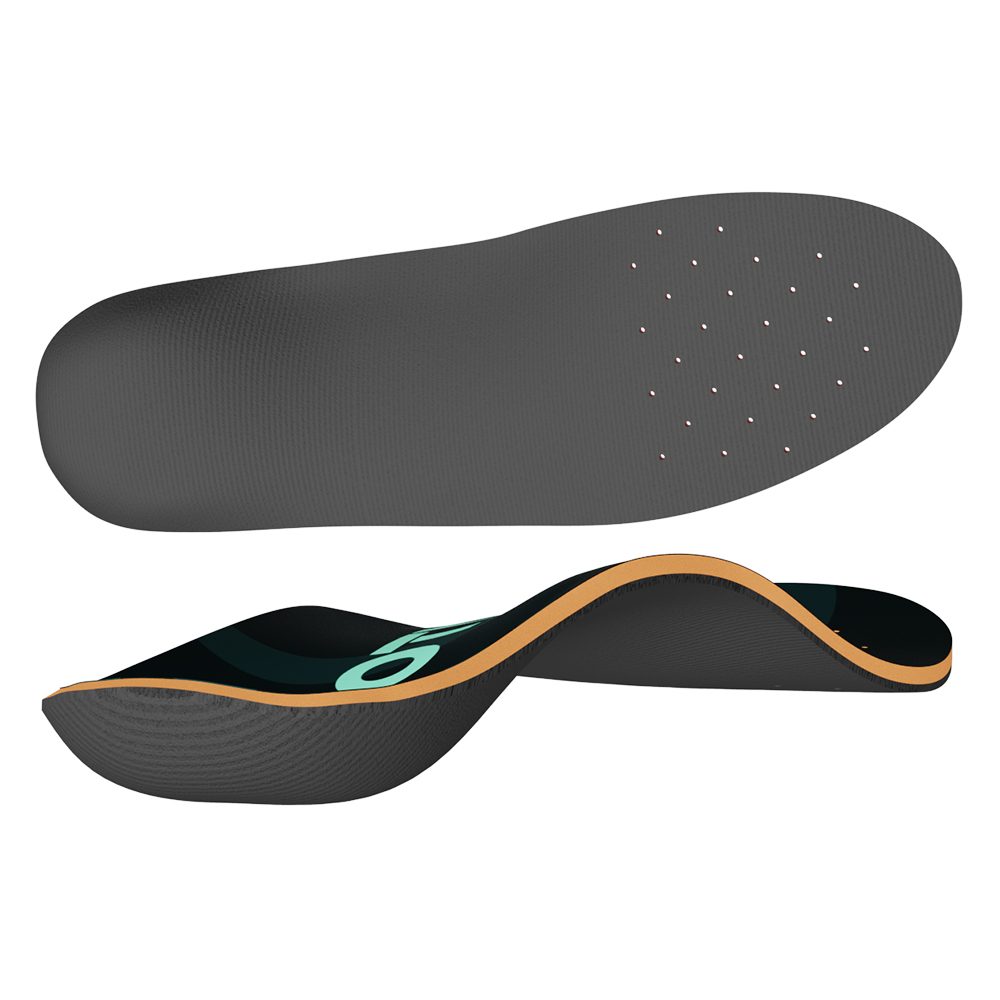
Behind any insole recommendation sits a production reality worth stating once. Our insoles are made in our own plant, with samples dispatched within three days and production capacity in the range of several hundred to a thousand pairs a day; minimum order quantities are set for mixed styles and sizes, and both ODM and OEM work are accepted. We do not promise outcomes for a pair, and we do not quote prices in an article like this, because the cost depends on specification and volume rather than on a figure that can be printed.
Frequently asked questions
Why do basketball players notice their feet the morning after a game?
During a game the tissues are warm and attention is on the ball, so the delayed response has not started yet. The repeated landing load typical of basketball commonly shows up hours later, which is why the report arrives on waking rather than on the court.
Are running shoes a reasonable substitute for basketball shoes?
Generally no. Running shoes cushion in one direction and lack the lateral structure a turning landing demands, which lets the foot travel toward the edge of the shoe during sideways loading. The basketball shoe’s firmness is load-bearing structure, not a comfort oversight.
Why does one foot usually take more of the landing work?
Players favour a side for rebounds and for turns, so the same foot receives the harder arrivals many times in a game. The other foot is not idle, but it is doing a different job, and the difference is often visible in shoe wear before anyone mentions it.
What should be checked on a basketball shoe first?
The outsole wear zones, the midsole set when the two shoes are pressed and compared, and whether the uppers still stand upright. A midsole that has stopped recovering has been quietly handing extra work to the foot, whatever the grip pattern looks like.
Do custom orthotic insoles help basketball players?
They are one option a qualified professional may consider once a measurement shows how load is distributed across the player’s feet. They are not a promise of anything, and the fair way to judge a pair is a proper adaptation period with notes taken before and after.
How long should a player trial a new setup before judging it?
Commonly two weeks at minimum, with a review around a month. New setups are used in practice first, exposure builds across the first week, and the second week is the fairer test. Day-three impressions are not a verdict.
Should the assessment be repeated during the season?
Whenever something in the chain changes: new shoes, a move from indoor hardwood to an outdoor court, a change of position, or a return after a break. The arrangement measured in one term is not automatically the arrangement of the next.
What we would do next
The two actions that survive a busy league night are the cheapest ones: the four intake questions, and the shoes on the bench before the feet on the plate. Neither needs equipment, both can start tomorrow, and together they turn a vague next-morning complaint into a structured one — surface, timing, wear zone, and what changed recently. If the intake still points toward the load pattern, a pressure assessment gives the professional a distribution to read against the history and the outsoles, and the trial that follows runs on notes rather than feelings.
Two adjacent reads on this site: the sole tells a story too, on reading shoe wear next to a pressure record, and how long before you record again, which treats the spacing of a second capture as a decision rather than a reflex. Both describe the same discipline this article keeps returning to: read the whole arrangement before changing any part of it.
The question we would leave with colleagues: when a player books in after a hard tournament, does anyone on your team count the landings or read the outsoles first — and if the answer is neither, which one would you add to intake tomorrow?
This article is intended for professional and educational reference. It is not medical advice. Foot assessment equipment produces measurements and images; clinical interpretation and any decision about care remain the responsibility of a qualified professional. Certification scope is limited to the documentation we hold: European Union certification and ISO quality system certification.