
Almost every buyer in this category types some version of “3D scanner
for feet” into a search box before they know what the machines actually measure. That is
not a mistake — it is simply the vocabulary the market taught them. The phrase is useful for
finding suppliers and almost useless for comparing products, because it covers instruments built
on entirely different measurement principles. This article unpacks what buyers are really
comparing when they compare “3D scanners for feet”, and how to turn a vague shortlist into a
decision you can defend.
FOOTWORK LAB has manufactured foot assessment equipment since 2014 and has run its own plant in
Ruichang, Jiangxi Province since 2018. We sell direct, which means we sit on the same side of the
table as the buyer during specification conversations, and we hear the same confusion weekly:
quotations arrive that look comparable, share similar silhouettes and similar screenshots, and yet
describe machines that would do completely different jobs in the same clinic.
The purpose here is not to steer you toward one model. It is to give you a sequence of questions
that separates the machines honestly — the same sequence we would walk through with any buyer,
whatever they eventually order and whoever they order it from.
One observation before the questions begin. In this category the marketing assets converge:
within an hour of browsing you will have seen a dozen units that look alike — a flat plate, a
camera arm, a software screenshot in blue and orange. Visual similarity is not evidence of
functional similarity, and it is worth saying early, because every mistake we see downstream
starts with a buyer who compared appearances and assumed the rest would follow.
What the phrase “3D scanner for feet” actually covers
Search the term and the results will include at least four kinds of hardware. There are units
that capture the surface shape of the foot — its contour, volume and dimensions — using optical
methods of one kind or another. There are plantar pressure systems, which record how load is
distributed under the sole while a person stands or moves. There are gait platforms, which extend
pressure recording across a walkway so that movement can be assessed rather than a single
stance. And there are combined systems that add a camera module, capturing posture and limb
alignment alongside the plantar data.
All four can honestly be described as equipment for measuring feet. All four produce visual
reports on a screen. To a buyer scrolling listings, they look like the same product at different
prices. In operational terms they are different instruments, the way a thermometer, a blood
pressure cuff and a stethoscope are all “medical devices” that answer different questions.
The practical consequence shows up months after delivery. A buyer who needed to understand load
distribution under the sole — the classic requirement behind custom insole work — but purchased a
surface-shape unit will have attractive images of feet and no pressure data at all. A buyer who
needed shape data for shoe fitting will find that pressure maps do not give them last dimensions.
Neither machine is defective. The specification was.
Why the market uses the word “3D” so loosely
The term persists because it signals modernity and precision to buyers, and because it ranks.
In footwear and orthotic workshops, some scanning methods do build a three-dimensional model of
the foot surface, and for last-making and shoe-fitting applications that model is genuinely the
right data. In pressure measurement, the third dimension is not about surface shape at all — it
is about force over time and area, which is a different geometry entirely.
Sellers know that buyers search “3D”, so listings borrow the word even when the underlying
measurement principle does not involve surface reconstruction. This is not always deceptive in
intent; the vocabulary of the category is genuinely muddled, and a supplier may describe its own
machine with the words its customers use rather than the words an engineer would choose.
For a buyer, the useful move is to stop treating “3D” as a filter and start treating it as a
conversation opener. Ask any supplier the same question: what exactly does this unit record —
surface contour, plantar pressure, movement across a walkway, or posture and alignment from a
camera module? The answer, given precisely, tells you more about the machine than any label on
the listing.
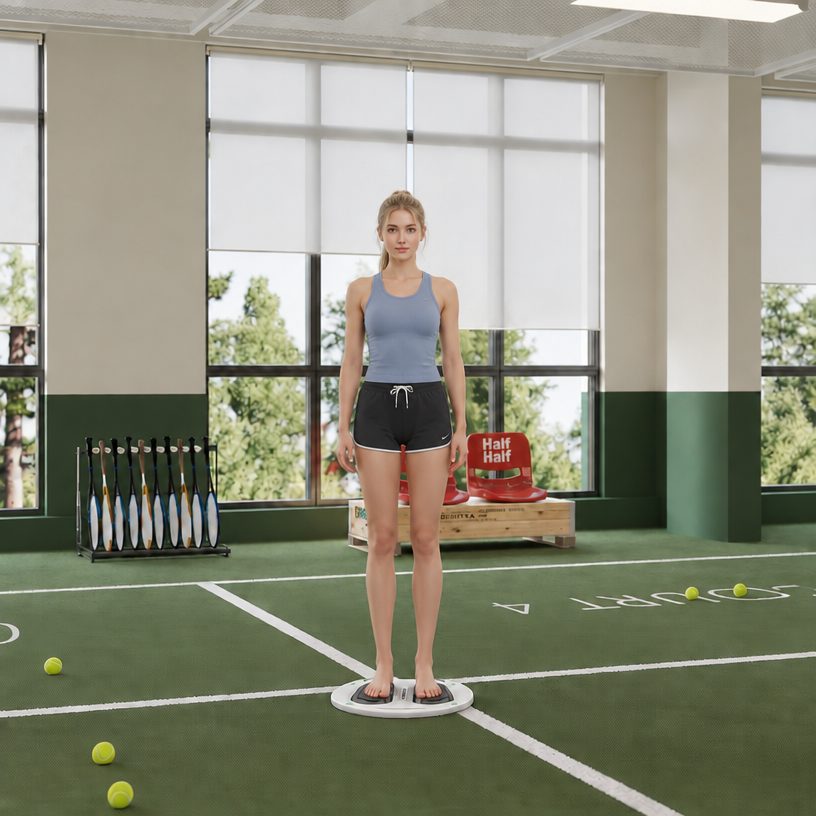
The four measurement jobs, matched to real workflows
Surface contour capture serves businesses whose output depends on geometric fit: shoe retailers
building fit services, orthotic labs that need foot dimensions to shape a device, workshops that
grade lasts. If your deliverable is an object whose shape must correspond to the shape of a foot,
contour data is what you need.
Plantar pressure measurement serves assessment work. Where does load concentrate when this
person stands? How does it shift when they walk? A clinic designing an insole program, a
rehabilitation unit tracking loading patterns, a retailer adding a professional assessment
service — all of these run on pressure data, and no contour scan substitutes for it.
Walkway gait platforms serve buyers whose assessment must include movement over several steps
rather than a single stance: sports labs, running stores, gait-focused rehabilitation units. The
hardware footprint and the consultation flow are larger, and the price conversation is different,
because the instrument is different.
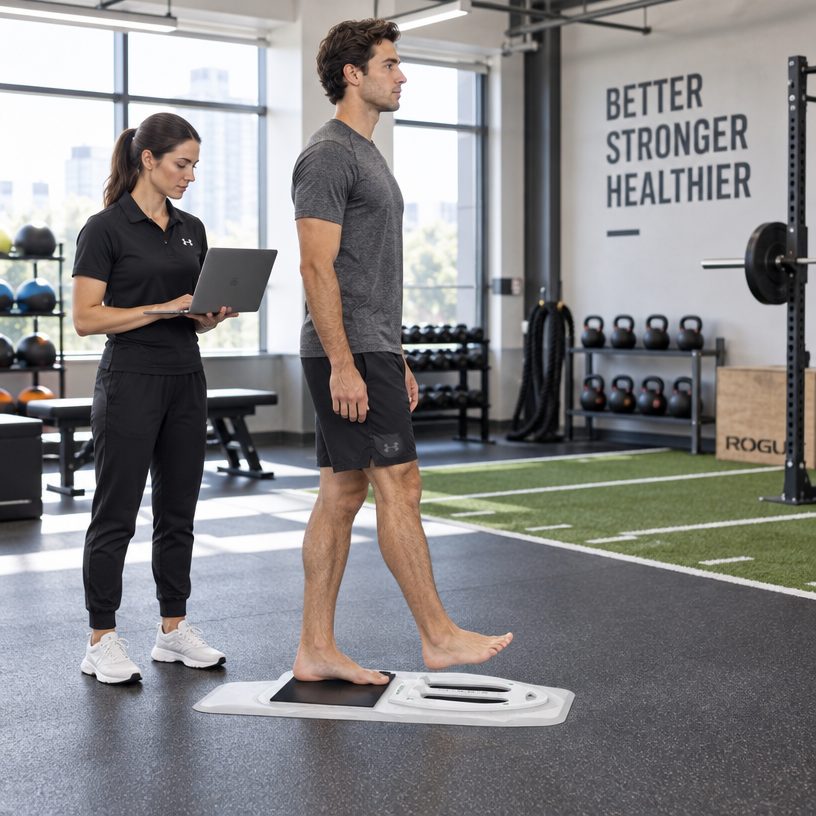
Camera-assisted posture capture answers questions the pressure plate cannot see: how the
knees track, how the pelvis sits, how the rearfoot lines up under the lower leg. In our own
systems, the camera module and the pressure plate work together precisely because neither data
stream answers the other’s question. A buyer who understands these four jobs can read any
supplier’s range — ours or a competitor’s — and place each model in the right slot within
minutes.
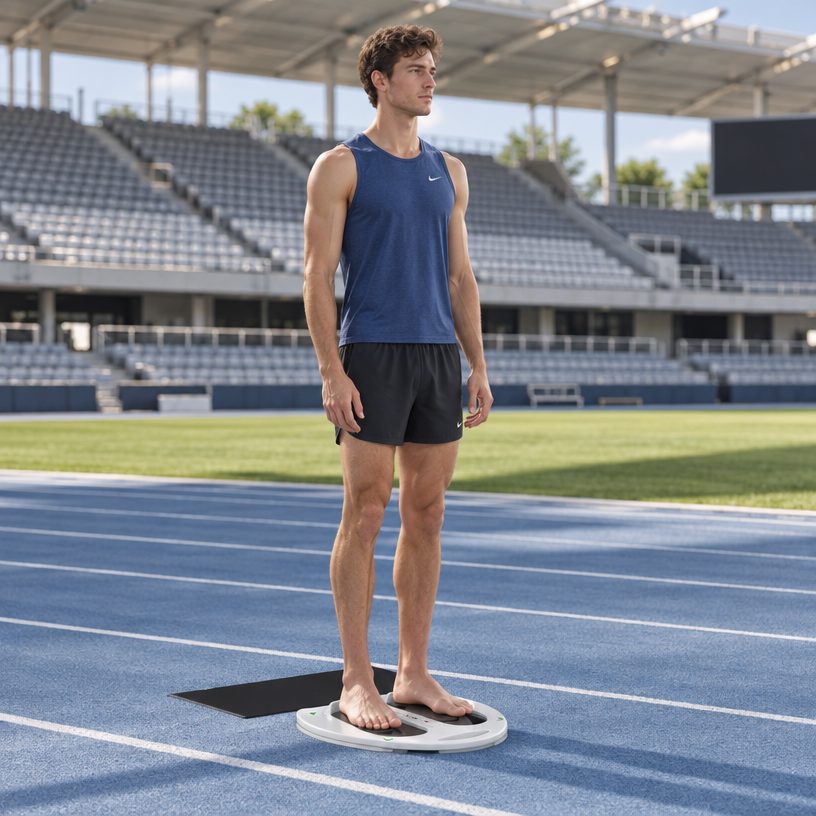
A note on combined systems, since they dominate this part of the market. A plate plus a
camera is not a luxury pairing; it exists because the two data streams cross-read. A pressure
map gains meaning when the professional can see how the limb was positioned while it was
recorded, and a posture frame gains meaning when the force underneath it is known. Buyers who
evaluate the two modules as one workflow — one session, one report, one operator sequence —
tend to be happier with the purchase than buyers who price them as separate gadgets and drop
one to save budget.
How to compare quotations that no longer look comparable
Once you know which measurement job you are buying for, comparison becomes possible. We
suggest a set order of questions, because the order prevents the most common wastes of
procurement time.
First, measurement principle: what does the unit record, through what sensing method, in static
stance, in movement, or both? Second, software: is the analysis software written by the
manufacturer or licensed from a third party? A manufacturer that writes its own software can
adjust report layout and workflow; a reseller usually cannot change anything. Third, the
service model: what happens after delivery — what does the warranty cover, how are faults
handled across time zones, can the software be updated remotely?
Fourth, production reality: is the supplier the factory or a trading company? The distinction
matters less for the machine itself and more for everything around it — spare parts, customisation,
software changes, and the speed at which problems get answered. Ask to see the production floor
on a video call. A factory will show you without hesitation.
Fifth, price — deliberately last. Two quotations that differ substantially usually differ
because the instruments are not the same class, not because one seller is generous. Comparing
prices before comparing specifications is how buyers end up owning the wrong machine at a good
price.
On sample reports specifically: ask each shortlisted supplier for a complete report from a
real session, with personal details removed, and read it the way your team would on a working
day. Does the sequence of the report match the sequence of your consultation? Can you find the
figures you would quote to a colleague in under ten seconds? A report is the product your
service will hand over; handling it as the primary evaluation artifact, ahead of brochure
claims, is the cheapest due diligence available in this category.
Questions we answer every week, and the answers behind them
Can a smaller clinic start with a single unit? Yes — our minimum order quantity for machines
is one, because we would rather a buyer validate the workflow in their own setting than commit on
the strength of a demonstration video. Does the supplier accept customisation? We write our own
analysis software and accept ODM on machines, which means report formats, interfaces and workflow
steps can be adapted; machine OEM is possible but discussed case by case.
What arrives before dispatch? Every unit is tested in-house for seven days before it leaves the
plant — a deliberately unhurried rate, since our production capacity sits at roughly three to five
machines per day. What about support afterwards? Each client gets a dedicated WhatsApp group with
direct engineer access, remote assistance where the setting allows it, and over-the-air updates
for connected units, backed by a twelve-month warranty on machines.
Where buyers go wrong, seen from the factory side
The most expensive mistake we watch is not choosing the wrong brand. It is choosing the right
category late. A team spends three months comparing surface scanners, obtains budget, installs the
unit, and only then discovers that the insole program they planned requires pressure data — which
is a different instrument and a second procurement cycle. The time to establish the measurement
job is before the first demonstration call, not after the first invoice.
The second mistake is evaluating software from screenshots. A screenshot shows a report; it
does not show how a consultation actually flows — how many steps an assessment takes, how the
data exports, what a client sees. Ask for a full recorded session, start to finish, not a
gallery of report pages.
The third is underweighting the service model. Foot assessment equipment is not a commodity
that ships and disappears; it is an instrument your team will use daily for years. The supplier’s
answer to “what happens when something goes wrong” predicts your experience better than any
specification sheet. Suppliers who answer with a named engineer, a response commitment and a
remote-access path are telling you how they operate. Suppliers who answer with brochures are
telling you something too.
It is also fair to say what good support does not look like, because buyers rarely get this
written down. It does not look like a response that arrives within an hour for two weeks and
then slows to days once the invoice clears. It does not look like a single contact person who
becomes unreachable. It does not look like updates that require shipping the machine anywhere.
Ask each supplier how the first ninety days after delivery actually run — the answer separates
organisations with a service process from organisations with a service promise.
A practical decision sequence you can run this week
Write down the deliverable your business actually sells: a fit recommendation, an assessment
report, an insole, a gait review. Trace each deliverable back to the data it requires. That
single exercise eliminates most of the category noise, because once the required data stream is
named — contour, pressure, movement, posture — most listings stop being relevant and the real
shortlist appears.
Then run the five-question comparison from the previous section against two or three remaining
suppliers, ask each for a sample report from a real session, and put the price conversation last.
This sequence takes about a week of honest work and prevents the most common forms of regret we
see from the production side.
A final word on timing. Procurement in this category drifts when it is open-ended;
shortlists multiply, demonstrations accumulate and the original requirement blurs under
attention. Give the sequence a deadline — the data question in one meeting, the comparison
table by the end of the week, price conversations after that — and the drift disappears. Every
successful installation we have followed started with a buyer who moved at that kind of pace,
and none of them regrets the speed.
Frequently asked questions
Does “3D scanner for feet” mean the same machine in every listing?
No. The phrase covers surface contour scanners, plantar pressure systems, walkway gait
platforms and camera-assisted posture systems. They answer different questions, and a report from
one cannot substitute for the data stream of another.
Which type do I need for a custom insole service?
Insole design work runs on plantar pressure data — how load distributes under the foot in
stance and in movement. Contour data supports shape and fit. Many programs use both, which is why
combined systems with a pressure plate and a camera module exist.
Can I order a single machine to evaluate first?
Yes. Our minimum order quantity for machines is one unit. Testing one machine in your own
setting tells you more than any demonstration, and scaling afterwards is straightforward.
Do you accept customisation of hardware or software?
We write our own analysis software, so report layouts and workflow steps can be adjusted for a
client’s needs, and we accept ODM on machines. Machine OEM is possible but discussed case by
case. On insoles we accept both ODM and OEM.
How is the equipment tested before shipping?
Every unit is tested in-house for seven days before dispatch. Production runs at roughly three
to five machines per day, a rate chosen so testing and inspection are done properly rather than
nominally.
What support follows delivery?
Machines carry a twelve-month warranty covering non-human damage with free spare parts in that
scope. Support runs through a dedicated WhatsApp group with direct engineer access, remote
assistance where possible, and over-the-air updates for connected units.
What certification covers the equipment?
Our documentation covers European Union certification and ISO quality system certification, and
we state our claims at exactly that scope — no more, and no less.
What we would do next
Name the data stream your service actually requires, then shortlist machines that record it.
If pressure and posture capture are the requirement, our F2 and
FMP platform is the family most buyers in that position compare, and the technology overview explains how the sensing and camera modules work
together. If your service is built around movement assessment, the F5-LAB gait platform covers the walkway use case. For
questions that recur across every procurement — MOQ, warranty, support, logistics — the FAQ page collects our standing answers, and the contact page reaches a human who answers them in context.
This article is intended for professional and educational reference.
It is not medical advice. Foot assessment equipment produces measurements and images; clinical
interpretation and any decision about care remain the responsibility of a qualified professional.
Certification scope is limited to the documentation we hold: European Union certification and ISO
quality system certification.