
Three buyers stand at the same table at a trade fair and ask three different questions about the same machine. The first runs a rehabilitation department and wants to know what appears on the report. The second distributes equipment in a territory and wants to know who answers the phone in the second year. The third owns two shoe shops and wants to know whether the thing fits behind a counter and how quickly a pair of insoles can follow. All three typed the same phrase into the same search bar and all three are looking at the same unit, which is why the phrase is so misleading: it names a category of buyer rather than a category of product. This article takes the three buyers in turn, sets out what each one is really asking, and then describes the configuration that answers all three — a system that travels in a case, records standing, walking and balance, reads the whole force line, and carries a forming module for on-site customisation. It ends where a supplier should always end, with the things we will not claim.
One phrase, three buyers, three first questions
The modifier at the front of the phrase is doing something specific: it tells the market that the equipment is meant for professional use rather than for a gym corner, and it attracts buyers who expect a certain vocabulary. What it does not do is distinguish between the three businesses that use the same vocabulary. A clinic, a distributor and a retail chain all describe themselves as working in this field, and all three want a machine that records a foot, and their procurement questions have almost nothing in common.
The clinic’s first question is about content. What items are on the page, are they named, can two visits be compared, and who is expected to read the result. The distributor’s first question is about continuity. What is the warranty, who supports the unit in the field, are parts available, is there a training path, and what happens when a customer two thousand kilometres away has a problem on a Monday morning. The shop’s first question is about throughput and floor space: how long does a session take, where does the unit live when it is not in use, and what can be sold at the end of it.
None of those questions is unreasonable and none of them can be answered by a specification sheet that lists the same features to all three. A supplier who sends the same brochure to a hospital and a two-shop retailer is not being efficient; they are declining to have the conversation that would have closed the order. The useful move for a buyer is to know which of the three they are before they open the first listing, because the answer determines which questions to ask first.
There is a fourth kind of buyer who does not fit neatly: the mobile practitioner, the sports team physiotherapist, the fitter who visits customers rather than waiting for them. That buyer needs the same record as a clinic and the same portability as a shop, and is usually the one most poorly served by equipment designed for a fixed room. It is worth keeping that buyer in mind, because the configuration that answers them tends to answer the other three as well.
The clinic asks what the record contains
A clinic’s purchase is judged after the first month, not at the demonstration, and the judgement is almost always about the report. A page of named items with dates can be discussed with a colleague, filed against a customer, and compared with a visit from last season. A page of images with no values behind them cannot do any of those things, however impressive it looks on the day. The clinic’s question, properly phrased, is not what the machine can show but what it can prove six months later.
What a clinic usually needs from a session is three things in one sitting: a standing record, a walking record and a balance trial. The standing pass describes the base — footprint length and width, contact area, how load is distributed, how the arch presents at rest. The walking pass adds time: foot axis angle, the proportions of contact and flat phase, peak and mean pressure, and the speed at which the centre of pressure travels. The balance trial describes a task rather than a stance. Together they answer three different questions that a clinic is asked every week.
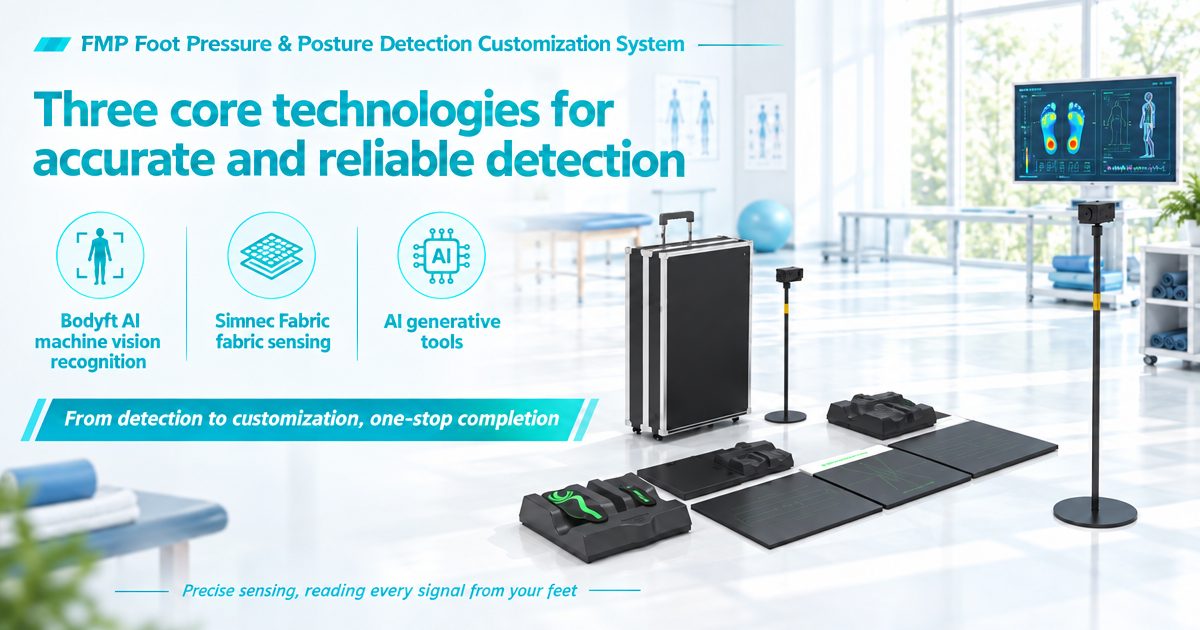
The force line is the part that turns a foot record into something a clinician can use. A lower-limb camera records heel position, knee tracking and the direction of the shin; a posture camera records how the column above sits over the base. The same load map means something different under a knee that tracks inward than under one that tracks straight, and the pairing is what allows the report to describe the relationship rather than the sole alone.
What the clinic should refuse is a report that ranks its own findings. A record with nine items on it does not know which of them matters for this person, and software that assigns severity has taken over a judgement it cannot make. The clinic’s own professional is the one with the history, the examination and the duty of care; the equipment’s job ends at the description, and a supplier who blurs that line is creating risk for the buyer rather than value.
The dealer asks what happens in year three
A distributor is buying a relationship rather than a unit, and the questions are correspondingly duller and more important. What is the warranty, what does it exclude, where do spare parts come from, how long does a replacement take, and who trains the second engineer after the first one leaves. A machine that records beautifully and sits idle for three weeks waiting for a part has failed in the only way that matters to a distributor: it has made their customer stop trusting them.
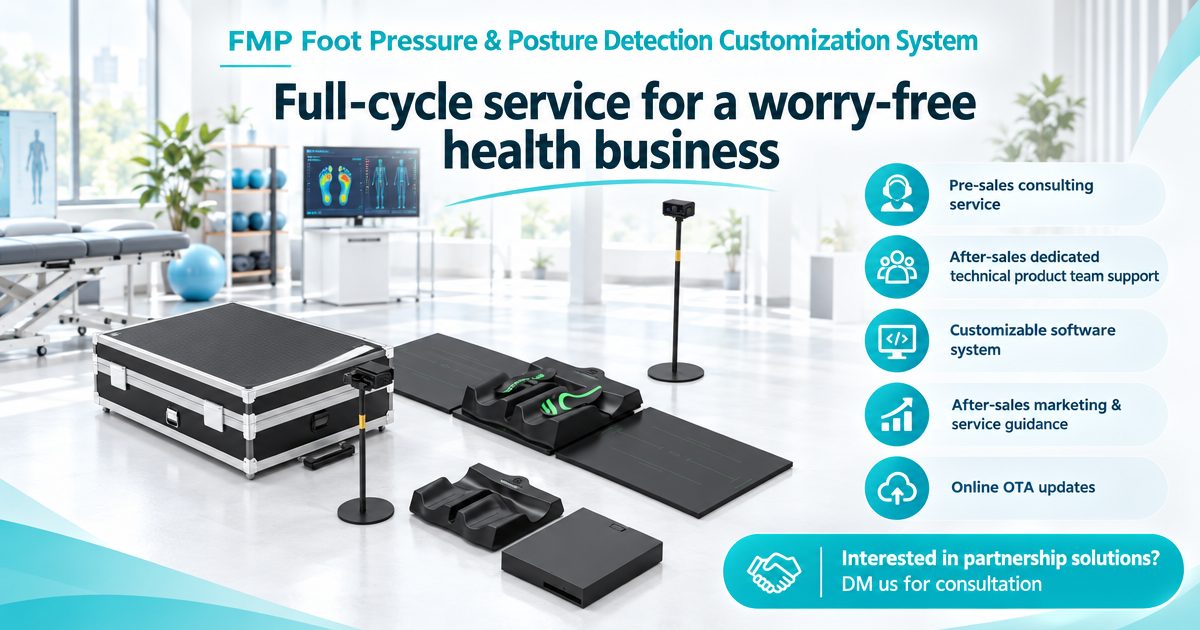
Our answers are specific because they have to be. The warranty runs twelve months against non-human damage with free parts. Support runs through a dedicated WhatsApp group with engineers reachable directly, remote assistance when a session misbehaves, and over-the-air updates where the unit is connected to a network. Every unit is tested at the plant for seven days before dispatch, which is where a fault should be found rather than in a customer’s clinic. Machines accept ODM, and insoles accept both ODM and OEM, which matters to a distributor building a local brand.
What we do not offer is exclusivity by territory. A distributor who needs protection is asking for a distribution agreement with volume commitments and obligations on both sides, and that is a different negotiation from a product order. Saying so early saves both parties a quarter of correspondence. It also means a distributor can start with one unit, test the market honestly, and come back for terms when there is something to negotiate about.
The other thing a distributor should ask about is documentation. Certification scope, test records, a manual in the language of the territory, and a training routine that can be handed to a new hire. We hold European Union certification and ISO quality system certification, and the scope of those documents is exactly what it says on them — a point worth being precise about, because buyers sometimes assume a certification covers more than the paper it is printed on.
The shop asks what fits behind the counter
A shop’s constraint is the shape of its day. A customer arrives with twenty minutes and a pair of shoes in mind, and anything that requires a second room, a change of clothes and an appointment will not happen on a Saturday. The questions that follow are practical: where does the unit stand, how long does a session take, who operates it, and what can be handed to the customer at the end. A machine that answers all four becomes part of the sales routine; one that answers three becomes furniture.
The answer that works in a shop is usually the smallest configuration that still records properly. A unit that folds into a case, sits on a counter or a low table, and runs a standing pass in a couple of minutes is worth more than a fixed platform in a back room. The walking pass needs a little more space, and a shop should measure the actual floor before ordering rather than assuming the showroom is big enough on a quiet Tuesday.
The commercial argument is straightforward once the record exists. A customer who has seen their own load pattern and their own alignment is in a different conversation about the pair they are trying; the recommendation stops being a preference and becomes a reason. That is also where insoles enter, not as an upsell at the till but as the next step in a sequence the customer has already agreed to. Shops that run the sequence report better attachment rates; shops that skip it are competing on price for the same pair of shoes.
The limit is that a shop is not a clinic and should not pretend to be one. A screening at a counter is a screening, the report carries a line saying the data is for reference, and any customer with a medical question is referred onward. A shop that starts using clinical language to close a sale will eventually meet a customer who takes that language seriously, and the resulting conversation is expensive for everyone.
What a portable case changes
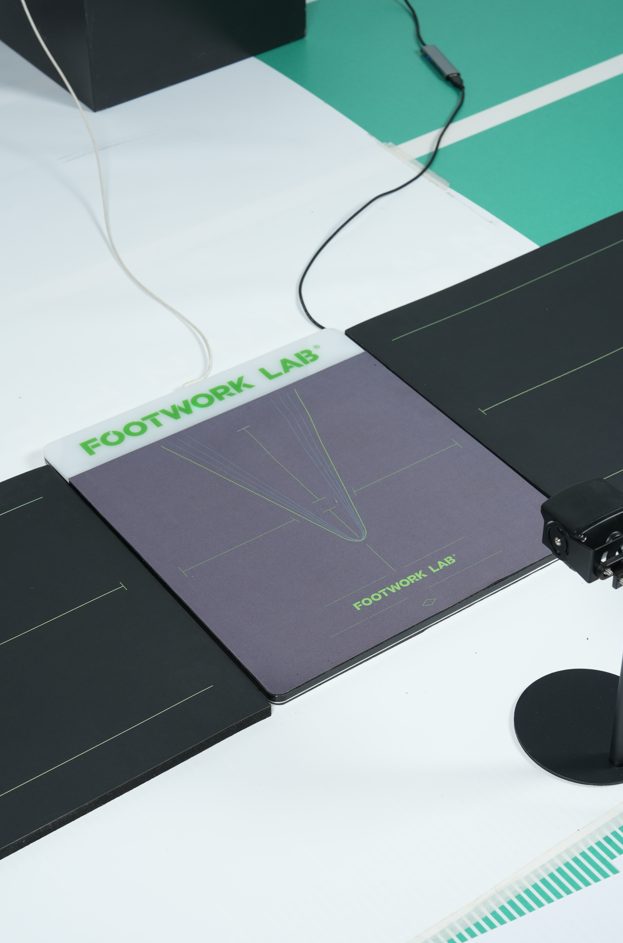
The FMP is built around a case, and the case is not a packaging decision. A pressure and posture system that travels in a suitcase can be carried by one person into a rehabilitation hospital in the morning and a sports training centre in the afternoon, and can be set up in a stadium room that was never designed as a clinic. That changes which customers a business can serve, and it changes which rooms inside a building get used.
Inside the case, the system records standing, walking and balance passes, and adds a whole-body force-line view: how the foot, the leg and the column above it relate when the person is still and when they move. The record items are the ones described earlier — footprint dimensions, contact area, load distribution, foot axis, phase proportions, peak and mean pressure, centre-of-pressure speed, heel position, knee tracking, and the posture angles above them. What the case changes is where those items can be collected, not what they mean.
The second half of the configuration is the on-site customisation module: a heating chamber, forming pillows in adult and child forms, and a set of auxiliary parts. In practice this means a fitting can begin and end in the same visit — the record is taken, the build is selected against it, and the insole is formed while the customer is still in the building. For a sports team on a tour, or a clinic serving customers who travel in, that is the difference between a recommendation and a delivery.
Portability has costs and they should be named. A case-borne system is set up and packed away more often than a fixed platform, so the routine has to be simple enough to survive a tired operator at the end of a day. Floors vary, rooms vary, and light varies, which is why the setup check matters more than it does in a dedicated room. A buyer who wants the same conditions every time should buy a fixed installation; a buyer who needs to be in three places a week should accept the routine as part of the purchase.
Where the answer stops
Three things follow from the sections above, and they are worth saying in the supplier’s own voice rather than leaving a buyer to discover them. The first is that this is not a surface capture device. There is no modelled foot, no contour file and no laser in the unit; a workshop that needs geometry for a carving step is shopping in a different category. What the system produces is a record of load and alignment, named item by item, with a date on it.
The second is that nothing in the record is a diagnosis. Every value — foot axis, phase proportions, peak and mean pressure, contact area, centre-of-pressure speed, heel position, shoulder height, pelvic tilt, knee hyperextension — is a measurement. Reading those measurements, and deciding what they mean for a person, belongs to a qualified professional. Our reports carry a reference line and we would rather repeat it too often than once too little.
The third is that we do not publish prices and do not promise territory. A quotation depends on configuration, the customisation module, destination, freight and the service wrapped around the unit, and a number printed in an article would be wrong by the time it was read. Exclusivity is a distribution agreement rather than a product term. What we do publish is the structure a buyer can plan against: one unit as the minimum order, ODM accepted on machines, a seven-day factory test before dispatch, a twelve-month warranty against non-human damage with free parts, and support through a dedicated WhatsApp group with engineers reachable directly.
That is a shorter list than most brochures, and it is the list we can defend in year three when a distributor’s customer calls on a Monday. A buyer comparing three suppliers will find longer lists elsewhere. The question worth asking is which items on those lists will still be true when the machine is out of warranty and the salesperson has moved on.
Frequently asked questions
What does a clinic ask first about this equipment?
What the report contains. Named items, whether two visits can be compared, and who is expected to read the result. A clinic’s purchase is judged after the first month, so the page that exists at the end of a session matters more than anything shown during a demonstration.
What does a distributor ask first?
What happens in year three: warranty terms, spare parts, training for a second engineer, and who answers when a customer two thousand kilometres away has a problem. Continuity decides whether a distributor’s own customer keeps trusting them.
What does a shop ask first?
Where the unit stands, how long a session takes, who operates it, and what the customer leaves with. If those four answers do not fit the shape of a Saturday, the machine becomes furniture regardless of how well it records.
What does the portable configuration include?
A case-borne pressure and posture system recording standing, walking and balance passes with a whole-body force-line view, plus an on-site customisation module: a heating chamber, forming pillows in adult and child forms, and auxiliary parts.
Can a fitting be completed in one visit?
Yes, where the module is part of the configuration. The record is taken, the build is selected against it, and the insole is formed while the customer is still in the building. That suits travelling practitioners, teams on tour and clinics serving customers who come from a distance.
Does the system diagnose anything?
No. Every item on the report is a recorded measurement, and reading it belongs to a qualified professional. The report carries a reference line, and the equipment does not rank findings, assign severity or recommend a course of action.
What are the order and support terms?
One unit is the minimum order, machines accept ODM, and every unit is tested at the plant for seven days before dispatch. The warranty covers twelve months against non-human damage with free parts, and support runs through a dedicated WhatsApp group with direct engineer access.
What we would do next
Decide which of the three buyers you are before the next call, then write the one question that would settle the purchase. Send it to the contact page with the rooms you work in and the customers you serve, and we will answer as a supplier rather than as a brochure, including the parts we cannot do.
The FMP system page sets out the record items, the three session types and the customisation module in the equipment’s own terms. A foot pressure plate that travels describes the portability argument from the field, and the orthopedic foot scanning device takes the same category from the clinical side. Fitting a foot scanner into a shoe shop is written for the counter, and what a scanner adds to an orthopedic insole business follows the record into the order book. Buyers who want to see how the unit behaves in service can ask for a customer reference in their own region.
This article is intended for professional and educational reference. It is not medical advice. Foot assessment equipment produces measurements and images; clinical interpretation and any decision about care remain the responsibility of a qualified professional. Certification scope is limited to the documentation we hold: European Union certification and ISO quality system certification.