
Two customers can lie on the same table, produce what looks like the same pressure picture, and still walk nothing alike. One takes short, quick steps across the room; the other takes long, unhurried ones and reaches the far end in much the same time. On the printout their footprints sit in almost identical places. Ask the receptionist who was in a hurry and she will usually tell you correctly. Ask the page, and it says nothing at all.
That gap is where cadence lives. A walking record describes where load goes, and it can also describe when each step arrived. Most records keep the first column and quietly forget the second. This article looks at what cadence adds when it is written down next to the pressure map, how a clinic can capture it without new equipment, and when a second record is worth making. Nothing here asks the reader to accept a claim on faith: the equipment produces measurements and images, and the interpretation stays with the qualified professional who holds the record.
Two walks, one map
The scene repeats in assessment rooms everywhere. A customer walks the short path, the pressure picture appears, and the professional reads the familiar features: where the heel lands, how the load rolls toward the forefoot, whether the two feet carry themselves differently. The picture is honest about all of those things. It is silent about the rhythm that produced them. Put two printouts beside each other and the distributions can look close enough to be the same walk, when in fact one customer covered the path in a rapid patter of short steps and the other in a slow, deliberate stride.
That difference is not a curiosity. Load applied many times in brief contacts is a different history from the same load applied fewer times in longer contacts, even when the places under the sole are identical. A clinician who sees only the map sees the destination and misses the journey. A clinician who also knows the step timing sees a third column on the sheet, and can ask better questions of the person standing in front of them.
The habit we are describing is deliberately small. It does not change the capture protocol, it does not require a different machine, and it does not turn the pressure picture into something it is not. It asks the team to write one extra line on the record card: the rhythm of the walk that made the picture. That line is often the detail that makes a follow-up appointment a comparison instead of a memory exercise. Six weeks later, nobody remembers whether the customer walked quickly or slowly on the first visit; the card does, if someone wrote it down.
Cadence is the name most people give to that line. It is the timing of steps within the walking record, nothing more ambitious than that. The rest of this article is about how to read it alongside the rest of the page without letting it carry more meaning than the measurement supports.
What cadence actually is
In a walking record, cadence is the rhythm of the steps: how closely one footfall follows the next across the path the customer walked. It is a timing measurement. It is not the same thing as speed, which describes how quickly the person crossed the room, and it is not the same thing as stride length, which describes how far one step carried them. A customer can walk faster by taking longer steps, by taking quicker steps, or by doing a bit of both, and the pressure picture may barely change. Separating the three ideas is the first useful thing a team can do with the concept.
Cadence also sits naturally next to the gait cycle. Every step divides into a stance portion, while the foot is in contact, and a swing portion, while it is travelling. A quicker rhythm compresses both portions; a slower rhythm stretches them. The pressure record shows the stance portion directly, because that is when the sole is loaded. Reading cadence against that contact record lets a professional say which part of the cycle a customer is talking about when they describe something they feel, instead of guessing from a single image.
Then the boundary, stated plainly. The record produces timing, pressure images and measurements. It does not produce a verdict about the walk. Deciding whether a rhythm is relevant to this customer, and what if anything should follow, is the work of a qualified professional who has the history, the shoes and the images in front of them. Equipment that claims to do the interpreting has stepped outside what it can do, and clinics are right to be wary of language that suggests otherwise.
One practical consequence follows from that boundary: describe cadence in relative terms on the card. Quicker than last time, slower than last time, unchanged, uneven from one side to the other. Those words are honest to the measurement and useful at review. Turning them into a score invites a meaning the record never contained.
Why the same map can hide two different walks
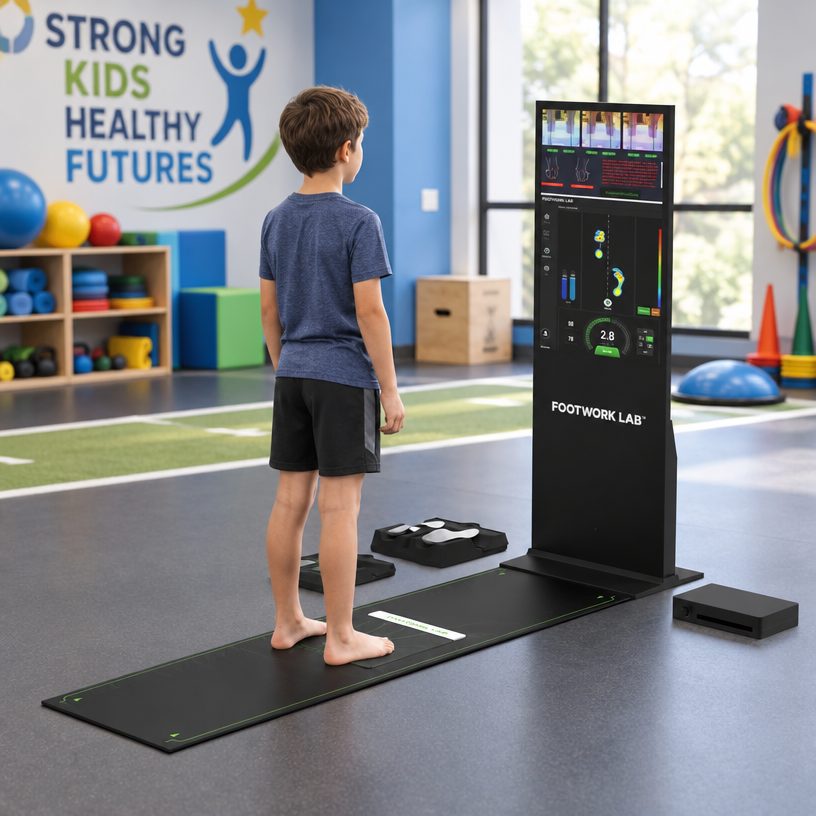
Take the familiar forefoot concentration that appears on so many records. On the page it is a shape. In life it can be reached by two very different routes. The first customer arrives there through a quick sequence of short steps, each contact brief and repeated often. The second arrives through a slow roll, with fewer contacts that last longer. The shape under the sole is similar; the number of times that shape was loaded, and the time available for the load to build, are not. The map records where. Cadence begins to describe how often.
The centre of pressure path makes the distinction easier to see. When the timing is captured alongside the images, the path through the stance portion can be read against the rhythm that produced it. A professional can notice whether the concentration appears at the same point in every step or only in the steps that follow a change of direction or a pause. That observation belongs to the measurement. What it means for this person is a clinical judgement, and the two should never be written on the same line as if they were equally certain.
Force-line alignment adds another layer. The line describes the direction of load relative to the body; cadence describes the tempo at which that load is delivered. Two records with similar alignment can differ in tempo, and a reader who has only the alignment image will miss it. This is why the static picture and the loaded steps deserve to be read as a pair. The standing capture shows the arrangement at rest; the moving capture shows what the arrangement does when a rhythm is applied to it.
None of this makes the pressure map less useful. It makes the map one member of a set. The team that writes timing beside it is simply keeping the set complete, so that the next reader sees the whole record rather than the most colourful part of it.
Reading cadence inside the gait cycle
The most reliable way to make cadence useful is to attach it to something a customer actually said. When someone reports that their feet feel different partway through a walk, the professional can ask which part of the step the feeling belongs to: the moment the heel arrives, the middle of the contact, or the push afterward. Writing that answer next to the timing turns a vague report into a located observation. It takes thirty seconds and it changes the quality of the next conversation.
Two actions do most of the work, and neither needs new equipment. First, count the steps over the same short path and write the count on the card together with the conditions: shoes on or off, surface, time of day, and whether the customer had been sitting or walking beforehand. Second, ask the customer to walk their ordinary way before the formal capture, and watch the rhythm before looking at the screen. People often change their walk when they know they are being measured; the informal pass is the one that resembles their day.
Then look at the two feet separately. A customer whose steps are uneven from one side to the other is showing something the averaged picture can hide, and the observation is worth recording in words before it is interpreted. The professional may find that the uneven rhythm and a difference in the pressure images agree, or that they do not. Agreement and disagreement are both useful findings, and both are easier to discuss when they are on the card rather than in someone’s recollection.
Keep the wording at the level of observation. Uneven, quicker, slower, unchanged. The moment the note becomes a conclusion about why, it has left the measurement and entered the domain of clinical reasoning, which is exactly where it belongs — but under the professional’s name, not the equipment’s.
Two checks before the second capture
A second walking record is only worth making if the first one can be compared with it. That sounds obvious and is routinely forgotten. The compare-friendly version starts with a fixed path, a fixed instruction, and a fixed set of conditions written down at the first visit. When the customer returns, the same path and the same instruction produce a rhythm that can be placed beside the earlier count. Change any of those and the difference on the page may belong to the setup rather than to the customer.
The first check is the count itself. Ask the customer to walk the path at their normal pace, count the steps, and write the number with the conditions. Repeat it at the next visit before anything else happens. A card that holds two counts and two sets of conditions tells a professional more than a second pressure picture alone, because the rhythm is the part most likely to shift with fatigue, footwear or a change in routine.
The second check is three short questions asked at intake. Does the rhythm change when you are tired? Does it change when you carry something? Has it changed since the last time we saw you? The answers rarely produce a diagnosis; they produce context. A customer who reports a quicker, shorter step late in the day is describing a different walk from the one captured at a morning appointment, and the professional can decide whether to capture both. This is the point at which a static-first sequencing habit, described in our earlier note on sequencing a two-part assessment, earns its keep: the resting picture and the moving picture answer different questions.
Add the shoe check to the same visit. Read the outsole, press the midsole, and photograph both at a consistent angle. A shoe whose midsole has stopped recovering changes the rhythm the customer can comfortably produce, and the photograph makes that visible at review. Together, the count, the three answers and the shoe photograph form a small intake ritual that any team can start tomorrow.
Where a pressure platform earns its place
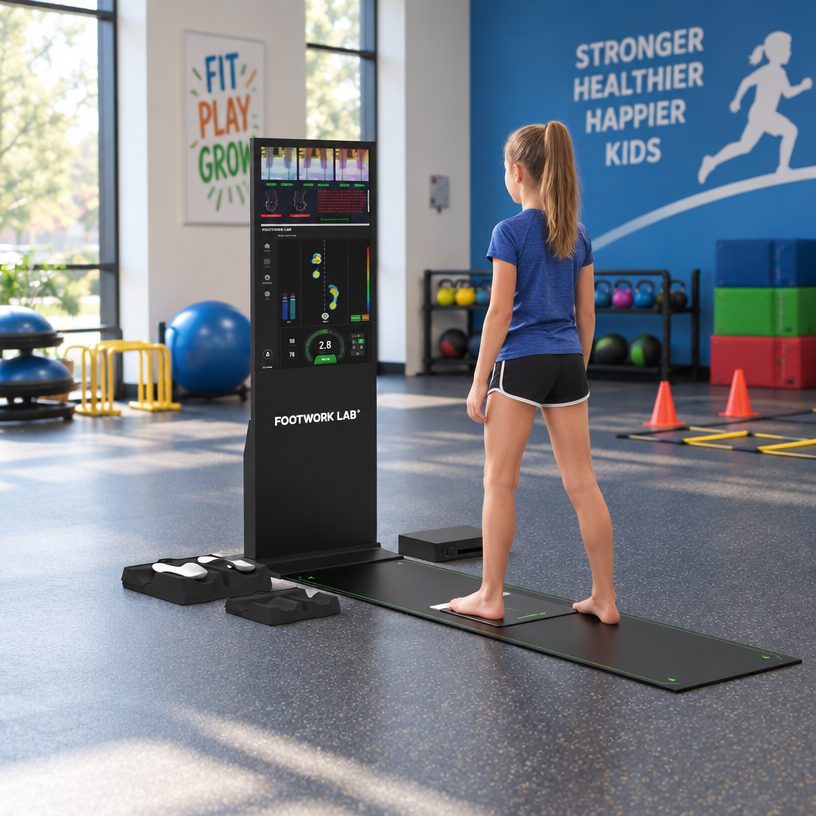
Questions and step counts describe the walk from the outside. A pressure record describes it from underneath, and when the timing is captured with it, the two sit on the same page. For teams that want that timing recorded alongside the distribution, a pressure and force-line platform — ours is described on the X3 page — is one tool that does it, a tool rather than an interpreter. It produces measurements and images. It does not tell the clinician what the rhythm means.
What the tool adds is repeatability. A counted walk in the clinic is a good observation, but it lives in the moment. A captured record can be opened again next month, compared with a later capture, and shown to a colleague in another room. When the timing and the pressure images are stored together, the professional is not asked to reconstruct the conditions from memory. That is the whole value of the instrument in this conversation: it keeps the evidence in one place.
What it does not do deserves equal space. The record does not score the walk, does not predict how anyone will perform, and does not promise that a change will follow from reading it. It says how load was distributed on this day, in these steps, under these conditions. Clinics that describe their equipment in those terms protect themselves and their customers from expectations the machine cannot meet. We take the same line ourselves: we do not make clinical claims for the equipment, and we do not quote prices in articles like this, because price depends on configuration and support rather than on a number that can be printed.
Behind the tool sits a production reality worth stating once. Every unit is tested for seven days before it leaves the plant, the structure is modular so a component can be serviced without replacing the whole system, and support continues after delivery through remote assistance, updates and a dedicated messaging group with the engineers. None of that changes what the measurement means. It changes how reliably the same capture can be repeated over the years, which is the quiet foundation of any comparison.
When to re-record, and when not to
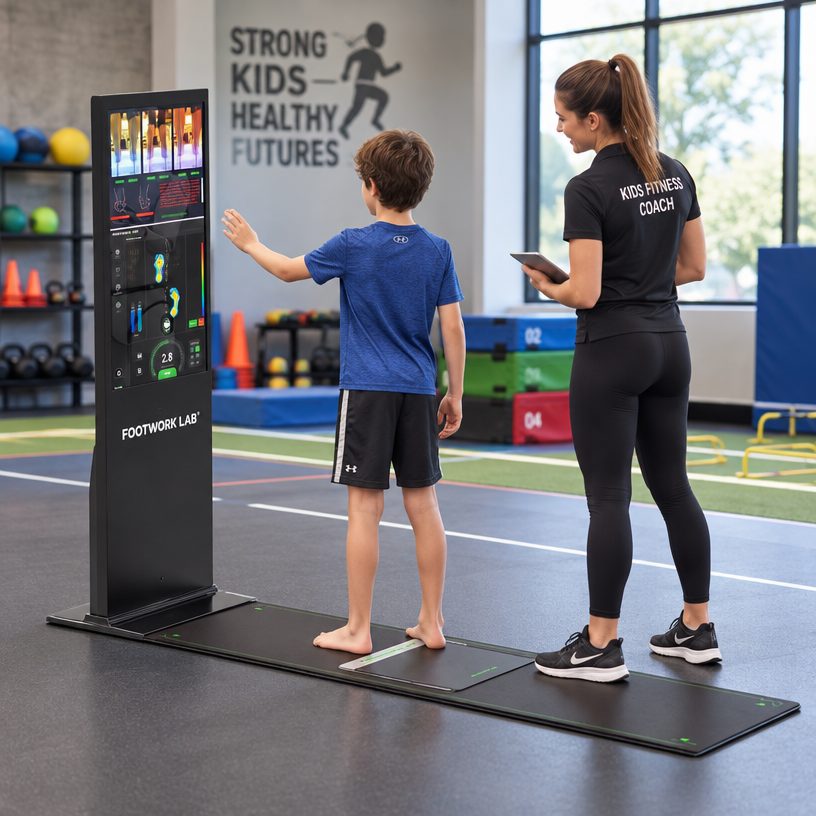
Cadence is not fixed. It shifts with fatigue, with a new pair of shoes, with a change in surface, with a period of sitting more than walking, and with a return after a long break. Each of those is a legitimate reason to make another record, provided the professional can say what changed and roughly when. A re-record without that context produces a second picture with no story attached, and two pictures without a story are harder to interpret than one.
There is also a reason to wait. If something has just changed — a new shoe, a first trial of a made-to-measure insole, a return to training after time off — the rhythm captured in the first days belongs partly to adaptation. Capturing it too early and treating it as the customer’s ordinary walk is a common way to reach the wrong conclusion. Give the new arrangement time to settle, keep the notes running, and then capture. The exact interval is a professional decision based on the person in front of you, not a rule that can be printed on a card.
Sometimes the right outcome is no new record at all. When the complaint has settled, the shoes are sound and the rhythm matches the earlier card, the existing picture is still the current one. Writing that sentence on the card is as useful as ordering another capture, because it records a decision rather than leaving a blank. A professional who can say why a second measurement was not needed is practising the same restraint as one who can say why it was.
The discipline described here is small and cumulative: a count, four lines on a card, a shoe photograph, a decision about timing. None of it belongs to the equipment, and all of it makes the equipment more useful when it is used. That is the point of adding cadence to a walking record — not a new number to admire, but a better question to ask at the next appointment.
Frequently asked questions
Can two people have the same pressure map but different cadence?
Yes. The map shows where load sits; cadence describes how quickly the steps arrive. Two walks can distribute pressure in almost the same places while one uses short, frequent steps and the other long, slower ones.
Does a pressure platform measure cadence directly?
A pressure record captures timing alongside the pressure images, so step rhythm can be read from the same capture. The platform produces measurements; deciding what the rhythm means belongs to the qualified professional.
Why does cadence matter in a walking record?
Because the same distribution applied over more frequent, shorter contacts is a different loading history from the same distribution applied over fewer, longer ones. Timing gives the pressure picture a third dimension.
Should cadence be compared with the gait cycle?
Yes. Reading timing against stance and swing shows whether a comment refers to loading or to the swing phase, and whether the two feet take the same rhythm. Both are measurements, not conclusions.
What should be written on the record next to the map?
Write the step count for a fixed walk, the conditions — shoes, surface, time of day — and any change the customer reports since the last visit. Those lines turn a single map into a comparison.
When is a second capture worth doing?
When the rhythm, the shoes, the surface or the complaint has changed, and enough time has passed for the new pattern to settle. Re-recording too early measures adaptation rather than the customer’s ordinary walk.
Does a higher cadence mean a better walk?
No. Cadence is a measurement, not a score. A quicker rhythm may suit one customer and not another, and the equipment makes no claim about which is better; interpretation stays with the professional.
What we would do next
The two actions that survive a busy clinic day are the cheapest ones. Count the steps over a fixed path and write the count with the conditions; then write the four lines — timing, shoes, surface, what changed — beside the pressure picture. Neither takes more than a minute, and together they turn a rhythm that nobody wrote down into a comparison the next reader can actually make. If the card still points somewhere, a captured record puts the timing and the distribution on the same page, and the trial that follows runs on notes rather than impressions.
Two adjacent reads on this site: one customer, two machines, on deciding which record answers the question in front of you, and how long before you record again, which treats the spacing of a second capture as a decision rather than a reflex. Both describe the same discipline this article keeps returning to: keep the conditions with the measurement, or the measurement loses its memory.
The question we would leave with colleagues: when your team reads a walking record, is step timing on the page at all — and if it is not, who on the team would add it first?
This article is intended for professional and educational reference. It is not medical advice. Foot assessment equipment produces measurements and images; clinical interpretation and any decision about care remain the responsibility of a qualified professional. Certification scope is limited to the documentation we hold: European Union certification and ISO quality system certification.