
Recording a person running is the most demanding version of dynamic
capture, and most of what makes it difficult has nothing to do with the equipment. The
contact phase shortens, the loading arrives faster, the person covers ground quickly, and the room
has to allow all of that to happen naturally and safely. Teams that plan the space and the routine
get recordings they can use. Teams that buy a platform first and think about the room afterwards
usually end up recording a person who is deliberately slowing down, which defeats the purpose.
FOOTWORK LAB manufactures foot assessment equipment at our own plant in Ruichang, Jiangxi
Province, where we have produced since 2018. Our F5-LAB
dynamic gait system is the platform in our range built for walking and running capture, and it
is used in clinical, rehabilitation, sports and fitness settings. Those settings ask for quite
different things from the same hardware, and the specification conversation goes better when the
buyer’s context is clear at the outset. This article sets out what running capture requires and how
to plan for it.
Why running recording is a different problem from walking
The physical differences are well known, and each of them has a consequence for measurement. The
foot is in contact with the ground for a much shorter period at running pace, so the recording has to
resolve a brief event rather than a sustained one. The loading that arrives is higher and arrives
faster, so the recording has to capture a rise that happens quickly. And the person covers several
times the distance per step, so the capture area has to cover a stride rather than a stance.
Running also introduces a flight phase, during which neither foot is loaded. That phase is not
empty from a measurement perspective; it is what makes running recognisably different from walking,
and how long it lasts is one of the quantities a running recording describes. Capturing it requires
a surface long enough that the person passes through the whole cycle within the recording area.
The practical consequence is that a platform installed for walking may be perfectly adequate for
walking and inadequate for running, not because it is poorly made but because the capture area is too
short and the approach too brief. That is a room problem more than a product problem, and it is why
the first question we ask a sports buyer is about floor space, not sensors.
A second difference concerns expectations. Walking recordings are usually compared with other
walking recordings from the same person over time. Running recordings are frequently compared
between people, which raises the bar on consistency, because a person’s own variation is no longer
the only thing the record contains.
The room: approach, surface and safety of movement
Three room properties decide whether a running installation works. All three are decided before
the platform arrives.
Approach
The run-up has to be long enough for the person to reach their intended pace before entering the
capture area. Without it, the recording shows someone accelerating, which describes a transition
rather than a stride. The run-out matters for the same reason in reverse: a person who has to stop on
the platform will produce a distorted final pass.
Surface
The surface should be consistent across the approach and the capture area. A change in grip or
compliance at the edge of the platform introduces an effect that belongs to the room rather than to
the person, and it is easy to miss because it appears in the data as a person-specific pattern.
Safety of movement
Running capture requires the person to move at speed in a defined space. Handrails, a clear
landing zone and a sensible placement of the platform relative to walls are practical requirements
rather than options. In rehabilitation and clinical settings this matters particularly, because the
people being recorded are not necessarily accustomed to running indoors.
Where a room cannot provide all three, the honest options are to record walking only, or to
reconsider the space. We would rather say that at enquiry stage than supply a platform that will be
used below its capability.
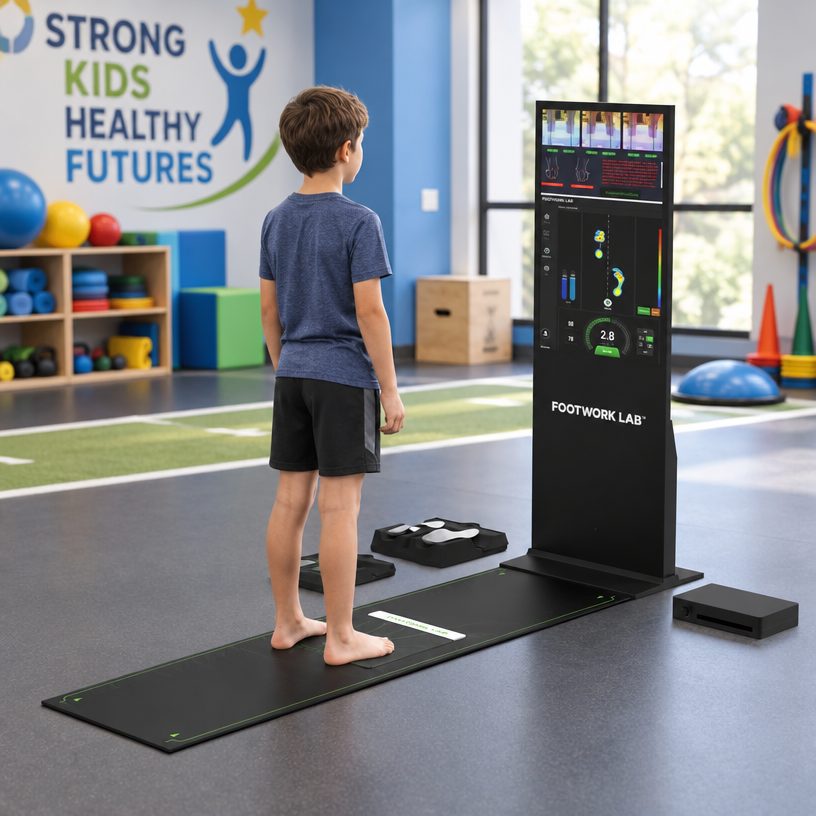
What teams actually want from a running recording
The questions buyers bring to a running setup cluster into four groups, and knowing which group
matters to you shortens the specification process considerably.
- Loading through the sole. Where load sits during contact and how quickly it
arrives. This is the most common requirement in clinical and rehabilitation contexts. - Symmetry and consistency. How the two sides compare, and how repeatable a
person’s pattern is across several passes. This is often the reason a team wanted a running
recording in the first place. - Change with speed. How the pattern changes as pace rises. Comparing a walking
recording with a running one, or two running recordings at different paces, is where this becomes
visible. - Timing relationships. How long each phase lasts, including the flight phase,
and how the sequence varies between passes.
Equipment in our range answers all four by combining pressure sensing with camera-based posture and
lower-limb alignment capture, so a recording can show both what happened at the sole and the position
the body was in while it happened. What it does not do is decide which of the four matters to you.
That is a decision for the team, and making it explicitly is the single most useful preparation we
see from buyers.
Speed, consistency and the number of passes
Running capture is sensitive to how the session is run, and three habits make a substantial
difference to the quality of what a team collects.
Set the intended pace and check it. Whether the session is a controlled pace or a
self-selected one, the same intention should be used across sessions. A recording described as
“running pace” without any check on what that meant is not comparable with anything.
Take several passes and look at the spread. A single pass can be unusual for
reasons that have nothing to do with the person. Several passes, reviewed together, make it possible
to see what is consistent and what is not. Teams that capture one pass and interpret it immediately
are the teams most likely to draw the wrong conclusion from good data.
Record the conditions every time. Surface, footwear, intended pace, number of
passes, operator, and anything unusual. A short note is all that is required, and it is what turns a
recording into a document that a colleague can review later without having been present.
There is a fourth habit that applies to teams operating more than one site: agree the routine
before installing the second system. If the intention is to compare recordings between locations,
the comparison has to be designed in rather than added afterwards. This is the most common planning
oversight we encounter in multi-site sports and fitness groups.
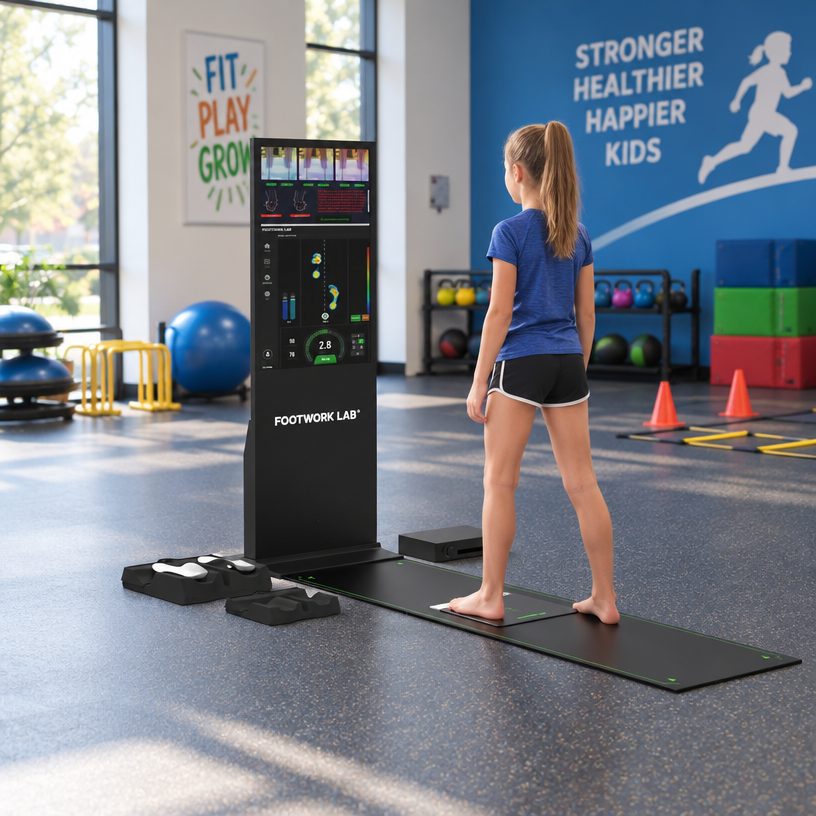
Sports, fitness and clinical settings: three different buyers
The same platform serves quite different purposes depending on where it is installed, and a buyer
who recognises their own context will ask better questions.
Sports and performance settings
Here the interest is usually in how a person’s loading and movement change as speed rises, and in
how consistent the pattern is across sessions. Priorities are capture at speed, a routine that can be
repeated through a season, and records that can be compared over months.
Fitness and training facilities
The requirement is often broader and more service-oriented: recording for a wider range of people
at a wider range of abilities, with less emphasis on a single performance question. Priorities are
ease of operation by several staff, clarity of output for a non-specialist conversation, and
durability under frequent use.
Clinical and rehabilitation settings
Where the emphasis is on assessment and monitoring, priorities shift towards consistency of
routine, records that integrate with existing documentation, and the ability to compare a person
against their own previous recordings rather than against a group.
None of these settings needs a different platform in principle. They need different routines,
different operator training and different weightings in the specification. We ask which setting a
buyer is in before discussing configuration, because the answer changes what we would recommend.
Specification and support points for a running setup
Seven points cover most of the decision.
- Floor space, including approach and run-out. The governing constraint, and the
one that cannot be changed later. - Capture conditions required. Walking, running, barefoot, in-shoe, or a defined
combination. Each answers a different question. - Number of operators. At least two trained people, so the routine survives
absence. - Where recordings go. Export format, records integration and interface language,
confirmed before ordering. - Comparison ambitions. Whether recordings will be compared across sessions only,
or across sites and people as well. This affects how strictly the routine must be standardised. - Support in year two. Who answers technical questions, through which channel, and
how quickly spare parts arrive. - Starting scale. Our machine minimum order quantity is one unit, which lets a
team run the routine in the real room before committing to more.
On support, our answers are published rather than supplied on request. A twelve-month warranty
covers non-human damage with free spare parts within that scope. Support runs through a dedicated
WhatsApp group with direct engineer access, remote assistance where the setting allows, and
over-the-air updates for connected units. Every unit is tested in-house during a seven-day testing
period before dispatch, and production runs at roughly three to five machines per day, so that
testing and inspection are performed properly rather than nominally.
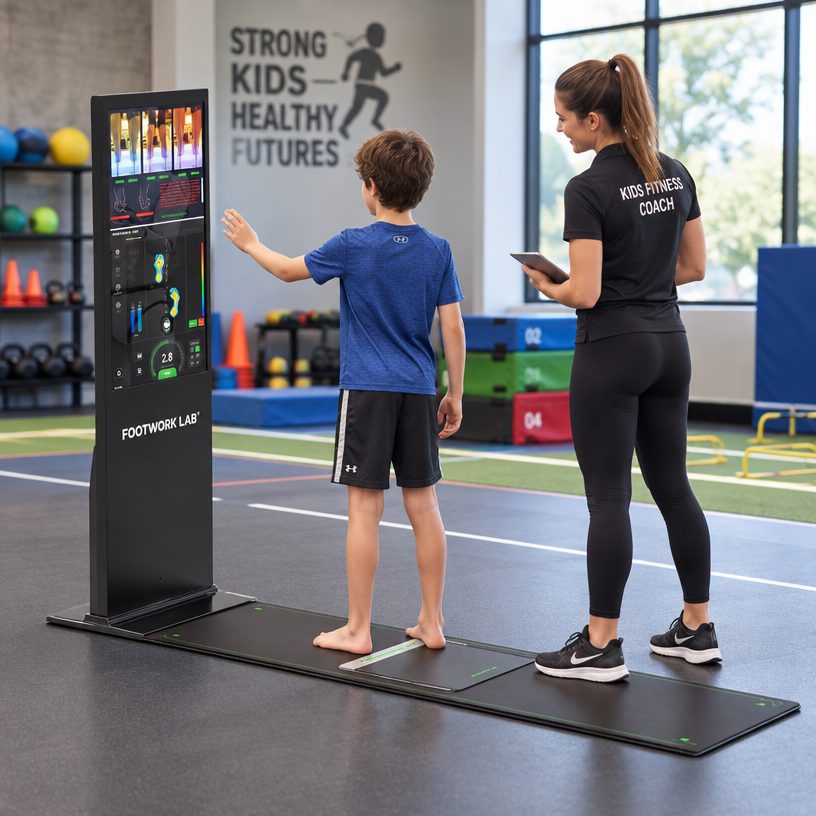
A final planning point concerns maintenance of the routine itself. Running capture depends on a set of conditions that are easy to drift: pace intention, number of passes, camera and platform placement, and who operates the session. A short written protocol, reviewed once a season, keeps the routine where it was designed. In our experience the systems that remain in active use years after installation are not the most elaborate ones; they are the ones whose routine was documented and revisited.
What a running recording cannot show
Running capture produces measurements of loading, timing and position. It does not identify why a
pattern looks the way it does, and it does not determine what anyone should do next. Those are
professional judgements made by qualified people, and the recording is one input among several.
It also describes the session rather than the person. A recording taken on a particular surface, at
a particular pace, in particular footwear, on a particular day is evidence about that moment. Teams
that hold that distinction in mind use running data far more productively than teams that present a
single session as a general statement.
We apply the same restraint to our own claims. Our documentation covers European Union
certification and ISO quality system certification, and we describe exactly that scope. We do not
extend certification language, we do not name or criticise competing products, and we do not quote
figures for a configuration in a general article, because the honest number depends on specification,
volume, service scope and destination. What we do offer is a factory relationship: technical
questions reach the people who wrote the software, and adjustments to report format or interface
language are feasible because the tooling and the code sit in the same building.
A last note on expectations. A running platform is a measurement instrument, and the value a team gets from it depends as much on the routine built around it as on the instrument itself. Buyers who accept that tend to be satisfied; buyers who expect the equipment to supply the routine usually are not.
Frequently asked questions
Can the same platform record both walking and running?
Yes, provided the room allows it. Running requires a longer capture area and a proper approach so
the person is at their intended pace when they reach the recording surface. The platform does not
change; the space and the routine do.
How many passes should we record?
More than one, so that the spread across passes is visible. A single pass can be unusual for
reasons unrelated to the person, and teams that interpret one pass immediately are the most likely to
draw the wrong conclusion from sound data.
Does the system interpret the data for us?
No. It records pressure distribution, timing, the path of the centre of pressure and camera-based
posture and alignment. Interpreting that output for an individual is a professional judgement made by
a qualified practitioner.
How much floor space does a running installation need?
Enough for the platform plus a run-up and a run-out, on a consistent surface, with a safe landing
zone. If the room cannot provide that, recording walking only is a more honest option than capturing
an accelerating person.
Can we trial a single system before ordering for several sites?
Yes. The machine minimum order quantity is one unit, and running the routine in a real room is the
most reliable way to find out what the second and third installations should look like.
How is the equipment tested and shipped?
Every unit is tested in-house during a seven-day testing period before dispatch, with production
at roughly three to five machines per day. Typical transit is six to seven working days by express,
ten to twelve by air, and thirty to thirty-five by sea.
What warranty and support apply?
A twelve-month warranty covering non-human damage with free spare parts within that scope,
supported through a dedicated WhatsApp group with direct engineer access, remote assistance where the
setting allows, and over-the-air updates for connected units.
What we would do next
Measure the room before you compare platforms, because floor space decides more than any
specification. Then define the routine and settle on a pace convention you can repeat.
Putting a walkway assessment into a rehabilitation unit covers room planning,
and what a gait report shows and what it cannot is worth reading before you
decide what you want recorded. Our F5-LAB dynamic gait
system is the platform built for walking and running work, and the
technology overview explains how pressure and camera-based capture
combine. For a configuration discussion about your own space, contact the
team.
This article is intended for professional and educational reference.
It is not medical advice. Foot assessment equipment produces measurements and images; clinical
interpretation and any decision about care remain the responsibility of a qualified professional.
Certification scope is limited to the documentation we hold: European Union certification and ISO
quality system certification.