
Somewhere in every insole factory there is a machine that receives a flat sheet and returns a shaped object, and everything else in the building exists to feed it or to check its work. The molding step is where a measurement stops being information and starts being geometry. Buyers who understand this step read quotations differently, judge samples more fairly and ask the one question that separates a production line from an assembly of gadgets.
We run insole production at scale — five hundred to a thousand pairs a day in our Ruichang plant, with a two-hundred-pair mixed minimum — and the molding station sits at the centre of that flow. This article explains what the step involves, what can go wrong, how it is checked, and what a buyer should ask when a supplier attributes their quality to the machine rather than to the discipline around it.
One framing note before the technical detail: the molding machine matters, but no molding machine has ever produced a consistent pair on its own. Consistency is a system — material preparation, station checks, cooling discipline, traceability — and the machine is the most visible part of that system. The article is really about the system, seen from the machine outward.
Why should a buyer of finished insoles care about the machine at all? Because the questions the molding step raises are the same questions that decide every other promise in the quotation. A factory that controls its heat windows also controls its remake rate. A factory that logs its rejects also knows its real capacity. The molding station is simply the place where the abstractions — quality, consistency, discipline — become physical enough to inspect. Read it well and you have read the factory.
What the step actually does
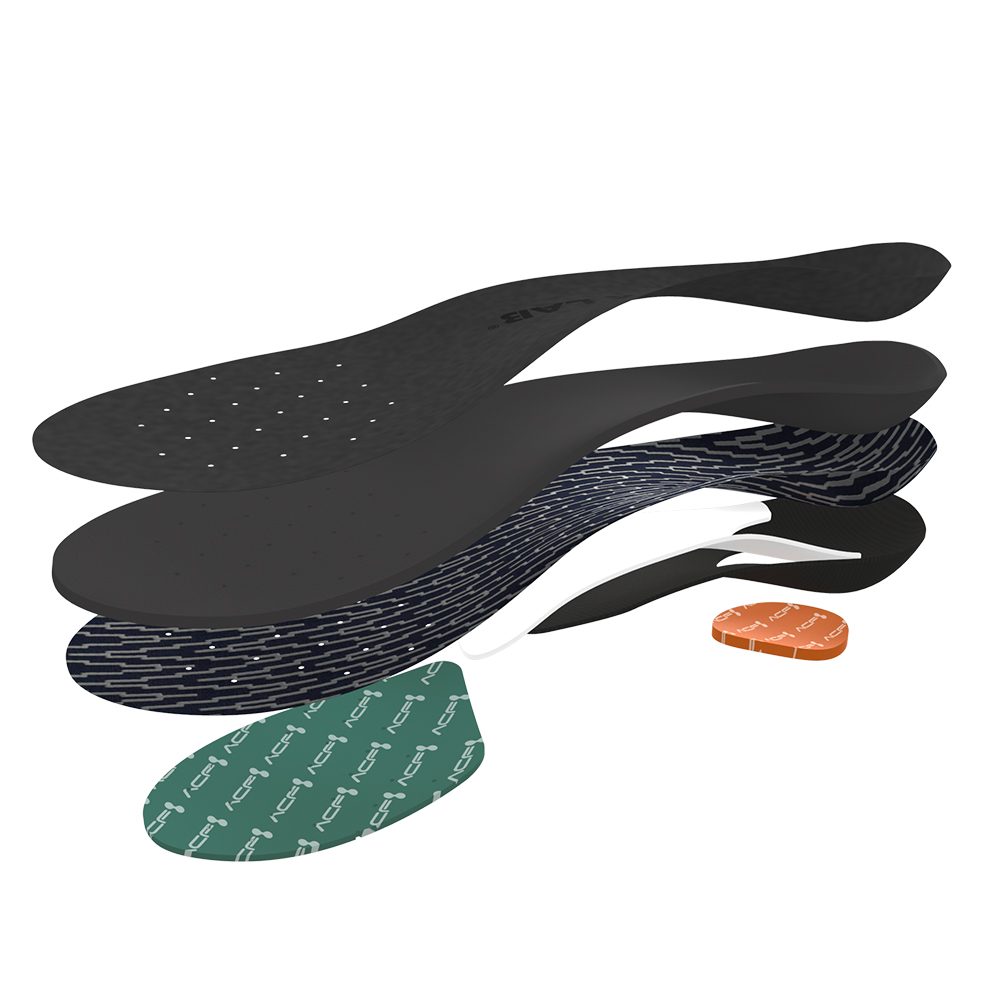
The input is a build sheet and a prepared blank: a sheet of thermoplastic material, cut and layered according to the confirmed design. The blank is heated until the material reaches its working range — pliable enough to take a shape, not so soft that its structure suffers. It is then pressed against a form that carries the design: the contours, the arch region, the support areas, the per-side differences that the measurement record justified.
Heat, pressure and time are the three variables, and each has a working window. Outside the window, the result degrades in specific, learnable ways: too little heat and the material springs back toward flat; too much and it thins at the high points or develops surface faults; wrong pressure and the shape is present but the bond between layers is not; wrong timing and the pair warps as it cools. Every experienced operator knows these failure modes by name, because every production line meets them weekly.
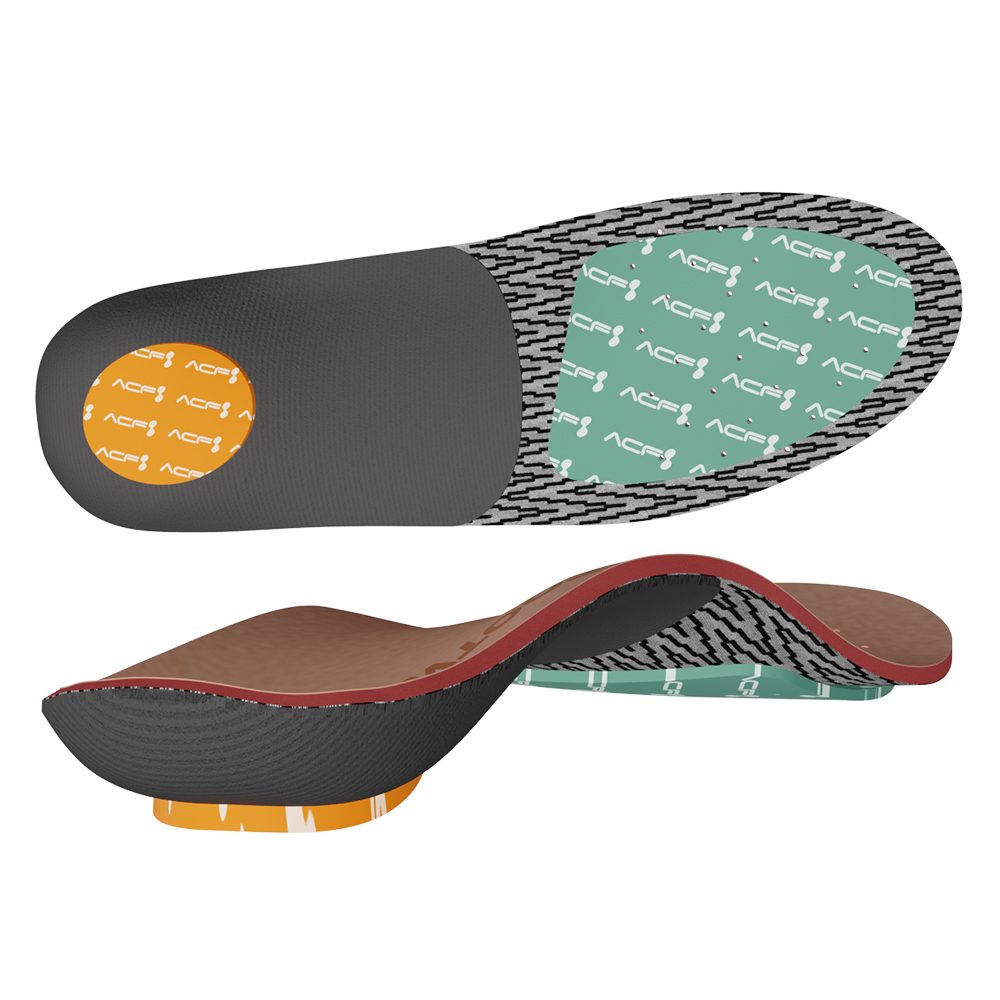
The output is a shell: the structural body of the insole, which will next be trimmed, finished and covered. The shell is the product’s skeleton — everything the client eventually feels about support and shape originates here. Which is why the checks applied at this station are the most consequential checks on the line, and why a factory’s answer to “how do you check the shell” reveals more than its answer to almost any other question.
A detail worth knowing because it changes how samples should be read: the shell remembers its history. A blank that sat too long in storage before molding, a sheet that was heated unevenly, a form that was warm from the previous cycle — each leaves its trace in the object, invisible at the moment of inspection and visible months later as a shape that drifted. This is why serious lines control what happens before the press as carefully as the press itself: material storage, sheet conditioning, form temperature. The machine gets the attention because it is loud and central, but the quiet steps on either side decide whether its work holds.
The machine itself: what to ask and what to ignore
Molding equipment comes in families — manual presses with skilled operators, semi-automatic stations with programmed cycles, higher-throughput lines where heating and pressing run as continuous stages. Each family can produce excellent work; each can produce rejects. The difference is rarely the badge on the press. It is whether the working windows are written down, followed and checked.
So the useful questions are not about the machine’s features. They are: how is the working window for each material determined, and who may change it? How is a new material introduced — by trial on scrap, with the results recorded? What does the station log look like: cycle counts, rejects with reasons, operator, batch? A factory that answers these in specifics runs a process. A factory that answers in adjectives runs a machine.
One genuinely machine-level property does matter and is worth asking about: repeatability under load. A press that delivers the same pressure cycle to the four-hundredth pair as it did to the first is the physical precondition for the tolerance discipline described below. But the honest way to assess it is not the brochure; it is the rejects log, which shows whether the process drifts within a batch or holds steady across it.
Ignore, or at least discount, any supplier whose quality case rests entirely on the equipment’s origin. Imported machinery in an undisciplined shop produces beautiful rejects. Conversely, a modest line with written windows, logged cycles and trained operators produces boring, dependable consistency — which, in molded products, is the luxury.
Cooling, and why the step after the step matters
The moment a shell leaves the press it is not finished; it is stabilising. Thermoplastic materials hold their formed shape through cooling, and the way cooling is managed decides whether the shape that leaves the press is the shape the client receives. Cooled too fast, stresses lock into the shell and it moves later. Cooled carelessly — stacked warm, for instance — shells deform one another, and a batch that checked well at the press arrives at trimming subtly wrong.
This is the least glamorous part of molding and one of the most frequent sources of “the sample was fine but the order was not”. Sample pairs, made slowly and cooled carefully, behave. Volume orders, pushed through a busy shift, meet the shortcuts. The buyer’s question is direct: how are pairs cooled, for how long, in what arrangement, and is that procedure written down?
Our answer, in short form: controlled cooling on racks, in single layers, before any stacking, with the hold time part of the station procedure rather than the operator’s judgement. It is a small discipline and it removes an entire category of complaints — the ones where neither party did anything wrong and the product still moved.
The same thinking extends to storage and shipping: a finished pair that sits in a hot warehouse or ships in packaging unsuited to the lane can drift after all the checks have passed. Production discipline that ends at the press is not production discipline; it is an optimised middle with unmanaged edges.
Tolerances and the checks that enforce them
A build sheet specifies; a tolerance says how closely the result must match. Arch height, contour positions, edge lines, thickness by zone — each has an acceptable band, and the band is where engineering meets honesty. Too tight and the line produces rejects that the client would never have noticed; too loose and pairs ship that the client notices immediately. A mature line publishes its bands internally, measures against them, and records the measurements.
The first check is against the form: does the shell match the shape record? The second is dimensional: do the specified measurements sit inside their bands? The third is the fit check — the shell paired against its intended size range, because a shell that matches its geometry can still be wrong for the shoe it is meant to live in. Our workflow includes that last check deliberately, since the design summary names the footwear, and the footwear sets limits the geometry alone cannot see.
When a pair fails, the discipline is traceability: which station, which batch of material, which operator, which shift. Not to assign blame — most failures are process drift, not negligence — but to find the pattern. Three rejects in a day from one station is a station problem. Three rejects spread across a week is a material batch problem. The log is what turns a reject from a loss into a lesson.
Buyers can test this cheaply. Ask the supplier what their most common reject reason was last month. A factory with a functioning log answers with a noun and a number: “edge trim, about two percent of pairs”. A factory without one answers with a shrug delivered in confident English. Both answers are informative; only one of them is reassuring.
The tolerance conversation has a second half that buyers should raise explicitly: what happens at the boundary. A pair that sits just outside a band is not automatically waste; it is a decision. Mature lines write down who decides — the station, the supervisor, the quality step — and what the customer is told. Lines without the written rule improvise, and improvisation under a full order board tends toward shipping first and asking later. The question “what do you do with a marginal pair” costs thirty seconds in a call, and its answer separates the factories that will tell you about a problem from the factories that will let you discover it.
Where molding sits in the whole chain
Upstream of the press sits everything that makes the press meaningful: the measurement record, the confirmed design, the material selection, the cut blanks. Downstream sits everything that makes the shell a product: trimming, finishing, covers, pairing, packing. The molding station is the hinge between them, and the chain is only as strong as its hinges — which is the argument for buying the chain, not the machine.
Our plant runs the full chain: assessment equipment that produces the records, a design workflow that turns records into build sheets, the production line described here, and a remake policy that assigns responsibility in writing. When one company owns the chain, the feedback loop is short — a molding reject traces back to a material batch, the batch back to a purchase, the purchase back to a specification, and the specification improves. In fragmented chains, the same loop crosses company boundaries and slows to the speed of email between strangers.
For buyers building an insole service of their own — a clinic producing for its own clients, or a distributor running local production — the same logic applies at smaller scale. We supply the production equipment as well: molding and supporting stations sized to the appointment book or the order book they serve. The equipment questions are identical at every scale, because the physics does not care about the volume; only the consequences do.
What a sample tells you about a line
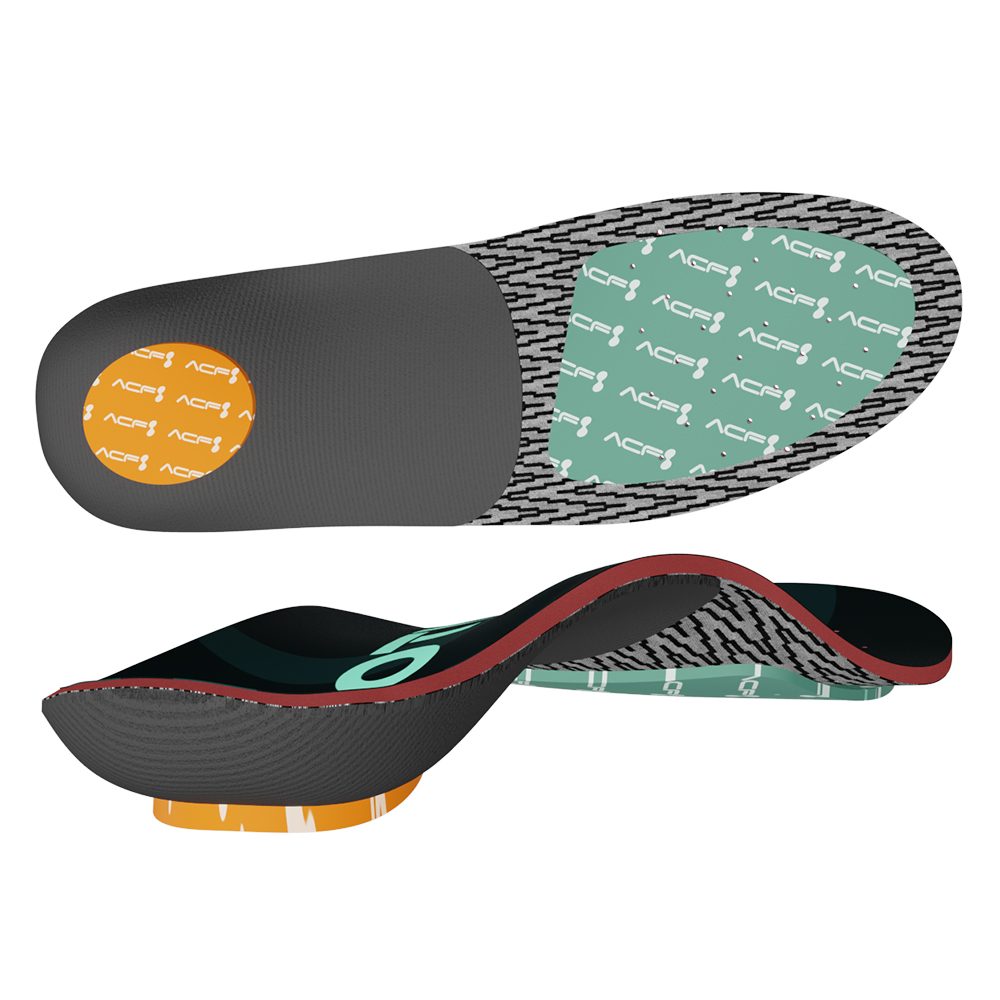
A sample pair is a small, honest report about a factory, and it can be read. Edges finished cleanly? Covers bonded without waves? Left and right visibly built to separate specifications where the design said so? Material feeling consistent across the pair? A sample that passes these readings came from a line in control; a sample with rough edges came from a line where checks are aspirational.
Then ask for two more samples: one from a current order, not a demonstration set, and one from a different style than the first. Two current-order samples from different styles that both read well say more about a line than ten perfect demo pairs — demo sets are made slowly by the best hands, which is exactly the condition volume production never enjoys.
Samples from us leave within three days of design confirmation, made on the production line with the production materials, because a sample that cannot predict the order is not a sample; it is a souvenir.
Frequently asked questions
What happens between the design being confirmed and production starting?
The confirmed design becomes a build sheet — regions, thicknesses by zone, material family, per-side specifications — and blanks are prepared against it. Only then does the pair enter the molding station, and the station works from the sheet, not from a memory of the design conversation.
How do you keep the four-hundredth pair consistent with the first?
Written working windows for heat, pressure and time; controlled cooling before stacking; station checks with tolerances; and a rejects log with reasons. Consistency is a system around the machine rather than a property of the machine itself.
What is your capacity and minimum order?
Capacity runs five hundred to a thousand pairs a day. The minimum order is two hundred pairs, mixed across styles and sizes, and samples leave within three days of design confirmation.
What is the most common reject reason, honestly?
Edge and finishing faults sit at the top of most lines’ logs, ours included — which is why finishing has its own checks downstream of molding. What matters to a buyer is not zero rejects; it is that rejects are counted, traced to their station and folded back into the process.
Can we visit or see the line remotely?
Yes. A scheduled live video walk of the production floor is available on request — the line running, stations working, no rehearsal. For many buyers this is the fastest way to see that the disciplines described here are ordinary practice rather than brochure language.
Do you supply molding equipment for clinics or local producers?
Yes. Beyond producing insoles ourselves, we supply insole production equipment, including molding and supporting stations, sized to the buyer’s expected volume. The same process disciplines — windows, checks, logs — apply at any scale.
Who covers a remake if a pair does not match its design?
A remake caused by a production fault is our responsibility; a remake caused by a changed design decision is a new order. The division is written into the order documents before anything ships.
What we would do next
See the products the line outputs on the insole categories page, and the commercial terms — minimums, sampling, remake policy, lead times — on the FAQ page. If you are evaluating equipment rather than finished pairs, choosing an insole production line manufacturer covers the supplier questions in depth, and what sits inside the price of an insole making machine explains the cost structure without quoting figures.
This article is intended for professional and educational reference. It is not medical advice. Foot assessment equipment produces measurements and images; clinical interpretation and any decision about care remain the responsibility of a qualified professional. Certification scope is limited to the documentation we hold: European Union certification and ISO quality system certification.